
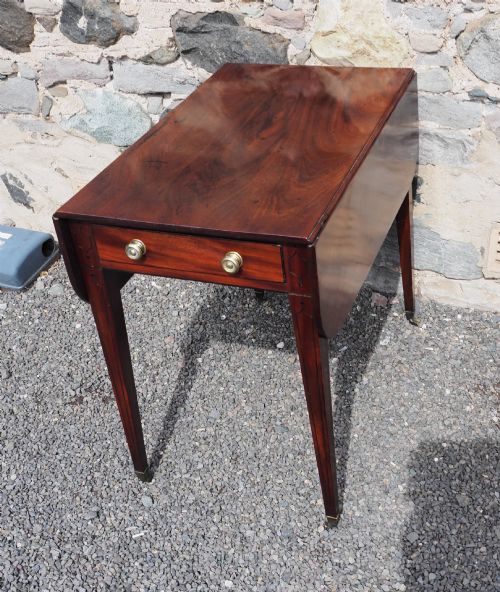
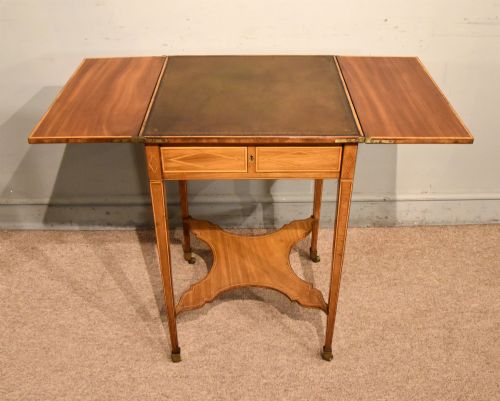
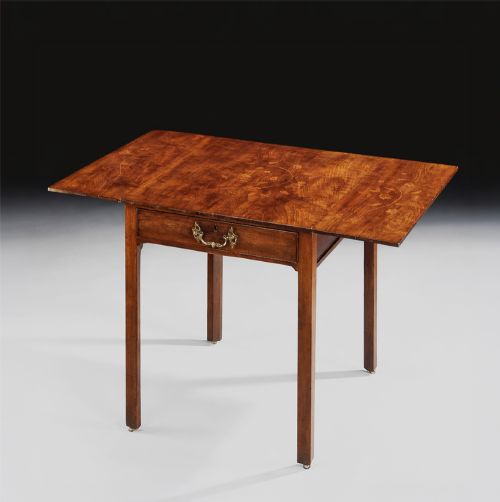
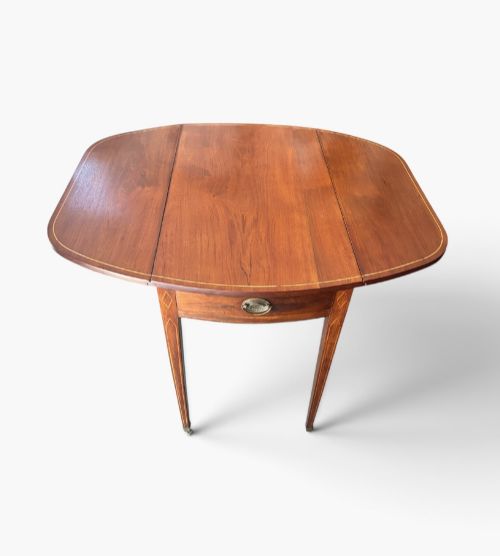





Inlaid Mahogany Pembroke Table
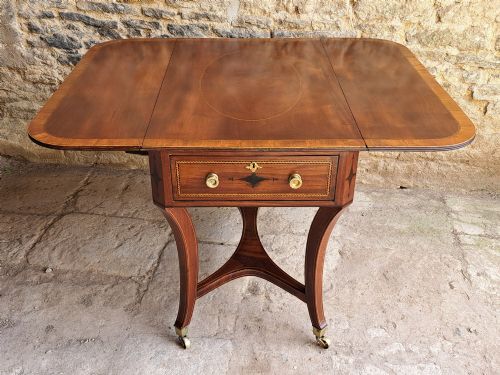
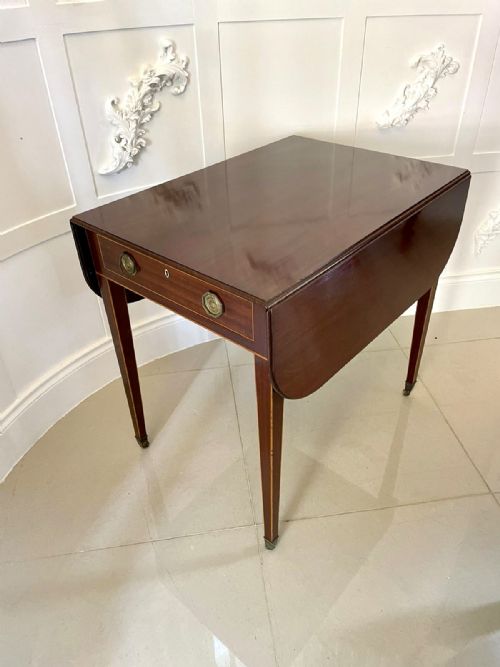
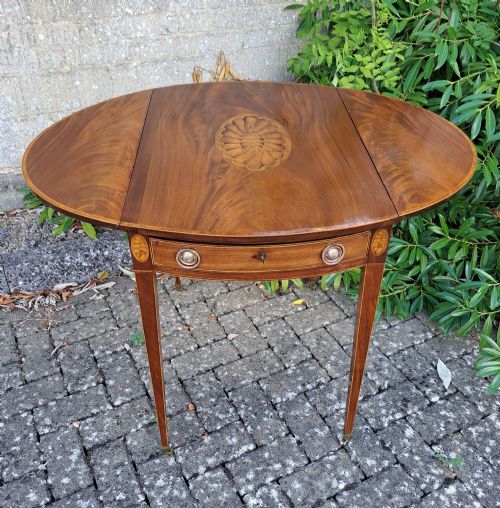
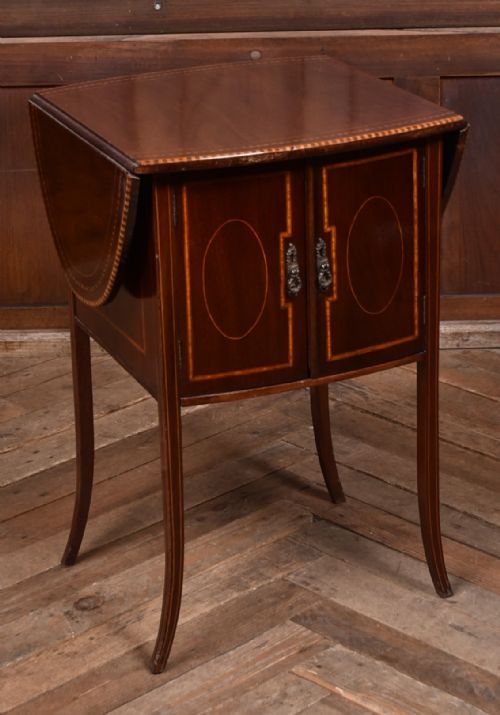
An inlaid mahogany pembroke table brings drop leaves and satinwood, boxwood or ebony details into a drawing room as an adaptable occasional surface.
Identifying the Inlaid Mahogany Pembroke Table
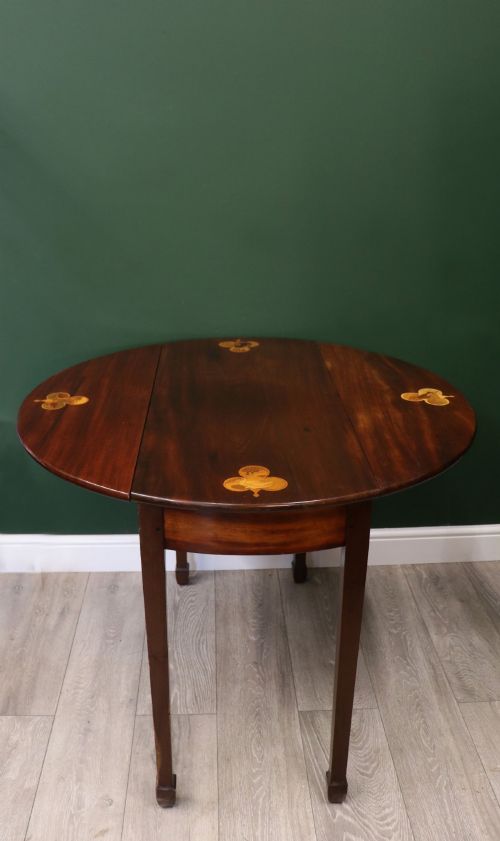
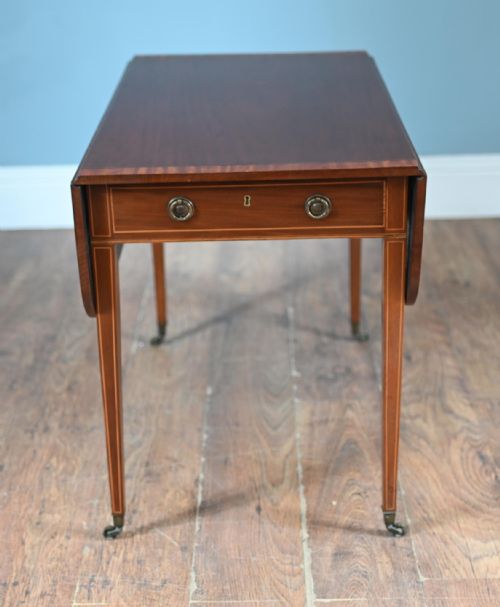
The inlaid mahogany pembroke table sits on four legs with hinged drop leaves, functioning as a side, lamp or occasional table in Georgian, Regency and Edwardian rooms. Most examples meet the eye either as rectangular forms or as oval Pembroke tables with tapering legs.
The archive shows these tables spanning the eighteenth century, the Georgian era, the Regency period and the Edwardian period. Makers adapted the drop flap design for breakfast, dining or drawing room use depending on the scale required.
Construction and Materials
The primary timber is mahogany, combined with contrasting satinwood, boxwood and ebony for inlay and line work. Brass fittings appear on selected pieces.
Joiners built these tables with drop leaves supported by hinged brackets, incorporating reeded legs or tapering supports depending on the period.
Retail Price Guide 2026
Typical UK retail prices for inlaid mahogany pembroke table, calculated from the Sellingantiques database of over a million retail prices indexed since 2003. This retail price guide relies exclusively on Sellingantiques data; no external sources or auction records are used, so the figures do not describe the wider market.
Listings include both Georgian and Edwardian periods, featuring mahogany paired with satinwood, boxwood and ebony inlay.
Assessing Craftsmanship and Distinction
Quality rests in the precision of the satinwood and boxwood inlay and the figuring of the mahogany timber. Finer pieces demonstrate careful attention to the grain alignment across the drop leaves and the crispness of reeded legs.
Proportion and scale separate standard occasional tables from finely executed butterfly and oval Pembroke forms. The integration of brass fittings and secondary woods further distinguishes the better examples.
The Inlaid Mahogany Pembroke Table Glossary
- Pembroke table
- A small occasional table featuring two hinged drop leaves on opposing sides. It typically includes one or two small drawers and stands on four legs.
- Drop flap
- A hinged leaf attached to the main top of a table that raises to extend the surface area. It lowers when not in use to save space.
- Satinwood
- A light yellowish timber used extensively for contrasting inlay and banding on dark woods like mahogany. It provides a bright decorative border.
- Line inlay
- A narrow strip of contrasting wood set flush into the surface to form geometric borders or outlines. Boxwood and ebony are common choices for this technique.
- Reeded legs
- Cylindrical table legs carved with parallel convex mouldings running vertically. This decorative treatment appears frequently on Regency and Edwardian furniture.
Frequently Asked Questions
How do I use a pembroke table today?
These tables function well as lamp tables, side tables or small desks in a sitting room. Raising one or both leaves allows the surface to expand when needed.
Their compact footprint makes them practical for spaces where a full-sized table proves too large. The drop leaves provide flexibility for daily living.
Are these tables sturdy enough for daily use?
The hinged brackets support the drop leaves when raised, though heavy weight should be avoided near the outer edges. Normal placement of lamps and books poses no difficulty.
Regular care of the mahogany surface keeps the timber conditioned. The drop flaps move easily on their original hinges when maintained correctly.
How do I distinguish Georgian from Edwardian examples?
Georgian pieces date from the eighteenth and early nineteenth centuries, exhibiting period timber characteristics and hand-cut joinery. Edwardian pieces often reflect earlier eighteenth-century designs while using later manufacturing methods.
Examining the secondary woods and construction details helps clarify the period of manufacture. Both eras produced fine inlaid mahogany versions.