

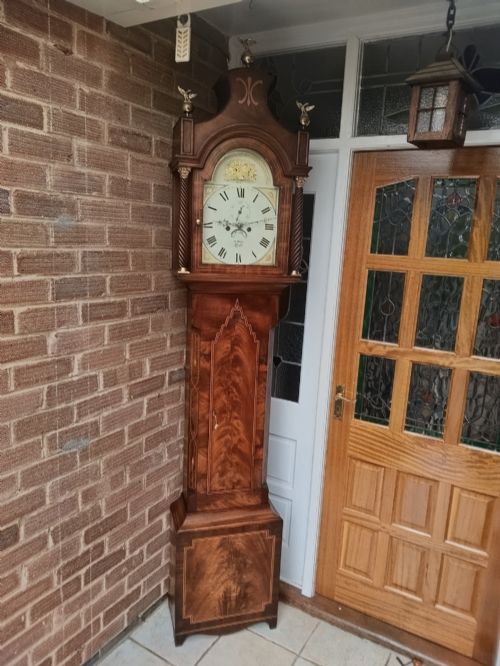
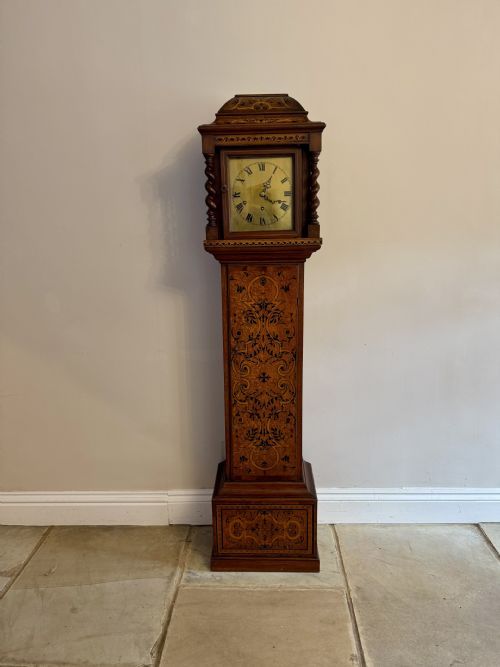


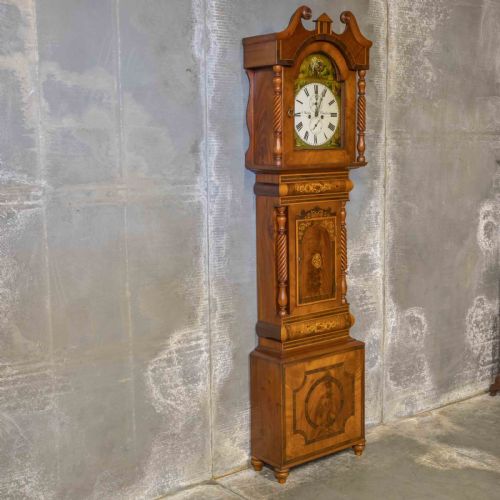


Inlaid Mahogany Longcase
An inlaid mahogany longcase clock anchors a room with mechanical precision and warm timber, carrying centuries of horological craft into a modern home.
Inlaid Mahogany Longcase
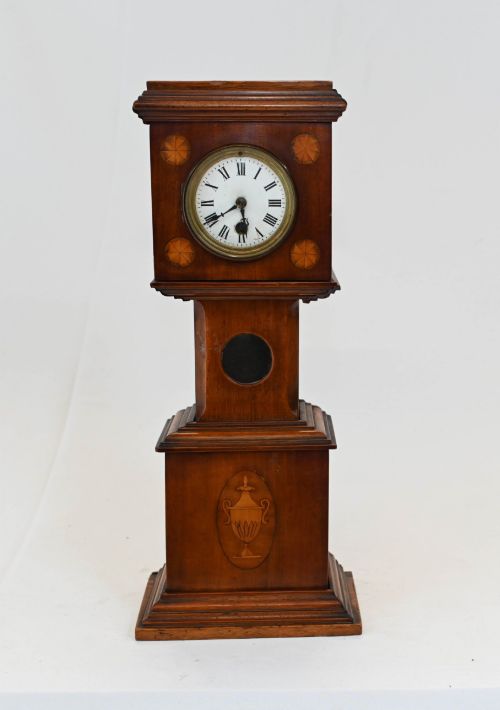
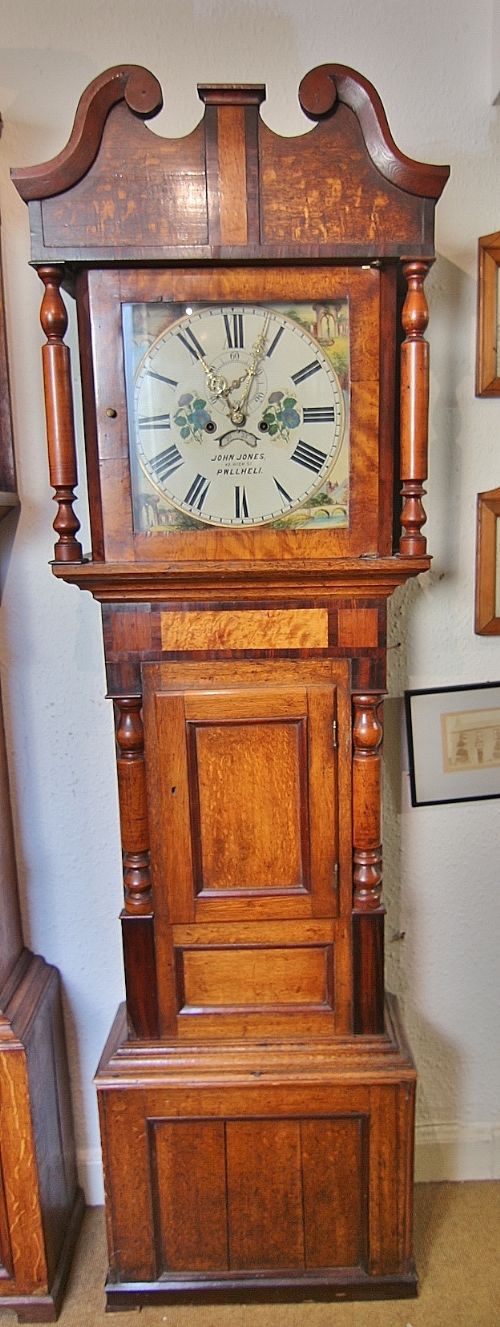
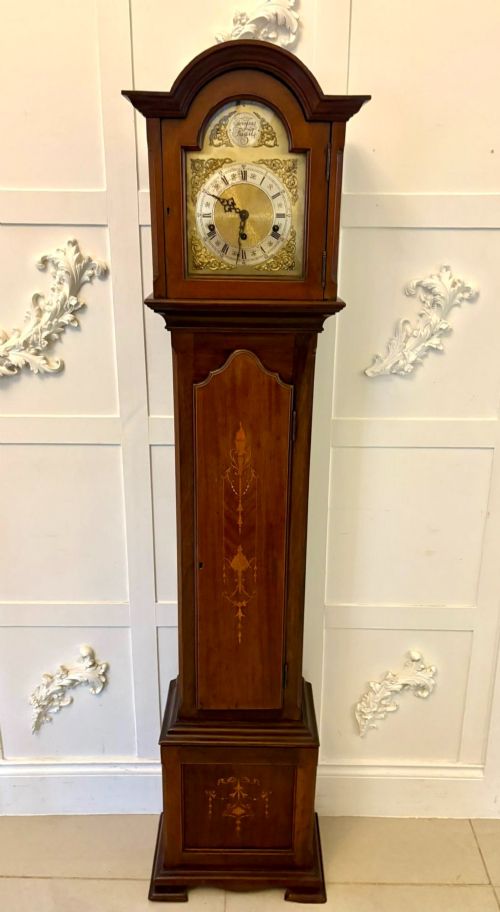
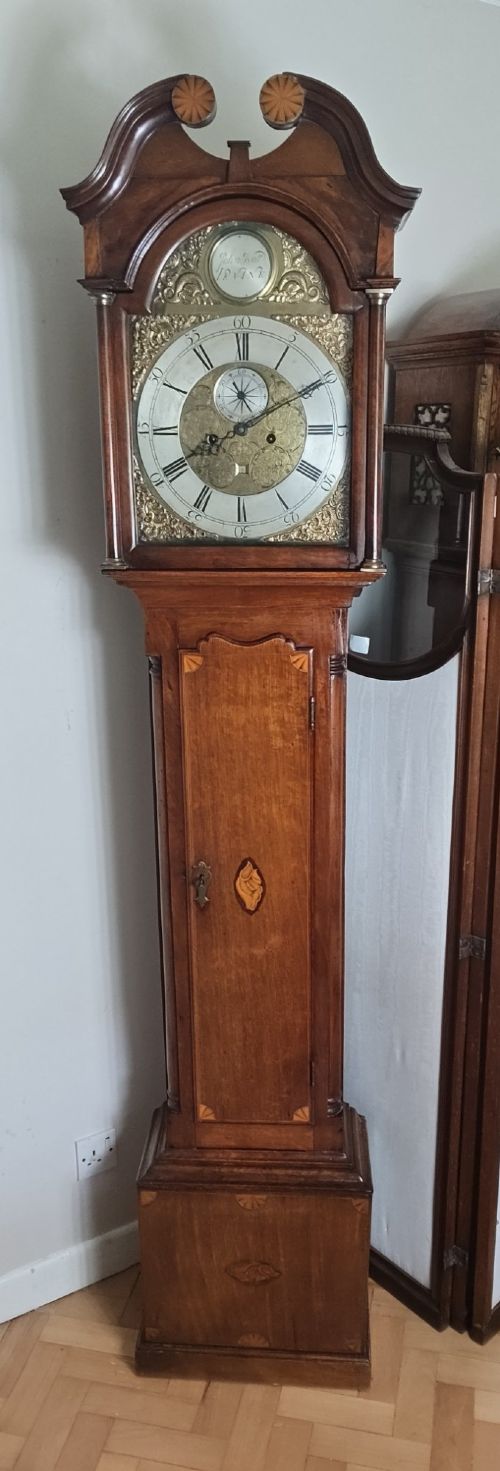
The search for an inlaid mahogany longcase yields tall floor-standing timepieces, frequently referred to as grandfather clocks, housing weight-driven movements within fitted wooden cases. These items emerge from Georgian, Regency, and Edwardian eras, spanning the eighteenth through the early twentieth centuries.
Most examples encountered here combine solid mahogany or flame mahogany casework with decorative satinwood inlay, often featuring brass or painted iron dials to indicate hours, minutes, and occasionally moon phases. Regional British and provincial makers signed many of these dials, reflecting local craftsmanship across England, Scotland, and Wales.
Alongside standard domestic proportions, the selection includes scaled-down variants such as miniature and grandmother clocks designed for compact spaces. Edwardian revivals and musical chiming versions also appear frequently, alongside earlier eighteenth-century prototypes.
What Varies in Quality
The sophistication of the movement largely dictates the standing of a piece, separating standard time-and-strike mechanisms from complex configurations featuring moon phase indicators, triple-weight chime trains, or quarter-striking capability. Signed dials by noted provincial or London makers also elevate the horological standing of the clock.
Cabinetwork standards diverge between simple linear framing and elaborate marquetry with finely preserved contrasting stringing and matched veneers. The crispness of the dial painting, the depth of the brass engraving, and the original proportions of the hood and trunk further define the grade of the piece.
Inlaid Mahogany Longcase Retail Price Guide 2026
Typical asking prices for inlaid mahogany longcase among the pieces listed under this phrase on Sellingantiques today, from the lower quarter to the upper quarter. They describe what is for sale here now, not the wider market.
Listings feature mahogany, satinwood inlay, brass, and painted iron across Georgian, Regency, and Edwardian periods.
John Denbigh Merton Park·William Moon London·David Morice Auchtermuchty·Benjamin Peers Chester·Thomas Lees Bury·Thomas De Gruchy Jersey·William Smith Keighley·Edward Glase Bridgnorth·Edward Renouf Jersey·Joseph Lum London·G Brown Edinburgh·Harford Bristol·Rowntree York·Ganz Swansea·Gustav Becker Germany·William Pridgin Hull·Charles Campbell Boness·Lott Barwise Cockermouth·J.O. Ingram Cardiff
The Inlaid Mahogany Longcase Glossary
- Moon dial
- A secondary semicircular dial showing the lunar cycle through painted phases. This rotating disc tracks the progress from new moon to full moon over twenty-nine and a half days.
- Paterae
- Small round or oval inlaid plaques resembling classical rosettes. Craftsmen used these decorative wooden motifs to punctuate corners and friezes on the case door.
- Marquetry
- Elaborate pictorial veneer work assembled from various tinted woods. Artisans cut intricate patterns of floral or scroll designs into the mahogany background.
- Flame mahogany
- Timber sliced from the fork of the tree where branches meet the trunk. This cutting method yields a distinctive feather-like grain pattern prized for cabinet fronts.
- Arch hood
- The curved upper section of the case enclosing the dial face. Glazed doors on these hoods allowed clear viewing of the engraved brass or painted iron plates.
Inlaid Mahogany Longcase: Frequently Asked Questions
How do I wind an eight-day longcase clock?
Use the winding crank to raise the hanging weights slowly via the arbors on the dial face, taking care not to over-wind the mechanism. Most eight-day movements require this action at regular weekly intervals to maintain accurate timekeeping.
Ensure you stop when resistance increases firmly to avoid damaging the internal chains or gut lines supporting the heavy metal weights.
Where should I place a grandfather clock at home?
Position the case against an interior wall away from direct sunlight, heating vents, and damp exterior stone to protect the mahogany timber. A stable, vibration-free floor ensures the pendulum swings evenly without throwing the escapement out of beat.
Use the adjustable feet or shimming beneath the plinth to plumb the case vertically so the second hand maintains an even beat.
How do I tell an 18th-century clock from an Edwardian copy?
Examine the construction of the movement plates, hand-cut gear teeth, and secondary softwood timbers inside the trunk for signs of age and hand-tool marks. Eighteenth-century models typically feature heavier brass castings and distinct regional dial signatures lacking modern machine stamps.
Edwardian revivals often display cleaner internal milling, standardised screws, and styles such as Chippendale revival or heavy Westminster chiming barrels.
Why does the clock strike incorrectly?
The rack and snail striking mechanism may have slipped out of synchronisation during transport or a hurried winding sequence. Letting the clock run down or manually advancing the minute hand past the hour points can reset the strike train.
Consult a professional horologist if the countwheel or rack lever jams repeatedly, as forcing the movement risks bending the internal brass teeth.