



Inlaid Wooden Floor Clock
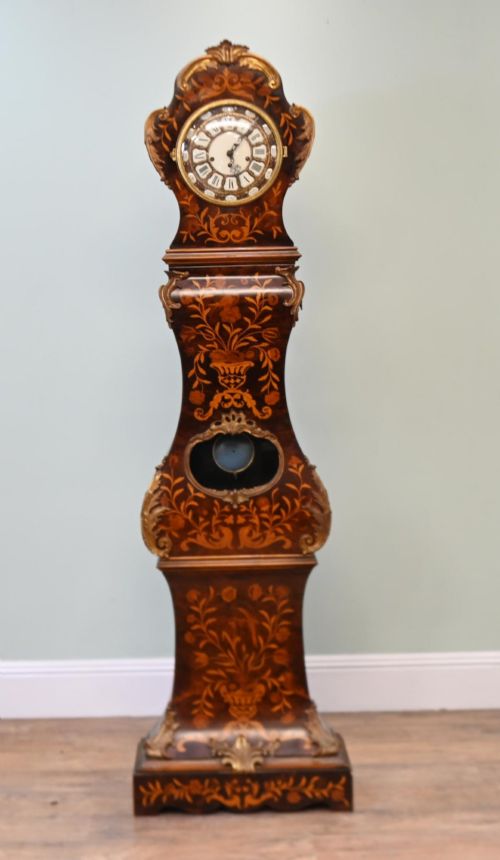
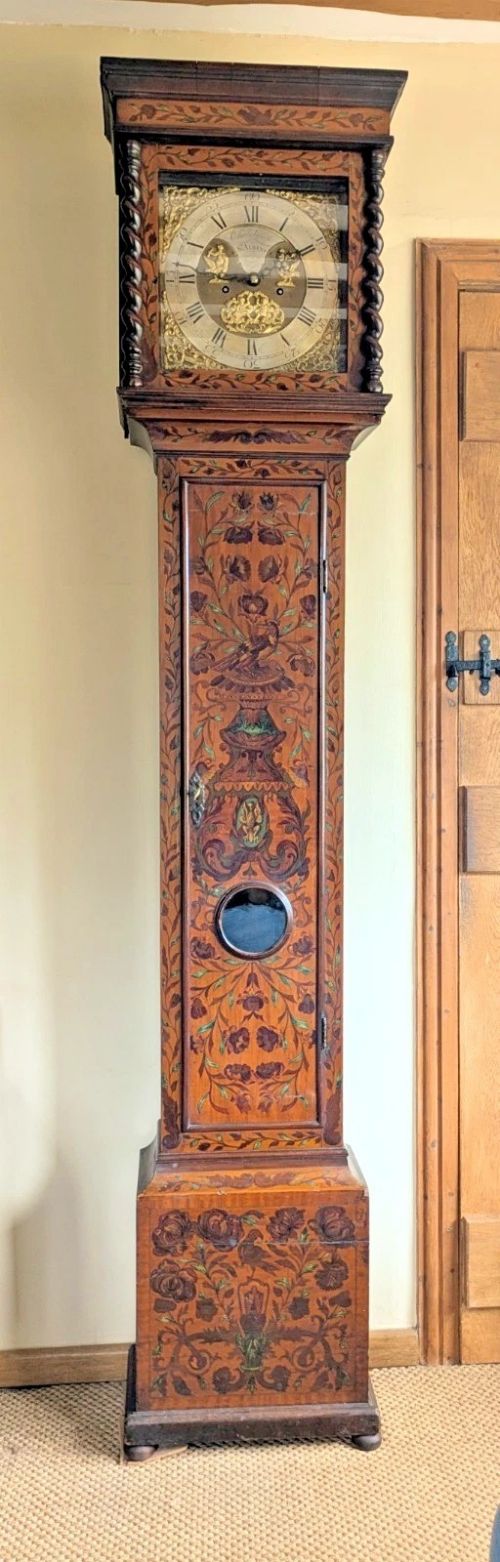
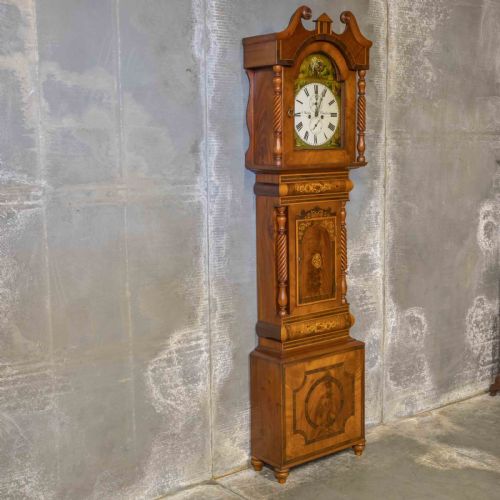
These inlaid wooden floor clock pieces combine architectural timber cases with precision timekeeping from Georgian and later eras, bringing traditional gravity-driven mechanics into domestic rooms.
Inlaid Wooden Floor Clock
The selections on this page appear in various timber forms, including mahogany, walnut, and oak bodies decorated with satinwood inlay and painted dials. Makers from regional workshops across Britain, such as Charles Louch in St. Albans and Benjamin Peers in Chester, built these tall timepieces to serve as both functional instruments and central room furniture.
How they were made
Cabinetmakers constructed these tall enclosures using hardwoods like mahogany, oak, and walnut, frequently applying contrasting satinwood inlay and marquetry panels to the trunk and hood. Glazed doors protect the painted dials and brass movements while allowing a clear view of the face and hands.
The interior mechanical systems rely on eight-day movements, chiming mechanisms, and moon dial complications driven by suspended weights and pendulums. Regional clockmakers housed these brass assemblies inside fitted timber cases built with traditional joinery.
Inlaid Wooden Floor Clock Retail Price Guide 2026
Typical asking prices for inlaid wooden floor clock among the pieces listed under this phrase on Sellingantiques today, from the lower quarter to the upper quarter. They describe what is for sale here now, not the wider market.
Listings feature timber cases in mahogany, walnut, and oak, incorporating satinwood inlay, brass fittings, and painted dials across Georgian and Edwardian periods.
What varies in quality
The refinement of the timber work and the complexity of the dial distinguish finer examples from standard production. Rich marquetry patterns, detailed satinwood inlay, and well-executed painted dials indicate superior craftsmanship in the case and face.
Charles Louch St Albans·Benjamin Peers Chester·Edward Renouf Jersey
The Inlaid Wooden Floor Clock Glossary
- Longcase clock
- A tall, weight-driven pendulum clock enclosed in a wooden case standing directly on the floor. This traditional form is frequently called a grandfather clock.
- Marquetry
- Decorative veneer work arranged in intricate patterns using various coloured woods. Artisans applied these detailed pictorial designs to the exterior surfaces of clock cases.
- Moon dial
- A specialised clock face mechanism that tracks the phases of the lunar cycle. This feature typically appears within an arched aperture above the main time dial.
- Satinwood inlay
- Contrasting light-colored timber inserts set flush into the primary wood surface of the case. It creates decorative borders and geometric framing around the door and trunk.
- Painted dial
- A metal face decorated with hand-painted numerals, floral corners, and maker signatures. These replaced engraved brass dials during the later periods.
Inlaid Wooden Floor Clock: Frequently Asked Questions
What is an inlaid wooden floor clock?
These tall timepieces combine a weight-driven mechanical movement with a wooden case decorated with contrasting timber inlays. They stand directly on the floor and house a swinging pendulum.
Cabinets take the form of longcase or grandfather clocks constructed in mahogany, oak, or walnut. Makers often incorporated painted dials and decorative marquetry panels into the design.
How do you wind these clocks?
Most eight-day movements require the heavy brass weights to be pulled back up using a winding key inserted into holes on the dial face. This action resets the drop for the pendulum mechanics.
Care must be taken not to overwind the mechanism when the weights reach the top of their internal track. Regular winding keeps the timekeeping consistent.
Where were these clocks made?
Regional workshops across Britain and the Channel Islands produced these tall timepieces during the Georgian, Regency, and Edwardian eras. Local horologists often signed the painted or brass dials.
Cabinetmakers built the timber cases locally or sourced them from specialised joinery shops. Regional signatures connect specific clocks to towns like Chester, St Albans, and Jersey.
How do I tell periods apart?
Georgian and Regency examples tend to feature classic mahogany proportions with simpler banded inlays and brass or painted dials. Edwardian pieces often display heavier marquetry decoration and chiming mechanisms.
Victorian and later nineteenth-century versions utilise darker oak or walnut timbers. Examining the dial style and timber choice helps identify the manufacturing period.
How do I care for the case?
Wooden floor cases need stable room environments away from direct heat sources and dramatic humidity changes to protect the timber and inlay. Regular dusting with a dry cloth maintains the surface finish.
Movement servicing by a professional horologist every few years ensures the internal brass gears and weights continue to function smoothly without undue wear.