
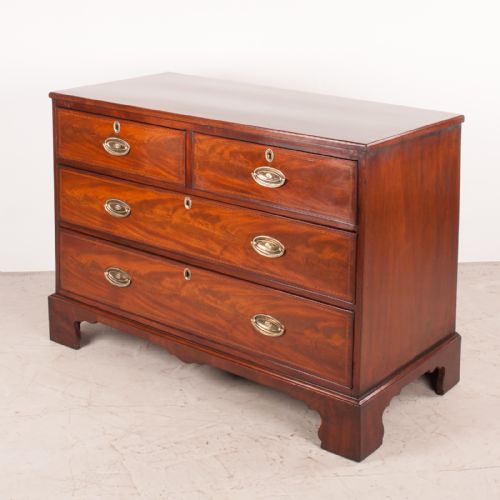
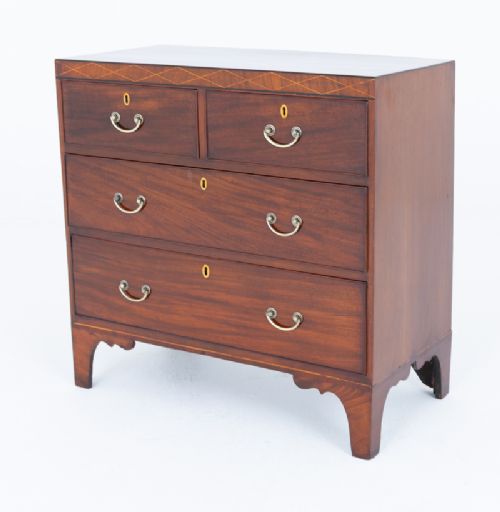
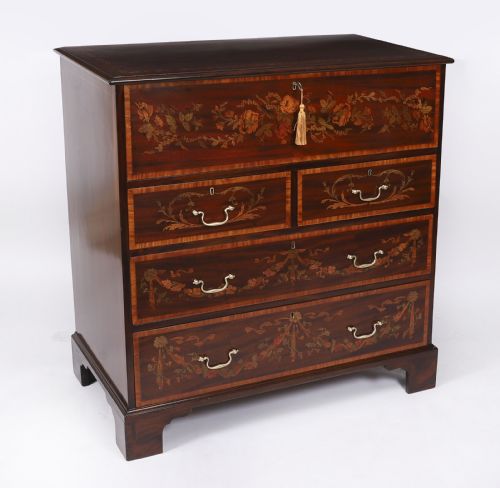
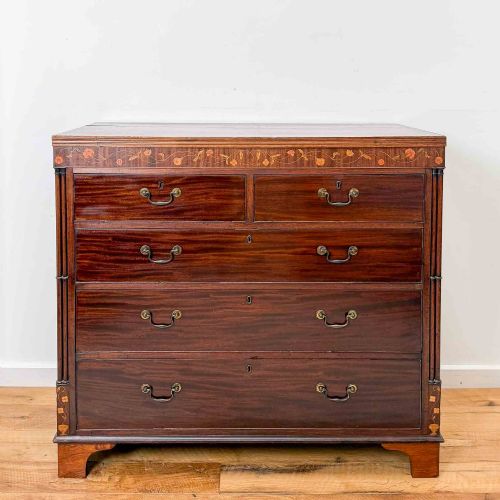


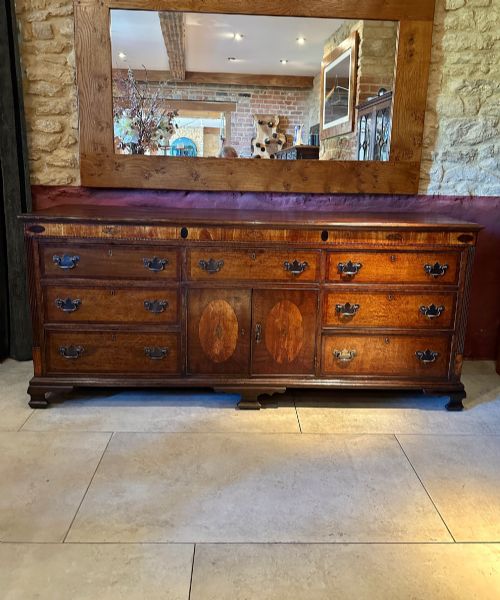
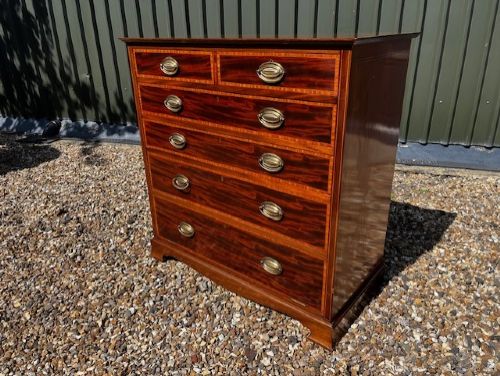
Inlaid Mahogany Dresser
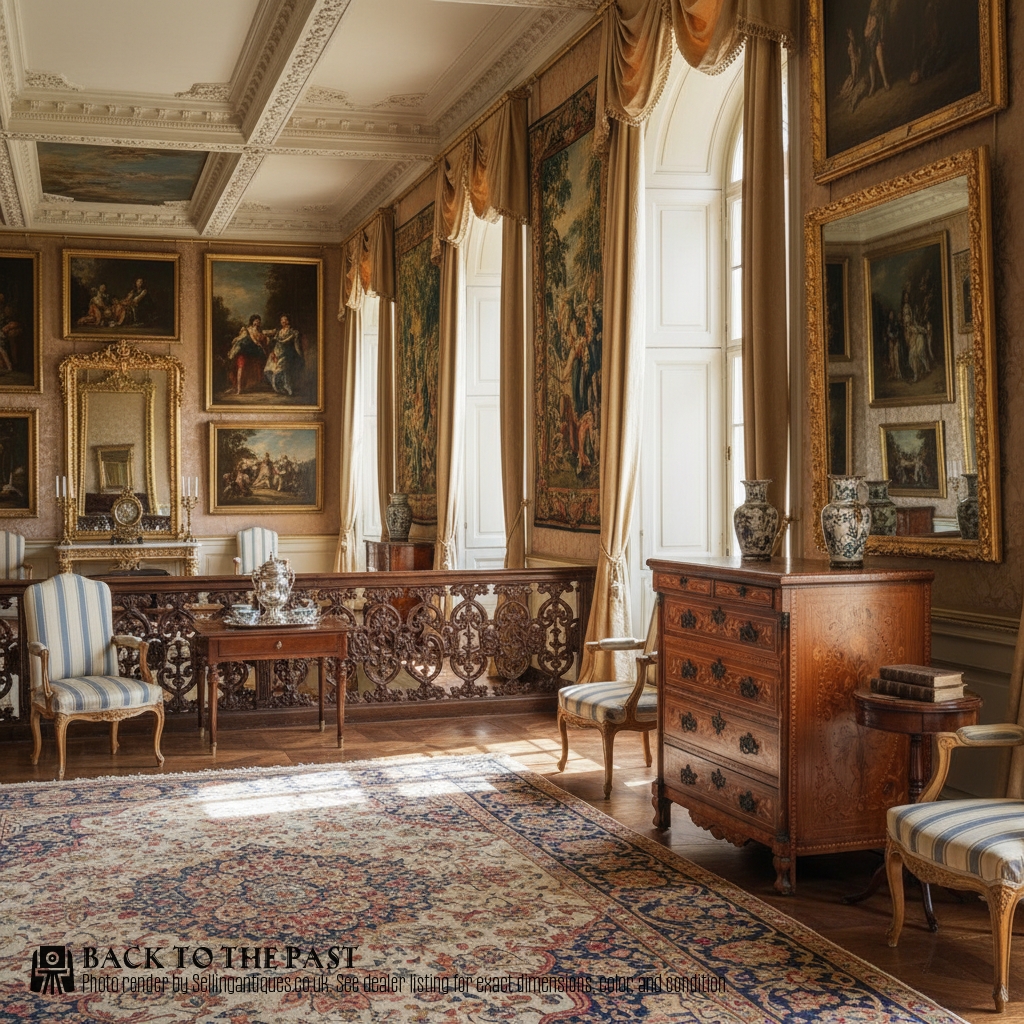
An inlaid mahogany dresser brings rich timber figures and fine contrasting lines into a room, offering practical storage with distinct period elegance.
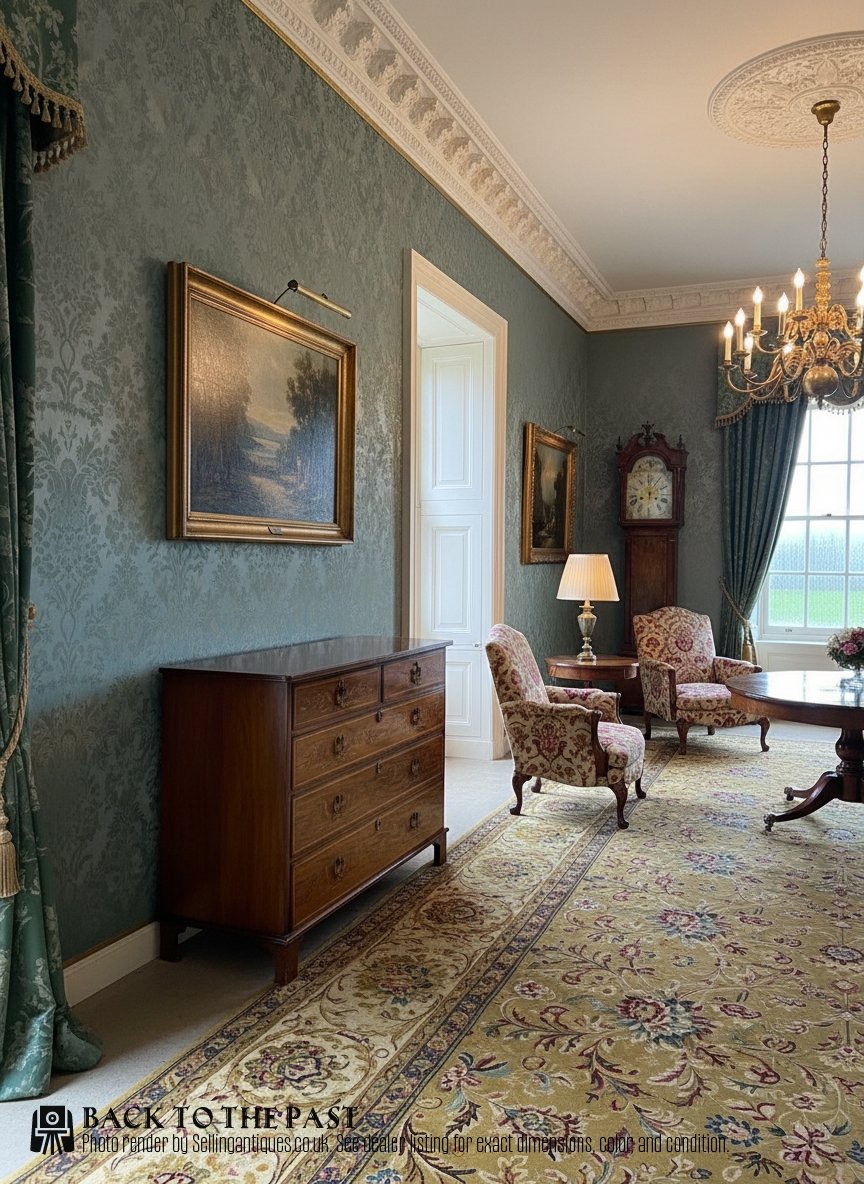
Inlaid Mahogany Dresser
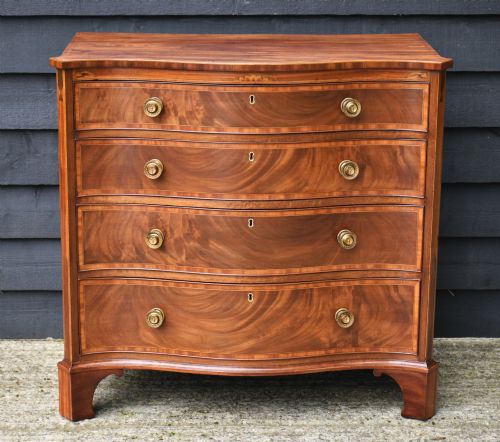
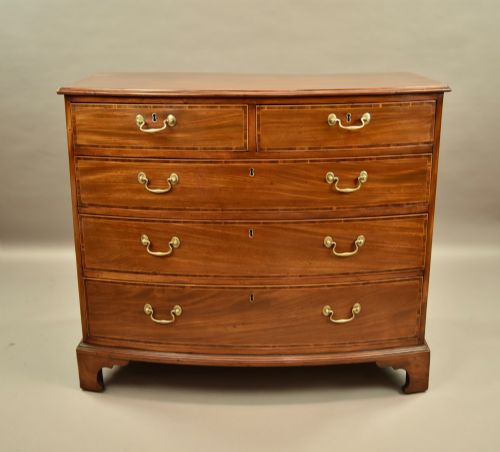
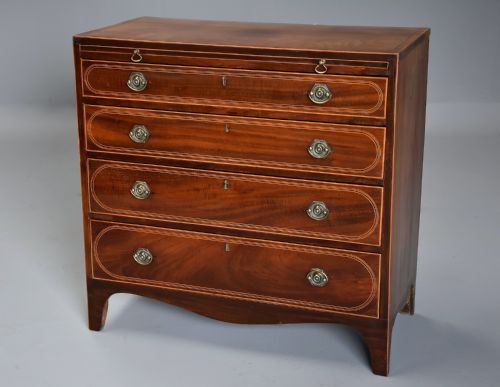
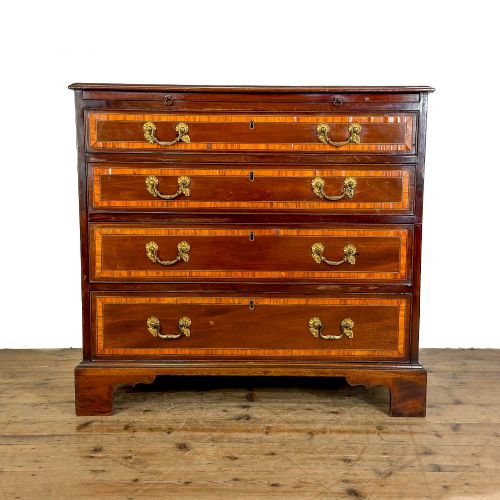
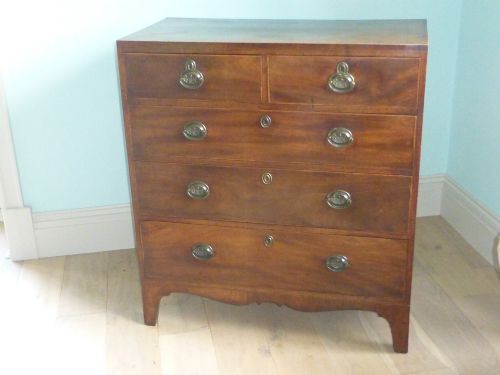
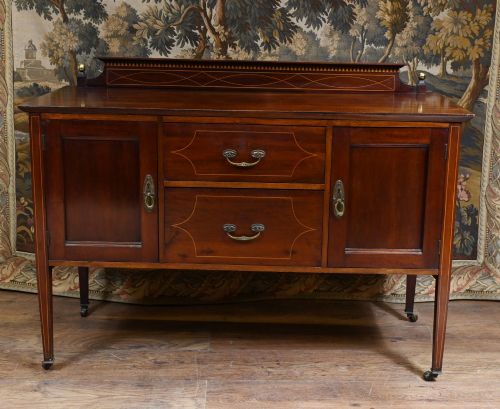
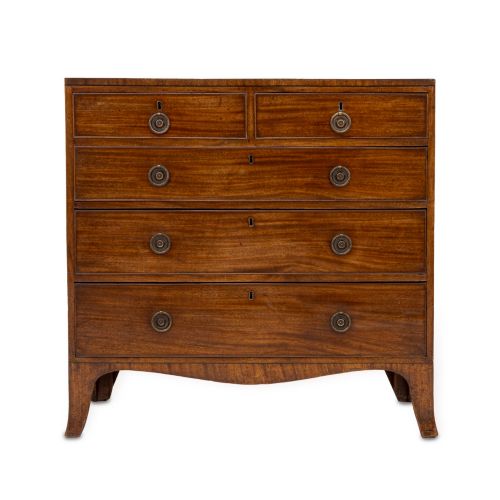
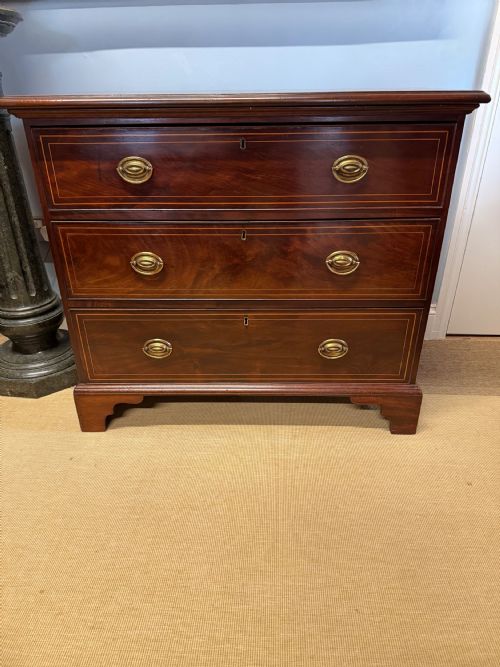
When you search for an inlaid mahogany dresser, you encounter pieces that span the Georgian, Regency, Victorian, and Edwardian periods. Most items appearing under this heading are chests of drawers, alongside sideboards, servers, and dresser bases.
The forms range from straight-fronted carcases to serpentine and bowfront shapes, often standing on bracket feet or slender legs. These examples reflect the changing domestic needs and stylistic shifts from the eighteenth century through to the early twentieth century.
Makers and workshops of the past utilised native and imported hardwoods to construct storage furniture that served bedrooms, dining rooms, and hallways. The surviving stock demonstrates a persistent preference for mahogany combined with lighter decorative borders.
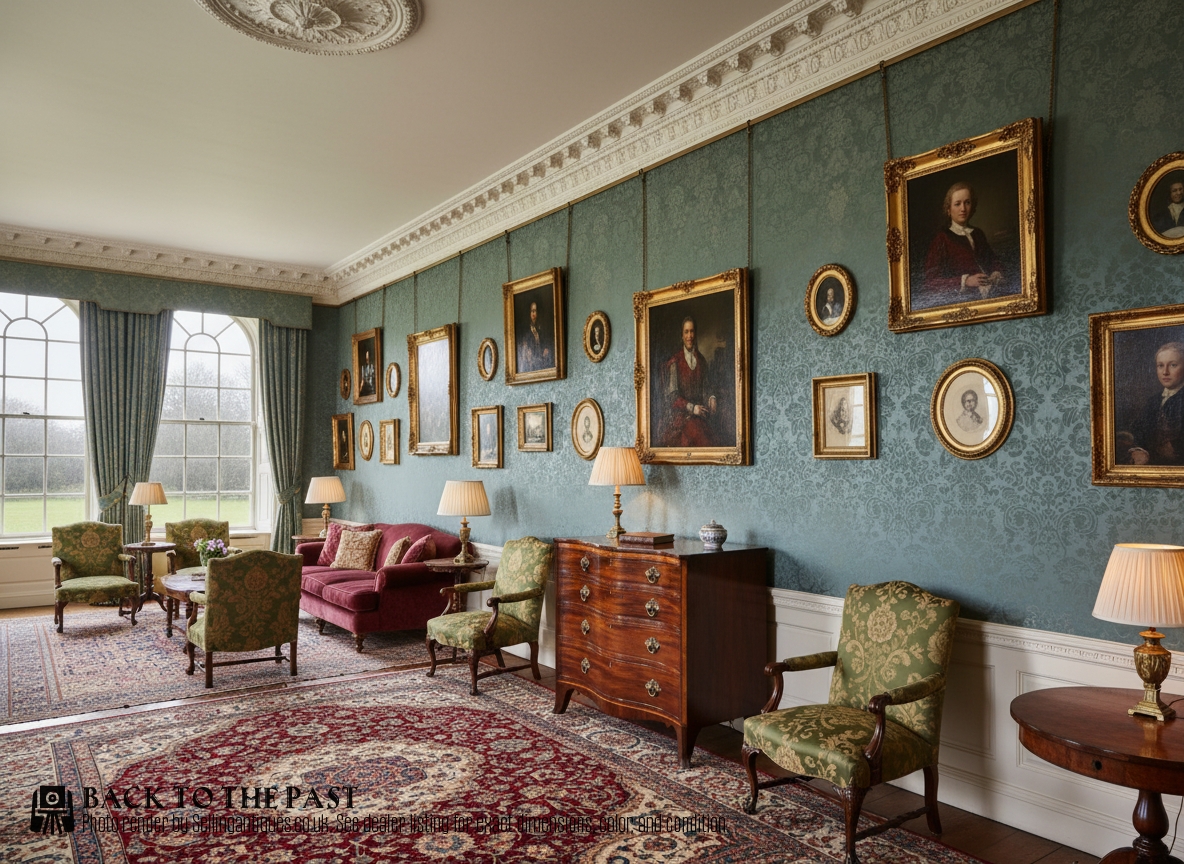
Materials and construction methods
Makers built the primary carcase and drawer fronts from solid or veneered mahogany, a dense and stable timber that accepted rich polishing. Secondary woods such as oak or pine appear in drawer linings and internal framing.
Workshops applied contrasting timbers like boxwood, satinwood, and ebony as stringing, banding, and floral inlays to break up dark surfaces. Cabinetmakers secured these decorative elements into shallow channels cut directly into the mahogany ground.
Hardware such as brass handles and escutcheons complemented the timber tones, while specialised techniques like marquetry and crossbanding created complex pictorial or geometric panels on select surfaces.
Inlaid Mahogany Dresser Retail Price Guide 2026
Typical asking prices for inlaid mahogany dresser among the pieces listed under this phrase on Sellingantiques today, from the lower quarter to the upper quarter. They describe what is for sale here now, not the wider market.
Some chests hide secret locking drawers behind top mouldings, keeping valuable papers safe from wandering household staff.
Factors that distinguish the work
The precision of the cabinetwork and the crispness of the inlay define the standard of a piece. Finer examples display tightly fitted dovetails, uniform drawer linings, and sharply defined floral or linear banding without gaps.
Druce & Co·Mawer & Stephenson
The Inlaid Mahogany Dresser Glossary
- Inlay
- The technique of inserting pieces of contrasting material into a depressed wooden ground to form a decorative pattern. This adds visual complexity to drawer fronts and top surfaces.
- Satinwood
- A pale, lustrous timber from the tropics frequently employed for contrasting inlay work and banding. Its yellow hue stands out sharply against dark mahogany.
- Serpentine
- A furniture front curved in a wave shape, convex in the centre and concave at the sides. This contour requires skilled carpentry to execute successfully.
- Crossbanding
- A border veneer applied around the edges of a panel where the grain runs perpendicular to the centre. It frames the main surface of a drawer or top.
- Caddy top
- A raised or moulded tabletop style with a stepped profile reminiscent of tea caddies. It is a common feature on late eighteenth-century chests.
Inlaid Mahogany Dresser: Frequently Asked Questions
What is an inlaid mahogany dresser?
An inlaid mahogany dresser typically refers to a chest of drawers, sideboard, or dresser base constructed from mahogany and decorated with contrasting wood inlays.
These pieces combine functional storage with decorative cabinetwork spanning multiple historical periods.
How do I date a mahogany chest?
Dating relies on observing construction methods, timber choice, handle styles, and overall proportions across periods like the Georgian or Victorian eras.
Earlier pieces often feature hand-cut dovetails and solid timber carcases, while later revivals adopt specific stylistic revivals from the nineteenth and twentieth centuries.
Where were these pieces used?
They served primarily in private residences as bedroom storage for clothing or dining room furniture for serving food and storing tableware.
Sideboards and servers populated formal dining spaces, whereas chests of drawers found places in bedrooms and private chambers.
How do I care for mahogany furniture?
Maintenance involves keeping the timber away from direct heat sources and strong sunlight to prevent the polish and wood from drying out.
Applying a suitable wax polish occasionally helps preserve the sheen and moisture of the mahogany surface.