
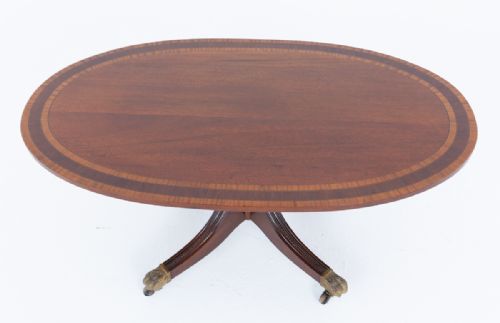


Inlaid Mahogany Center Table
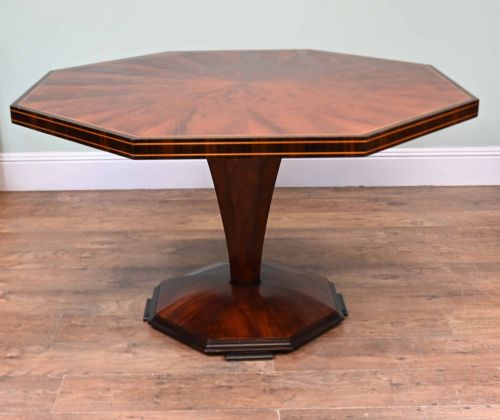
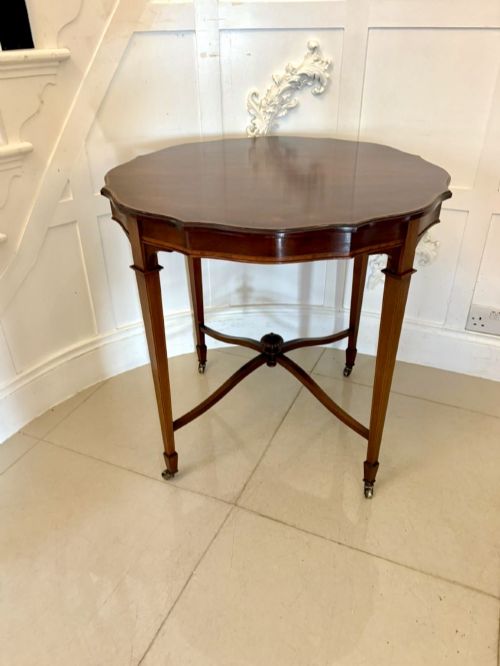
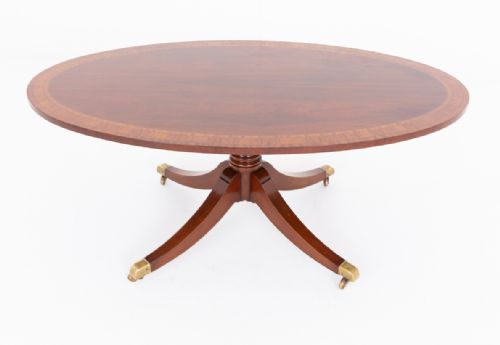
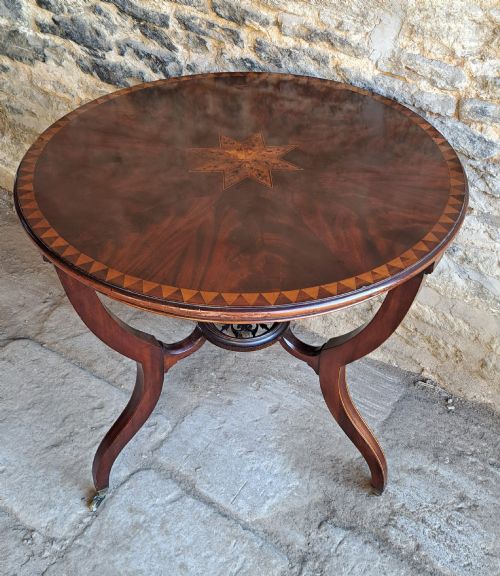
An inlaid mahogany centre table brings architectural presence to a room, offering rich timber grain combined with delicate contrasting stringing and marquetry.
Inlaid Mahogany Center Table
An inlaid mahogany centre table stands as a freestanding piece designed to be viewed from all sides within a room. The selections range from George III and Regency periods through to Victorian, Edwardian, and Sheraton Revival iterations.
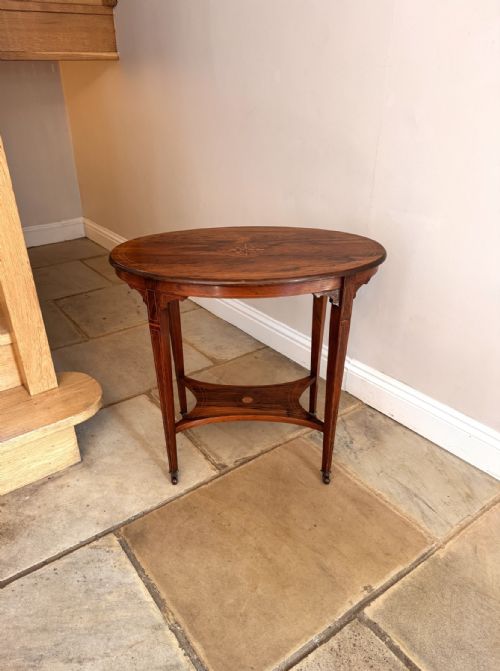
The physical forms include circular pedestal tables, oval occasional tables, drum tables with fitted tops, and rectangular library formats. Buyers regularly encounter Edwardian satinwood-inlaid examples and Victorian pedestal centre tables on this page.
Materials and Construction
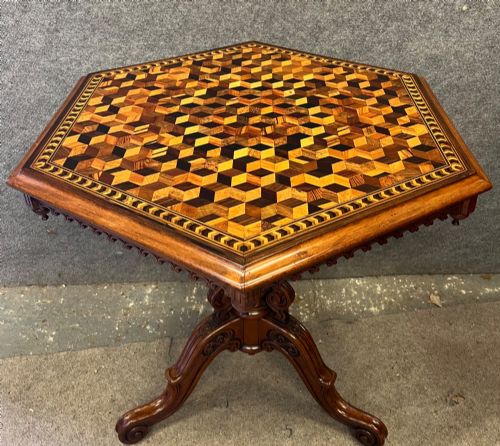
Makers utilised solid and veneered mahogany as the primary structural timber, frequently selecting flame mahogany to yield striking, figured grain patterns across the top surface. Contrast is introduced through delicate inlays of satinwood, boxwood, and ebony.
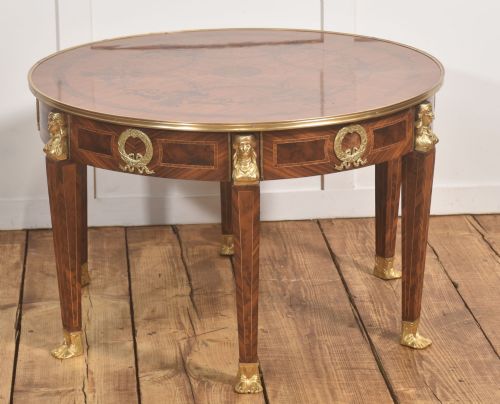
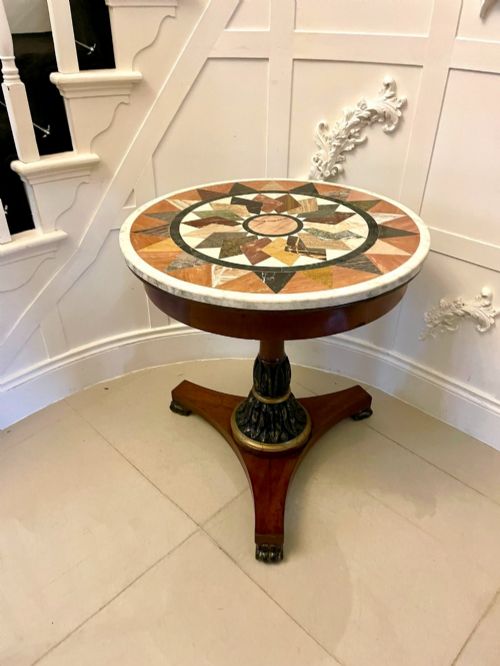
Many examples incorporate brass stringing and mounts, whilst specialised iterations feature inset specimen marble or pietra dura panels. Marquetry and parquetry techniques build complex geometric and floral motifs into the timber surface.
Several tables feature inlaid zodiac symbols, ensuring your occasional surface doubles as an astronomical map.
Evaluating Craftsmanship
The standard of an inlaid mahogany centre table rests upon the crispness of the timber inlay and the depth of the mahogany figure. Superior pieces display seamless integration of contrasting woods without gaps or clumsy filler.
Structural integrity of the pedestal base, the precision of the turning on pillars, and the weight of materials such as marble or brass elevate an example from utilitarian furniture to high-status cabinet work.
Maples and Co·Francoise Linke·A Beurdeley·Woodley family
The Inlaid Mahogany Center Table Glossary
- Marquetry
- Decorative veneer work forming pictures or patterns using different woods, shells, or ivory. This technique creates elaborate floral or pictorial designs across the table top.
- Satinwood
- A pale, lustrous timber imported from the tropics, utilised extensively for contrasting inlay and stringing lines. It provides a bright golden counterpoint to dark mahogany.
- Pietra dura
- Inlay technique using cut and fitted polished coloured stones to create images. These panels appear on Grand Tour and Victorian tables.
- Drum table
- A circular library table with a deep top containing drawers, resembling the shape of a drum. They rest on a central pillar with spreading legs.
- Stringing
- Thin lines of contrasting wood inlaid into channels in the furniture surface. It frames the perimeter and geometric sections of table tops.
Inlaid Mahogany Center Table: Frequently Asked Questions
Where should I place a centre table?
A centre table is designed to stand free in the middle of a room rather than against a wall. This allows access from all sides and showcases the timber grain and inlay work fully.
In modern rooms, they function effectively as large lamp tables or focal points in spacious hallways and libraries.
How do I care for mahogany and inlay?
Maintain mahogany surfaces with traditional beeswax rather than modern silicone sprays, applying polish sparingly with a soft cloth. Protect the timber and delicate stringing from direct sunlight and extreme humidity fluctuations.
Marble-topped variants require gentle cleaning with damp cloths and mild soap to preserve the stone polish without damaging surrounding wood.
How do I distinguish Sheraton Revival from original George III?
Sheraton Revival pieces date from the late nineteenth century and draw inspiration from eighteenth-century designs. They exhibit lighter construction methods and typical Victorian or Edwardian secondary timbers beneath the mahogany veneer.
Original George III examples display eighteenth-century construction techniques, hand-cut dovetails in the drawers, and period-appropriate internal oak or pine framing.