
Brown Mahogany Center Table
A brown mahogany centre table anchors a room with rich timber warmth and versatile scale, drawing the eye naturally to its freestanding form.
Brown Mahogany Center Table
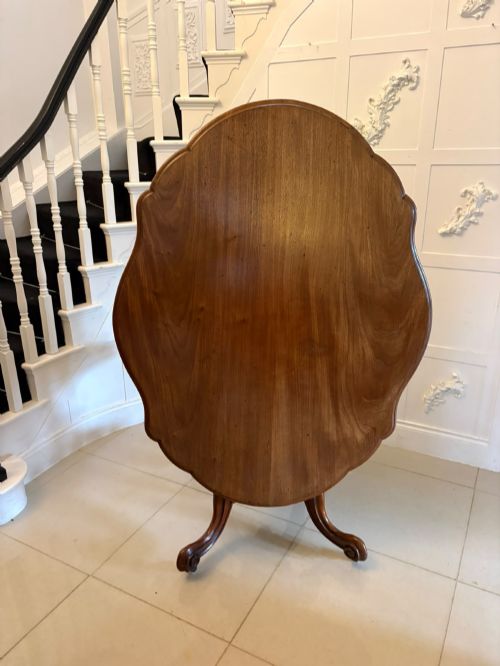
A brown mahogany centre table serves as a freestanding focal point designed to sit in the middle of a room rather than against a wall. When searching for a brown mahogany centre table, buyers encounter forms spanning from the Georgian and Regency periods through the Victorian era and into the early twentieth century.
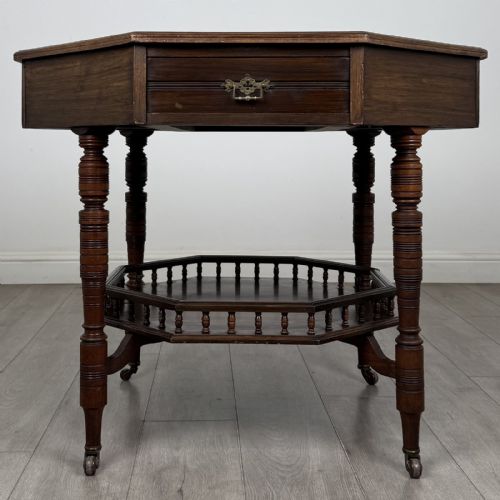
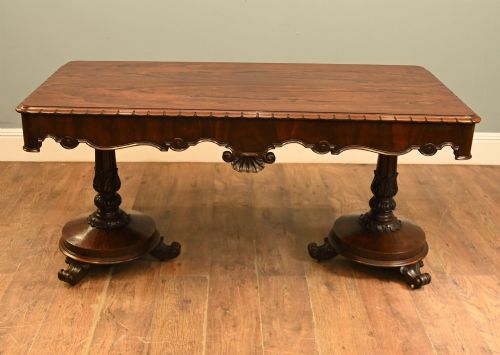
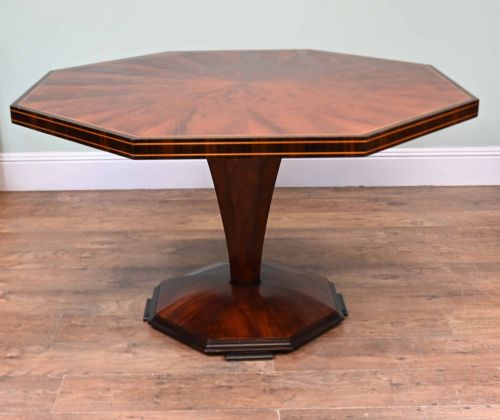
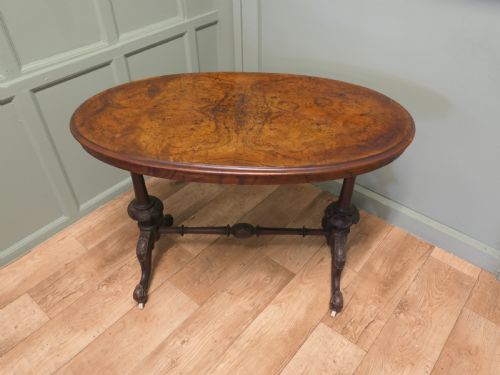
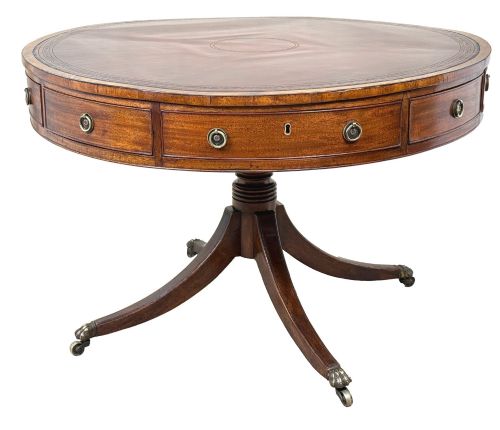
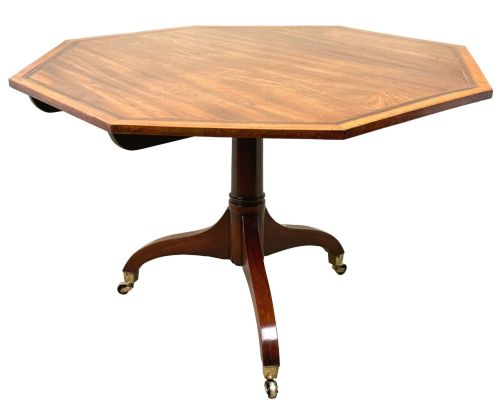
The selection includes circular breakfast tables, tilt-top dining pieces, drum tables, and smaller lamp or occasional tables. Many examples incorporate pedestals with tripod or platform bases, while others take rectangular, oval, or octagonal shapes suited to varied domestic spaces.
Originating from English workshops as well as French and Scandinavian makers, these tables utilise rich timbers. Buyers are most likely to meet nineteenth-century Victorian and Regency iterations featuring figured veneers and central pillars.
How they were made
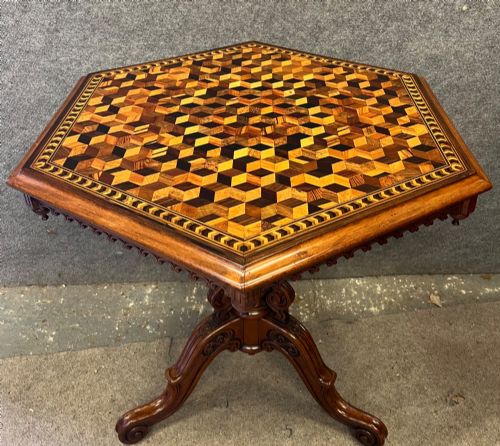
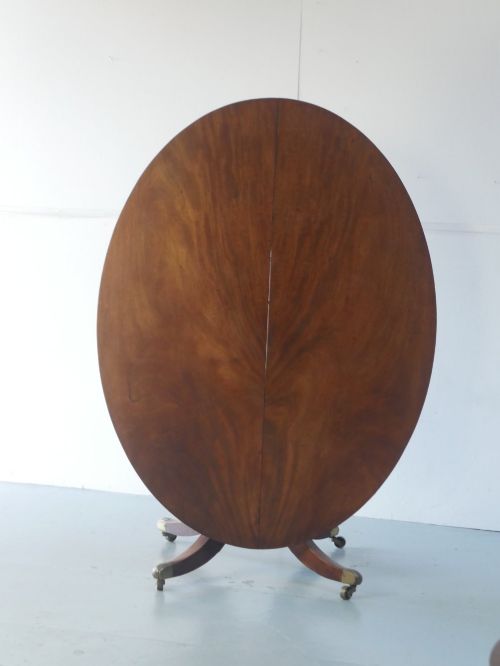
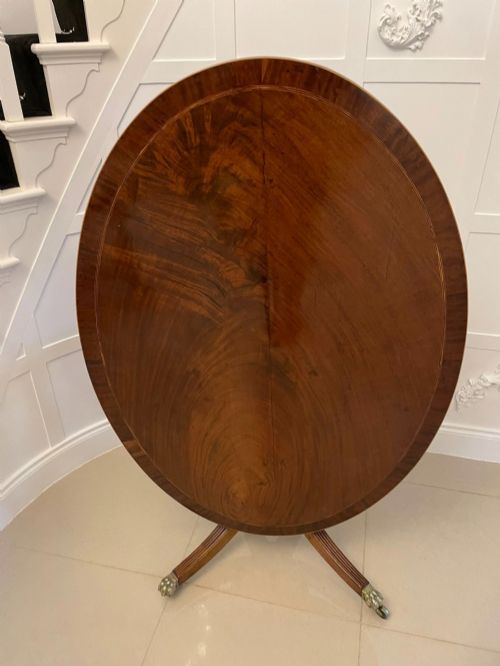
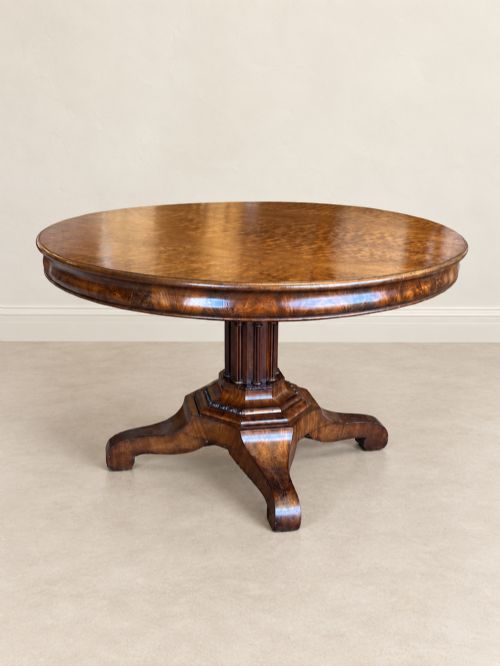
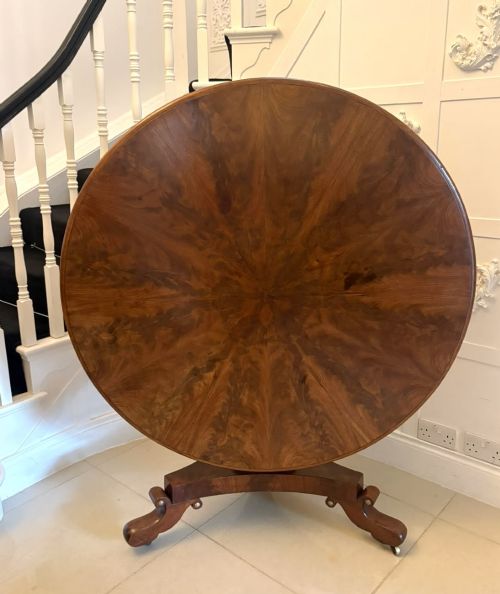
Cabinet makers built these tables using solid mahogany and applied veneers such as flame mahogany or plum pudding mahogany over supportive secondary woods. Timber selection allowed craftsmen to create striking grain patterns across circular and oval tops.
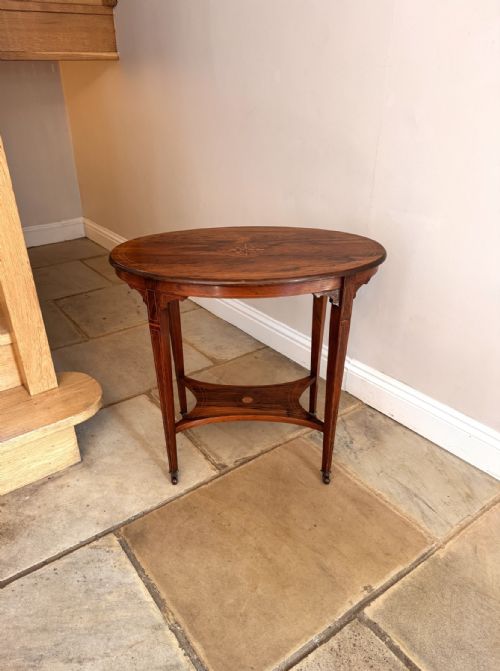
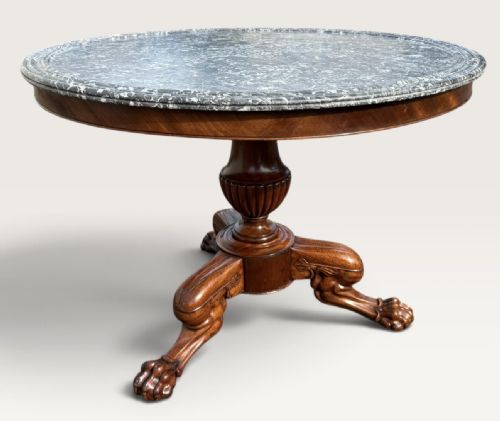
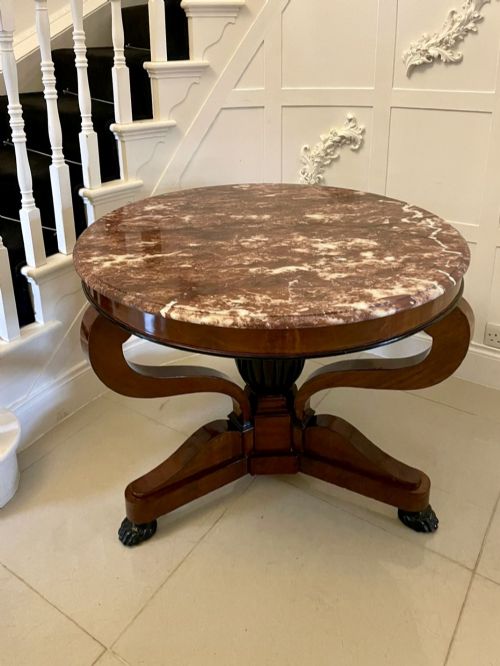
Many high-status examples incorporate contrasting inlay materials like satinwood, alongside brass mounts, ormolu details, and turned pillars. Marble tops feature on several French gueridon forms, paired with heavy timber bases.
Construction methods include drop-leaf mechanisms, tilt-top actions with brass catches, and central pedestals resting on tiered or claw feet. Joinery relies on traditional techniques designed to support heavy timber surfaces without warping.
Listings feature mahogany, marble, brass, and leather across periods from the Georgian era to the early twentieth century.
What varies in quality
The degree of figuration in the mahogany veneer dictates much of the visual appeal, with richly patterned flame mahogany commanding greater attention than plain stock. Crossbanding and delicate satinwood inlay require precise hand-cutting that separates standard workshop production from finer cabinet work.
Structural integrity depends on the stability of the central pillar and the alignment of the base, particularly on tilt-top and heavy marble-topped variants where weight distribution is critical. Original hardware, such as brass castors and pivoting mechanisms, preserves the functional integrity intended by the maker.
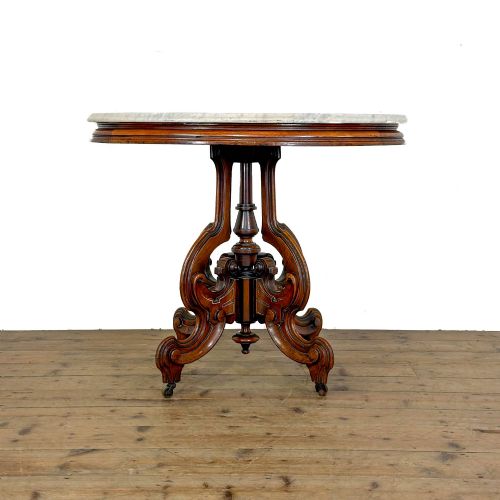
Proportion and execution of carved details on pedestals and feet reflect the skill of the original workshop. Finer pieces maintain crisp moulding profiles and harmonious dimensions that balance the weight of the timber top.
Gillows·JACOB
The Brown Mahogany Center Table Glossary
- Gueridon
- A small French round table, frequently standing on a central column and often fitted with a marble top. These tables originated in the seventeenth century and remained popular through the Empire and Victorian periods.
- Tilt-top
- A table mechanism allowing the surface to pivot to a vertical position when not in use, saving floor space. This construction is common on nineteenth-century breakfast and dining tables.
- Drum table
- A circular library or writing table with a deep top containing drawers around the circumference, usually supported by a single central pillar and tripod base. They date prominently to the Regency period.
- Crossbanding
- A border technique where veneer strips are laid perpendicular to the main grain of the table top, creating a framed effect. Cabinet makers used contrasting timbers to highlight the perimeter.
- Satinwood
- A durable, yellow-brown timber utilised for stringing and decorative inlay work on eighteenth and nineteenth-century furniture. Its bright tone contrasts sharply with dark mahogany.
Brown Mahogany Center Table: Frequently Asked Questions
How were centre tables used historically?
Historically, a brown mahogany centre table stood in the middle of a grand parlour or library to hold lamps, books, or decorative objects. Unlike dining tables pushed against walls, these pieces remained accessible from all sides.
In domestic interiors, they also functioned as impromptu writing desks or surfaces for serving morning breakfast when fitted with tilt-top mechanisms.
How do I identify a Regency table?
Regency tables, dating roughly from the early nineteenth century, typically exhibit classical architectural influences such as reeded pillar supports and brass paw feet. The mahogany often displays deep, rich patination accumulated over decades of use.
Look for robust circular or drum configurations featuring subtle brass inlay or crossbanded borders rather than heavy Victorian carved ornamentation.
Can I use a tilt-top table daily?
A tilt-top table functions reliably for daily use provided the locking catch and under-mechanism remain secure. The pivoting design allows the table to store flat against a wall when floor space is required.
Care should be taken when releasing the catch to protect the wooden rule joints and support blocks from sudden impacts.
What is flame mahogany?
Flame mahogany is a veneer cut from the fork of the mahogany tree where the branch meets the trunk, producing a distinctive ripple pattern resembling flickering fire. Cabinet makers prized this timber for central table surfaces to create dramatic visual movement.
Because of its thin nature, veneer requires careful handling to preserve the polished surface over generations.