
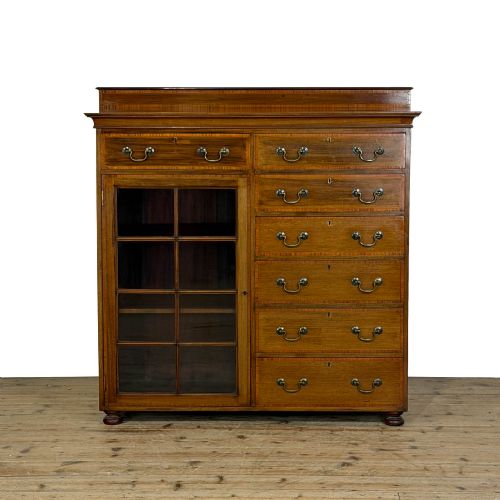
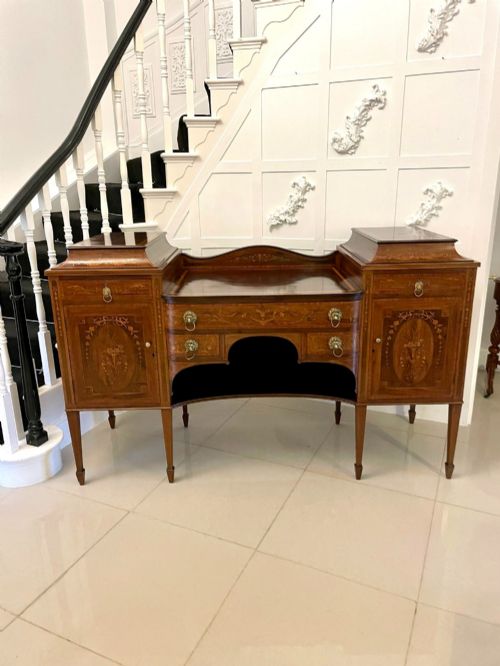
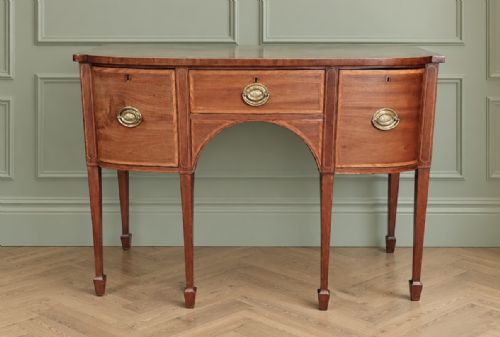
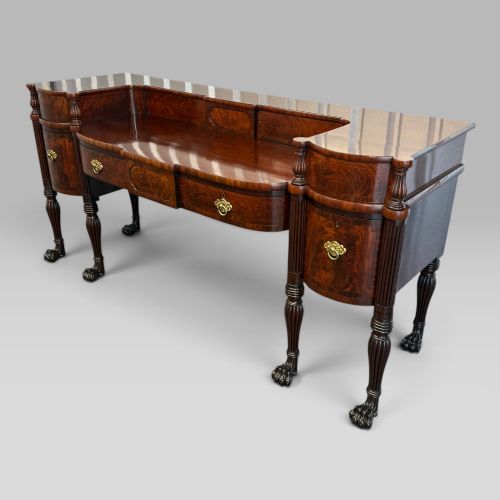
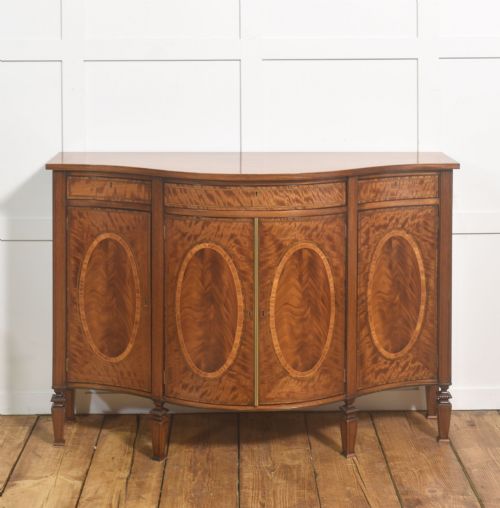
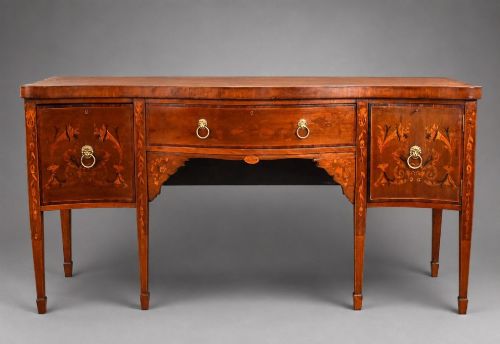
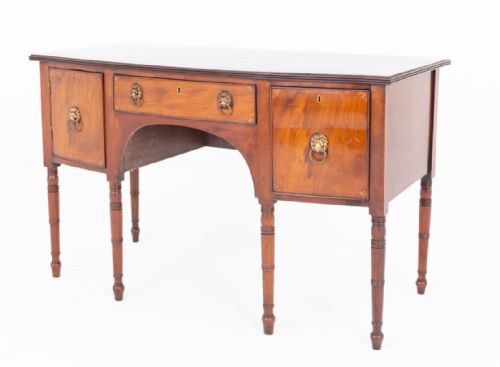

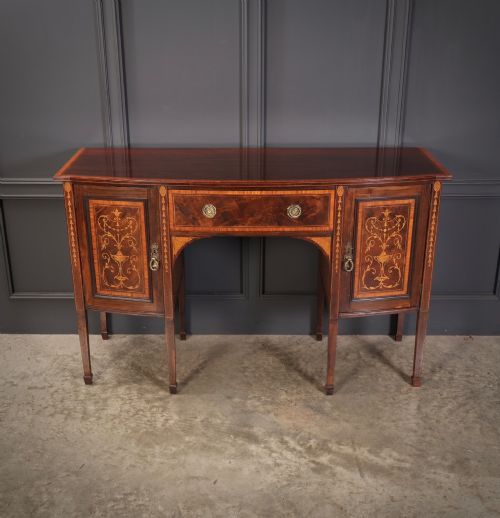
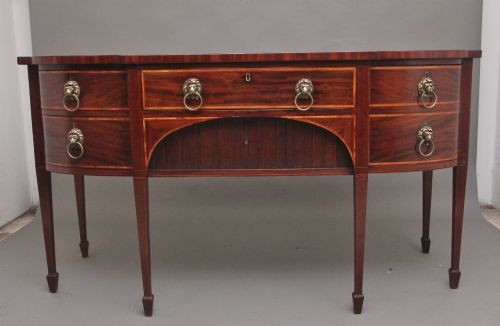
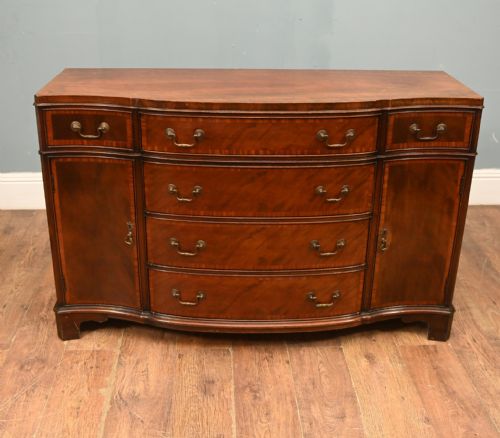
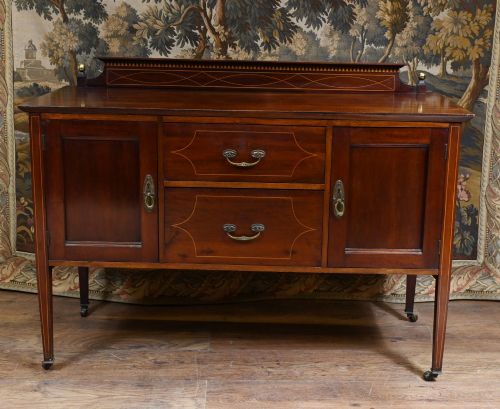
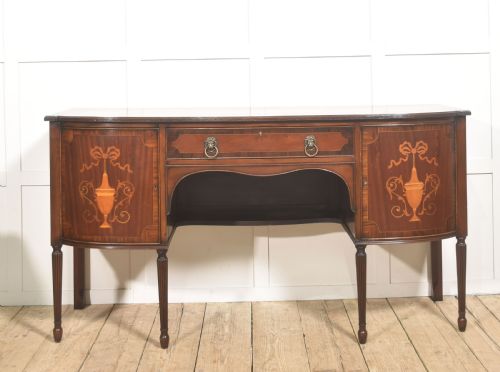
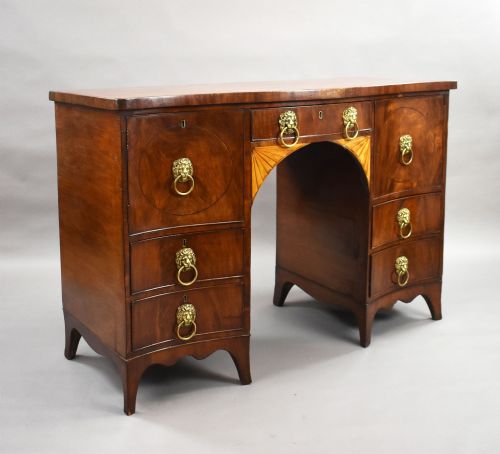
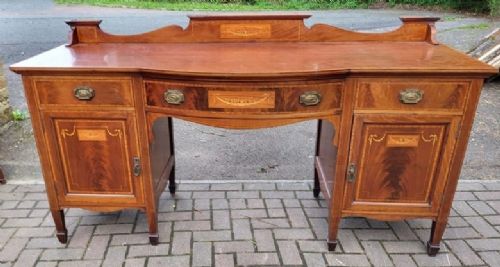

Inlaid Mahogany Buffet Cabinet
An inlaid mahogany buffet cabinet brings warmth and structured storage to a dining room, uniting rich timber with fine decorative detail.
Inlaid Mahogany Buffet Cabinet
When searching for an inlaid mahogany buffet cabinet, buyers encounter formal dining room furniture designed to serve meals and display silver or porcelain. These sturdy pieces appear primarily as sideboards, side cabinets, and servers across Georgian, Regency, Victorian, and Edwardian periods.
The most common formats on this page include bow-front and serpentine shapes, alongside breakfront designs. Makers constructed these large items using solid timber and veneers to equip dining spaces with practical surface area and cupboards.
Examples span from genuine 18th Century and George III origins to later Sheraton Revival and Edwardian interpretations. Each piece reflects the formal entertaining needs of its respective era through deep storage capacities and long linear profiles.
Materials and construction methods
Craftsmen built these cabinets primarily from mahogany, frequently selecting flame mahogany and figured variations to produce dramatic grain patterns across the long drawer fronts and doors. They often reinforced structural elements and added striking contrast using boxwood and satinwood for borders and banding.
Makers embellished the timber surfaces with intricate wood inlay, marquetry inlay, and satinwood inlay, creating floral motifs, urns, and geometric lines. Detail work extended to hardware, utilising cast brass for handles, drawer pulls, and occasionally lion paw feet.
Cabinetmakers shaped the carcasses into curved profiles like the bow-front and serpentine front using specialised bending techniques and multi-layered veneers. Joinery remained robust to support heavy marble or timber tops alongside deep internal shelving.
Listings feature mahogany, satinwood, and brass materials across Georgian, Regency, and Edwardian periods.
Distinctions in craftsmanship and design
The division between standard and superior pieces rests on the precision of the timber selection and the complexity of the decorative inlay. Premium examples feature highly figured flame mahogany matched symmetrically across doors and drawers, paired with crisp, multi-wood marquetry rather than simple banded lines.
Structural configuration dictates much of the distinction, with serpentine and breakfront forms demanding far greater joinery skill than standard straight-front servers. The integration of fine details, such as hand-chased brass hardware or elaborate brass inlay, elevates a utilitarian storage item into a masterwork.
Age and provenance further separate pieces, distinguishing authentic George III and Regency originals from later Edwardian Sheraton Revival interpretations. The depth of the colour, the patina developed over centuries of polishing, and the crispness of the carving determine overall standing.
Hewetsons London·Edwards and Roberts
The Inlaid Mahogany Buffet Cabinet Glossary
- Bow-front
- A cabinet front curved outward in a convex shape, popular during the Georgian and Regency periods. This profile softens the rigid lines of the dining room.
- Serpentine
- A front configuration featuring a central convex curve flanked by two concave curves. It requires advanced carpentry to achieve balanced proportions.
- Marquetry
- The art of forming decorative patterns by fitting together small pieces of different coloured wood veneers. Craftsmen apply this technique to table tops and drawer fronts.
- Crossbanding
- A narrow strip of veneer laid around the border of a panel with the grain running at right angles to the central wood. This frames the primary timber.
- Breakfront
- A large piece of furniture where the central section projects forward from the flanking outer sections. This creates architectural depth and visual weight.
- Flame mahogany
- A highly figured timber veneer displaying dramatic, tongue-like patterns created by cutting across burls or fork joints. It provides rich movement across large surfaces.
Inlaid Mahogany Buffet Cabinet: Frequently Asked Questions
What is a buffet cabinet?
A buffet cabinet is a long, low dining room furniture piece designed for serving food and storing tableware. These items typically feature a combination of deep drawers and enclosed cupboards.
Craftsmen built them to anchor the dining space, providing a wide top surface for food presentation during formal meals and interior shelf storage for linen and heavy serving dishes.
How do I date a sideboard?
Dating these cabinets relies on examining construction techniques, hardware, and prevailing design styles across different eras. Georgian pieces often display heavy proportions and hand-cut dovetails, while Edwardian revivals exhibit lighter satinwood framing.
Secondary woods inside drawers and the specific style of the marquetry or brass handles offer further clues. Comparing these physical traits against documented period characteristics establishes the likely decade of manufacture.
Where should I place a sideboard?
These cabinets suit dining rooms, large hallways, and spacious living areas where their long profiles fill expansive wall space. Their deep surfaces function well for displaying lamps, ceramics, or serving dishes.
Placement should avoid direct sunlight and heating vents to protect the delicate mahogany veneers and historical timber finishes from drying out or cracking over time.
What is Sheraton Revival style?
Sheraton Revival refers to late 19th and early 20th century furniture inspired by the late 18th century designs of Thomas Sheraton. These pieces celebrate classic neoclassical symmetry, delicate legs, and fine inlay work.
Cabinetmakers of this later era utilised advanced machinery alongside traditional hand methods to recreate the elegance of the Georgian period for Edwardian homes.