
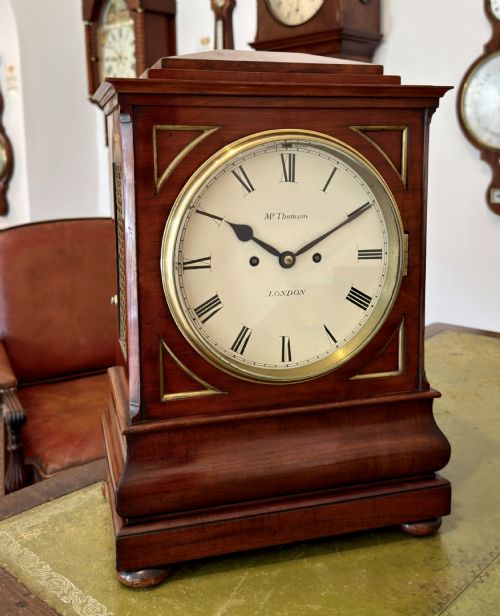
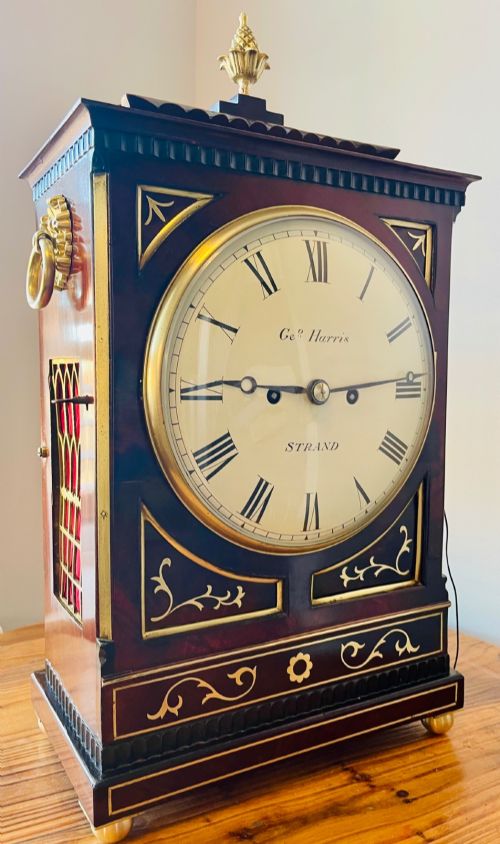
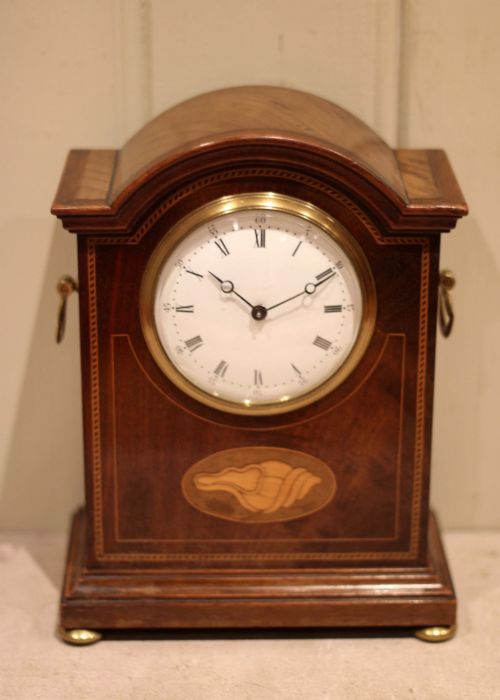
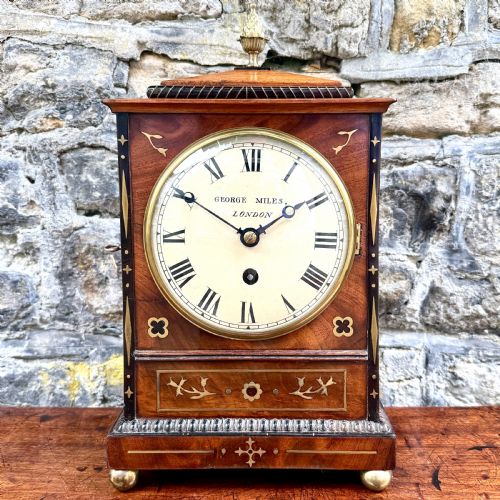
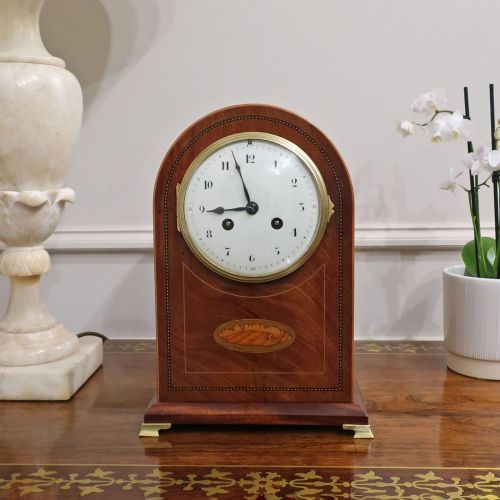

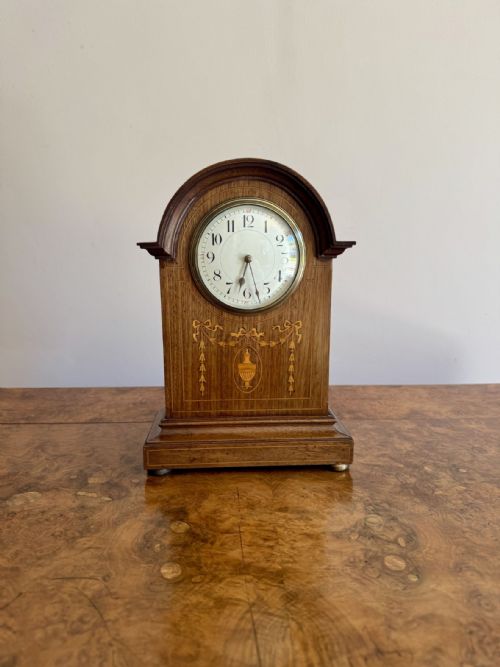


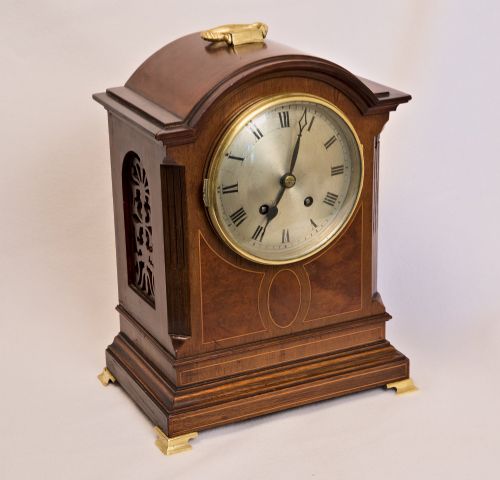


Inlaid Mahogany Bracket Clock
An inlaid mahogany bracket clock brings dependable timekeeping and refined cabinetwork into a room.
Inlaid Mahogany Bracket Clock
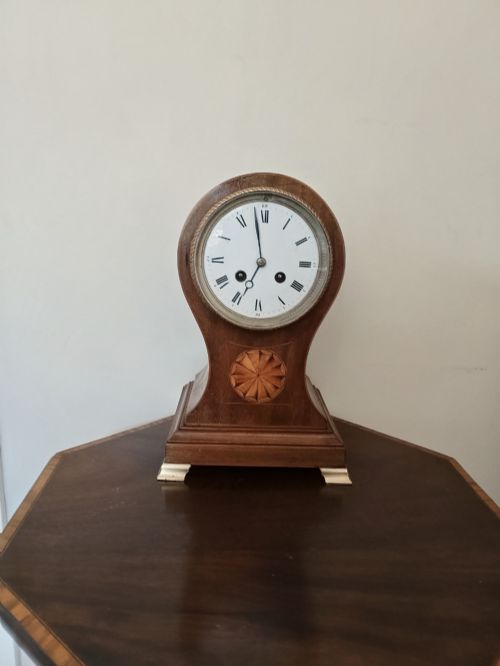
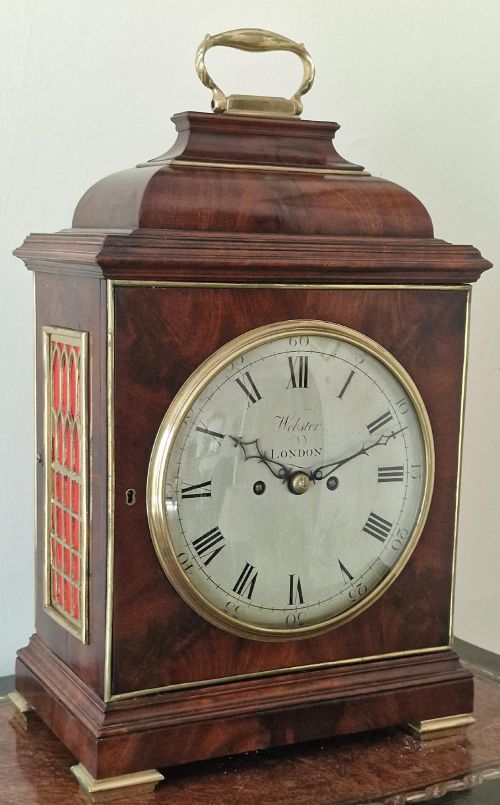
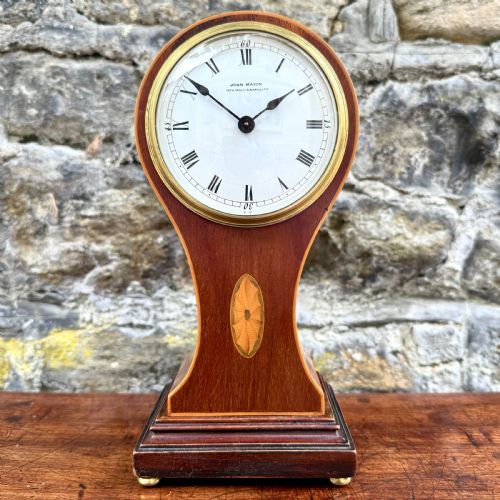
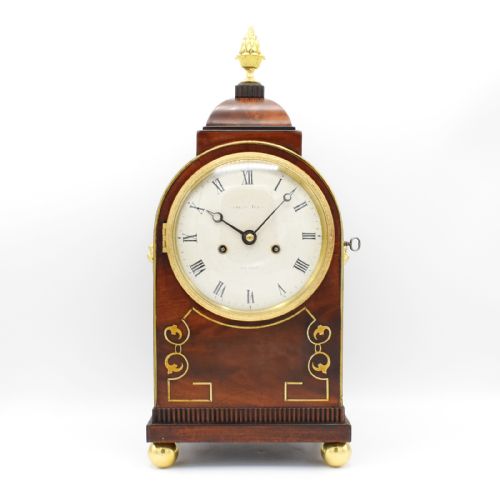
An inlaid mahogany bracket clock is a portable timepiece designed to sit on a table, shelf or bracket, housed in a wooden case enriched with contrasting wood or metal details. These pieces span from the Georgian and Regency periods through to the Edwardian era, taking forms such as balloon, lancet, dome top and pad top cases.
The versions most commonly met on this page belong to the Edwardian period and the Regency era, often featuring brass inlay or satinwood details alongside enamel or silvered dials. Makers ranging from London workshops to provincial clockmakers produced these items as both striking and silent timepieces for domestic interiors.
How they were made
Cases are constructed from mahogany timber, sometimes combined with ebony, partridgewood or satinwood, and fitted with glass panels to protect the dial. Brass is utilised extensively for stringing, scroll inlay, dial bezels and carrying handles.
Movement mechanisms rely on brass plates and gear trains, often configured as single or double fusee movements, striking or chiming arrangements, and occasionally silk suspension pendulum systems.
Listings feature mahogany bracket clocks spanning the Georgian, Regency, Victorian and Edwardian periods alongside continental European examples.
What varies in quality
The refinement of the cabinetwork and the precision of the brass or satinwood inlay distinguish the standard of production. Finer examples display crisp carving, balanced proportions and well-executed dial engraving.
Movement complexity also separates the work, with multi-train chiming and fusee mechanisms representing a higher tier of horological construction than simpler spring-driven timepieces.
Thomson of London·Webster London·George Orpwood·Bush of London·L Vick of Stroud·Thomas Moss·Cording of London·Bryson Edinburgh·W Burton·W&H·Wilkinson Leicester·Barrett London·Junghans·Thomas Connold·Hyde of Salisbury·Thwaites & Reed·Henry Marc
The Inlaid Mahogany Bracket Clock Glossary
- Fusee
- A conical pulley used in spring-driven clocks to equalise the declining power of the mainspring as it unwinds. This mechanism helps maintain a consistent force on the gear train for better timekeeping accuracy.
- Bracket clock
- A portable table clock originally designed to sit upon a matching wall bracket. Over time, the term came to describe large table clocks regardless of whether a wall bracket was present.
- Satinwood inlay
- A decorative technique employing light-coloured satinwood veneers set into the darker mahogany surface. It creates contrasting geometric or floral patterns across the clock case.
- Lancet top
- A clock case design featuring a pointed, gothic arch shape at the top. This architectural silhouette was particularly popular during the Georgian and Regency periods.
- Striking clock
- A timepiece equipped with a mechanism that sounds the hours or quarters on a bell or gong. The countwheel or rack system controls the number of strikes.
Inlaid Mahogany Bracket Clock: Frequently Asked Questions
What is a bracket clock?
A bracket clock is a portable timepiece built into a wooden case, designed to be moved between rooms or placed on furniture. They originated when clocks were heavy and required a dedicated wall bracket for support.
Over centuries, the name persisted even when the clocks were placed directly onto mantelpieces, tables or chests of drawers without any wall bracket.
How do fusee movements work?
A fusee movement uses a conical pulley connected to the mainspring via a cord or chain. As the spring unwinds and loses tension, the chain moves to a wider part of the cone to maintain steady power.
This clever mechanical device ensures the gear train receives even force throughout the running cycle, improving the precision of the clock.
How can I date an inlaid mahogany clock?
Dating relies on stylistic clues in the case architecture, such as the curved lines of a Regency brass-inlaid design or the lighter Edwardian satinwood banding. Dial materials, hands and movement construction types also offer clear indicators of the period.
Examining the maker's signature, if present on the dial or movement backplate, often allows for a more specific attribution to a workshop or decade.
Where should I place a bracket clock?
Bracket clocks suit stable horizontal surfaces like mantelpieces, sideboards, desks or dedicated wall brackets where vibration is minimal. Placement away from direct sunlight and damp environments helps preserve the mahogany finish and internal metals.
Ensuring the surface is completely level is essential for the pendulum or balance wheel to beat evenly and keep correct time.