



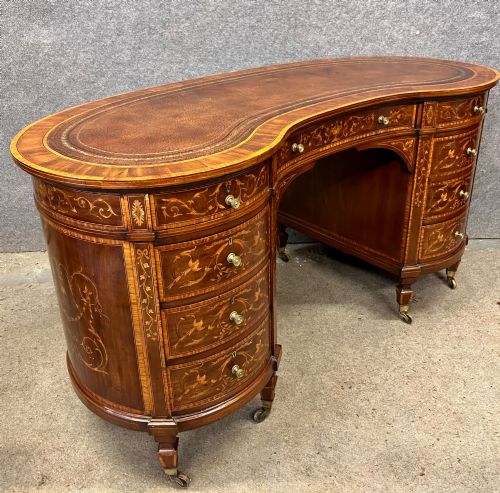
Inlaid Leather Top Table
An inlaid leather top table brings traditional writing furniture into daily use, combining firm leather writing surfaces with decorative wood craftsmanship.
Inlaid Leather Top Table
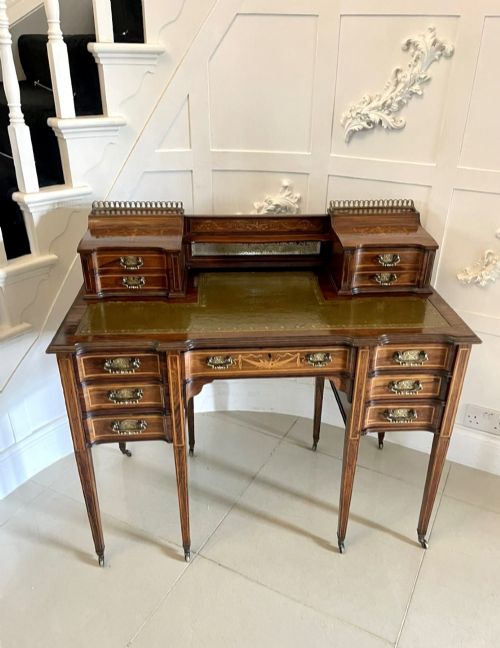
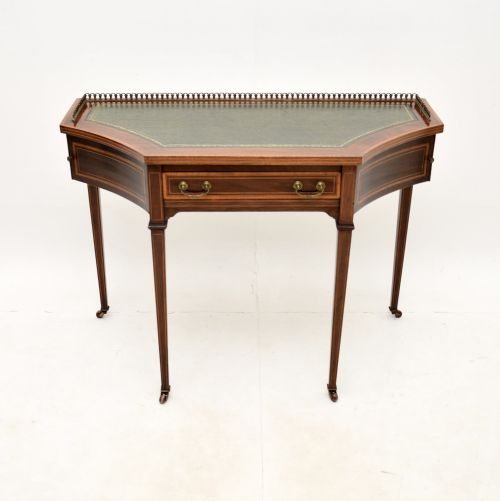
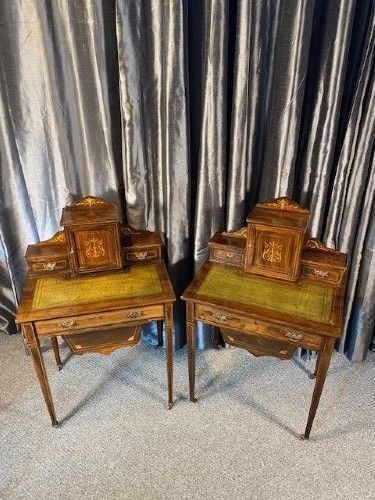
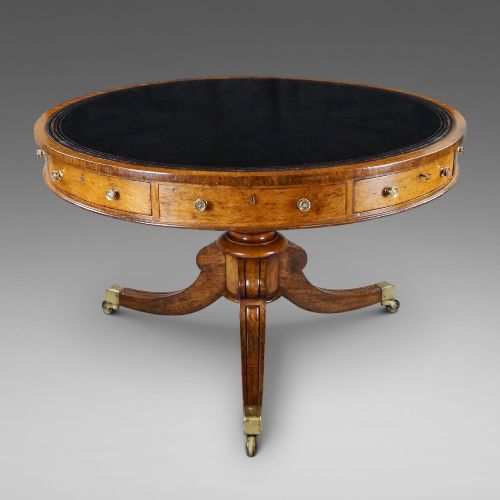
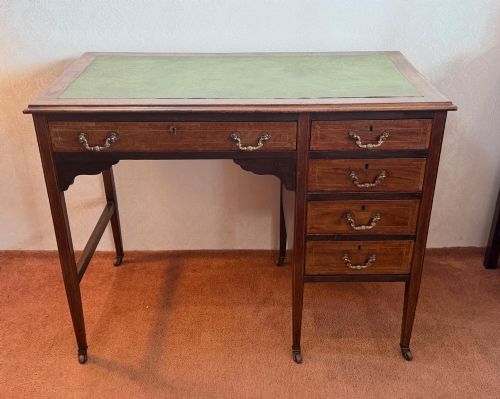
An inlaid leather top table serves as a functional workspace, appearing across this selection primarily as writing tables, desks, and library tables from the Victorian, Edwardian, and nineteenth-century periods. These pieces combine a smooth leather insert for writing with decorative timber surrounds.
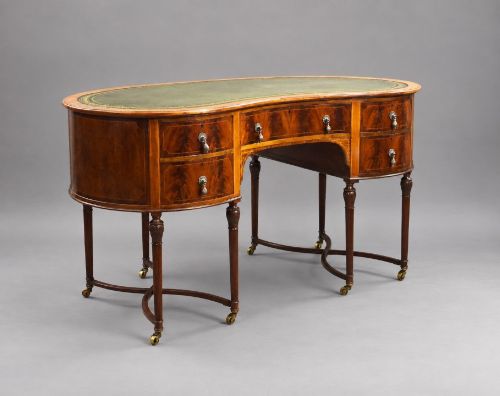
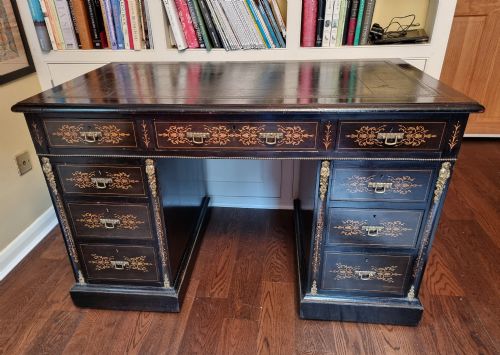
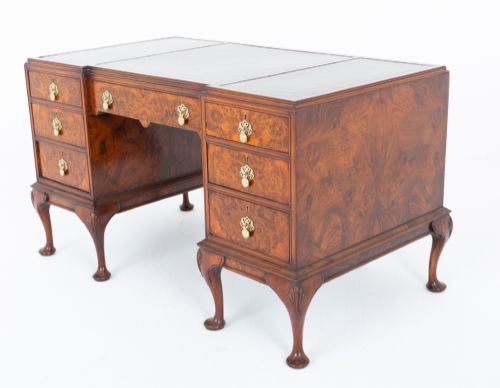
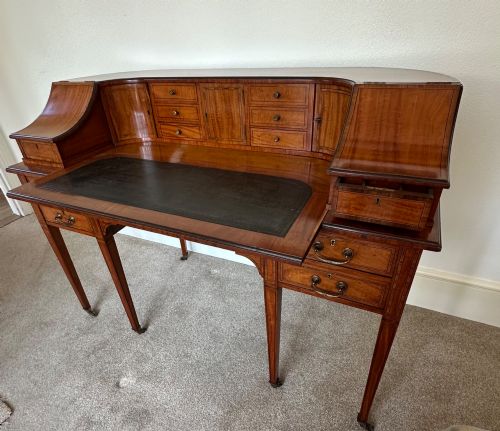
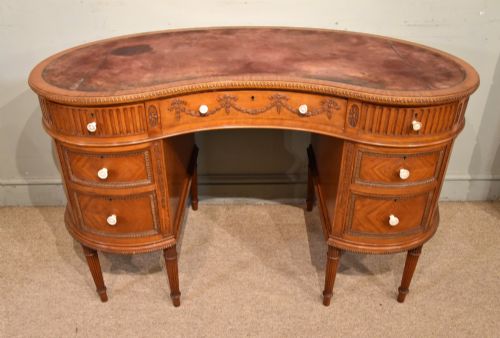
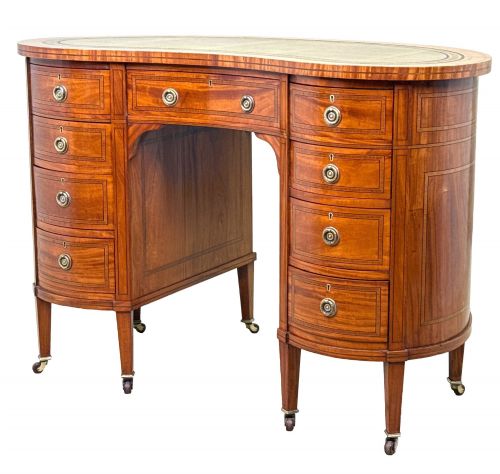
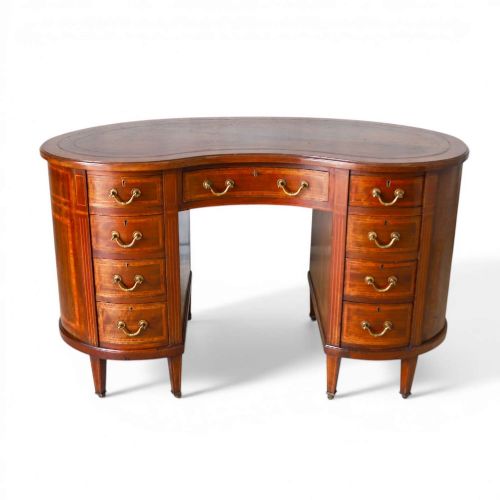
The most common form encountered here is the mahogany or satinwood writing table, often featuring shaped kidney outlines or rectangular tops decorated with marquetry and inlay. Alongside these stand freestanding pedestal desks and Carlton house desks designed for study and library spaces.
How these tables were made
Cabinet makers utilised dense hardwoods such as mahogany, rosewood, walnut, and satinwood, frequently applying contrasting stringing and marquetry inlay around the perimeters. The central writing surface was set with tooled leather, often bordered by gold-tooled accents.
Structural integrity relied on solid timber framing, dovetailed drawers, and turned or cabriole legs. Brass hardware and occasional ormolu mounts finished the fittings on pedestals and drawers.
Several desks manage to look both scholarly and aerodynamic thanks to their sweeping kidney-shaped writing surfaces.
What varies in quality
Quality rests in the precision of the timber selection and the execution of the inlay work. Flame mahogany, burr walnut, and finely figured satinwood indicate higher workshop standards, whilst crispness in the marquetry patterns separates ordinary items from superior examples.
The integration of the leather insert and the finish of secondary timbers inside the drawers reflect the original maker's skill. Pieces bearing workshop attributions often demonstrate greater refinement in their proportions and carving.
Maple & Co·Edwards & Roberts·Wolfe & Hollander·Gill & Reigate
The Inlaid Leather Top Table Glossary
- Inlay
- A technique where pieces of contrasting wood or other materials are inserted into recessed portions of a base timber to form a decorative pattern. This adorns the borders of many writing tables.
- Kidney shape
- A curved, asymmetrical desk or table outline resembling a kidney bean. This form appears frequently in Edwardian and Victorian satinwood or mahogany pieces.
- Marquetry
- Elaborate veneer patterns arranged to form pictorial or geometric designs on furniture surfaces. It is commonly seen on nineteenth-century French and English desks.
- Pedestal desk
- A heavy freestanding desk supported by two banks of drawers rather than simple legs. Examples often feature crossbanded mahogany and leather inserts.
- Carlton house desk
- A Davenport-style writing desk featuring a raised superstructure of small drawers and compartments curving around the back of the leather-lined writing surface.
Inlaid Leather Top Table: Frequently Asked Questions
What is an inlaid leather top table used for?
These tables function primarily as writing desks or library tables, providing a dedicated surface for correspondence and study.
The smooth leather insert offers an ideal texture for writing by hand while protecting the wooden structure underneath from ink and daily wear.
How do I identify a Victorian desk?
Victorian examples often employ dense timbers such as rosewood, burr walnut, or mahogany, frequently accompanied by heavy pedestal bases or elaborate marquetry.
They span the nineteenth century and generally display heavier proportions and richer wood grains than their lighter Edwardian successors.
What distinguishes Edwardian tables?
Edwardian pieces tend to favour lighter woods like satinwood and lighter mahogany frames, often incorporating delicate Sheraton Revival styling.
They frequently appear in kidney shapes with refined inlay work and slender tapering legs rather than massive pedestal drawers.
How should I care for the leather top?
The leather surface benefits from gentle dusting and occasional conditioning with appropriate leather balms to prevent drying and cracking.
Avoiding direct sunlight and excessive moisture helps preserve both the leather insert and the surrounding wood polish.