

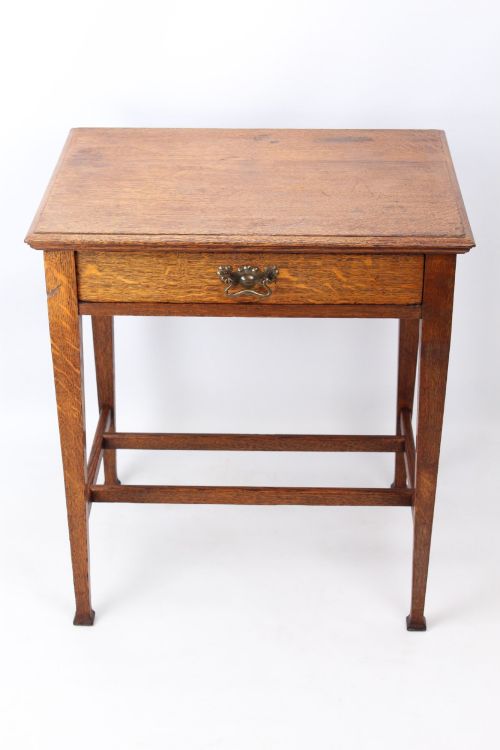
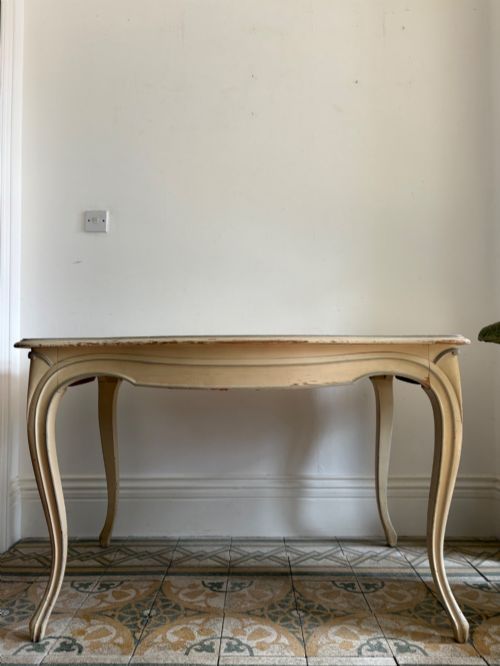
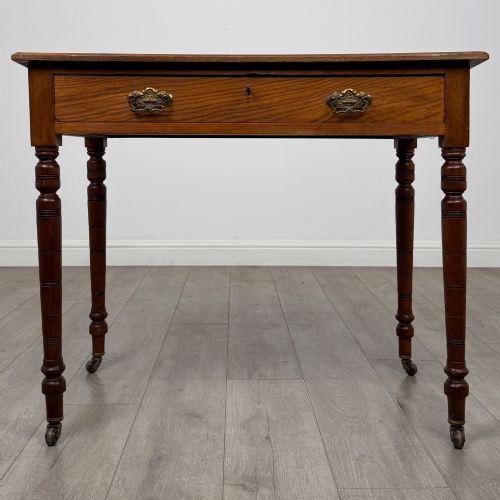
Antique Hall Writing Desk
An antique hall writing desk brings practical surface space and period timber into an entrance passage, offering a functional desk surface with compact proportions.
Antique Hall Writing Desk
When buyers search for an antique hall writing desk, they encounter compact tables and desks adapted for narrow circulation spaces from periods spanning the eighteenth, nineteenth, and early twentieth centuries. These pieces share a domestic ancestry that bridges the gap between side tables, console tables, and dedicated writing desks.
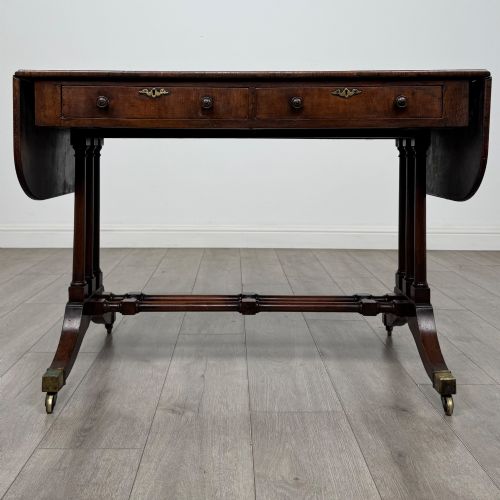
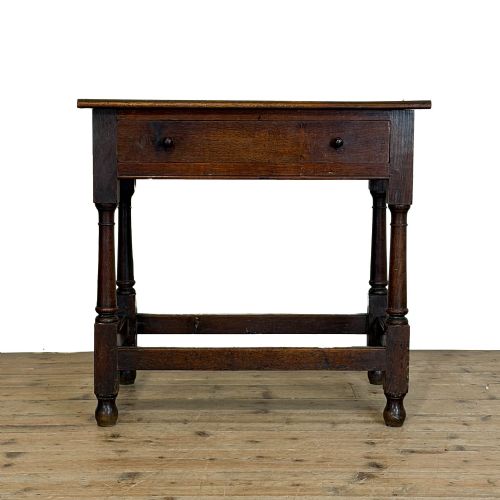
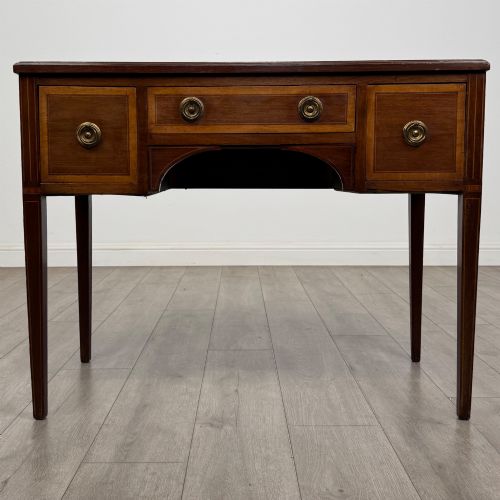
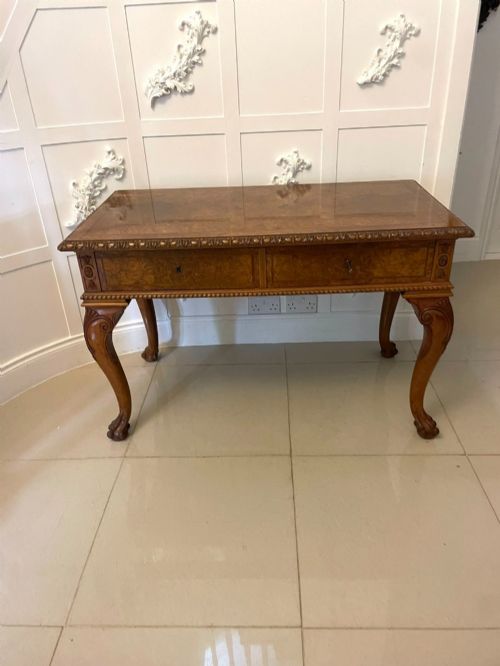
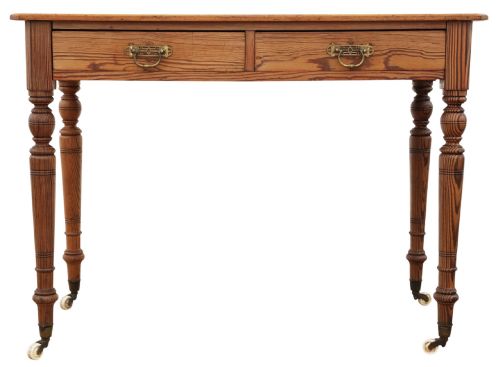
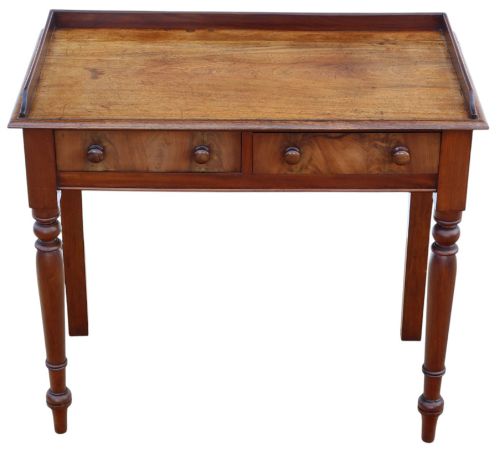
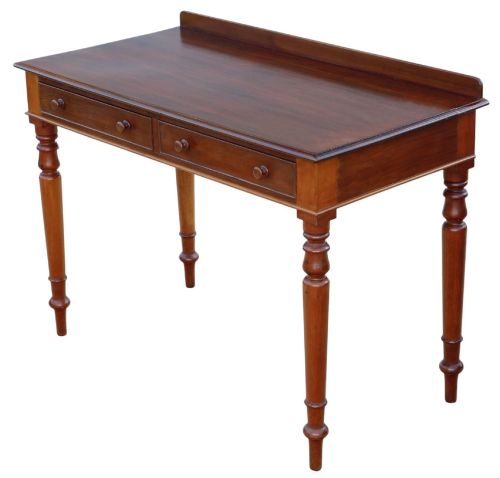
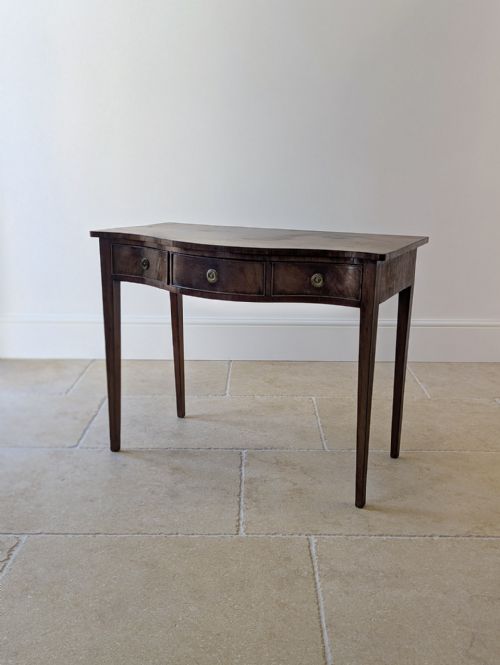
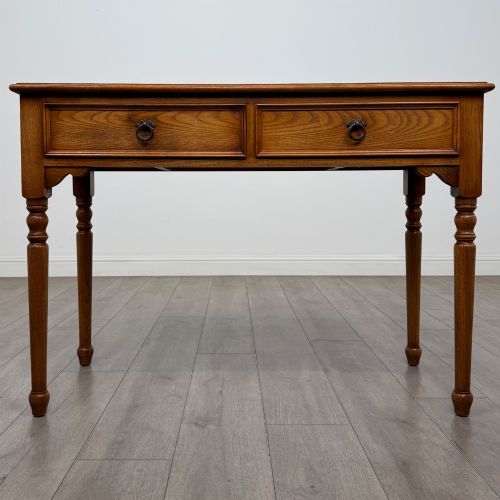
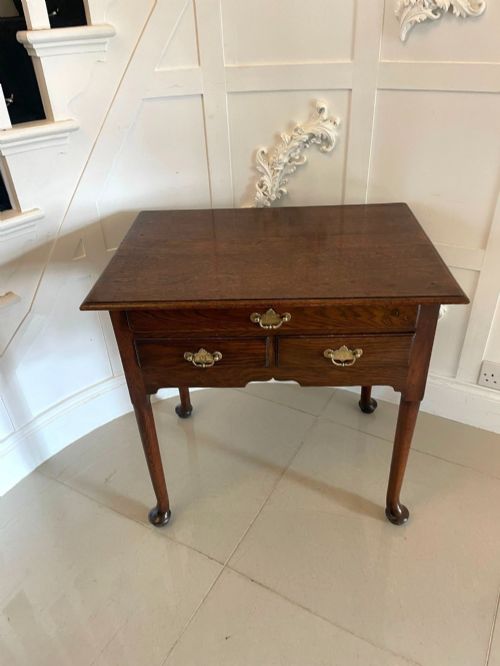
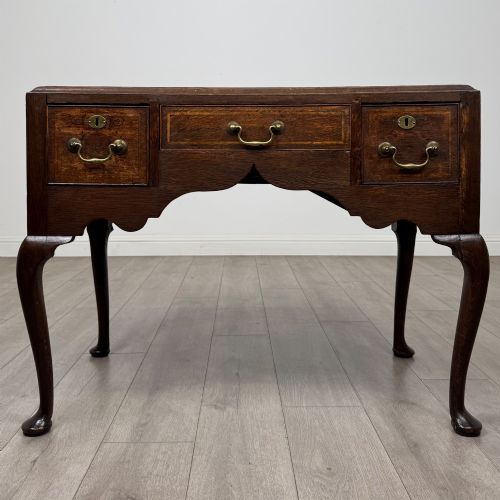
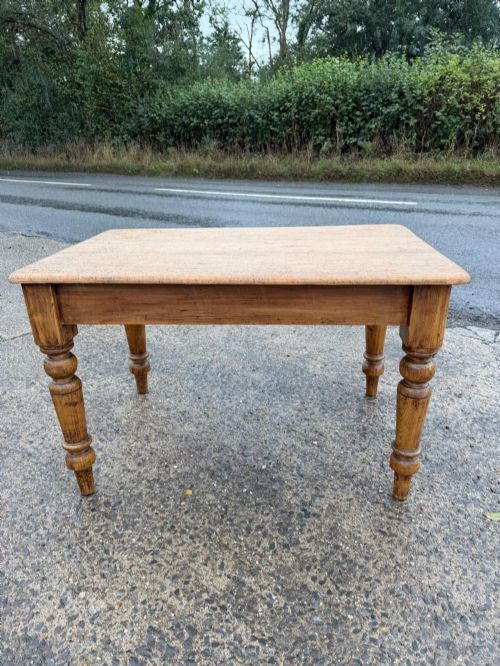
The varieties met on this page range from Georgian oak lowboys and mahogany serpentine side tables to Victorian pine, walnut, and pitch pine writing tables. Many incorporate single or double drawers in the front frieze, designed initially for correspondence and small household ledgers.
Originating across English country houses and town residences, these items frequently adopt forms like the console table, washstand, or sofa table to suit passage and hallway dimensions.
How they were made
Cabinet makers utilised dense hardwoods including mahogany, oak, walnut, and satinwood alongside softer timbers like pine and pitch pine for internal framing and carcass work. Selected pieces feature decorative techniques such as marquetry, flame mahogany veneers, and inset leather or suede working surfaces.
Construction methods rely on traditional joinery techniques, visible in dovetailed drawer construction and turned, tapered, or cabriole legs. Brass handles and fittings frequently accent the timber surfaces across Georgian, Regency, Victorian, and Edwardian examples.
One resourceful maker apparently decided a washstand could double as a writing table if you just ignored the basin hole.
What varies in quality
The distinction between tiers of quality rests upon the selection of timber figure, such as the richness of flame mahogany or burr walnut, and the crispness of carved details. Superior examples display refined proportions, balanced drawer arrangements, and original brass hardware that complement the period aesthetic.
Lesser pieces often utilise simpler secondary timbers like pine with heavier, unrefined joinery, whereas top-tier items demonstrate sophisticated cabinet-making traditions associated with workshops like Gillows.
Heal and Son·Gillows·Edward’s And Robert’s
The Antique Hall Writing Desk Glossary
- Lowboy
- A small eighteenth-century dressing or side table with one or more drawers and cabriole or straight legs. This form frequently serves as an early predecessor to hallway writing surfaces.
- Console table
- A table designed to be fixed against a wall, often supported by brackets or ornamental legs. In hallways, these pieces provide narrow writing and display space.
- Frieze
- The horizontal band situated directly beneath the top surface of a table. Drawers are commonly integrated into this structural zone.
- Sofa table
- A rectangular occasional table with drop leaves at either end, traditionally placed before sofas but utilised in wider hallways. They often feature double drawer layouts.
- Marquetry
- Decorative inlay patterns formed by fitting together small pieces of veneered wood to create geometric or floral motifs.
Antique Hall Writing Desk: Frequently Asked Questions
Where do I place an antique hall writing desk?
These compact tables suit narrow entrance passages, hallways, and landings where floor space is limited. Their shallow depths allow them to function as display surfaces or occasional writing spots without obstructing circulation.
Pairing the desk with a small chair or bench creates a dedicated writing area near the entrance of a home.
How do I date an antique hall writing desk?
Dating relies upon examining the timber species, construction methods, and stylistic details visible in the legs and handles. Georgian pieces often display clean oak or mahogany lines, while Victorian examples introduce heavier turned legs or pitch pine.
Secondary woods inside drawer boxes and the presence of hand-cut dovetails provide further clues to the manufacturing decade.
Did these desks have leather tops originally?
Many writing tables and library desks featured inset leather, suede, or baize panels to provide a smooth writing surface. Plain timber tops were equally common on side tables and lowboys that doubled as writing furniture.
Examining the frieze and surrounding timber rebate reveals whether a working surface was historically fitted.
How do I maintain the timber surface?
Regular dusting with a dry, soft cloth preserves the polish and prevents particle buildup on mahogany, oak, and walnut surfaces. Applying occasional natural wax feeds the timber and protects against dryness.
Keeping these tables away from direct heat sources prevents the wood from warping and protects inset leather or veneer.