



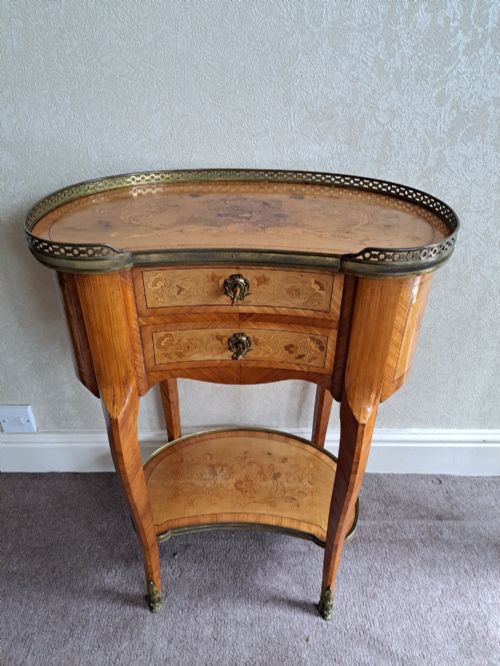

Inlaid Kingwood Cabinet
An inlaid kingwood cabinet brings continental flair and rich timber grain to a room, offering practical surface space alongside intricate historic decoration.
Inlaid Kingwood Cabinet
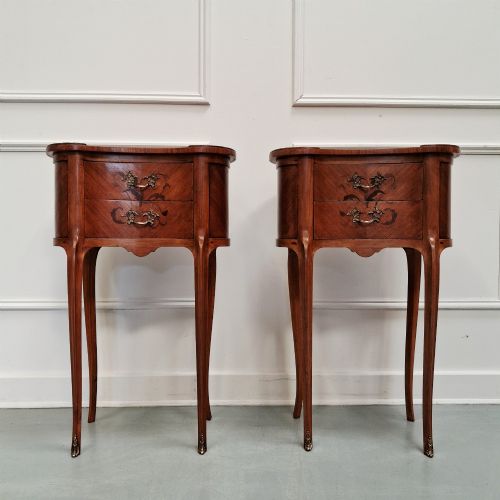
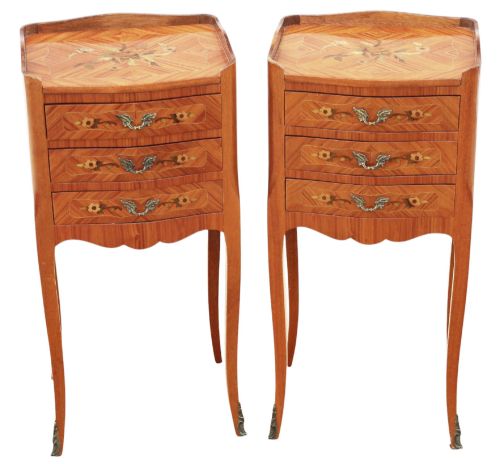
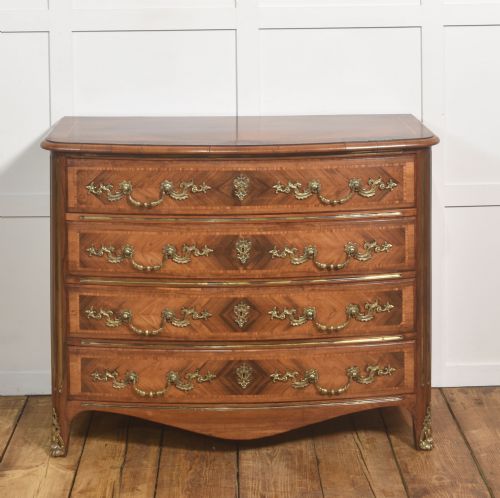
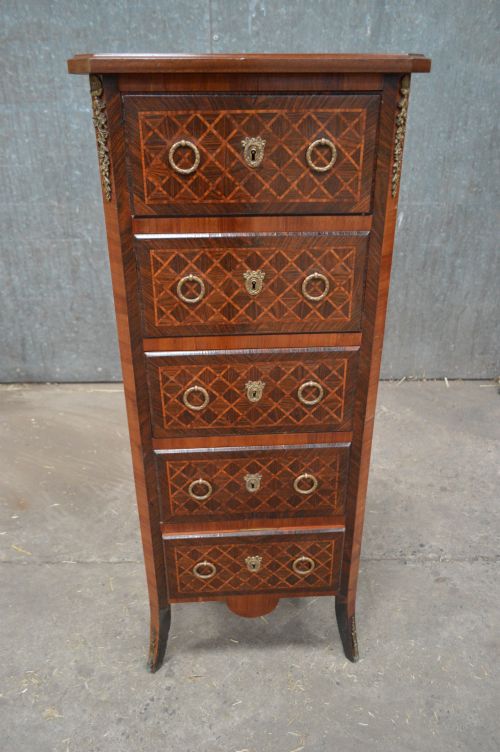
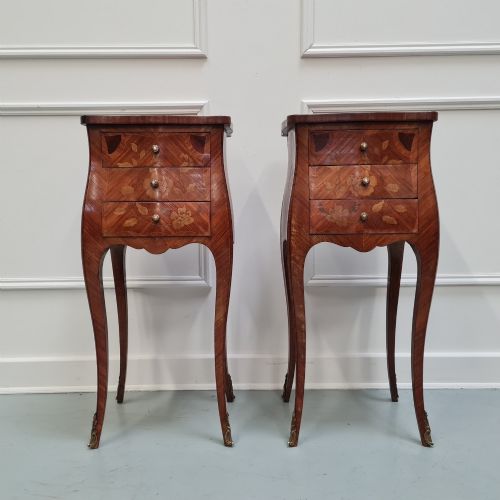
An inlaid kingwood cabinet encompasses a variety of practical forms, from compact bedside tables and lamp chests to larger side cabinets, commodes, and vitrines. Most pieces on this page lean heavily toward French design vocabularies, particularly the curves and ornamentation of the Louis XV style and its later revivals.
The timeline stretches from the eighteenth century through the nineteenth century and into the early twentieth century, including the 1920s and 1930s. Buyers will frequently encounter pairs of bedside cabinets alongside standalone commodes and display cabinets surfaced with decorative veneers.
Materials and construction methods
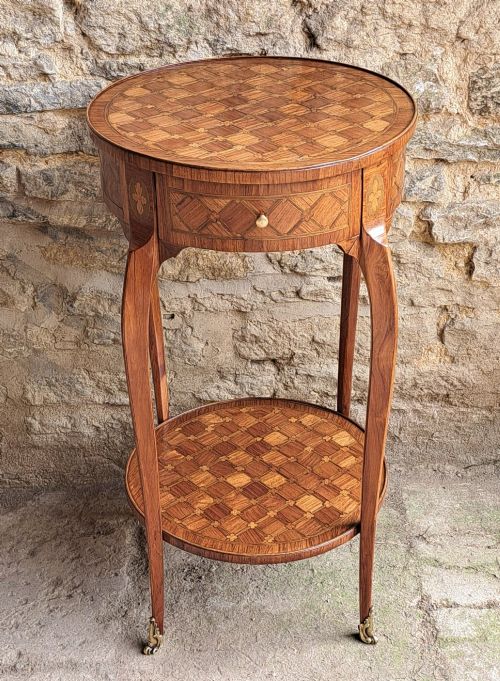
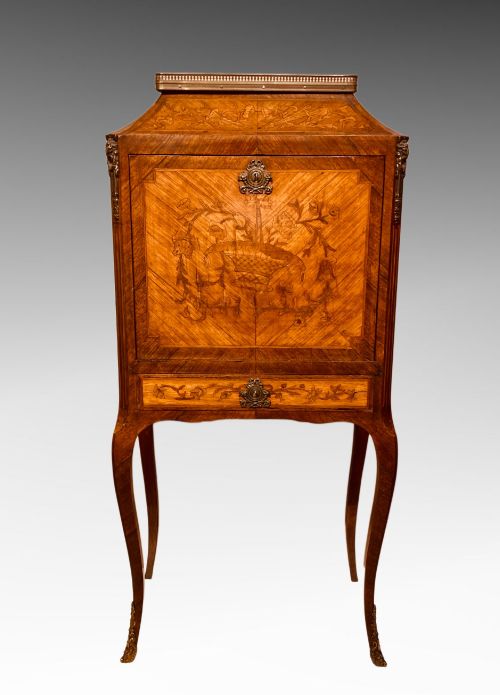
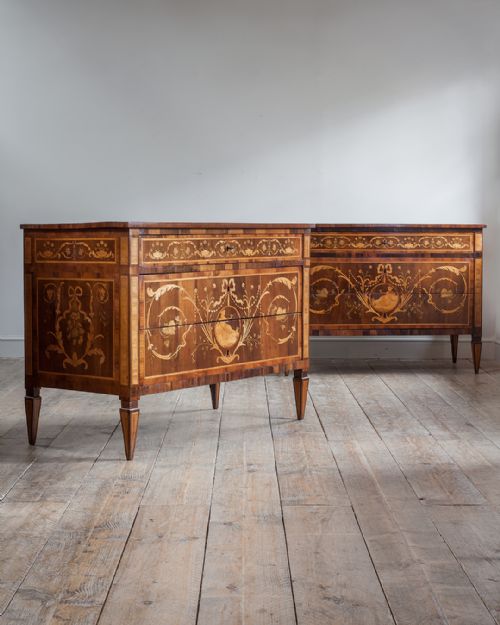
Makers utilised kingwood veneers laid in geometric parquetry or pictorial marquetry patterns over supportive secondary timbers like walnut and other wood veneers. These patterned surfaces gain contrast and depth from the natural dark and golden tones inherent in the kingwood timber.
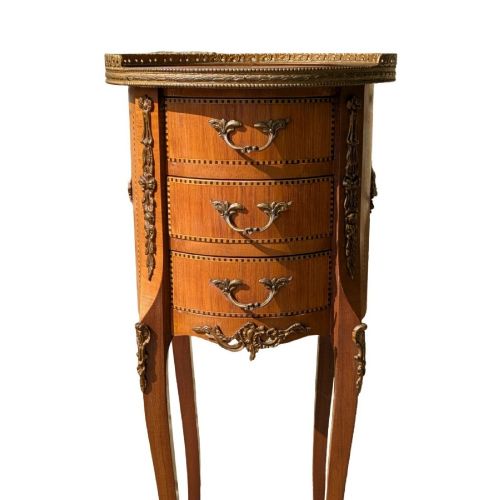
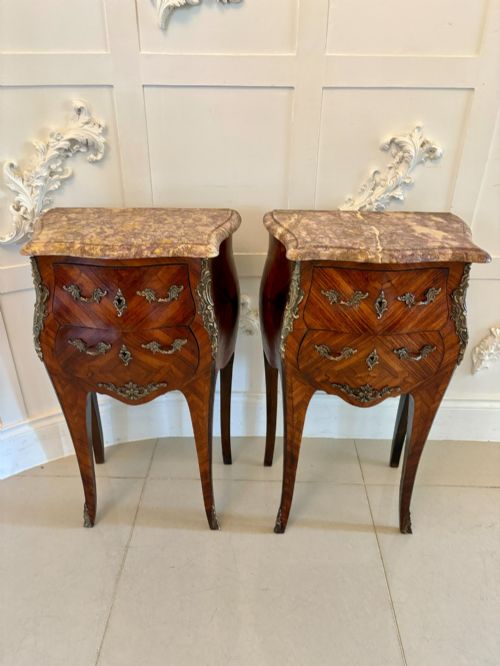
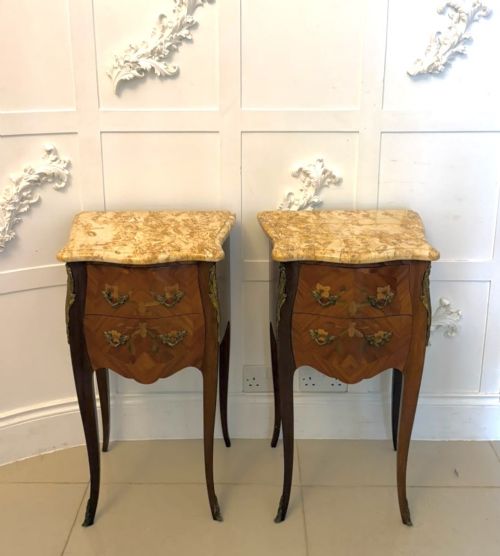
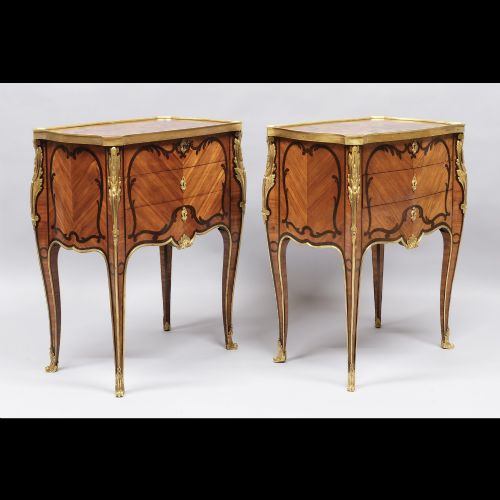
Metal mounts in ormolu and polished marble slabs frequently cap these pieces, particularly on commodes and bedside cabinets from the nineteenth and early twentieth centuries. Brass details accent key escutcheons and framing edges, working in concert with the polished stone tops.
Inlaid Kingwood Cabinet Retail Price Guide 2026
Typical asking prices for inlaid kingwood cabinet among the pieces listed under this phrase on Sellingantiques today, from the lower quarter to the upper quarter. They describe what is for sale here now, not the wider market.
Several bedside cabinets arrive ready to whisper French secrets from the 1920s straight into your midnight tea.
Distinctions in construction and design
The division between standard output and finer work rests in the precision of the marquetry cutting and the crispness of the cast ormolu mounts. Finer examples display tightly fitted veneer panels with seamless joins and carefully shaded floral or geometric motifs.
Structural harmony also dictates standing, with superior items maintaining balanced proportions across serpentine fronts and bombe silhouettes. The integration of heavy marble slabs and the smooth movement of drawers indicate the underlying joinery standards.
Sormani
The Inlaid Kingwood Cabinet Glossary
- Kingwood
- A dense, richly figured timber native to Brazil, prized for its dark violet-brown tones and pale golden striping. Cabinetmakers cut it into thin veneers for decorative geometric and floral surfaces.
- Marquetry
- The art of arranging thin slices of coloured wood veneer into pictorial designs, often depicting floral bouquets or architectural scenes. These patterns are assembled on paper before being glued to the carcase.
- Parquetry
- A geometric mosaic of wood veneer pieces laid down in repeating patterns such as cubes, lozenges, or chequers. It forms durable, highly structured surface decoration on tabletops and drawer fronts.
- Ormolu
- Gilded bronze mounts cast and chased by hand to ornament the corners, feet, and aprons of furniture. The finish provides metallic highlights against dark timber veneers.
- Commode
- A low standing chest of drawers or cupboard originating in France, typically featuring decorative mounts and a finished marble top. These forms often stand on slender cabriole legs.
- Vitrine
- A glass-panelled display cabinet designed to showcase porcelain, glassware, and small ornaments. These pieces rely on delicate framing to maximise visibility from multiple angles.
Inlaid Kingwood Cabinet: Frequently Asked Questions
How do I care for kingwood veneer?
Keep these surfaces away from direct sunlight and extreme humidity changes to prevent the timber from drying out or the veneer from lifting. Dust gently with a dry, soft cloth and avoid chemical polishes.
Apply a traditional beeswax polish occasionally if the timber appears dry, buffing it lightly to maintain a soft sheen. Protect the surface from moisture by using coasters beneath any objects placed on the wood or marble.
Where should I place a bedside cabinet?
These compact cabinets suit bedrooms as functional nightstands, offering enclosed storage alongside a surface for lamps and books. Their decorative fronts and marble tops also allow them to function as small lamp tables in reception rooms.
Consider matching pairs to frame a bed or sofa symmetrically, or use a single freestanding commode in a hallway or landing. Their varied heights and serpentine shapes add architectural interest to plain corners.
What is the difference between marquetry and parquetry?
Marquetry involves cutting varied wood veneers to create pictorial compositions like flowers, ribbons, and landscapes. Artisans assemble these elements like a puzzle to cover curved or flat cabinet surfaces.
Parquetry relies on strict geometric shapes such as cubes, squares, and triangles to form repeating patterns. Both techniques decorate kingwood cabinets, though parquetry tends to emphasise architectural lines while marquetry focuses on organic motifs.
How do I date a French style cabinet?
Look at the construction methods inside the drawers, the types of secondary woods used behind the veneers, and the wear patterns on the feet and handles. Eighteenth-century pieces generally show hand-cut joinery and native European framing timbers beneath the kingwood.
Revival pieces from the nineteenth and early twentieth centuries often incorporate machine-sawn elements while closely copying earlier Louis XV forms. Stylistic details and the specific casting quality of any ormolu mounts further help narrow the era of manufacture.