
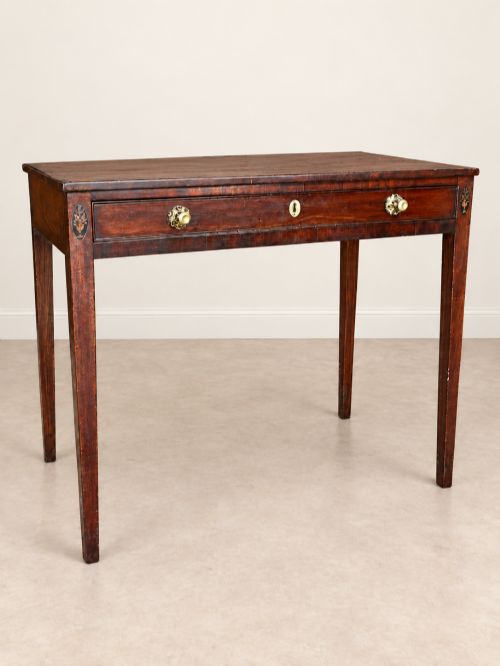
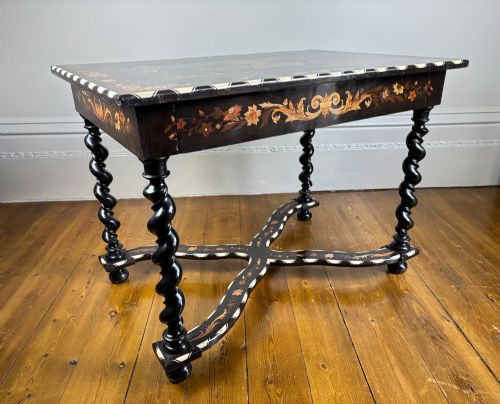
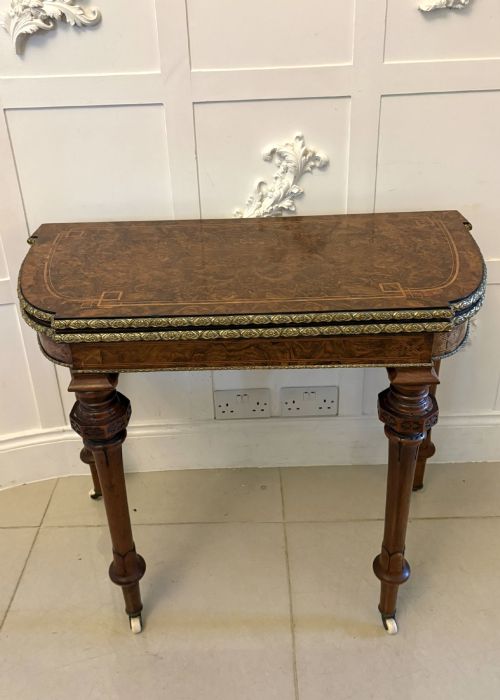
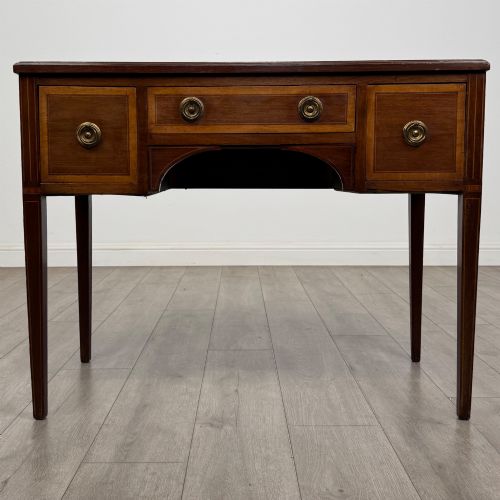




Inlaid Hall Desk
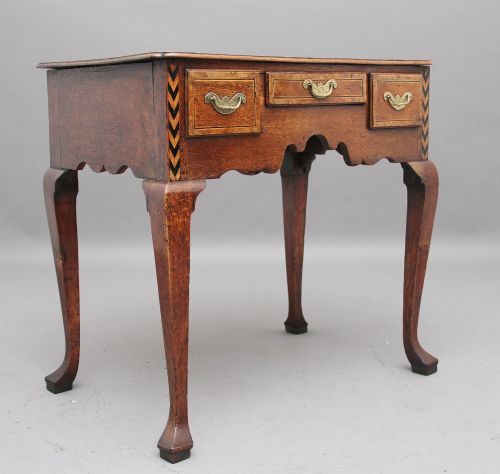
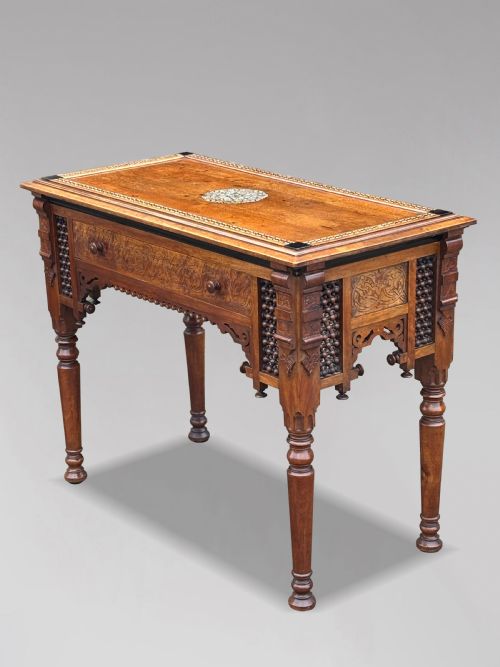
An inlaid hall desk brings linear refinement to an entrance space, pairing timber surfaces with contrasting decorative woodwork.
Inlaid Hall Desk
When searching for an inlaid hall desk, buyers encounter compact writing surfaces, side tables, and console forms designed for transitional spaces rather than primary studies. The evidence shows these pieces span periods from the Georgian era through the Victorian period and into Edwardian production, predominantly utilising mahogany carcases.
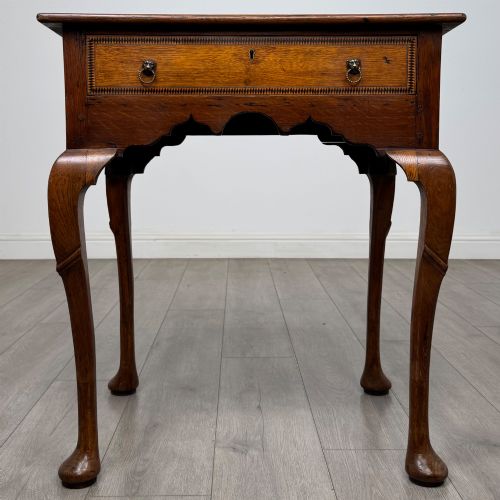
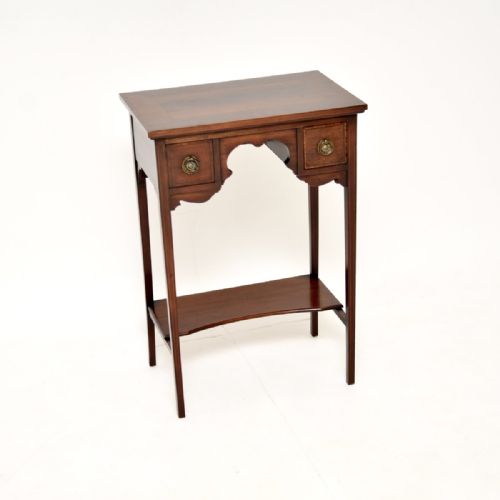
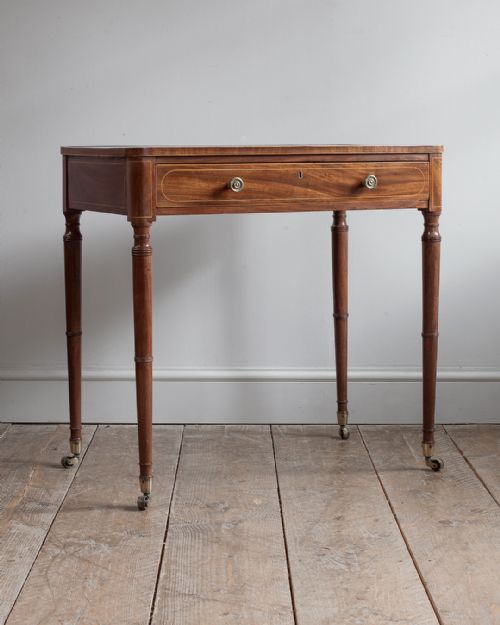
The most common formats on this page combine rectangular mahogany tops with delicate stringing or figural marquetry, often fitted with single drawers suitable for correspondence. These examples demonstrate the domestic shift toward decorative furniture for hallways and reception spaces during the nineteenth and early twentieth centuries.
How they were made
Cabinet makers constructed the primary carcases of these tables using solid mahogany, walnut, or oak, frequently applying finely figured veneer to the top surfaces. Woods such as satinwood, boxwood, and rosewood were then sliced thinly for intricate inlay and marquetry panels.
Detailing relied on contrasting timber strips, or stringing, inlaid into channelled grooves around the perimeter of the top and drawers. Brass mounts, handles, and occasional ormolu accents completed the assembly on finer examples.
Listings feature mahogany, walnut, rosewood, and oak, combined with boxwood and satinwood inlay across Georgian, Victorian, and Edwardian periods.
What varies in quality
Quality rests on the precision of the timber selection and the integration of the inlay into the solid ground. Superior pieces display tightly figured flame mahogany or balanced walnut veneers that remain flush with the surrounding wood, whereas lesser examples rely on painted rather than inlaid decoration or heavy secondary timbers.
The sophistication of the brassware and the crispness of the hand-cut stringing differentiate standard production from high-workshop pieces. Construction integrity, seen in the neatness of dovetailing within the drawer linings, marks the distinction between utilitarian items and fine furniture.
Edwards & Roberts·Francoise Linke
The Inlaid Hall Desk Glossary
- Stringing
- A thin strip of contrasting wood inlaid into the surface to form a border. It outlines the edges of tabletops and drawer fronts on mahogany pieces.
- Marquetry
- The art of forming decorative patterns using fitted veneer pieces of various woods. It appears on finer tables of the eighteenth and nineteenth centuries.
- Parquetry
- Geometric mosaic woodwork formed by small veneer blocks arranged in patterns. This technique frequently decorates the tops of French console and centre tables.
- Lowboy
- A small side table fitted with drawers, often standing on slender cabriole or straight legs. Georgian versions serve multiple functions in hallways and bedrooms.
- Ormolu
- Gilded bronze mounts applied to furniture for decorative enrichment. It is seen primarily on nineteenth-century pieces influenced by French design.
Inlaid Hall Desk: Frequently Asked Questions
Where should I place an inlaid hall desk?
These compact tables suit entrance halls, narrow corridors, or landing spaces where deep furniture obstructs movement. Their finished backs often allow them to stand freestanding.
Position them away from direct sunlight to protect sensitive satinwood and rosewood veneers from fading over time.
How do I maintain the inlaid surface?
Dust the timber regularly with a soft, dry cloth and avoid modern silicone polishes that build up a hazy film. Traditional beeswax applied sparingly preserves the natural sheen of the wood.
Keep humidity levels stable in the room to prevent the delicate boxwood or satinwood stringing from lifting out of its channels.
Can I use an antique hall desk for daily writing?
Most surviving examples feature modest writing heights and shallow drawers originally intended for occasional correspondence rather than heavy laptop use. Leather-lined surfaces provide a suitable pad for writing notes.
Protect the antique timber top with a blotter if the desk sees regular daily service in a busy household.
How do I distinguish Georgian from Edwardian pieces?
Georgian examples rely on heavier proportions, solid mahogany construction, and understated oak or boxwood stringing. Their drawer linings typically feature hand-cut dovetails.
Edwardian interpretations tend to be lighter in scale, frequently utilising machine-sawn elements, satinwood banding, and more varied marquetry motifs.