

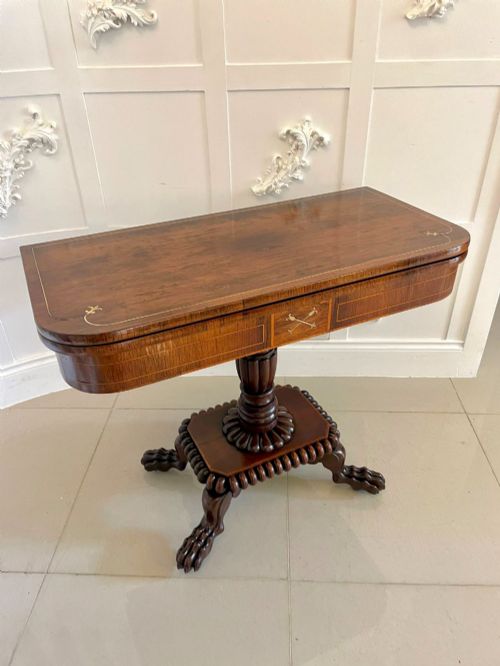
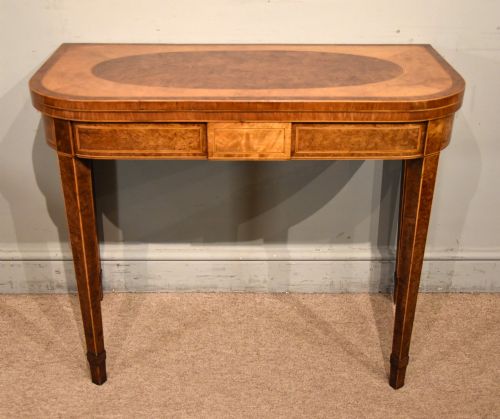
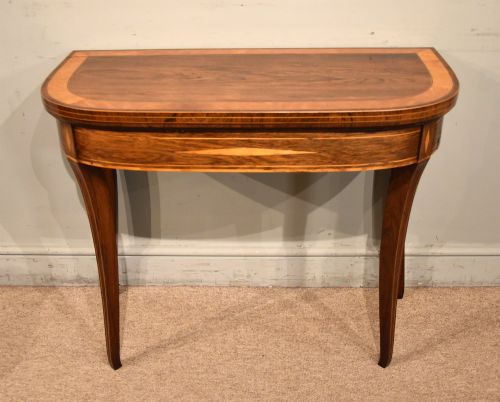

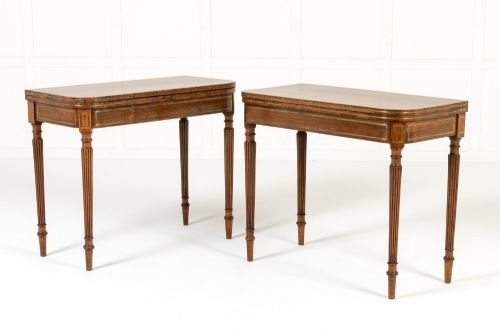
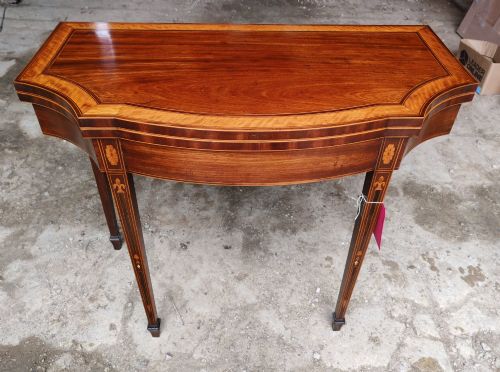
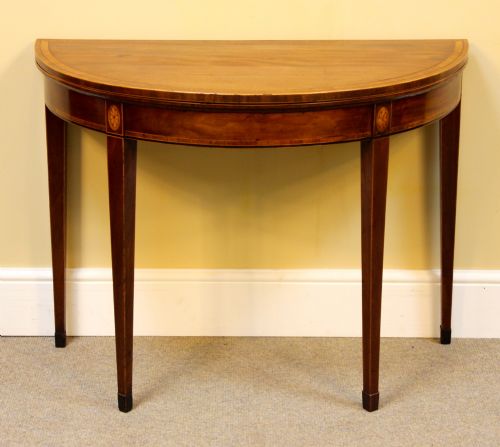
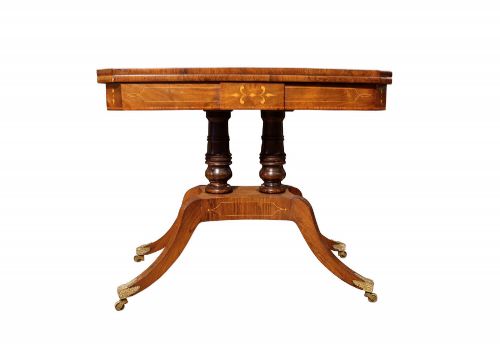
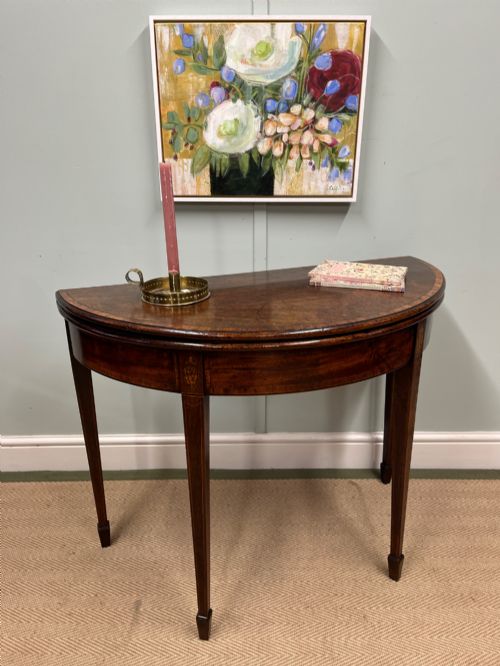


Inlaid Foldover Table
An inlaid foldover table opens to reveal a felt-lined surface for cards or tea, combining domestic utility with fine cabinetmaking.
Inlaid Foldover Table
An inlaid foldover table is a dual-purpose piece of antique furniture designed to sit against a wall as a console or side table before expanding to serve guests. When you search for this phrase, you encounter forms that double as card tables, tea tables, games tables, and writing desks.
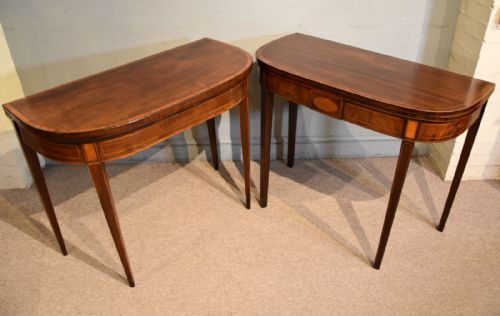
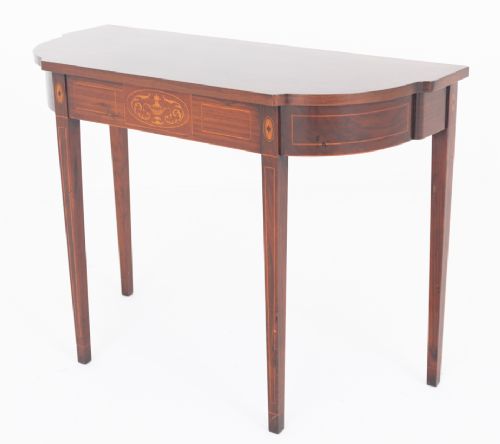
The versions most likely to meet you on this page date from the Georgian, Regency, and Victorian eras, alongside Edwardian examples. They appear in shapes ranging from D-shaped and demilune to rectangular formats.
Makers utilised clever hinges and rotating tops to support the leaf when open, creating a sturdy flat surface from a compact footprint. These pieces reflect the social habits of earlier centuries when entertaining at home required versatile furniture.
How They Were Made
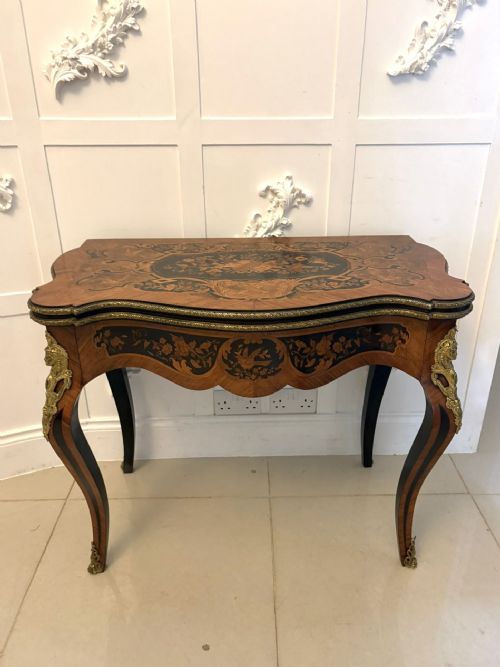
Cabinetmakers built these tables using primary timbers such as mahogany, walnut, rosewood, and satinwood, often applying veneers over sturdy secondary woods. Surface enrichment relied on contrasting inlay and marquetry using boxwood, satinwood, and kingwood to create geometric or floral motifs.
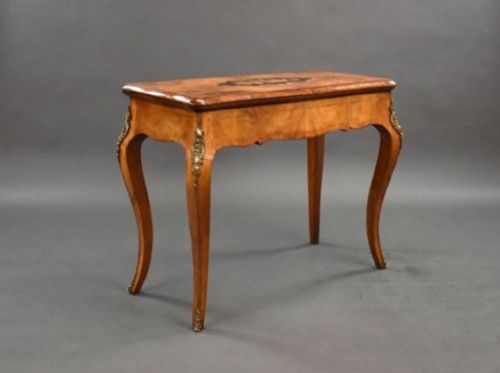
Metal detailing played a structural and decorative role, with brass stringing inset into the timber, brass sabots protecting feet, and castors enabling smooth movement. Ormolu mounts appeared on French-influenced pieces to accentuate the contours of the frame.
Secret compartments occasionally lurk beneath the folding tops of these tables, designed for stabling illicit card counters and hidden debts.
What Varies in Quality
The distinction between average and exceptional pieces rests upon the precision of the cabinetwork and the choice of timber figures. Highly figured burr walnut, burr yew, and richly grained rosewood elevate a piece, especially when matched across the folding leaves.
The finesse of the inlay determines the visual success of the table, separating simple linear stringing from elaborate pictorial marquetry or parquetry. Original brassware, well-fitted hinges, and mechanisms that operate without sagging set superior examples apart.
George Bullock
The Inlaid Foldover Table Glossary
- Demilune
- Half-moon shaped in plan, allowing the table to sit flat against a wall when closed. This form was particularly popular during the Georgian period.
- Marquetry
- Decorative veneer work forming pictorial or floral patterns using various coloured woods. It differs from simple inlay by covering the entire surface in a jigsaw of materials.
- Sabot
- A metal sleeve or mount fitted to the foot of a furniture leg for protection and decoration. Brass is the material most frequently encountered on English and French tables.
- Parquetry
- Geometric mosaic woodwork arranged in patterns such as cubes or chequers. This technique demonstrates the precision of the maker's cutting and fitting.
- Stringing
- Thin strips of contrasting wood inlaid into channels cut into the primary timber. It creates delicate borders around the edges of top boards and drawer fronts.
Inlaid Foldover Table: Frequently Asked Questions
What is an inlaid foldover table used for?
These tables served as decorative console or side pieces against a living room wall during the day. When visitors arrived for social gatherings, the top folded out to provide a stable surface for card games, tea service, or writing.
The hinged leaf typically rested on a pivoting leg or a concertina frame to bear weight securely. This adaptability made them essential items in formal drawing rooms and parlours.
How do I date an antique foldover table?
Dating relies on combining the timber choice, the prevailing furniture style, and the construction methods visible beneath the frame. Georgian and Regency examples often feature solid mahogany or rosewood with delicate boxwood stringing, while Victorian pieces frequently showcase burr walnut with heavier proportions.
Looking at the secondary woods inside the frame and the style of the hinge mechanisms provides further clues. Earlier pieces tend to show hand-cut joinery and simpler pivot designs compared to later mechanised brackets.
Where should I place one at home?
An inlaid foldover table fits neatly into a hallway, landing, or living room as a side console beneath a mirror or artwork. Keeping the top closed preserves the decorative marquetry or timber grain while offering a convenient surface for lamps or small objects.
Opening the table transforms it into a functional desk or a display area during dinners. Positioning it away from direct heat sources and strong sunlight protects the delicate veneers and polished finish.
Are these tables sturdy when opened?
Most foldover tables are structurally sound when the rotating or swinging leg is correctly positioned to support the secondary leaf. The hinges and pivot joints bear the weight of the cantilevered top during use.
Careful handling prevents strain on the pivot mechanism over time. Avoiding excessive downward pressure on the outer edge keeps the table level and stable.