



Inlaid Floral Vitrine Cabinet
An inlaid floral vitrine cabinet brings botanical marquetry and glass display together, offering a refined stage for porcelain and curiosities.
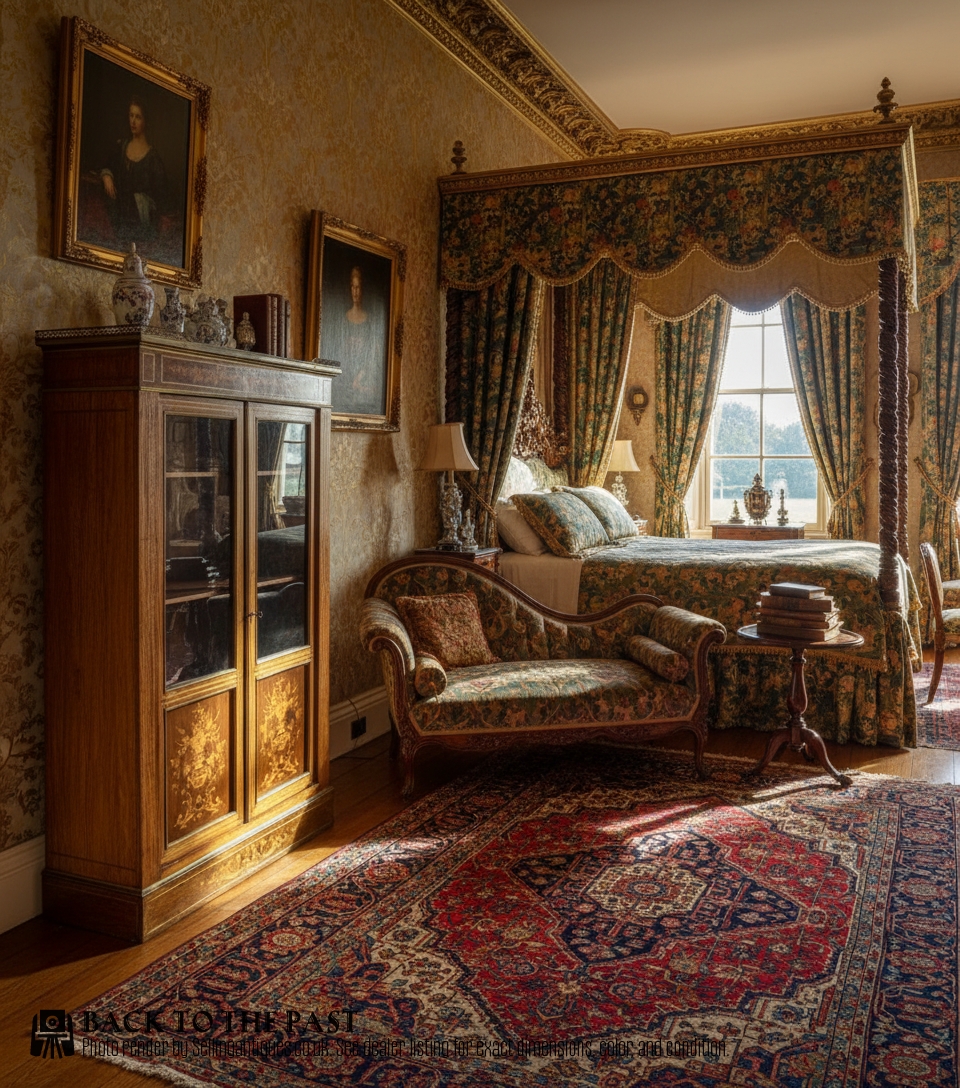
Inlaid Floral Vitrine Cabinet
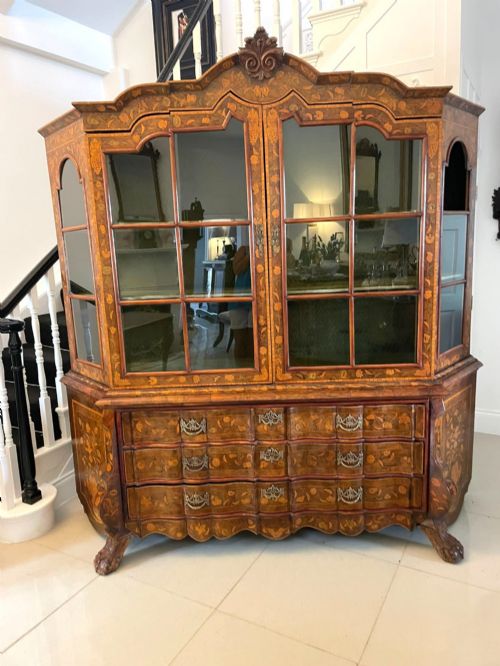
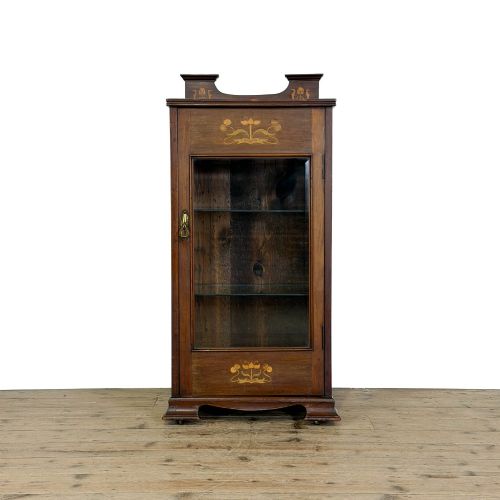
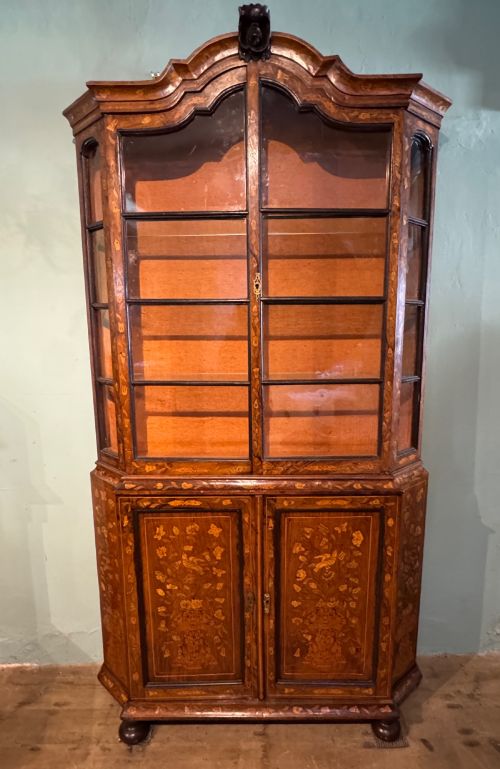
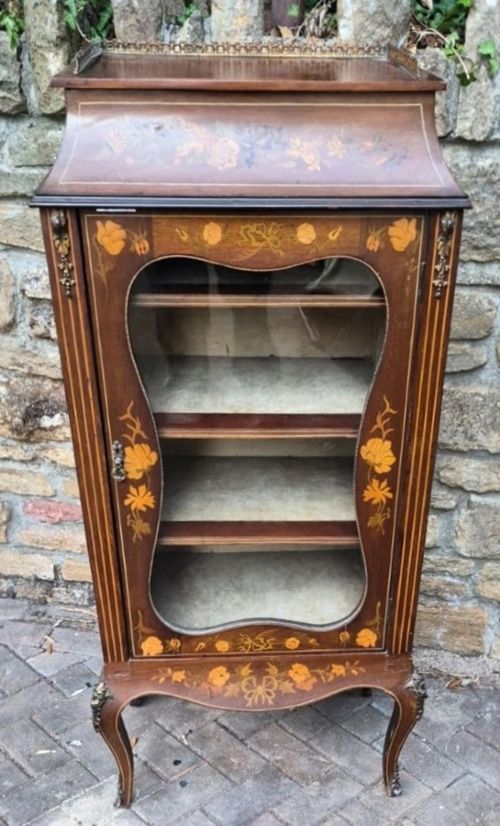
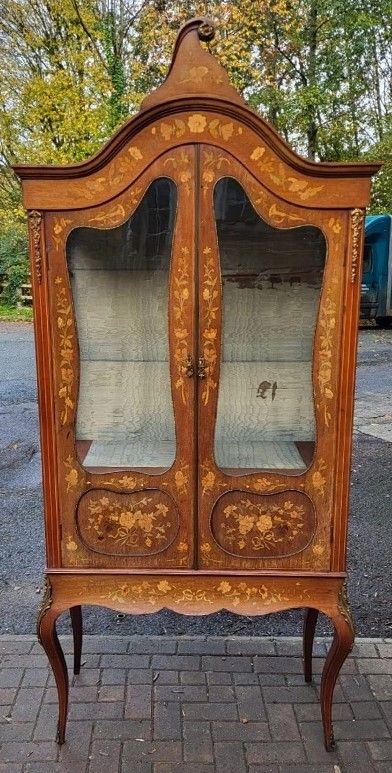
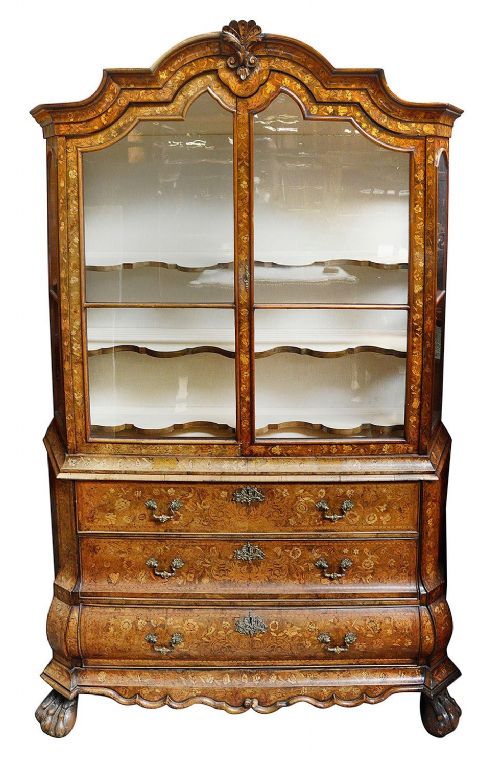
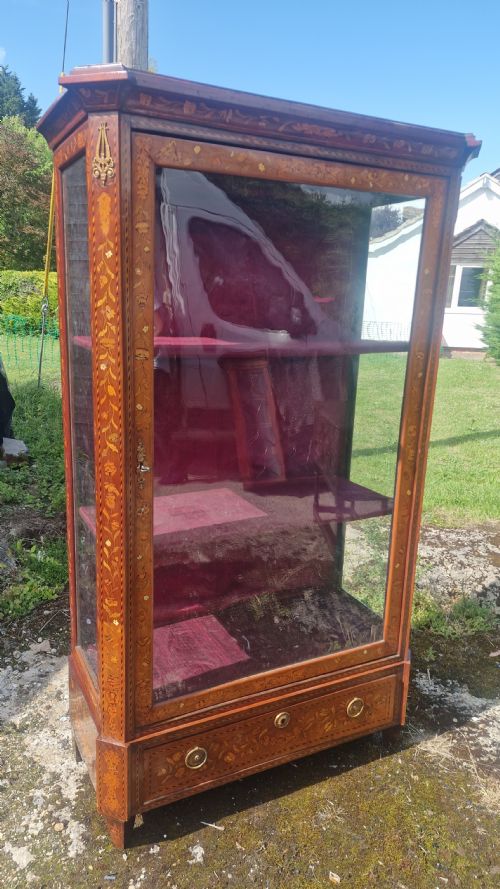
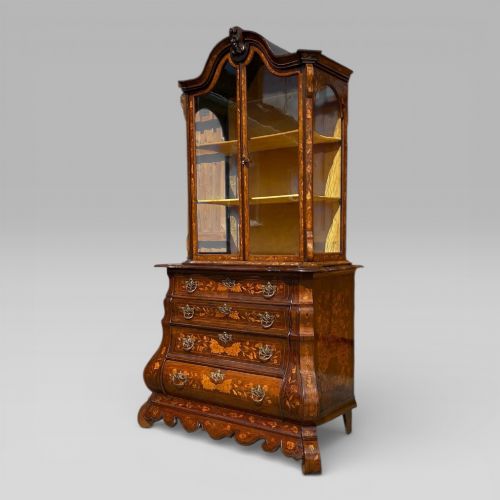
When you search for an inlaid floral vitrine cabinet, you are looking at glazed display furniture featuring botanical wood marquetry. The pieces available span several eras, crossing Edwardian satinwood and mahogany forms alongside substantial walnut Dutch Baroque styles.
Most examples you will meet on this page date from the eighteenth century through to the Edwardian period. Forms range from compact pier cabinets and corner cupboards to large bombe display cabinets and cabinets on chests.
The primary purpose of these cabinets is the display of precious objects behind glass. The integration of floral inlay elevates utilitarian storage into decorative focal points for a room.
How they were made
Cabinet makers utilised foundational timbers such as mahogany, walnut, and satinwood, applying fruitwoods and exotic varieties for detailed marquetry panels. Glass panes provide the transparent enclosure for display, occasionally held by brass framing.
Makers embellished surfaces with ormolu mounts and painted accents alongside complex wood inlay depicting floral motifs. Carcass construction involved solid timbers and selected veneers shaped into serpentine and bombe contours.
Several cabinets feature elaborate floral marquetry depicting tulips and urns that outlived the empires of their makers.
What varies in quality
The intricacy and precision of the floral marquetry separate standard examples from exceptional pieces. The choice of background timber, such as figured walnut, burr walnut, or fine satinwood, dictates the visual depth of the cabinet.
Structural complexity, including serpentine fronts and bombe shaping, requires advanced cabinet-making skill. The integration of original cast ormolu mounts and finely glazed doors contributes to the standing of an individual piece.
Edwards and Roberts
The Inlaid Floral Vitrine Cabinet Glossary
- Vitrine
- A glass-fronted cabinet designed for displaying fine objects and porcelain. The term derives from the French word for glass.
- Marquetry
- Decorative patterns formed by fitting together thin veneers of wood and other materials onto a structural carcass. Floral designs are particularly characteristic of Dutch and Sheraton revival pieces.
- Bombé
- A swelling, outward-curved furniture shape most often seen on eighteenth-century Dutch cabinets. This bulging profile demands considerable mastery from the woodworker.
- Pier cabinet
- A low cabinet built to fit the wall space between windows. Victorian examples frequently feature glazed doors and marquetry top surfaces.
- Ormolu
- Gilt bronze mounts applied to furniture for decorative effect. It provides metallic contrast against dark walnut or mahogany surfaces.
Inlaid Floral Vitrine Cabinet: Frequently Asked Questions
What is a vitrine cabinet?
A vitrine cabinet is an enclosed piece of furniture featuring glass panels designed specifically to showcase decorative items, ceramics, and collectibles while protecting them from dust.
These pieces combine functional storage with display space, often sitting in reception rooms or drawing rooms as decorative centrepieces.
Where should I place a cabinet?
These cabinets suit drawing rooms, reception hallways, or dining rooms where their glass doors and detailed marquetry can be appreciated.
Keep them away from direct sunlight to protect delicate wood veneers and painted floral details from fading over time.
How do I distinguish periods?
Edwardian cabinets often utilise light satinwood, mahogany, and Sheraton revival influences with restrained floral painting or inlay. Eighteenth-century and nineteenth-century Dutch pieces tend to feature heavy walnut construction and dense, dramatic floral marquetry.
Form also guides attribution, as bombe shapes and cabinet-on-chest structures point firmly towards earlier Dutch origins.
How were floral designs created?
Craftsmen cut delicate shapes from various coloured fruitwoods and veneers, assembling them into botanical motifs before pressing them into the cabinet surface. Shading was often achieved by scorching wood veneer edges in hot sand.
This meticulous technique produced lasting floral displays across door panels and friezes.