
Inlaid Marquetry Vitrine
An inlaid marquetry vitrine combines precision cabinetwork with glazed display space, offering a sophisticated vessel for cherished porcelain and objects.
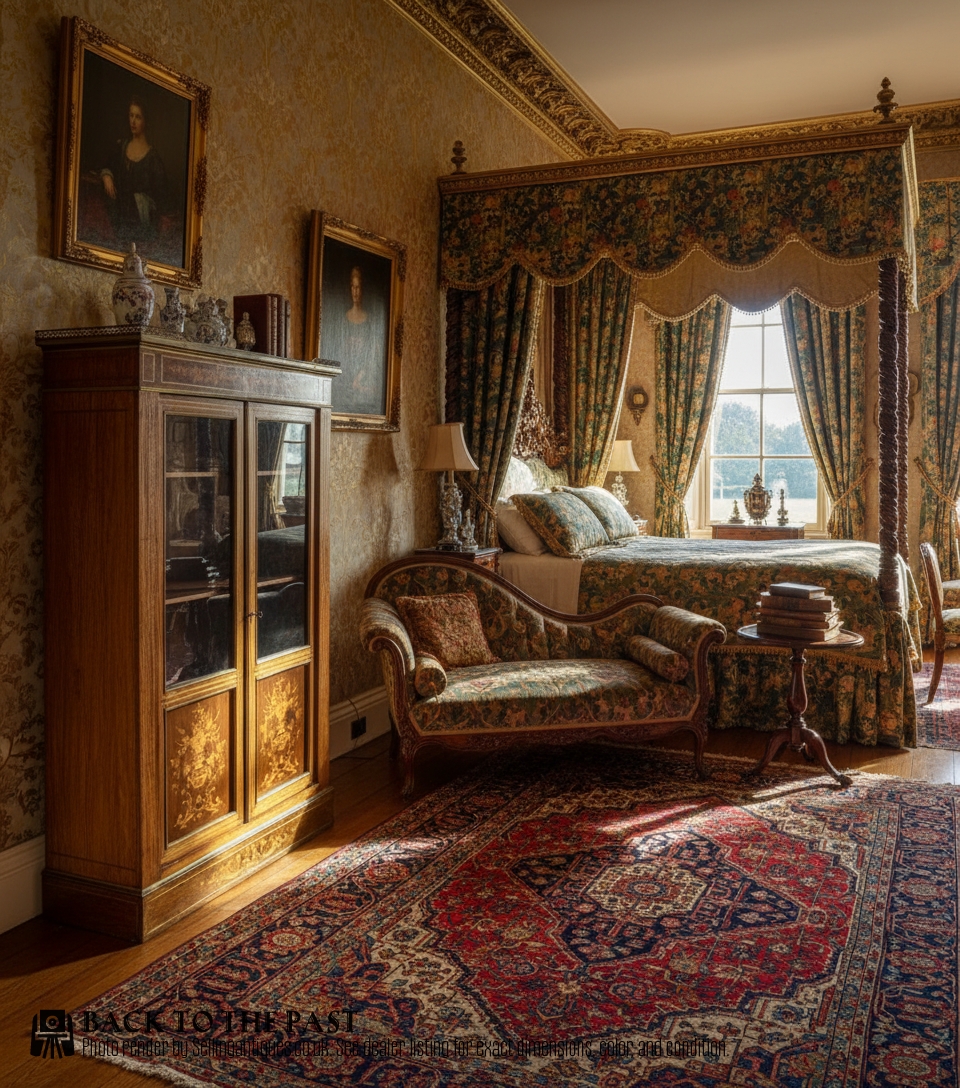
Inlaid Marquetry Vitrine
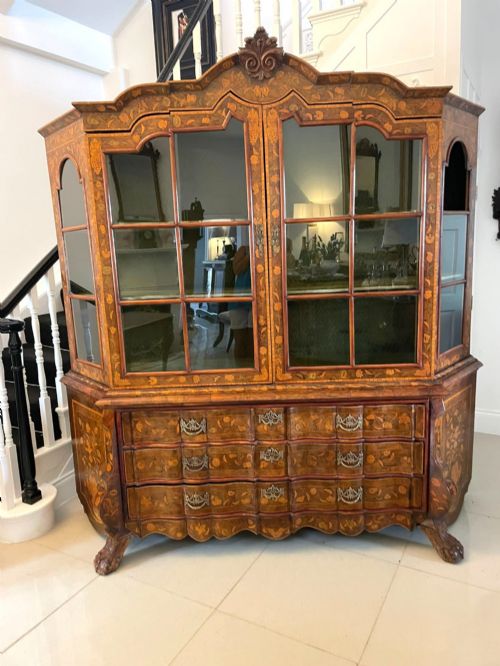
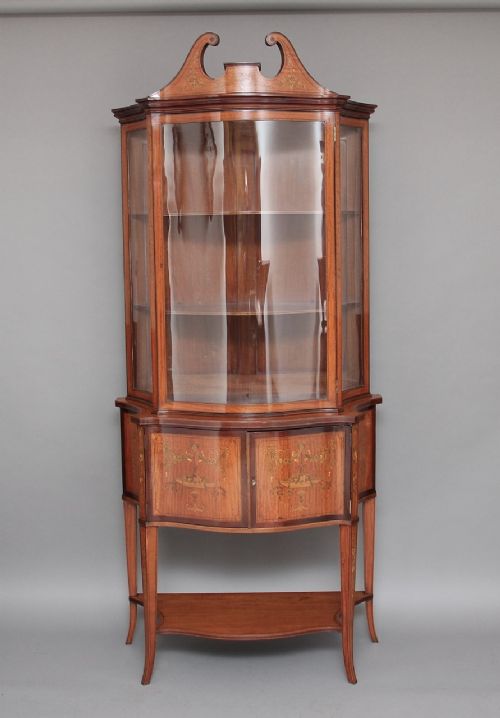
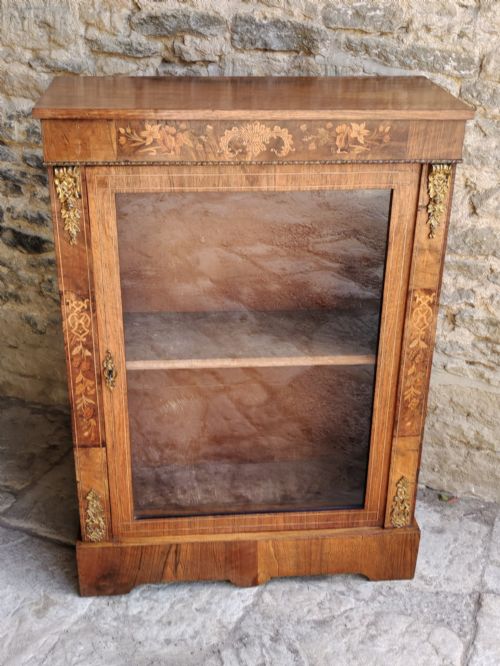
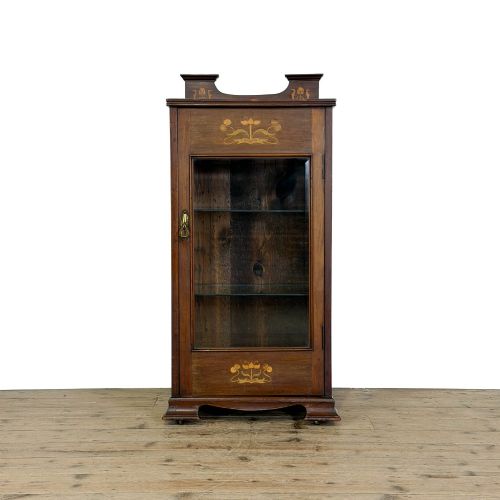
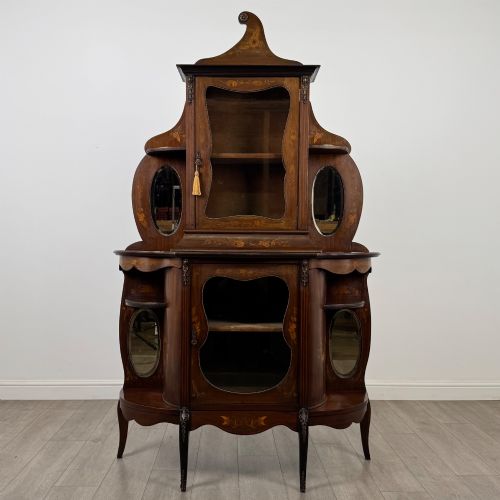
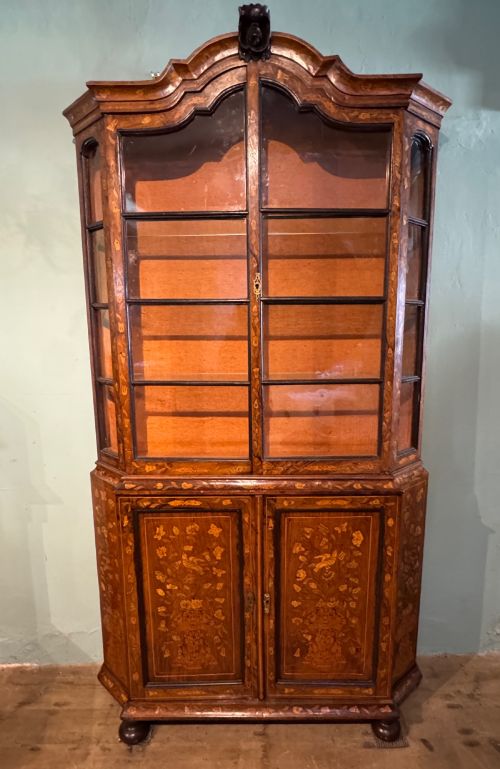
When you search for an inlaid marquetry vitrine, you meet pieces originating across the eighteenth, nineteenth, and early twentieth centuries. These cabinets serve primarily to exhibit decorative objects, porcelain, and curiosities behind protective glazing.
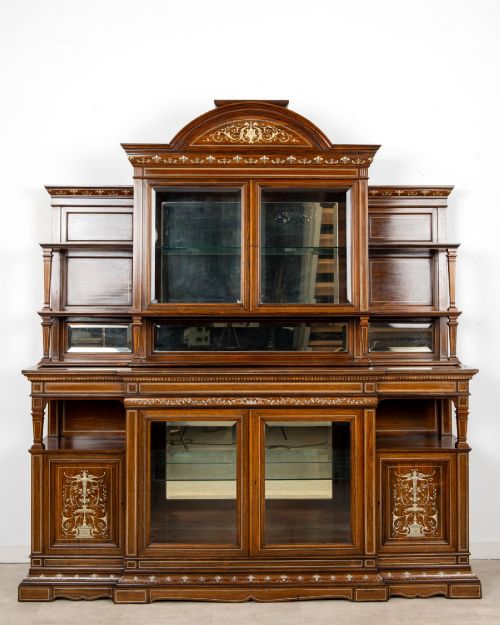
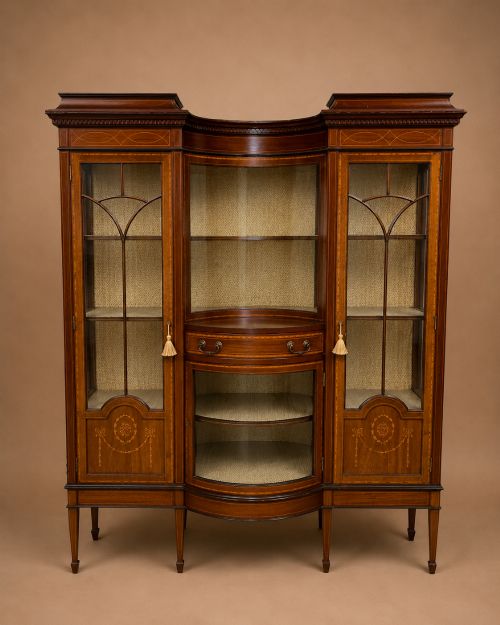
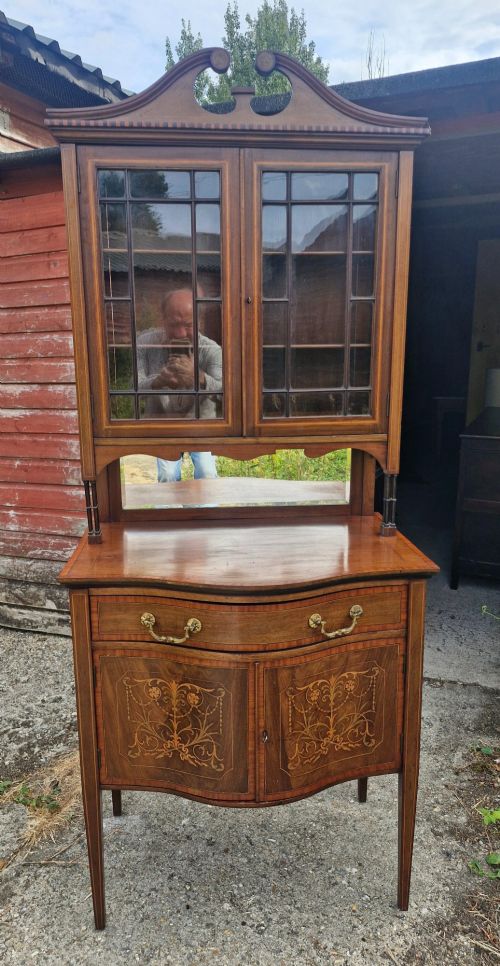
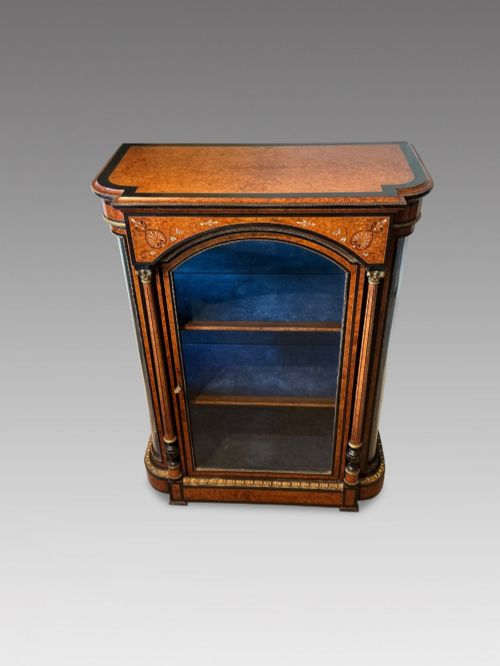
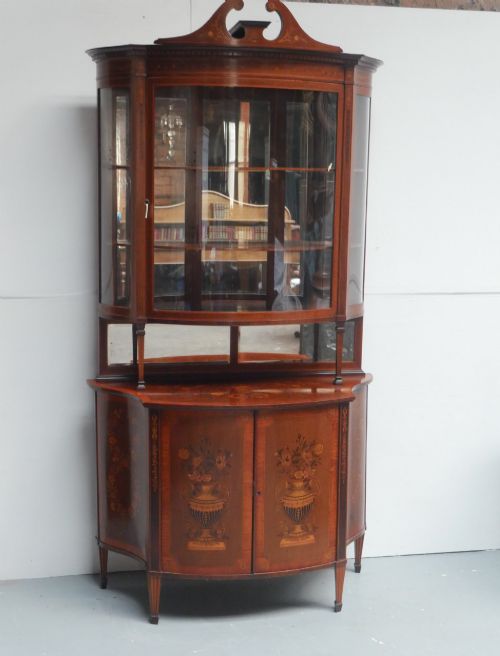
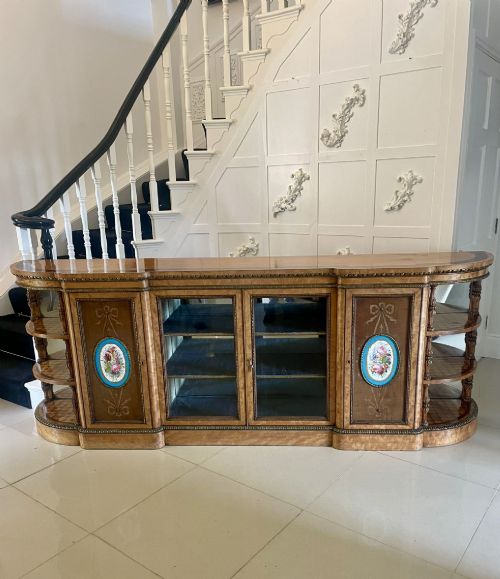
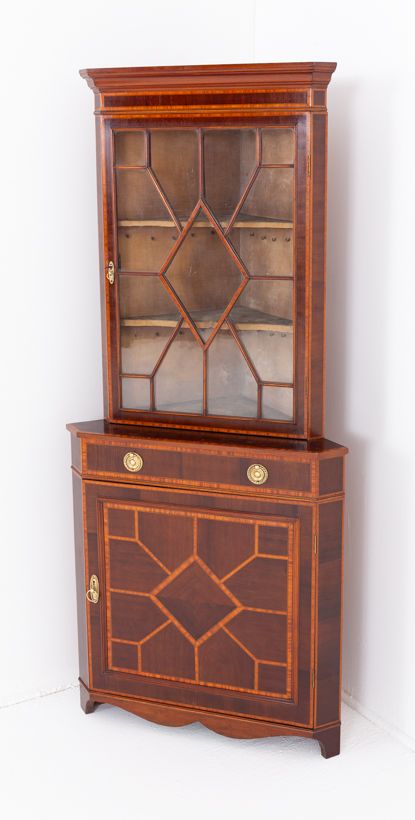
The most common examples on this page are Edwardian and Victorian creations in mahogany, walnut, and satinwood. Forms range from compact corner cabinets and pier cabinets to monumental credenzas and two-part display cases.
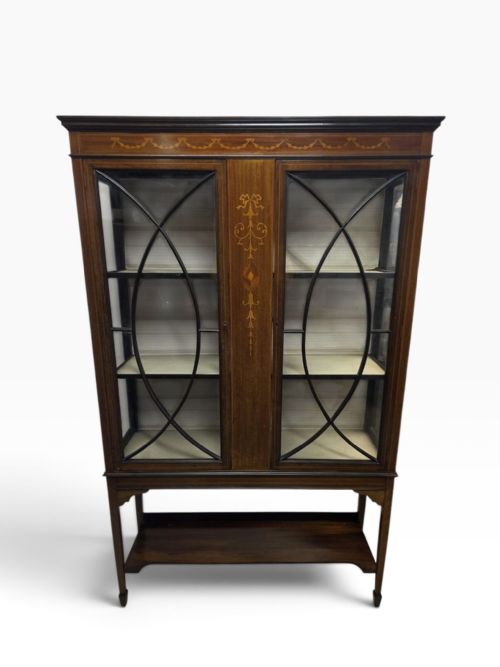
Earlier pieces from the eighteenth century often display Dutch Baroque influence with elaborate floral designs, while later Edwardian examples frequently embrace Sheraton Revival symmetry.
Materials and Technique
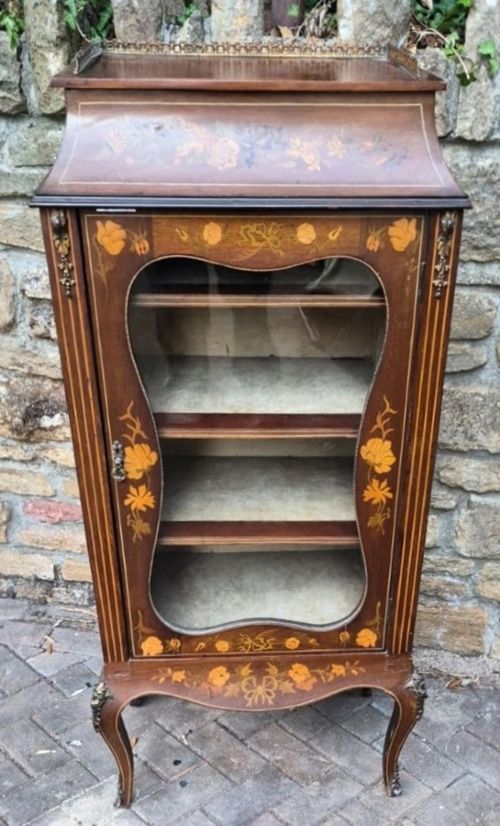
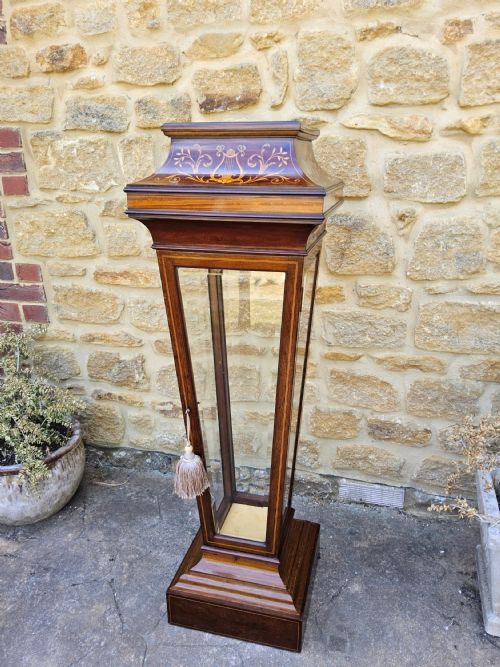
Cabinetmakers constructed carcass frames using solid timbers such as mahogany and walnut, applying delicate veneers of satinwood across visible surfaces. Marquetry panels were assembled by cutting contrasting wood veneers together to form floral, pictorial, or geometric motifs.
Glazing typically involves individual glass panes held within wooden framing or intricate astragal bars. Mounts of cast or chased ormolu and brass trim borders, doors, and feet, complementing the inlaid decoration.
Display formats range from compact wall cabinets and corner units to expansive credenzas and two-part cabinets with glass doors.
Craftsmanship and Proportion
Distinction across the range lies in the precision of the marquetry cutting and the choice of secondary timbers. Finer pieces demonstrate seamless veneer alignment where floral patterns flow naturally across doors and drawers without gaps or crude filler.
Structural harmony also dictates standing; superior examples balance elaborate ormolu mounts and glazed areas without appearing heavy. The crispness of internal shelving and original brass hardware further separates standard production from exceptional cabinet work.
Collinson and Lock·Edwards and Roberts·Maple and Co·James Hicks
The Inlaid Marquetry Vitrine Glossary
- Marquetry
- Decorative veneer work forming pictures or patterns by assembling pieces of different coloured wood. This technique requires immense skill to ensure tight joints between individual wooden elements.
- Vitrine
- A glass-fronted cabinet designed specifically for displaying fine objects and porcelain. The glazing protects contents from dust while allowing all-round visibility.
- Astragal
- Moulding profiles used to hold panes of glass within a glazed door or window. In these cabinets, wooden or brass astragals form decorative geometric grids.
- Ormolu
- Gilded bronze mounts applied to furniture for decorative accent. The technique involves coating bronze in a mercury-gold amalgam and heating it.
- Satinwood
- A durable tropical hardwood known for its golden-yellow sheen and silky lustre. It is frequently employed for contrasting inlay work and fine furniture veneers.
Inlaid Marquetry Vitrine: Frequently Asked Questions
How do I date an antique vitrine?
Dating relies on examining timber species, construction methods, and stylistic influences. Pieces from the eighteenth century often feature heavier walnut frames and Dutch floral marquetry, whereas Edwardian examples favour lighter satinwood and Sheraton Revival symmetry.
Hardware, glazing techniques, and secondary woods inside the carcass further narrow down the decade of production.
Where should I place a vitrine?
These cabinets suit reception rooms, drawing rooms, and hallways where natural light enhances the glazed display area. Corner units fit neatly into unused angles, freeing up wall space while still offering storage.
Avoid placing antique veneer and glass cabinets in direct sunlight or damp environments to protect the polished timber surfaces.
How do I care for antique marquetry?
Maintenance involves dusting regularly with a soft, dry cloth and avoiding silicone-based polishes. Maintaining stable room humidity prevents the delicate wood veneers from drying out or lifting over time.
Applying microcrystalline wax occasionally helps nourish the timber and protect the polished finish without harming the historic surface.