
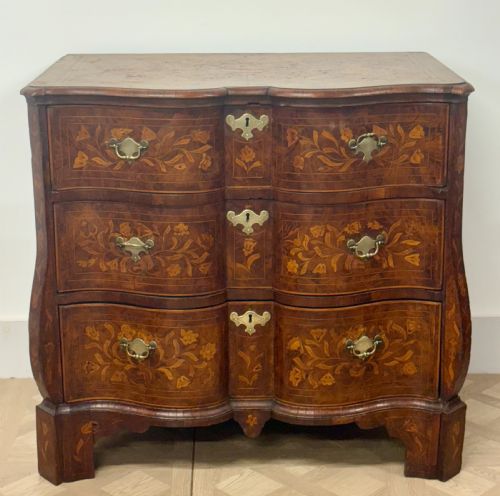
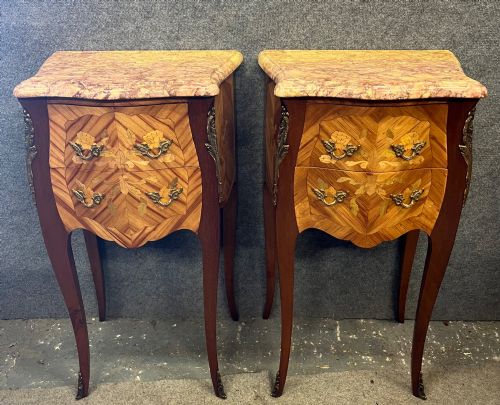
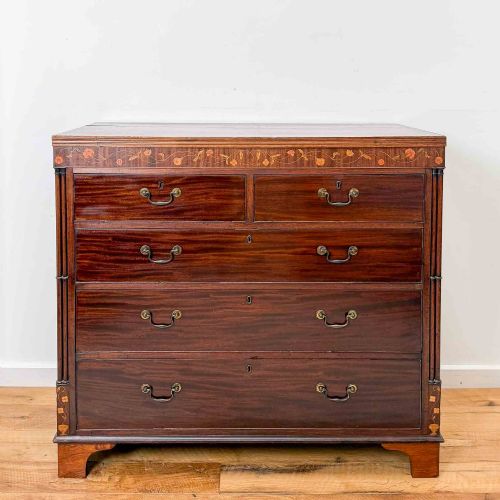
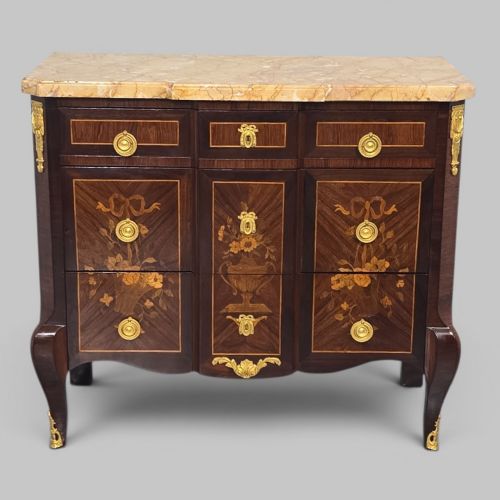



Inlaid Floral Commode
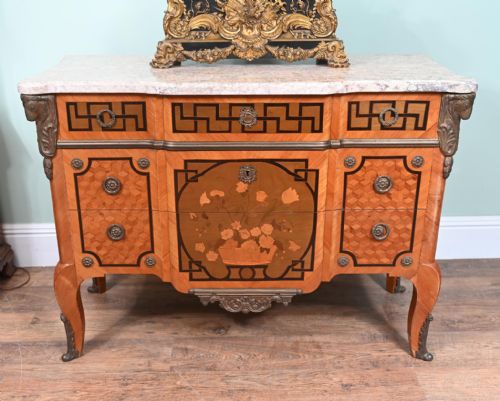
An inlaid floral commode brings together the patient craft of wood marquetry and the sculptural presence of centuries past.
Inlaid Floral Commode
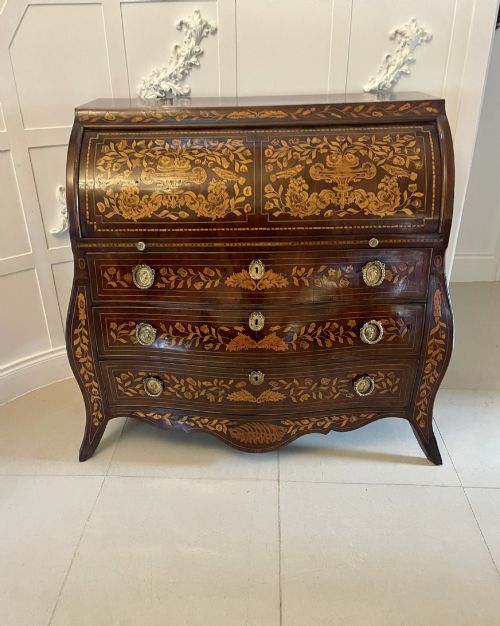
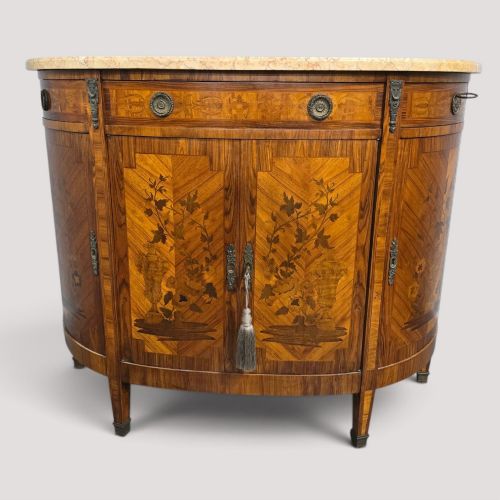
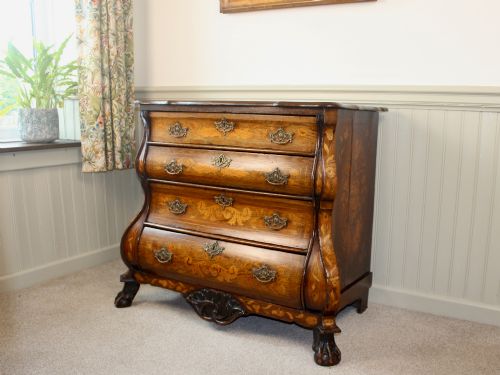
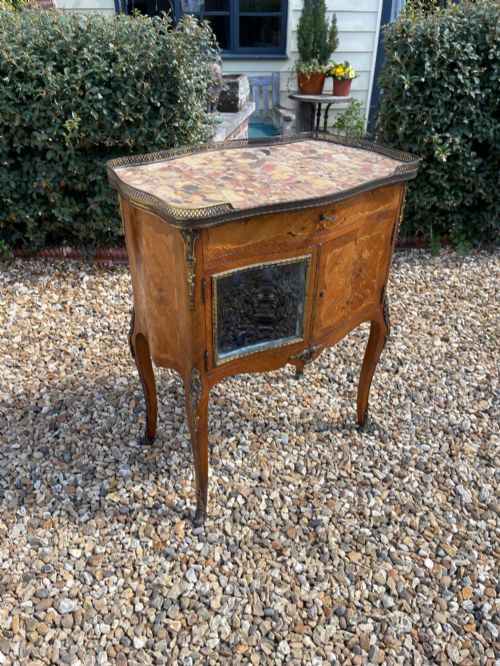
When you search for an inlaid floral commode, you encounter a wide spectrum of storage forms built across several centuries in Britain and continental Europe. The selection spans robust Dutch walnut and oak bombé chests of drawers alongside refined French Louis-style cabinets, sideboards, and bedside tables.
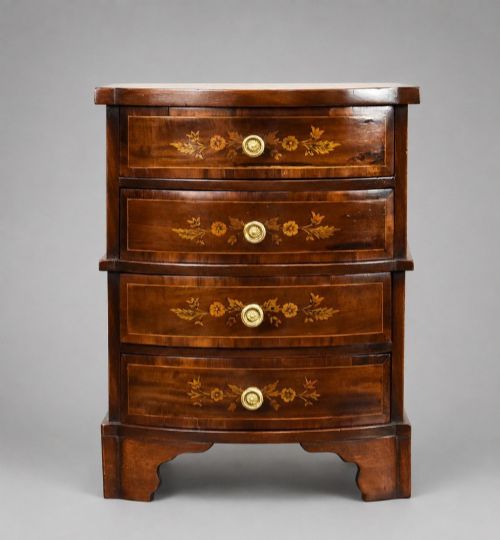
Most pieces you meet on this page date from the eighteenth and nineteenth centuries, with notable examples stretching back to the seventeenth century and forward into twentieth-century revivals. Alongside full-scale commodes and chests, the forms include tallboys, bureaus, demi-lune consoles, and neat miniature furniture.
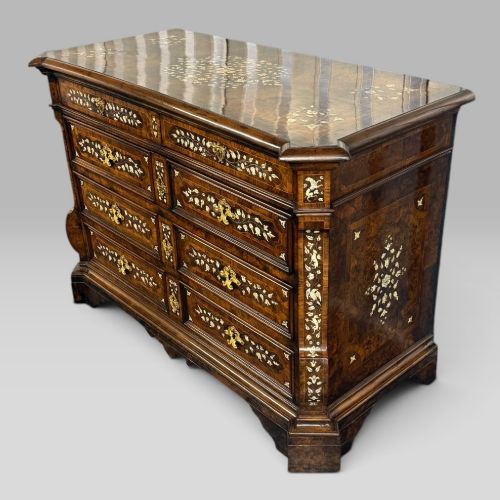
Regional variations define the appearance, showing the distinct influence of Dutch marquetry, Italian baroque workshops, and English Sheraton revival cabinet making. Each piece serves as a functional storage chest or cabinet while displaying detailed floral designs worked directly into the wooden surfaces.
Materials and Techniques
Cabinet makers constructed the foundational carcases of these pieces using sturdy timbers like oak, walnut, and mahogany, providing a stable frame for intricate decorative work. Over these structures, they applied fine veneers of exotic and native woods including satinwood, kingwood, rosewood, and fruitwood.
The floral decoration relies on marquetry techniques, where contrasting wood veneers are cut and fitted together into pictorial designs before being glued onto the furniture carcase. Metal elements such as brass handles and ormolu mounts frequently accent the woodwork, while top surfaces often feature polished marble slabs.
Floral marquetry panels often conceal subtle wooden stems that appear to wind around drawer locks.
The Measure of Craft
Quality rests upon the precision of the marquetry cutter and the selection of timber veneers used to create depth within the floral motifs. Master makers aligned wood grain and colour graduation deliberately, ensuring the botanical details remain crisp and lifelike rather than flat or crowded.
Structural integrity also separates the output of standard workshops from exceptional ateliers, visible in the careful jointing of drawers and the harmonious integration of bronze or ormolu mounts. The weight and thickness of the marble tops, where fitted, further indicate the original tier of production.
Edwards and Roberts·Grand Ducal Workshops
The Inlaid Floral Commode Glossary
- Marquetry
- The art of forming decorative patterns by fitting together thin slices of wood veneer onto a structural carcase. This technique allows for complex pictorial representations of flowers and foliage.
- Bombe
- A swollen or bulging profile characteristic of continental furniture forms, particularly associated with Dutch and French chests of drawers. This curved shape requires advanced woodworking skill to maintain structural strength.
- Ormolu
- Gilded bronze mounts applied to furniture edges, feet, and key escutcheons to provide decorative contrast against the wood. The metalwork is cast and finished by hand.
- Demi-lune
- A half-moon shape used for the footprint and top surface of console tables and cabinets designed to stand flush against a wall. These pieces frequently feature curved veneered panels.
- Satinwood
- A lustrous hardwood displaying a golden-yellow sheen, widely utilised during the eighteenth and nineteenth centuries for veneering and inlay work.
Inlaid Floral Commode: Frequently Asked Questions
How do I clean an inlaid wooden surface?
Dust the timber gently with a dry, soft cloth to remove everyday particles without disturbing the delicate veneer layers.
Apply a microcrystalline wax polish sparingly when the wood appears dry, avoiding any moisture or silicone-based sprays.
Where should I place a marble-topped cabinet?
Position the furniture away from direct sunlight and strong heat sources to prevent the wood veneers from drying out and cracking.
Ensure the floor beneath is level so the heavy marble top rests evenly across the wooden carcase without putting strain on the joints.
How do I distinguish eighteenth-century Dutch pieces?
Look for dense floral marquetry covering the entire drawer fronts and sides, often paired with swelling bombe profiles and substantial oak carcases.
Examine the interior drawer construction and timber patination for signs of age that match the Georgian era.
Can these cabinets be used for daily storage?
These chests and cabinets function effectively for storing linens, documents, or tableware while serving as a central decorative focus in a room.
Take care not to overload the interior shelves or drawers, treating the antique mechanisms with gentle handling.