




Inlaid Drop Front Cabinet
An inlaid drop front cabinet combines concealed writing surfaces with decorative wood craft, offering practical storage and distinct period character.
Inlaid Drop Front Cabinet
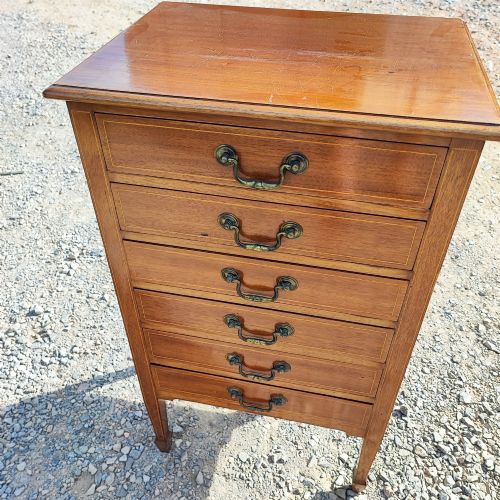
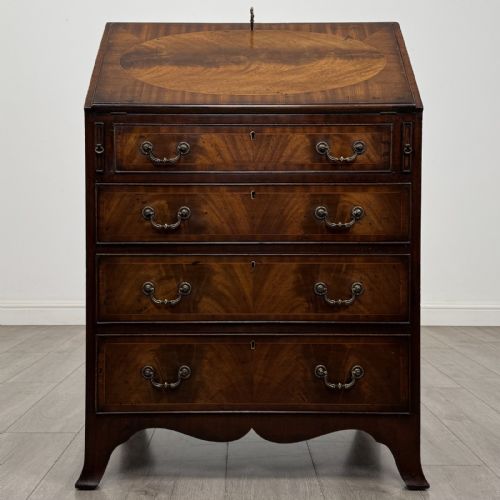
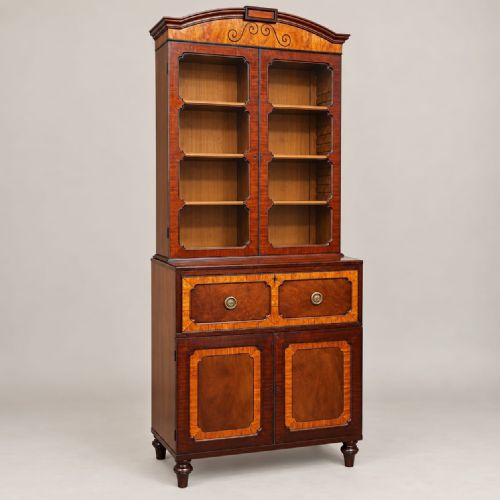
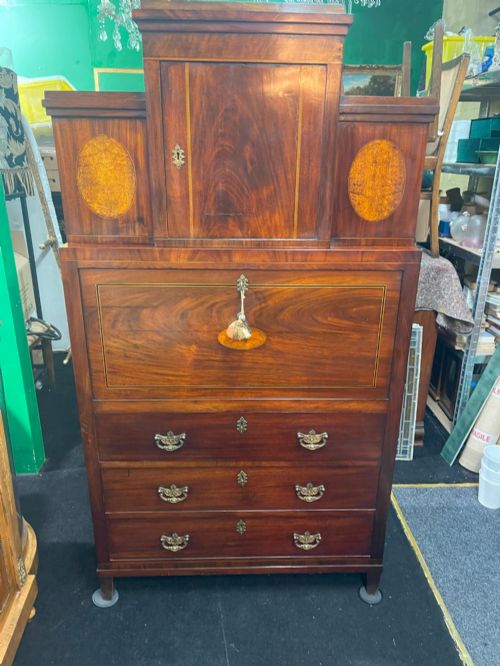
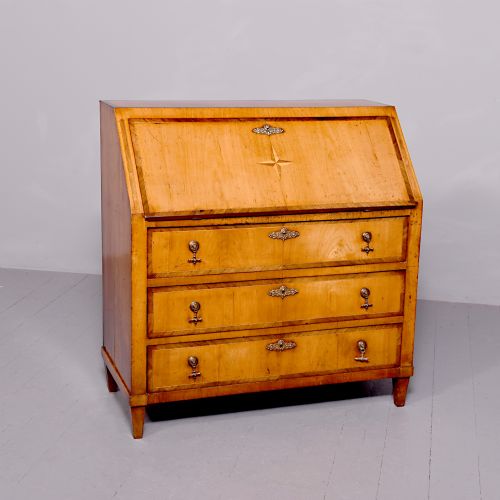
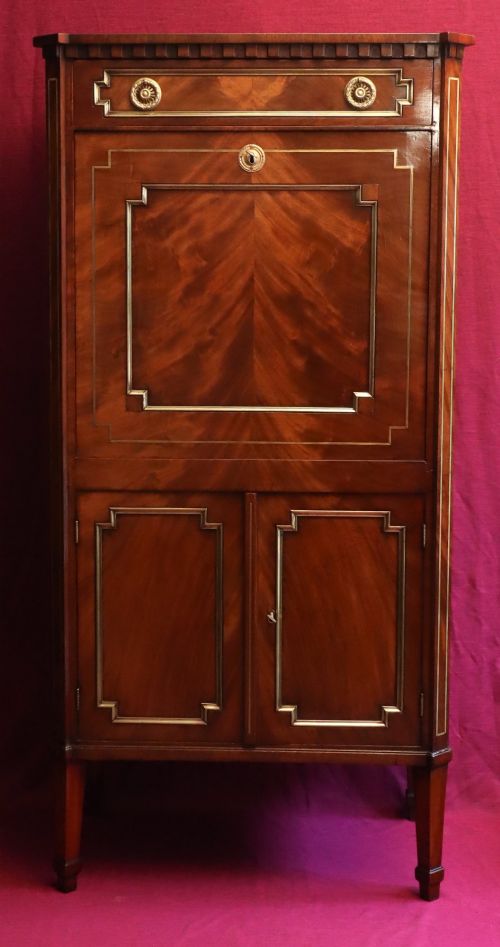
An inlaid drop front cabinet appears across several historical periods, most frequently originating from the Georgian era, the nineteenth century, and the Edwardian period. These pieces encompass writing desks, bureau bookcases, and music cabinets, sharing the defining characteristic of a fall-away writing surface or falling flap.
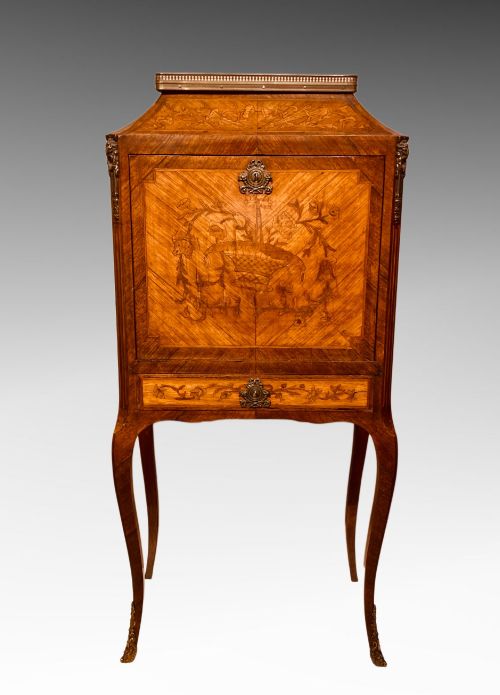
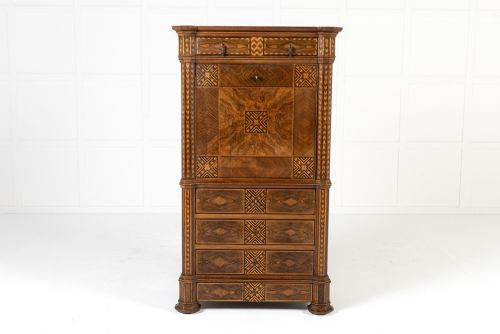
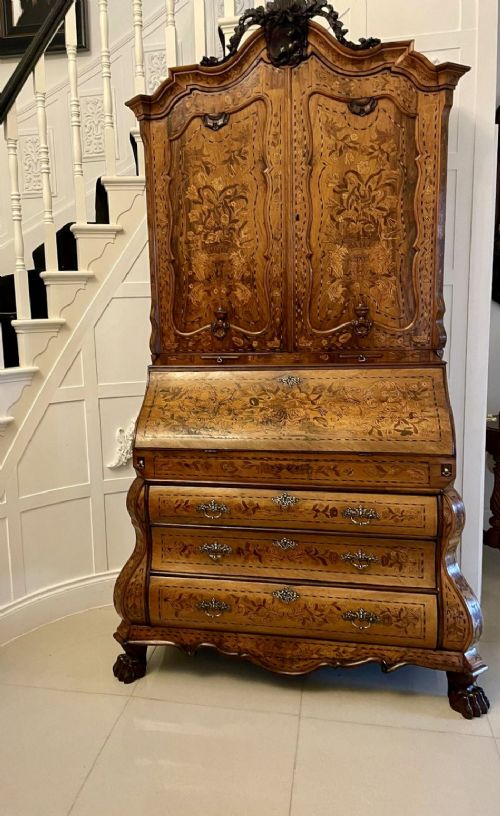
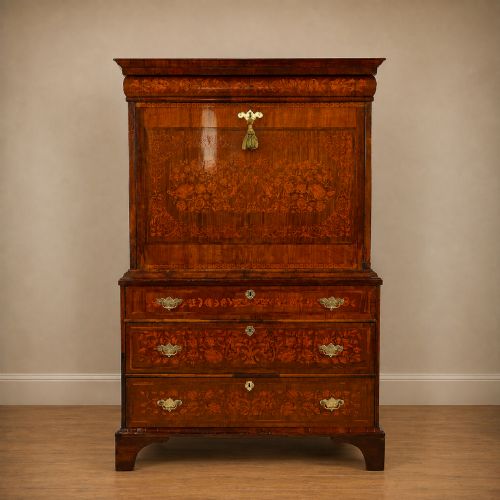
The selection ranges from substantial mahogany bureau bookcases to smaller rosewood and satinwood escritoires designed for domestic writing and storage. Continental examples, particularly Dutch marquetry pieces in walnut, demonstrate elaborate floral and geometric inlay work across the primary panels.
Materials and technique
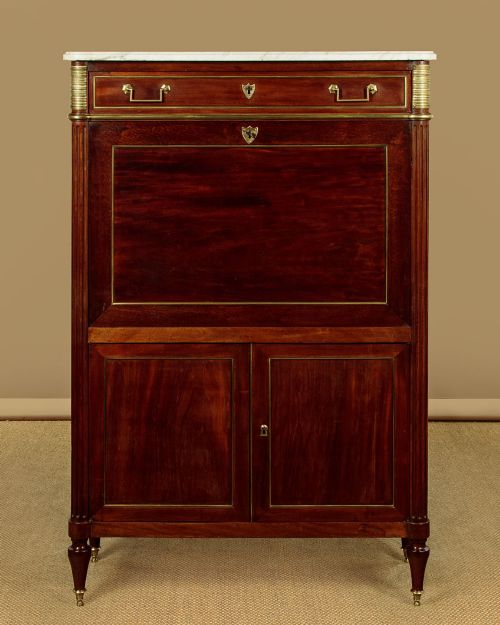
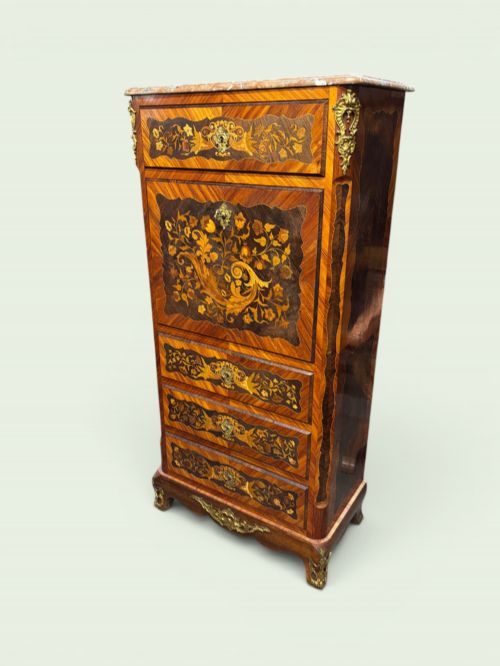
Cabinet makers utilised primary timbers such as mahogany, walnut, rosewood, and satinwood, applying intricate marquetry and geometric veneer patterns to the exterior surfaces. Brass hardware, ormolu mounts, and marble tops frequently complete the construction of continental secretaire abattant styles.
The internal compartments incorporate fitted drawers, pigeon holes, and writing ledges behind the drop front, requiring precise joinery to balance the weight of the falling panel against the main carcase.
Inlaid Drop Front Cabinet Retail Price Guide 2026
Typical asking prices for inlaid drop front cabinet among the pieces listed under this phrase on Sellingantiques today, from the lower quarter to the upper quarter. They describe what is for sale here now, not the wider market.
Several Edwardian music cabinets hide sheet music behind drop fronts designed to look like formal library desks.
Distinctions in craftsmanship
The standard of an inlaid drop front cabinet rests on the precision of the marquetry and the choice of timber veneers, where balanced grain patterns elevate the visual depth of the piece. Superior examples maintain structural integrity in the drop front hinge mechanism and offer finely fitted internal drawers.
The complexity of the decorative program, from simple stringing lines to elaborate floral marquetry, distinguishes standard production from exceptional examples across both English and continental workshops.
The Inlaid Drop Front Cabinet Glossary
- Escritoire
- A writing cabinet with a drop front panel that opens to reveal a fitted interior of small drawers and pigeon holes. It functions primarily as a compact desk.
- Marquetry
- The art of applying pieces of veneer to a structure to form decorative patterns and pictures. It differs from inlay by assembling the design on a backing sheet before fixing.
- Ormolu
- Gilded bronze mounts applied to furniture, commonly found on nineteenth century French pieces. The technique involves mercury gilding cast bronze.
- Secretaire abattant
- A tall vertical cabinet featuring a drop front writing surface that conceals an interior compartment. This form originates largely from continental European workshops.
Inlaid Drop Front Cabinet: Frequently Asked Questions
How do I use a drop front cabinet?
The front panel lowers on hinges to create a flat writing surface supported by internal brackets or side arms. Inside, you find small drawers and compartments for letters and papers.
When closed, the drop front conceals the working area entirely, presenting a tidy cabinet exterior to the room.
How do I date an inlaid cabinet?
Dating relies on timber selection, secondary woods used in internal framing, and the style of the marquetry decoration. Georgian pieces often employ solid mahogany carcasses, while Edwardian versions utilise lighter satinwood veneers.
Hardware styles and construction methods within the internal drawers provide further evidence for the period of manufacture.
Where should I place a secretaire in my home?
These cabinets suit studies, living rooms, or hallways where surface space allows the drop front to open fully. Placing them away from direct heat sources protects the timber veneers and prevents warping.
Their compact vertical footprint makes them practical for rooms requiring both display space and concealed storage.