
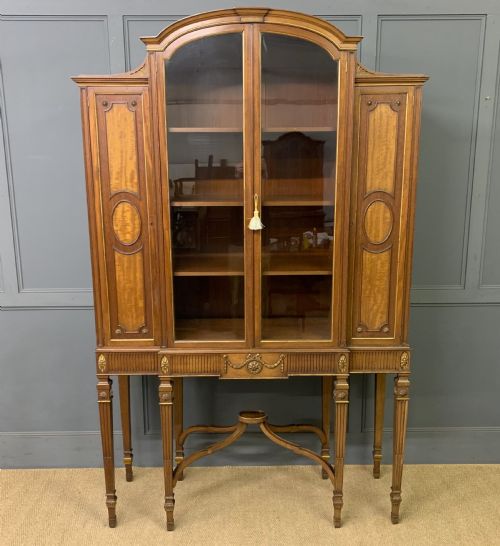
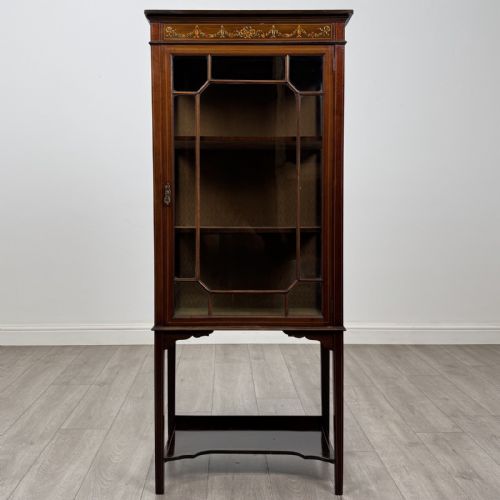
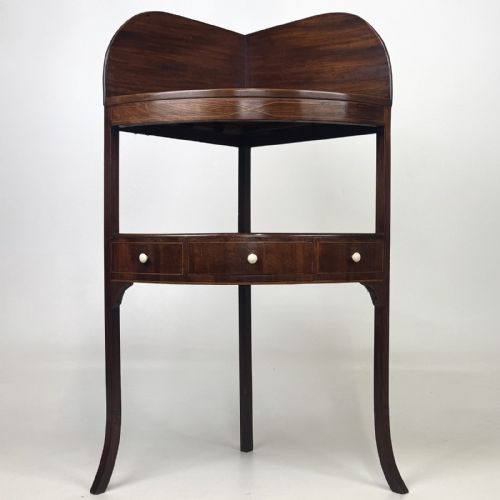
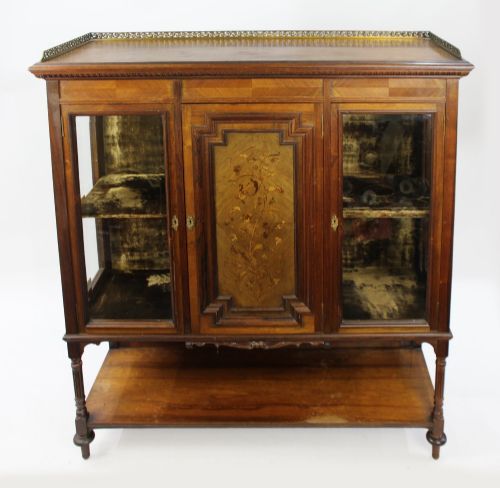
Inlaid Display Stand
When you search for an inlaid display stand, you seek a purposeful piece for presentation that combines useful timber framework with decorative surface craft.
Inlaid Display Stand
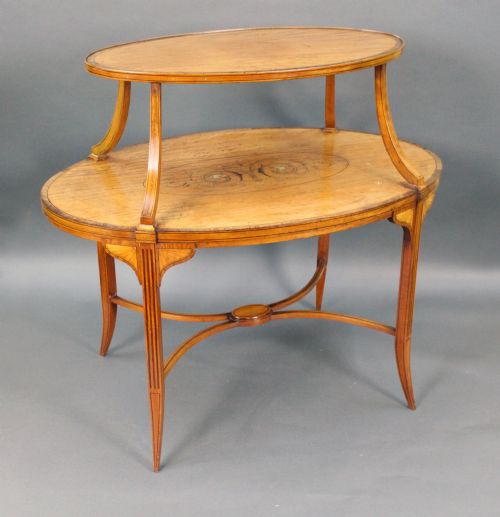
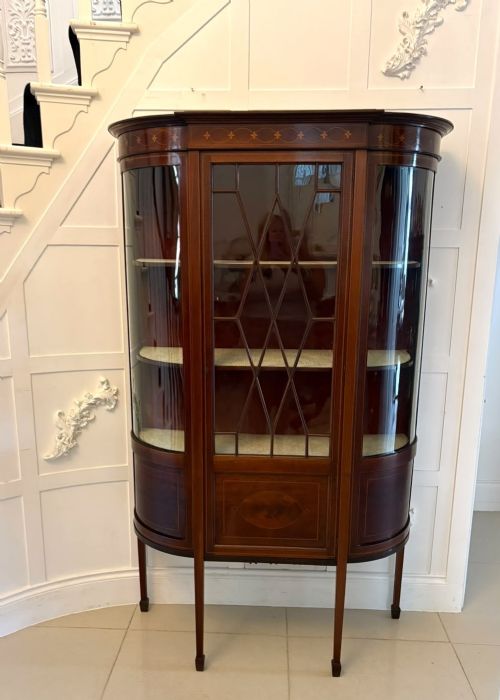
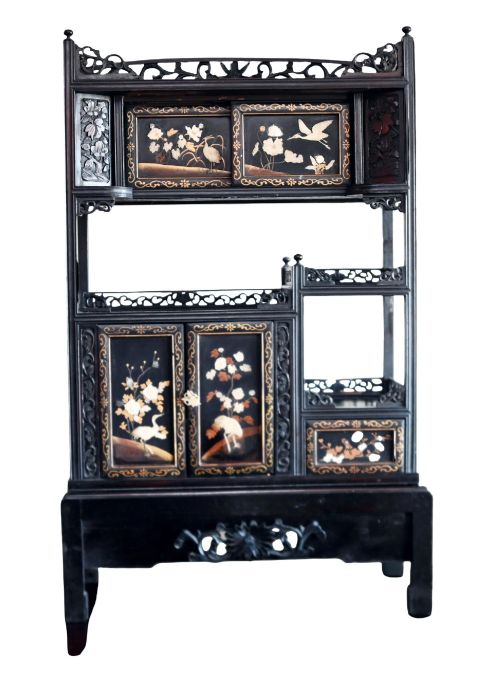
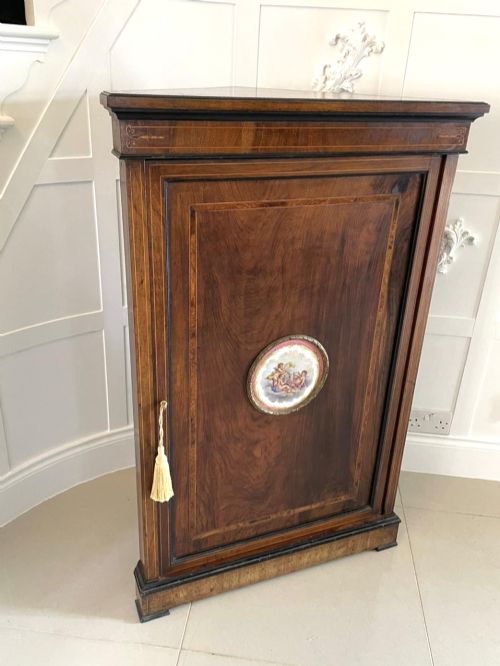
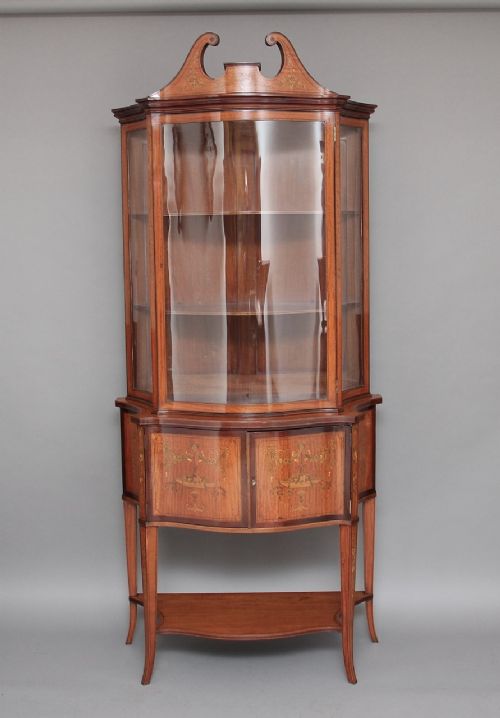
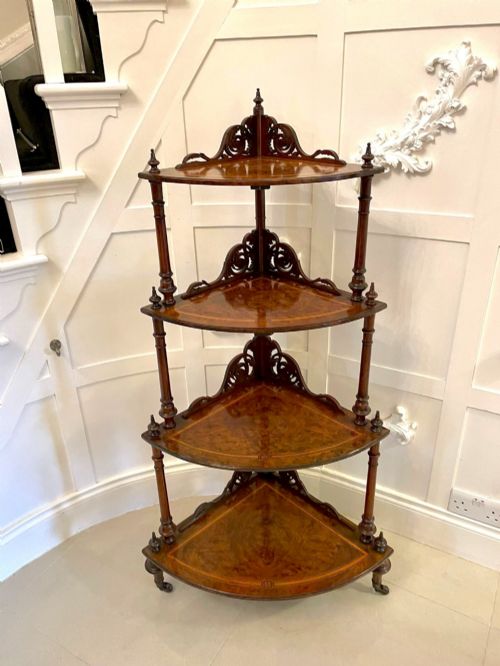
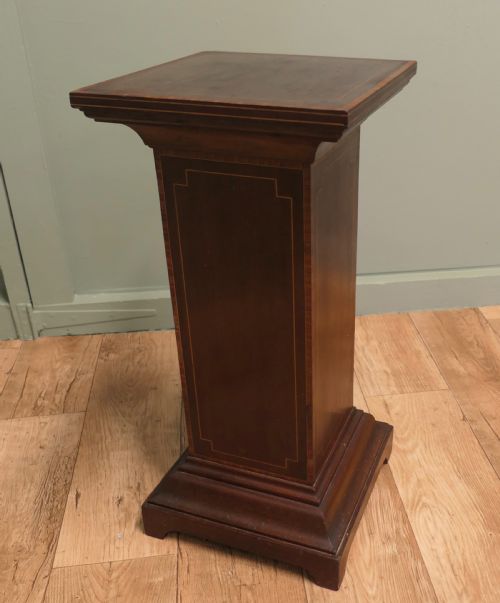
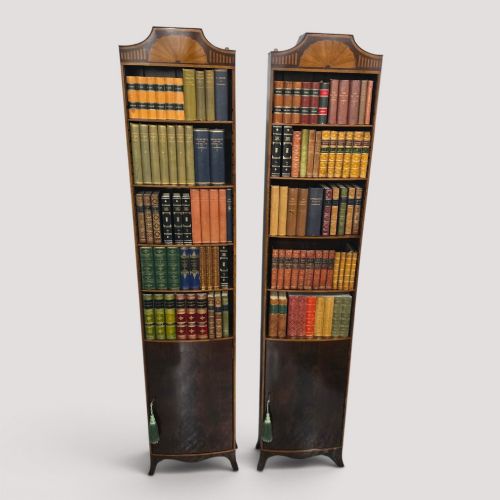
An inlaid display stand encompasses upright display cabinets, corner cabinets, vitrines, plant stands, pedestals, and etageres designed to showcase porcelain, books, and small treasures. The selection relies heavily on Edwardian and Victorian forms, alongside Georgian and later nineteenth-century examples.
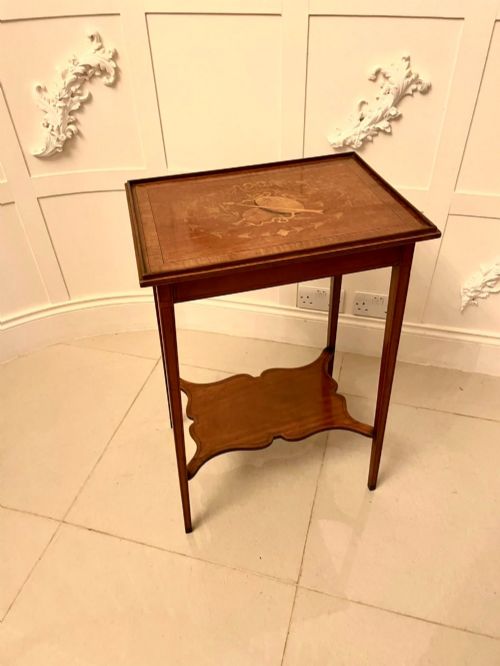
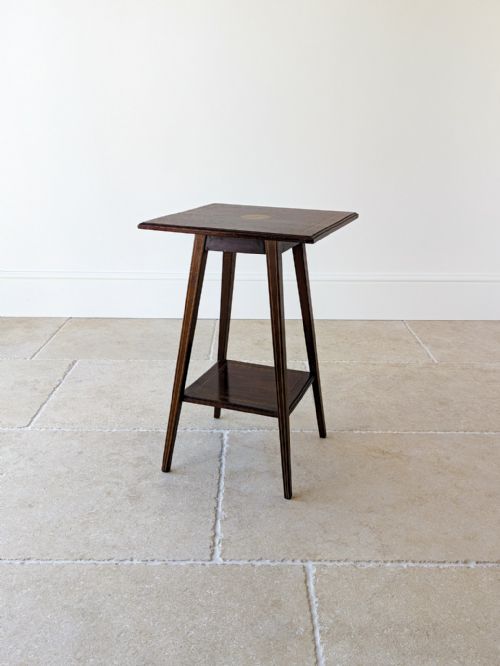
The most common formats you encounter are Edwardian mahogany display cabinets and standing pedestals, often finished with delicate satinwood or boxwood stringing and marquetry. These pieces vary from tall floor-standing corner cupboards to compact lamp tables and tiered etageres.
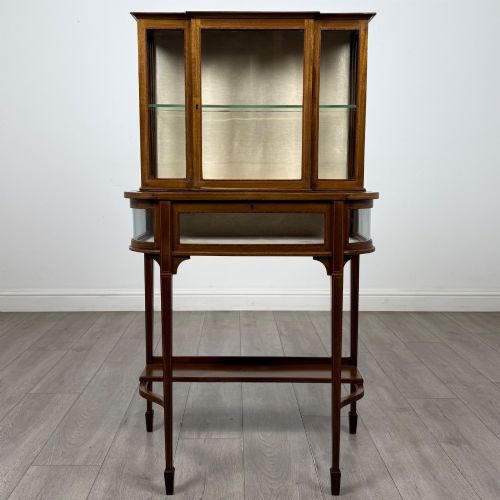
Originating largely from domestic English workshops of the late nineteenth and early twentieth centuries, these stands served the Victorian and Edwardian desire for curated interior display. They range from simple glazed cabinets on stands to elaborate serpentine-fronted vitrines.
How they were made
Makers constructed the primary carcases using dense timbers such as mahogany, walnut, rosewood, and harewood, providing a sturdy architectural frame for glass panels and shelves. Cabinet makers then recessed contrasting decorative veneers into the primary wood.
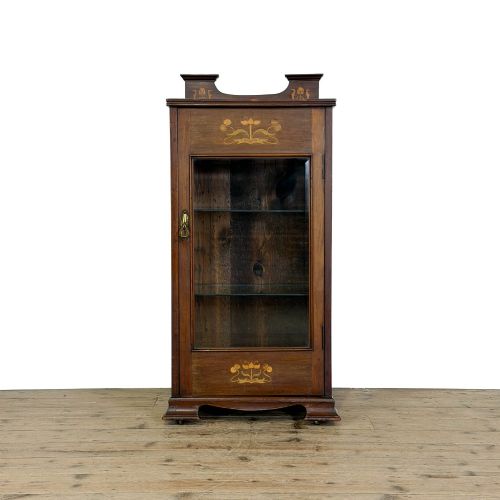
Surface ornament relied upon satinwood inlay, boxwood stringing, brass detailing, and pictorial marquetry, often executed with fine botanical or neoclassical motifs. Glazing was fitted into timber doors, sometimes supported on brass castors or elevated stands.
Listings feature periods spanning from the 17th-century Dutch Baroque era through Georgian, Victorian, and Edwardian revivals.
What varies in quality
Quality rests in the precision of the timber selection, the crispness of the inlaid motifs, and the integration of secondary woods. Pieces utilising figured burr walnut, rich mahogany, and finely graduated satinwood show superior craftsmanship compared to plain timber carcases.
The sophistication of the internal joinery, the weight and clarity of the glass, and the restraint or ambition of the marquetry define the tier of the piece. Well-balanced proportions and refined brass or ormolu mounts elevate an ordinary cabinet to a high status.
Trevor Page & Co·Collinson & Lock·Edwards & Roberts
The Inlaid Display Stand Glossary
- Inlay
- A decorative technique where pieces of contrasting timber, shell, or brass are fitted into recesses carved into the wood surface. This creates a flush, patterned design across doors, tabletops, and friezes.
- Marquetry
- Elaborate pictorial wood inlay that forms complex pictorial scenes, floral sprays, or scrolling motifs. It differs from simple linear stringing by using varied veneer grains to build up shaded images.
- Etagere
- An open tiered piece of furniture with multiple display shelves supported on slender uprights. Originating in France, these pieces served to display ornaments and small collectables.
- Vitrine
- A glass-fronted or glass-sided cabinet designed specifically for the exhibition of delicate objects and curiosities. They often feature mirrored backs and glazed side panels to maximise light.
- Serpentine
- A furniture front or tabletop shaped with a central convex curve flanked by two concave curves. This fluid line requires advanced woodworking skill to execute cleanly.
- Stringing
- Thin, narrow strips of contrasting light or dark wood inlaid into linear channels around panel edges and drawer fronts. It frames the primary timber surface with a sharp border.
Inlaid Display Stand: Frequently Asked Questions
What is an inlaid display stand used for?
These pieces were built to exhibit porcelain, glassware, books, and decorative curiosities in domestic rooms. Glazed doors and open tiers protected the contents while keeping them visible.
They functioned as focal points in drawing rooms, libraries, and hallways, reflecting the collecting habits of nineteenth and twentieth-century households.
How do I identify an Edwardian display stand?
Edwardian examples typically feature light mahogany or satinwood timbers combined with delicate boxwood stringing and neoclassical Revival motifs. The construction feels lighter and more slender than heavier Victorian counterparts.
Many bear Edwardian dates from around 1900 to 1910, often taking the form of corner cabinets, tall pedestals, or compact occasional tables with glazed panels.
Where should I place a display stand at home?
Corner cabinets and tall floor-standing cupboards fit neatly into unused room angles, making efficient use of floor space while drawing the eye upward. Freestanding tables, etageres, and pedestal stands suit brighter spots where natural light enhances the glazed or open shelves.
Keep them away from direct heat sources and strong sunlight to protect delicate wood veneers and historic polishing.