

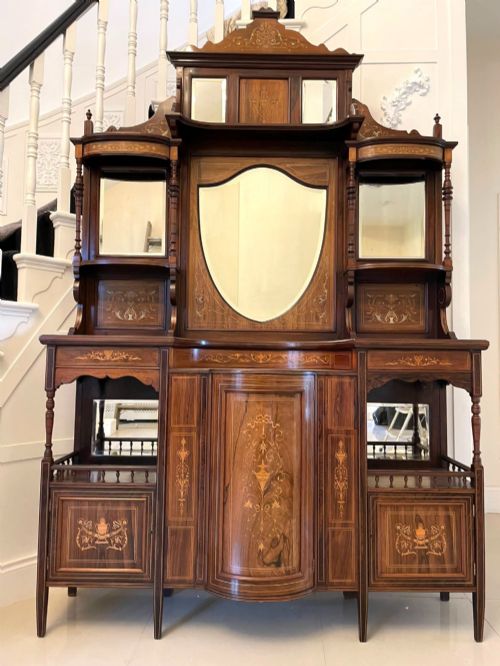
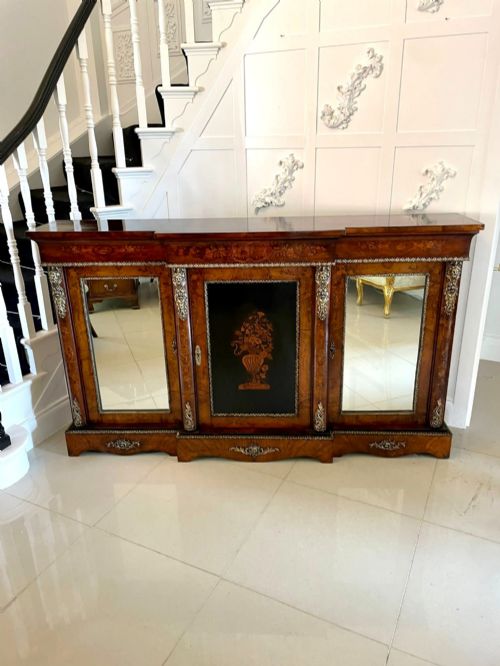
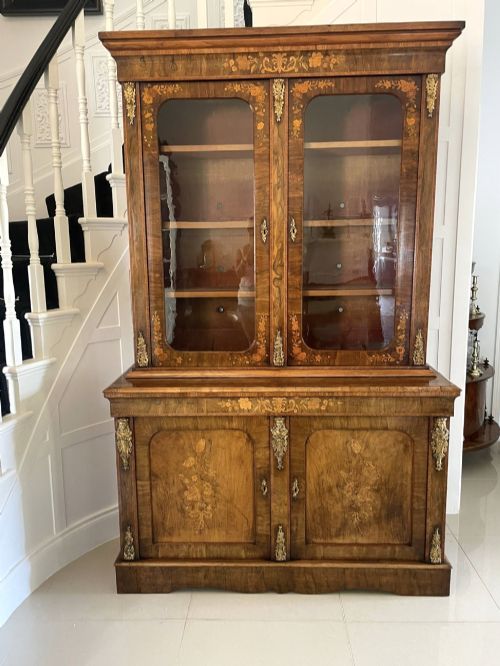
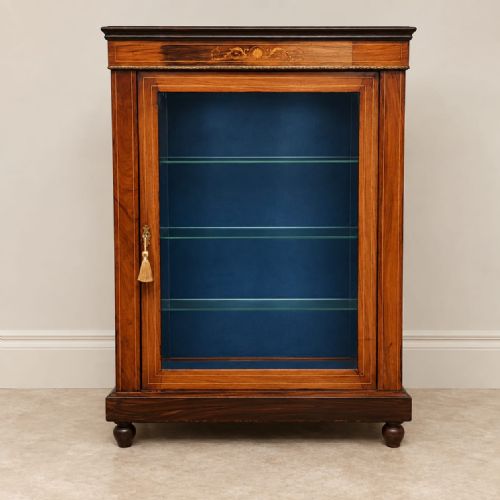
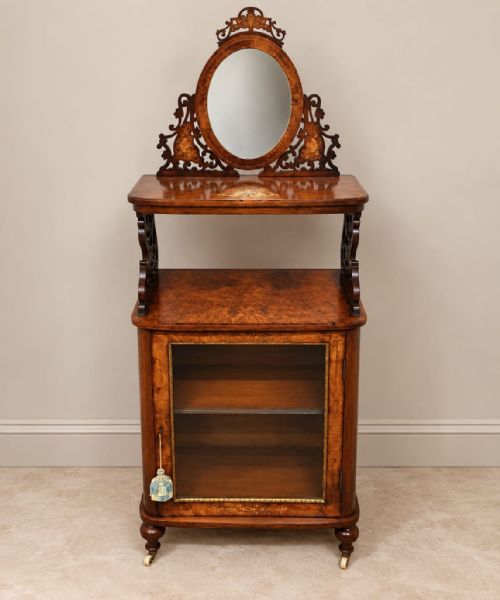
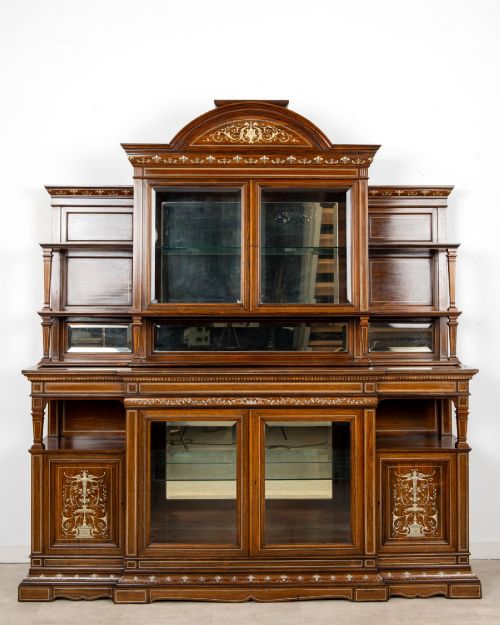
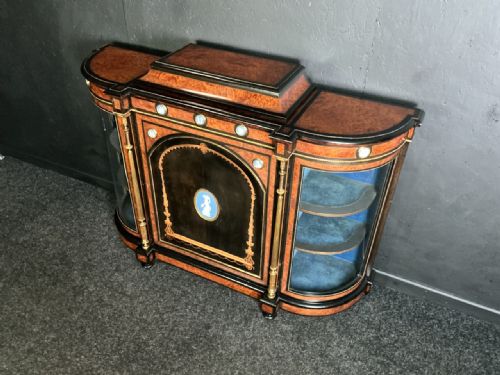
Inlaid Credenza Display Cabinet
These inlaid credenza display cabinet examples combine fine timber and glass to anchor a formal interior.
Inlaid Credenza Display Cabinet
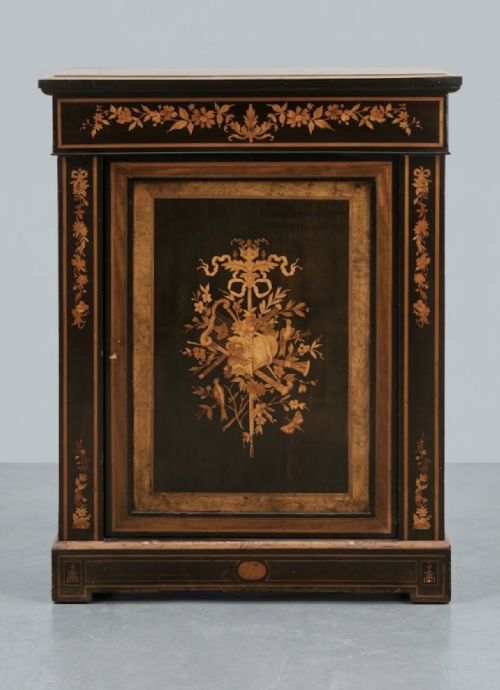
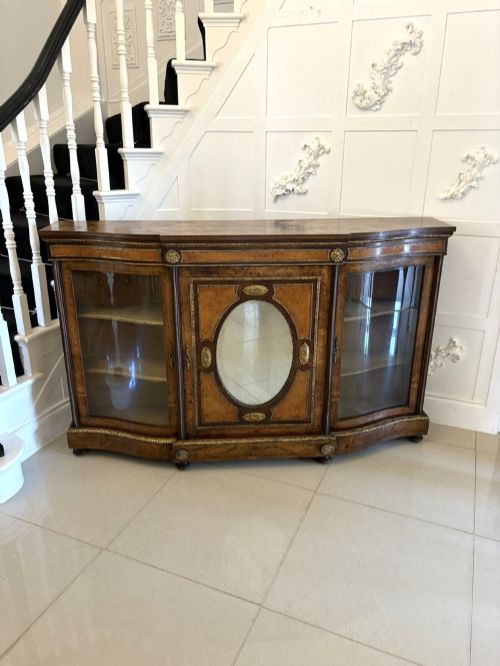
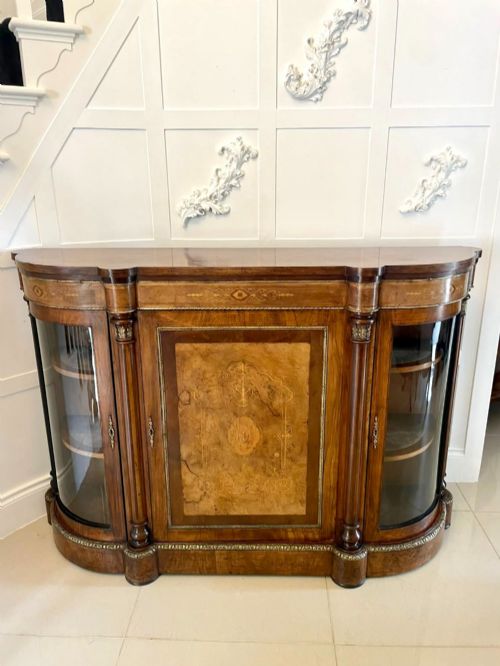
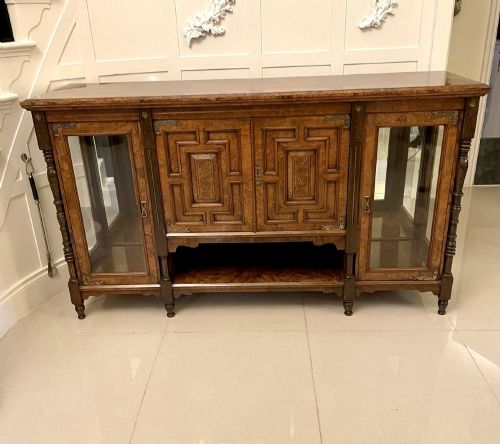
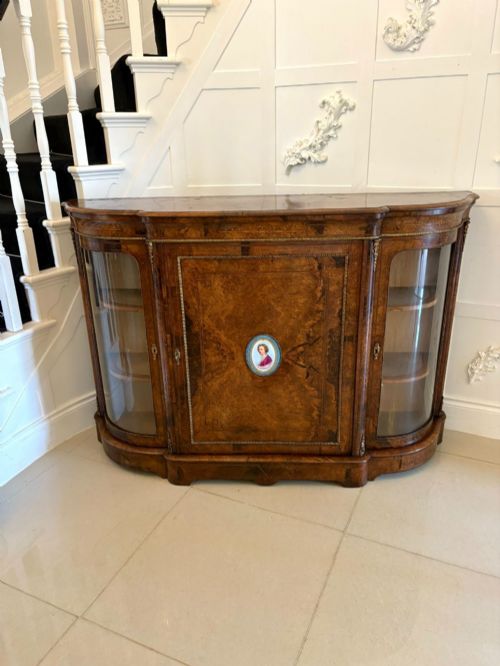
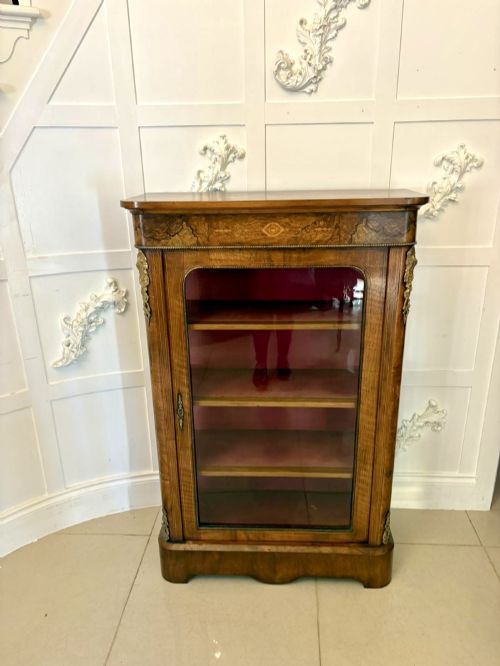
An inlaid credenza display cabinet is a low, polished storage piece designed to hold precious objects while serving as a focal point in a reception room. These items appear primarily in Victorian forms, spanning side cabinets, pier cabinets and serpentine display cases.
Makers shaped these surfaces from burr walnut, rosewood, mahogany and satinwood, often integrating glazed doors to exhibit porcelain and collectibles. The dominant aesthetic draws on nineteenth-century revival styles, incorporating intricate marquetry and gilt mounts.
How They Were Made
Cabinetmakers constructed carcass frames from solid native timbers, applying rich veneers of burr walnut, rosewood or satinwood across flat surfaces and curved doors. Marquetry panels utilise contrasting woods to form floral and geometric motifs.
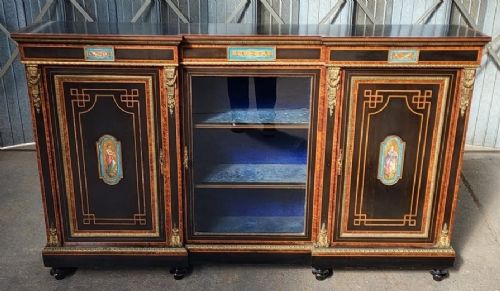
Cast ormolu mounts, gilt bronze details and brass stringing edge the doors, pilasters and plinths. Glass panes are fitted into timber frames to enclose the shelved interior, sometimes backed with velvet.
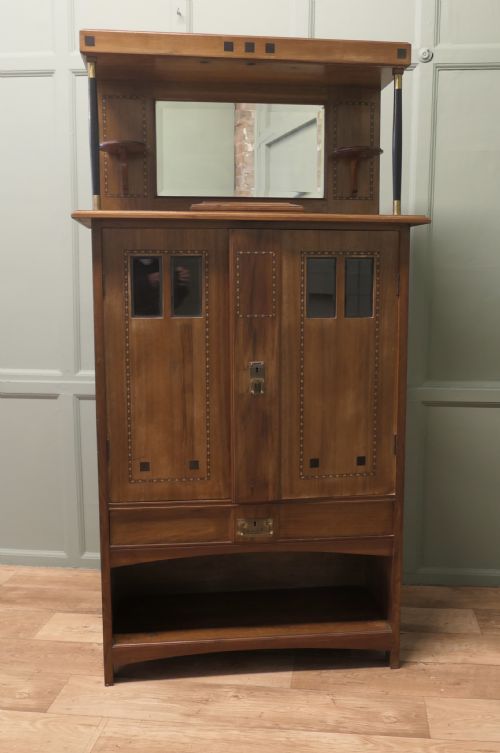
Listings feature Victorian, Regency and Georgian periods, utilising burr walnut, rosewood, mahogany and ebonised wood.
What Varies in Quality
The standard of an inlaid credenza display cabinet rests on the depth of the timber figuring and the precision of the marquetry work. Finer examples display tight, symmetrical burr walnut grain alongside meticulously cut floral inlays that sit entirely flush with the surrounding veneer.
Structural harmony also dictates distinction, seen in serpentine fronts that maintain crisp lines and heavy, well-cast ormolu mounts rather than light stamped brass. The integration of porcelain plaques and high-grade glazing marks the upper tiers of nineteenth-century production.
Collinson and Lock·Lamb of Manchester·Gillows·Maison Gagneau·Edwards and Roberts
The Inlaid Credenza Display Cabinet Glossary
- Credenza
- A low cabinet originating in the nineteenth century, typically featuring a central cupboard flanked by curved glass doors.
- Marquetry
- Decorative patterns formed by fitting together thin slices of various coloured woods onto a structural panel.
- Ormolu
- Gilded bronze mounts applied to furniture edges and mounts for ornamental effect.
- Pier Cabinet
- A narrow display cabinet built specifically to fit the wall space between windows.
- Burr Walnut
- Timber taken from walnut tree growths, prized for its swirling, highly figured grain patterns.
Inlaid Credenza Display Cabinet: Frequently Asked Questions
What is a credenza used for?
These cabinets served to display prized porcelain, glassware and decorative objects behind glass doors while storing linens or documents in the side compartments. They anchored formal drawing rooms and parlours.
In modern spaces, they function similarly as low sideboards that draw the eye while keeping surfaces clear for lamps and decorative items.
How do I date an inlaid credenza?
Dating relies on identifying timber choices, construction techniques and stylistic motifs such as aesthetic movement lines or Victorian marquetry. The presence of specific hardware and gilt bronze mounts also guides the timeline.
Most pieces date from the mid to late nineteenth century, reflecting the revival periods popular during the Victorian era.
How do I care for burr walnut?
Burr walnut requires stable indoor humidity and protection from direct sunlight to prevent the delicate veneer from drying and cracking. Regular dusting with a soft, dry cloth preserves the polished finish.
Avoid placing wet items or harsh chemical cleaners directly onto the wood or ormolu mounts.
What is the difference between a credenza and a pier cabinet?
A credenza is typically a wide, low piece featuring three or more doors with curved or serpentine fronts designed for long walls. A pier cabinet is much narrower, built explicitly to occupy the wall space between two windows.
Both incorporate glass doors and marquetry, but their proportions serve entirely different room layouts.