




Inlaid Corner Vitrine
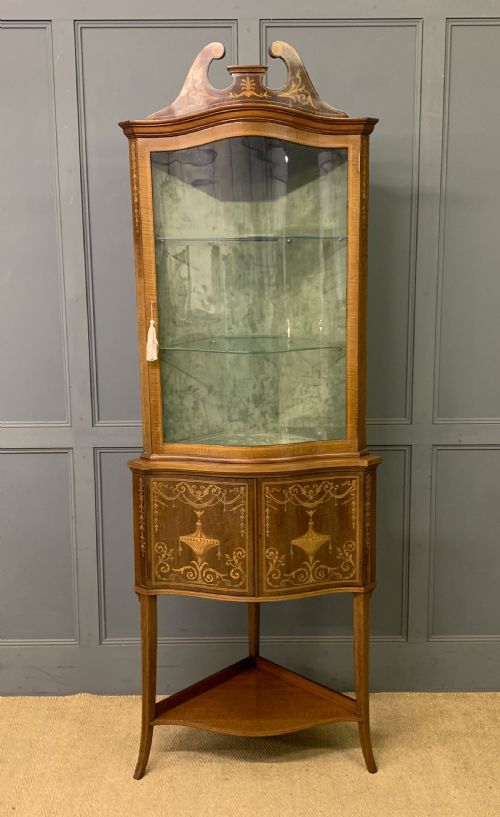
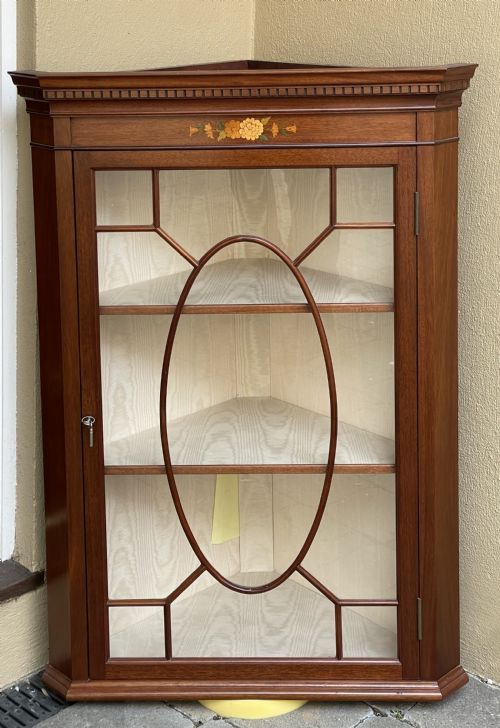
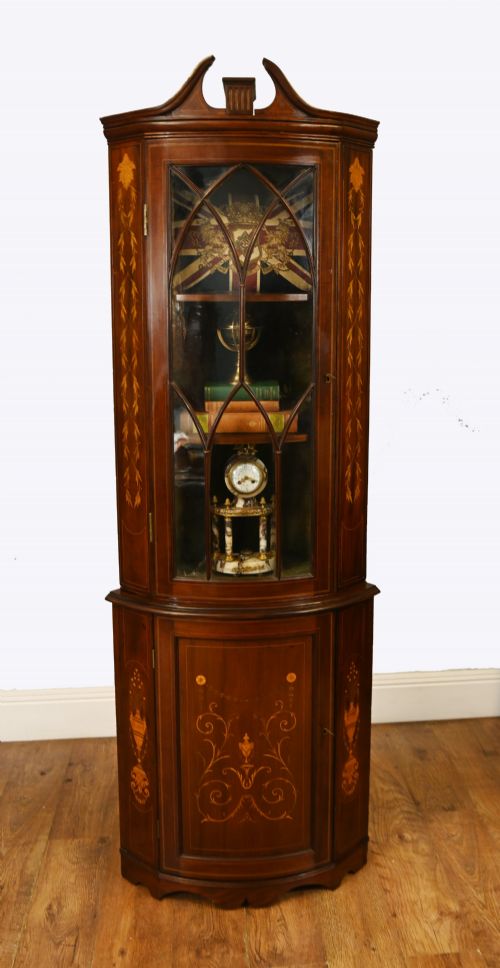
An inlaid corner vitrine turns a blank room junction into a showcase, pairing glazed display space with decorative timber work.
Inlaid Corner Vitrine
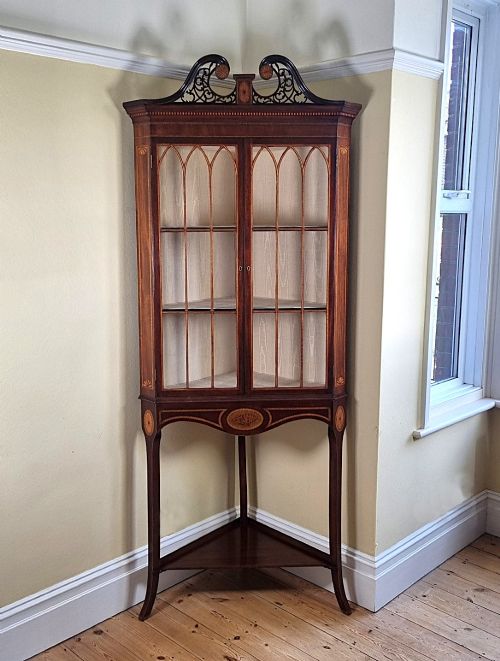
An inlaid corner vitrine occupies the junction of two walls, making use of awkward angles to display prized objects while taking up minimal floor space. These cabinets combine timber framing with glass panels, offering either wall-hanging formats or standing heights.
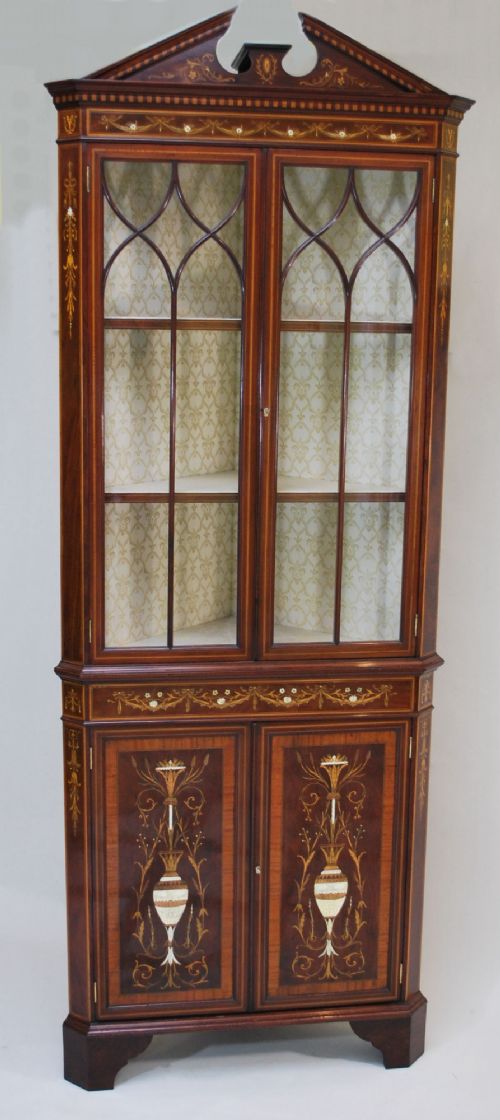
The versions most commonly met on this page date from the Edwardian era and the late nineteenth century, frequently adopting Sheraton Revival aesthetics. Makers built these pieces using mahogany, walnut, or rosewood, often curving the front glass to soften the room's geometry.
How they were made
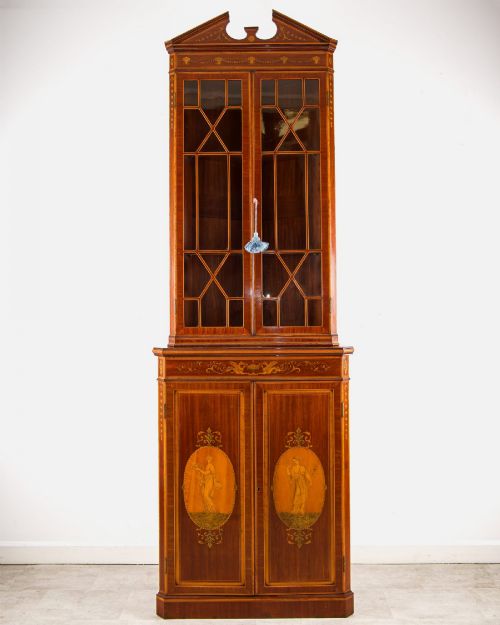
Cabinet makers constructed the primary carcasses from solid and veneered timbers such as mahogany and walnut, applying delicate light wood details to create contrast. Satinwood and boxwood inlay formed intricate floral or geometric borders across the doors and cornices.
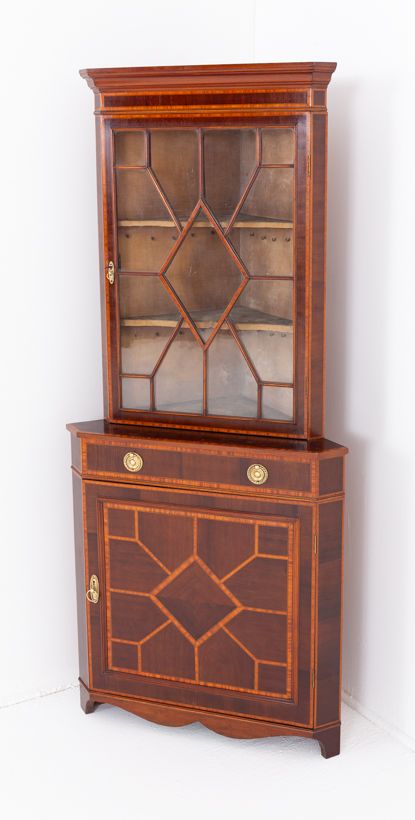
Glazing techniques included individual glass panes held by astragal bars and curved bowed doors that required specialist glass-bending skills. Brass hinges, escutcheons, and mirrored backs completed the interior fittings designed to reflect light through displayed items.
The selection spans from Georgian and Victorian eras through to Edwardian Sheraton Revival interpretations.
What varies in quality
The refinement of the timber marquetry and the precision of the inlay work separate standard production from superior pieces. Crisp plant motifs and balanced stringing reflect a higher level of workshop skill than rushed, repetitive patterns.
Structural harmony also defines the better examples, visible in the balance between the glazed upper display sections and the supporting stands or cabinetry below. Smoothly operating doors and well-chosen grain matching in the primary woods elevate the overall presence of the furniture.
Edwards And Roberts
The Inlaid Corner Vitrine Glossary
- Vitrine
- A glass-fronted cabinet designed specifically for displaying fine objects or collections. They protect delicate items from dust while offering all-round visibility.
- Astragal glazing
- The arrangement of small wooden strips, known as bars, holding individual panes of glass within a door frame. This technique was vital before large sheets of plate glass became common.
- Marquetry
- The art of applying pieces of veneer to a structure to form decorative patterns or pictures. It differs from inlay by assembling the pattern across a sheet before fixing it to the surface.
- Sheraton Revival
- A late nineteenth and early twentieth century design movement that reinterpreted the lighter, neoclassical styles of the eighteenth-century designer. These pieces favour graceful proportions and delicate satinwood highlights.
Inlaid Corner Vitrine: Frequently Asked Questions
How do I secure a wall-hanging corner cabinet?
Wall-hanging corner cabinets require sturdy fixings screwed directly into the wall studs or masonry behind the plaster. Because glass and hardwood are heavy, proper weight distribution prevents the cabinet from pulling away from the corner.
Use heavy-duty brackets or internal mounting points provided by the original maker. Professional installation is recommended to ensure the display case remains stable once filled with heavy ceramics or glass.
Where should I place a corner vitrine?
A corner vitrine fits naturally into empty room junctions that standard rectangular furniture cannot occupy. Placing the cabinet near a light source helps illuminate the interior glass shelves and reflected mirrored backs.
Avoid positioning these delicate timber pieces in direct sunlight, which can fade mahogany and walnut veneers over time. Ambient room lighting usually provides the best balance for viewing collections.
How do I tell Edwardian from Georgian cabinets?
Edwardian and Sheraton Revival pieces from around nineteen hundred often feature lighter satinwood inlay, brighter mahogany tones, and machine-sawn internal components. Genuine Georgian pieces from the eighteenth century show greater structural age through hand-cut joints and simpler, heavier timber proportions.
Examining the backboards, drawer linings, and secondary woods helps clarify the true age of the cabinet. Cabinetmaking methods evolved significantly between the Georgian period and the Edwardian revival eras.