






Inlaid Corner Display Unit
An inlaid corner display unit turns wasted room space into a showcase for fine ceramics and small treasures.
Inlaid Corner Display Unit
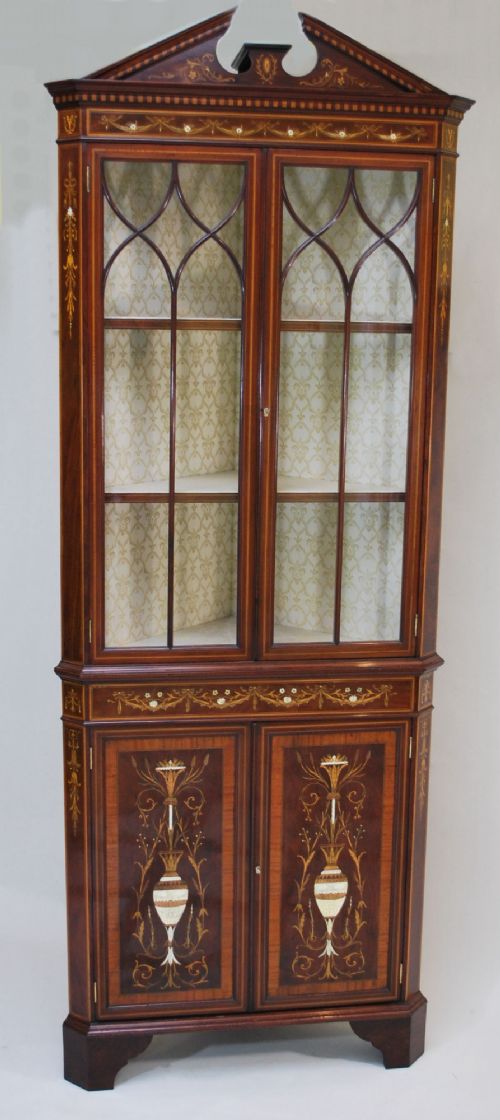
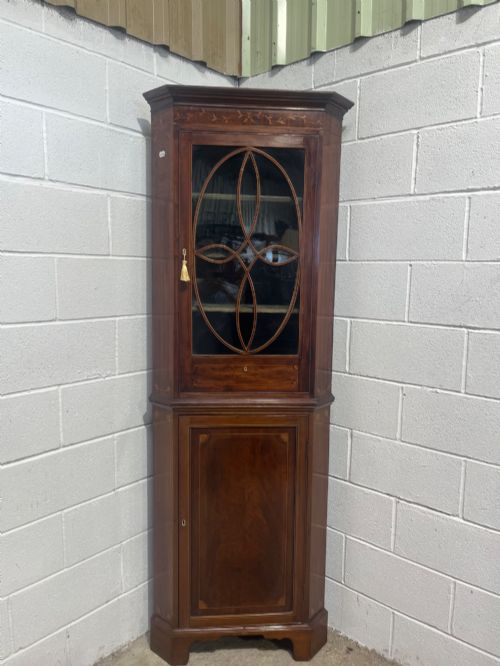
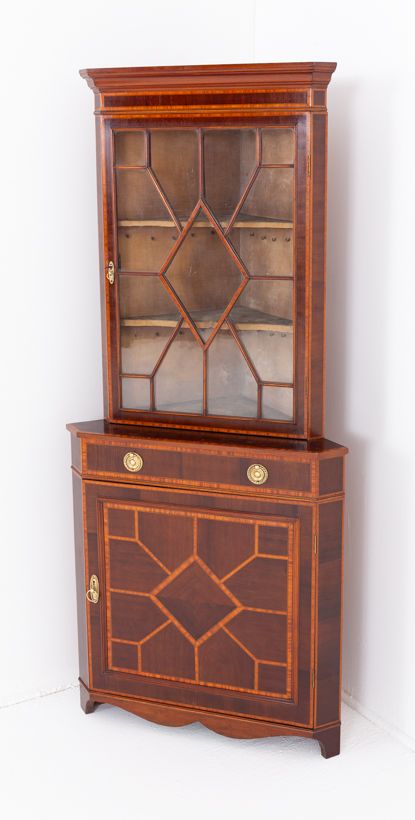
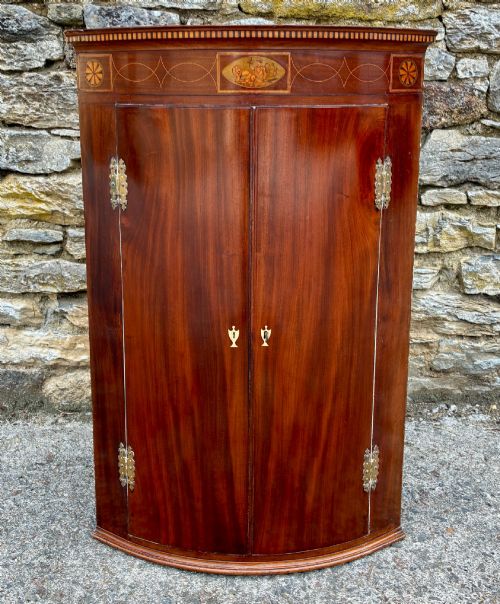
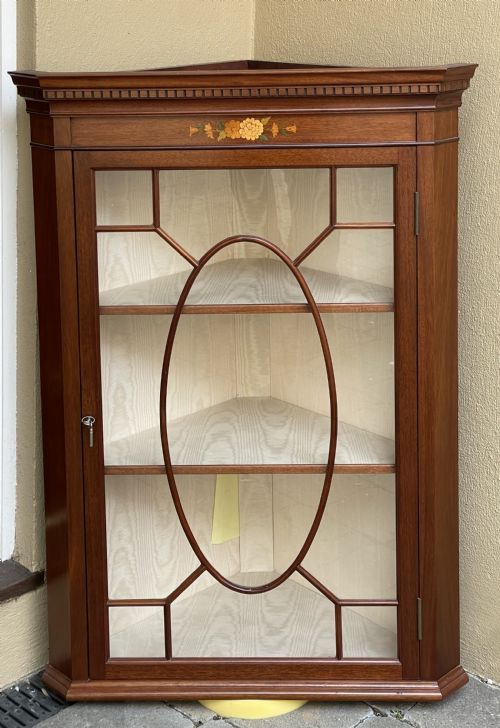
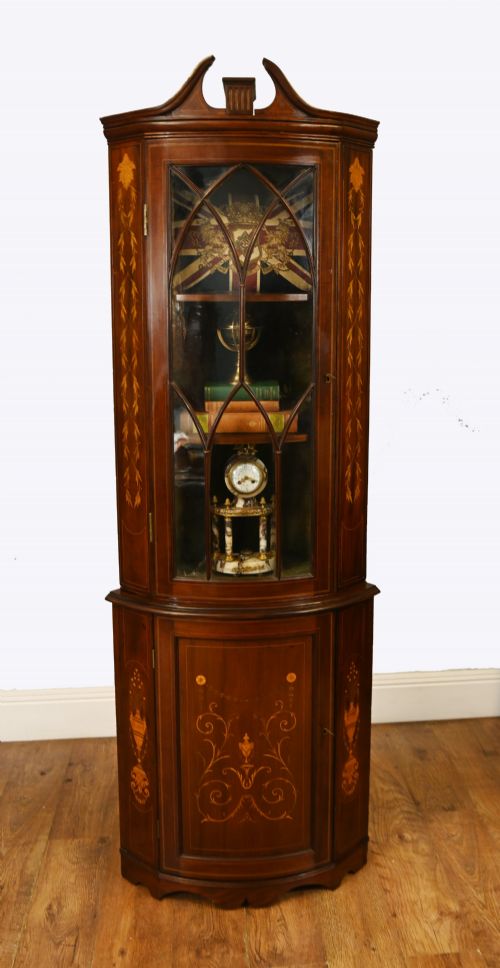
An inlaid corner display unit is a specialised piece of furniture designed to fit neatly into the junction of two walls while exhibiting objects inside. The selection on this page relies heavily on Edwardian and 19th-century examples alongside Georgian pieces, predominantly shaped from mahogany with contrasting stringing.
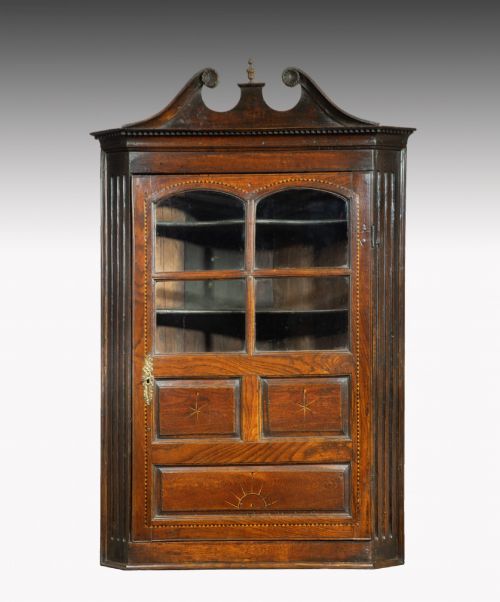
Buyers will encounter various forms here, ranging from tall standing double-height cupboards and floor-standing cabinets to hanging wall versions and multi-tiered whatnots. Many pieces incorporate glazed doors or open shelves, while specific variants include bow-fronted profiles and washstand adaptions with fold-down tops.
The decorative vocabulary spans straightforward Sheraton Revival stringing to detailed marquetry panels involving satinwood and boxwood. These items serve the dual purpose of space-saving storage and refined visual display within domestic rooms.
How they were made
Cabinet makers constructed these units chiefly using solid timbers and veneers of mahogany, walnut, oak, and rosewood, engineered to withstand the structural demands of angular joinery. Carcasses often feature carefully mitred corner joints and internal shelving supported by fixed wooden glides.
Ornamentation relies on precise contrasting inlays executed in satinwood and boxwood, alongside elaborate floral marquetry panels set into the primary wood grain. Glazed doors use individual wooden glazing bars to hold panes securely, while hardware such as brass handles and hinges provide functional contrast.
What varies in quality
The standard of a piece depends on the crispness of the cabinet work, the precision of the marquetry, and the selection of figured timber veneers. Superior examples display tightly matched wood grain on curved bow fronts and seamless mitres where the cabinet meets the wall.
Edwards And Roberts
The Inlaid Corner Display Unit Glossary
- Marquetry
- Decorative veneer work arranged in pictorial or geometric patterns using various coloured woods. It requires immense skill to cut and fit the thin wooden elements together precisely.
- Stringing
- Thin inlay lines of contrasting timber used to outline panels, drawers, or doors. This linear detail defines much of the Sheraton Revival aesthetic.
- Whatnot
- An open-shelved stand with multiple tiers designed for displaying ornaments and books. These pieces frequently take a corner orientation to utilise awkward spatial layouts.
- Bow Front
- A convex curved cabinet front that projects outward. This form demands advanced curved joinery and carefully bent veneers.
- Serpentine
- A shaped furniture front featuring a concave centre flanked by convex curves. It adds fluid movement and complexity to standing cabinet designs.
Inlaid Corner Display Unit: Frequently Asked Questions
How do I hang a wall cabinet?
Hanging corner cupboards require secure fixing to solid wall studs or masonry using appropriate brackets. The internal structure must bear the weight of both the heavy timber frame and any glass contents placed inside.
Professional installation ensures the cabinet remains level and stable, preventing strain on the antique mitre joints over time.
What is a corner whatnot?
A corner whatnot is an open-tiered shelving unit built to occupy room angles. These pieces were utilised in Victorian and Edwardian interiors to display ceramics, books, and decorative objects without enclosing them behind doors.
The open structure prioritises vertical display over secure storage.
How do I date an inlaid cabinet?
Dating relies on assessing the primary timber, the style of the inlay work, and the construction methods used inside the carcass. Edwardian and Sheraton Revival pieces often show lighter satinwood stringing on mahogany, while 18th-century examples exhibit heavier oak or solid mahogany construction with simpler joinery.
Secondary woods and backboards also provide clues regarding the period of manufacture.
Can these hold heavy items?
Most standing and hanging units comfortably support standard display objects like porcelain, glassware, and small ornaments. However, the fixed or resting shelves are generally not engineered to hold exceptionally heavy loads such as large book collections.
Checking the stability of internal shelf supports helps determine safe loading capacities.