

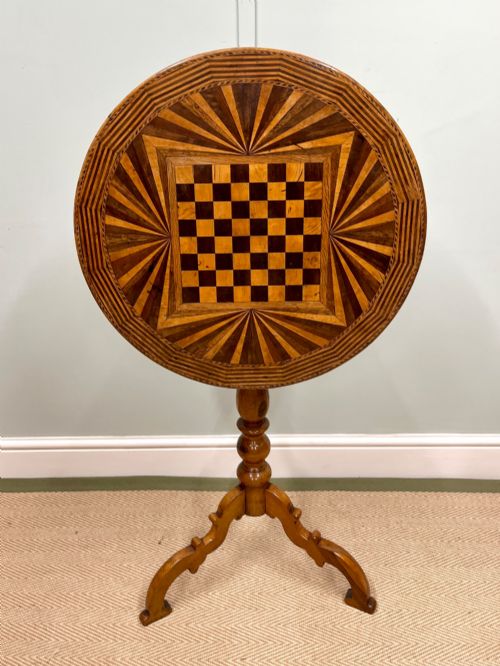
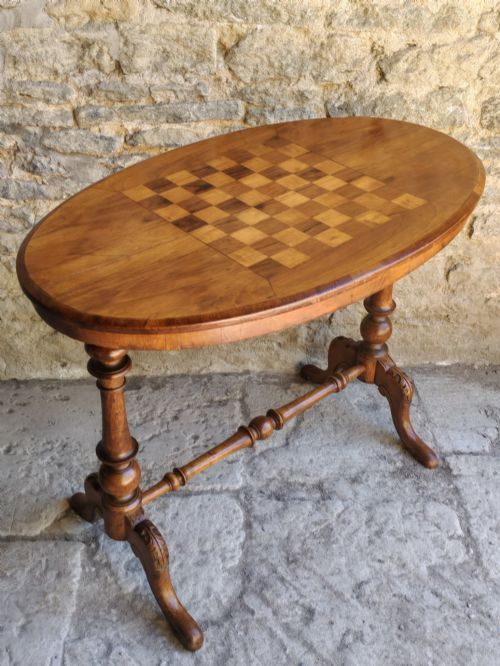
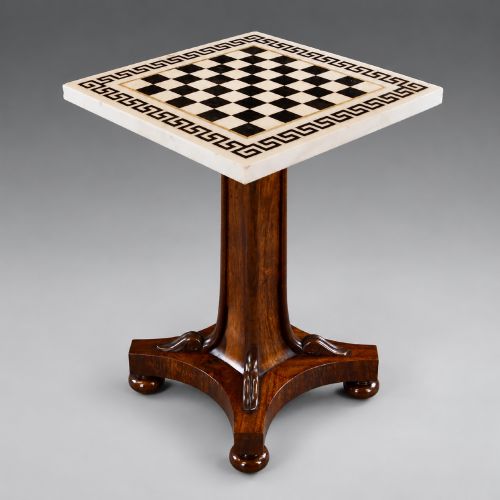
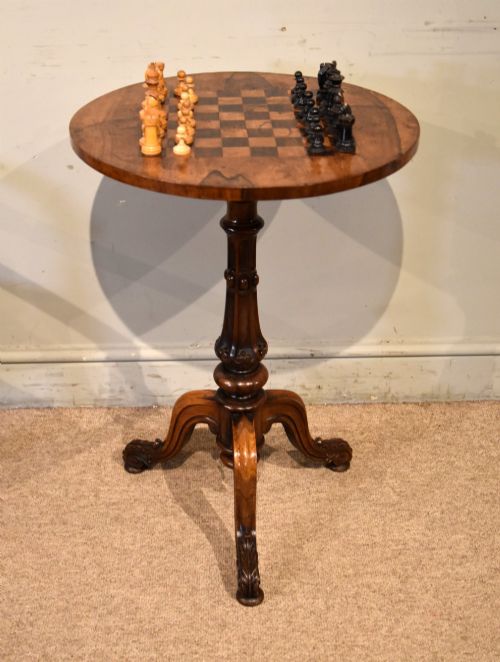

Inlaid Chess Table
When you search for an inlaid chess table, you are looking at functional Victorian and Georgian social furniture built for play.
Inlaid Chess Table
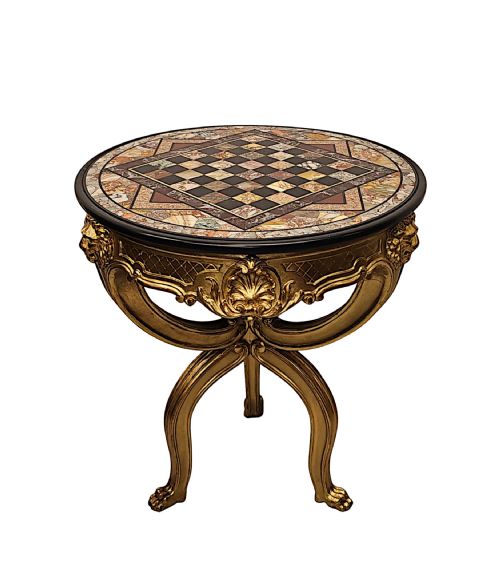
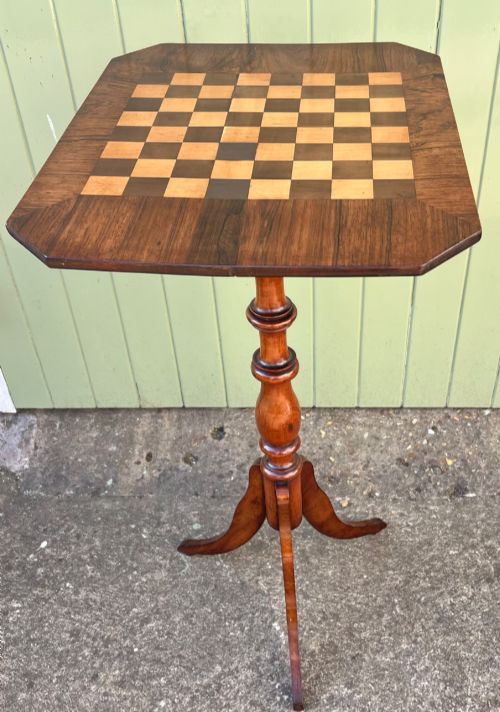
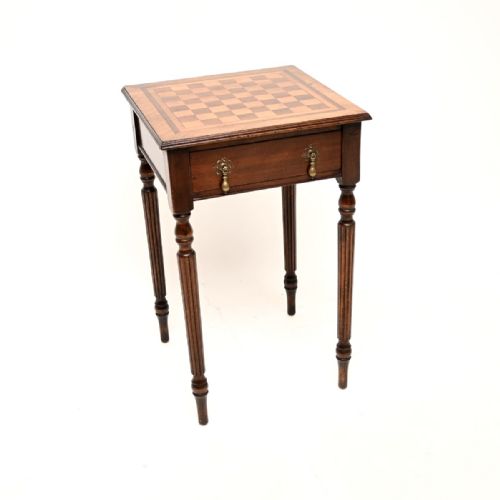
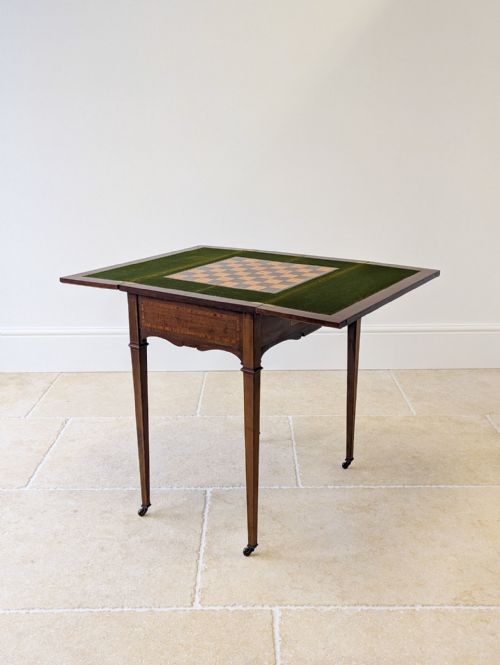
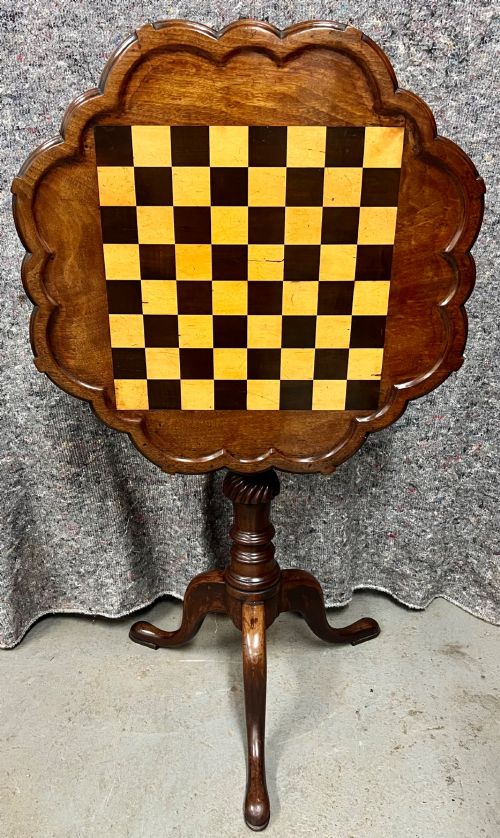
An inlaid chess table is a dedicated piece of social furniture designed primarily for board games, frequently combining chess playing surfaces with card playing, backgammon, or sewing storage. These pieces appear across the 19th Century, Georgian, Regency, and Edwardian periods, manifesting as tripod tables, occasional tables, centre tables, and nest of tables.
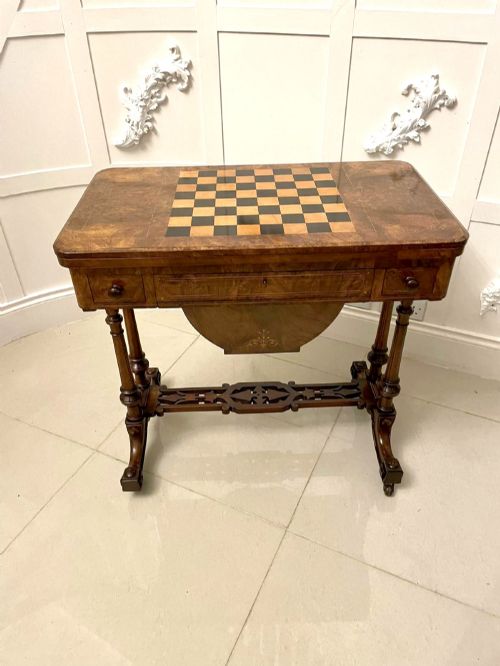
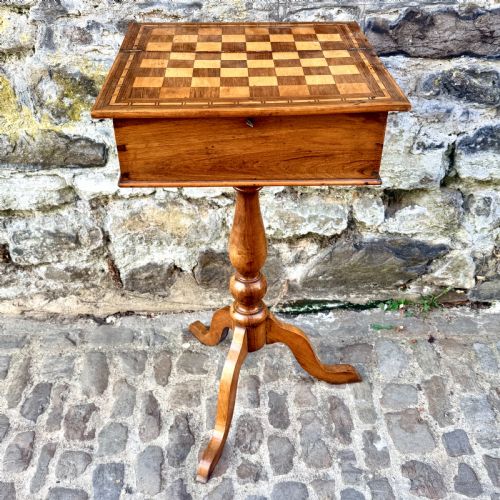
The version you are most likely to meet on this page is the Victorian walnut or burr walnut games table, often featuring a chessboard inlaid directly into the top alongside marquetry or floral decoration. Many of these survive as combination pieces that lift to reveal sewing compartments, backgammon boards, or folding leaves.
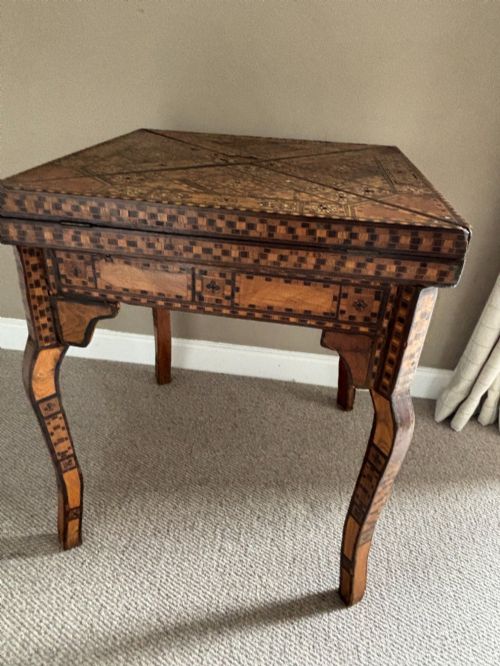
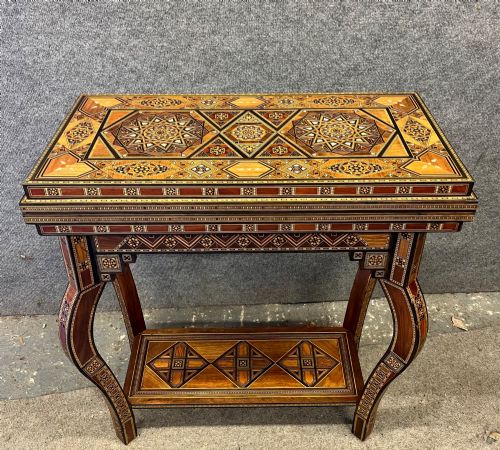
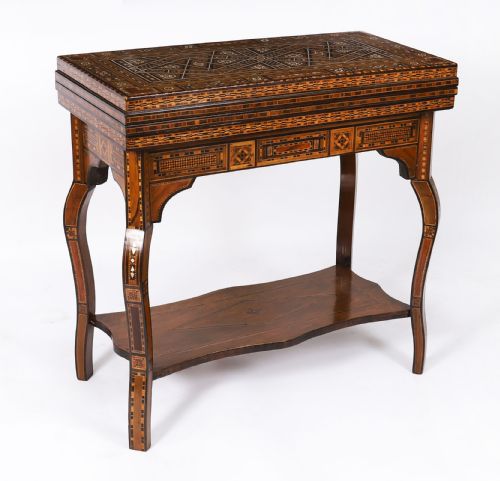
Regional and international variations also occur within the evidence, ranging from Anglo-Indian Hoshiarpur and Damascus Syrian bone and wood inlaid examples to French Provincial and Sorrento marquetry pieces. These diverse forms reflect global craftsmanship traditions adapted for European drawing rooms during the 19th Century.
How they were made
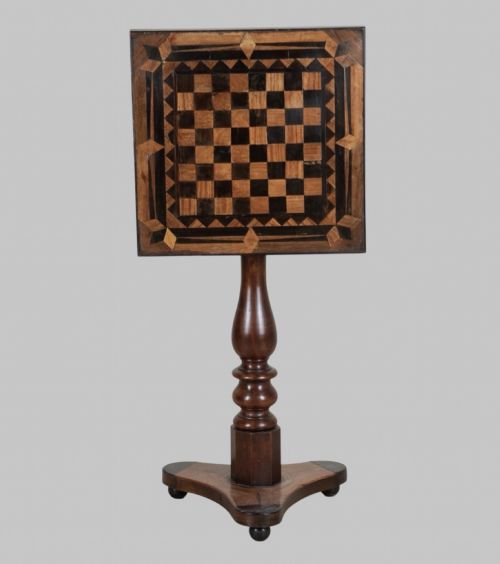
Cabinet makers utilised dense hardwoods such as walnut, rosewood, mahogany, and satinwood for the primary carcases and structural frames of these tables. Surfaces were then enriched with intricate veneers and geometric or floral wood inlay using contrasting timbers like boxwood, ebony, and birdseyes maple.
Specialised regional workshops employed specific decorative techniques, integrating bone inlay, mother-of-pearl, and micro-mosaics into Syrian, Damascan, and Anglo-Indian tables. European makers relied on parquetry and marquetry to create precise alternating squares for the chess boards and elaborate scrollwork borders.
Inlaid Chess Table Retail Price Guide 2026
Typical asking prices for inlaid chess table among the pieces listed under this phrase on Sellingantiques today, from the lower quarter to the upper quarter. They describe what is for sale here now, not the wider market.
Listings feature 19th Century, Georgian, and Edwardian pieces constructed from walnut, rosewood, mahogany, and satinwood.
What varies in quality
The standard of an inlaid chess table is determined by the precision of the wood inlay and the selection of figured timber veneers. Burr walnut, rosewood, and satinwood with strong natural grain patterns and tight, flush geometric borders represent higher levels of cabinet making skill.
Structural complexity and multi-functional design also separate standard tables from exceptional ones. Tables that incorporate sliding drawers, pivoting or tilt-top mechanisms, and integrated backgammon or card compartments demonstrate superior internal engineering and joinery.
The Inlaid Chess Table Glossary
- Marquetry
- Decorative veneer work forming pictorial or geometric patterns on a furniture surface. This technique uses varied wood types to create contrasting scenes and borders.
- Parquetry
- Geometric mosaic woodwork used for flooring and table tops. It creates the precise repeating patterns seen on chessboard squares.
- Quartetto tables
- A set of four graduating occasional tables that nest inside one another. These space-saving designs often feature integrated chess boards.
- Tripod table
- A small table supported by a pillar on three spreading feet. Many chess and occasional tables utilise this pedestal format for ease of movement.
- Specimen wood
- Furniture constructed from a multitude of different native and exotic timbers. Makers showcased their botanical knowledge by assembling varied coloured woods into decorative table tops.
Inlaid Chess Table: Frequently Asked Questions
What is an inlaid chess table?
An inlaid chess table is a piece of antique furniture with a permanent chessboard surface built into the top. These tables served both as decorative drawing room furniture and functional items for recreation.
Most surviving examples date from the 19th Century and Georgian eras. They frequently combine chess playing surfaces with storage compartments for sewing, cards, or backgammon pieces.
How were inlaid chess tables used?
These tables were utilised for evening entertainment and parlour games in domestic settings. Players sat around them to play chess, draughts, or cards in the drawing room.
Many examples doubled as work tables, featuring integrated bags or boxes for needlework and sewing. When not in use for games, their decorative tops functioned as standard occasional or side tables.
How do I tell different periods apart?
Georgian and Regency chess tables often feature cleaner architectural lines, utilising mahogany and rosewood with understated stringing. They lean toward tripod bases and classical proportions.
Victorian and later 19th Century tables tend to feature burr walnut, elaborate marquetry, and heavier turned pedestals or cabriole legs. Syrian and Anglo-Indian examples from the late 19th Century display distinct dense geometric bone and contrasting wood inlay.
Where were these tables made?
Chess tables were produced across British, European, and international workshops throughout the 19th Century. British cabinet makers frequently utilised mahogany, rosewood, and burr walnut in domestic workshops.
Other notable manufacturing regions included Sorrento in Italy, Damascus in Syria, and Hoshiarpur in India. Each region contributed distinct local timbers, decorative motifs, and inlay techniques to their furniture.