
Inlaid Burr Walnut
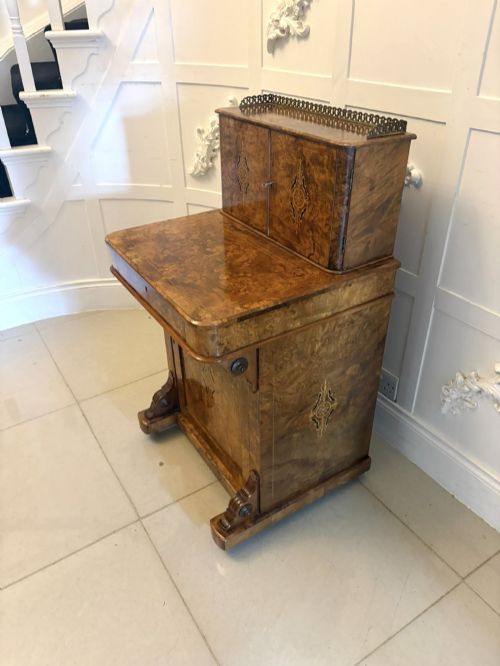
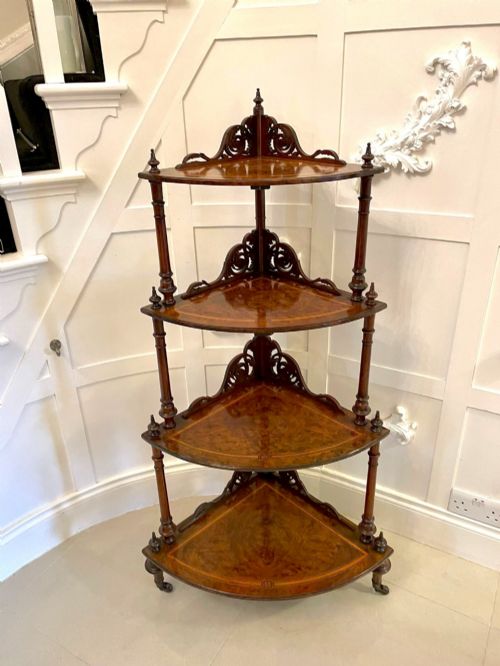
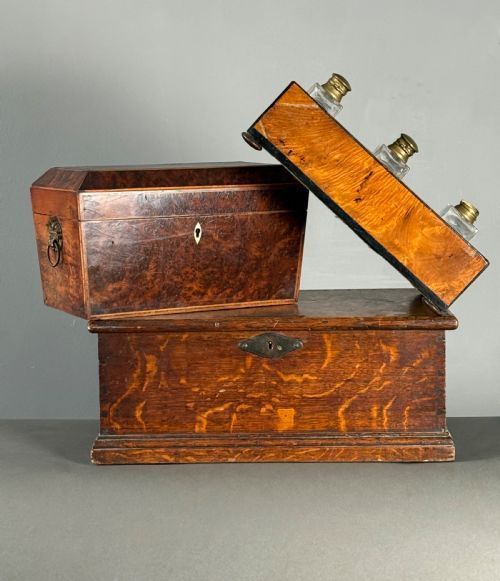
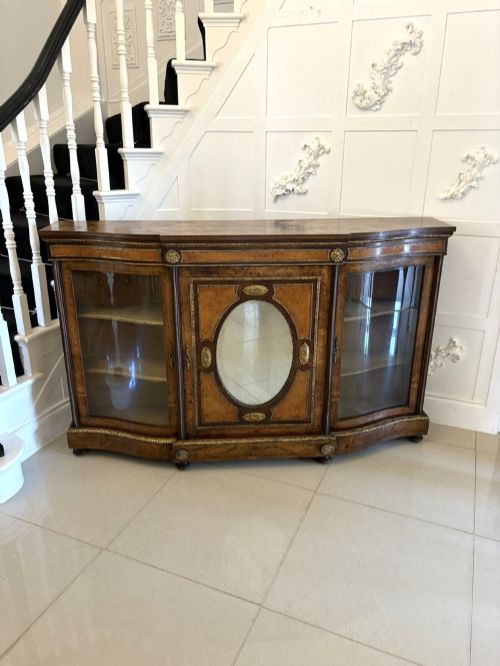
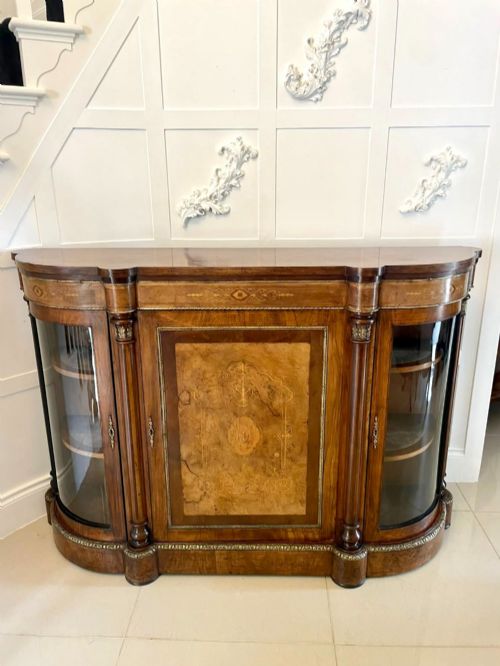
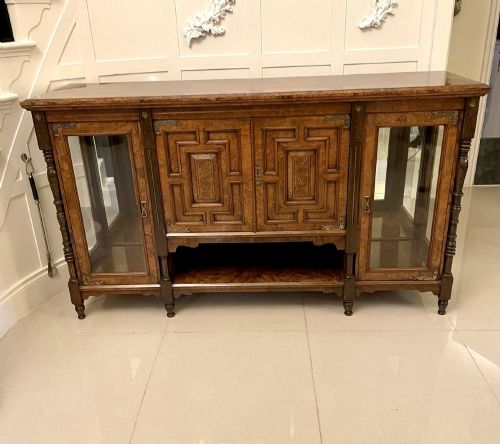
When searching for inlaid burr walnut, you encounter highly figured wooden furniture fashioned into credenzas, pier cabinets, and occasional tables from various historic periods.
Inlaid Burr Walnut
Pieces bearing inlaid burr walnut encompass a range of functional furniture forms designed for domestic display and utility, spanning from the seventeenth century through to the twentieth century. The selections available on this page lean heavily towards Victorian production, alongside notable Georgian, Edwardian, and Art Deco examples.
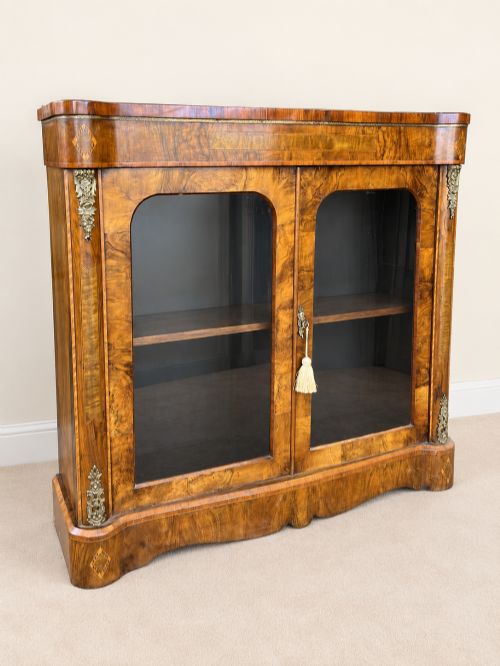
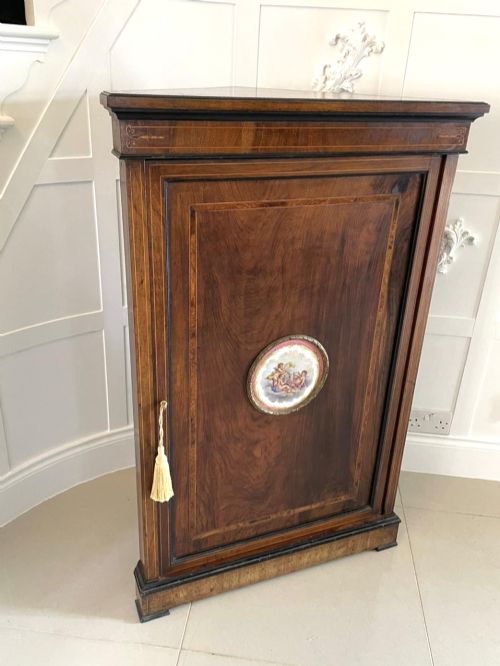
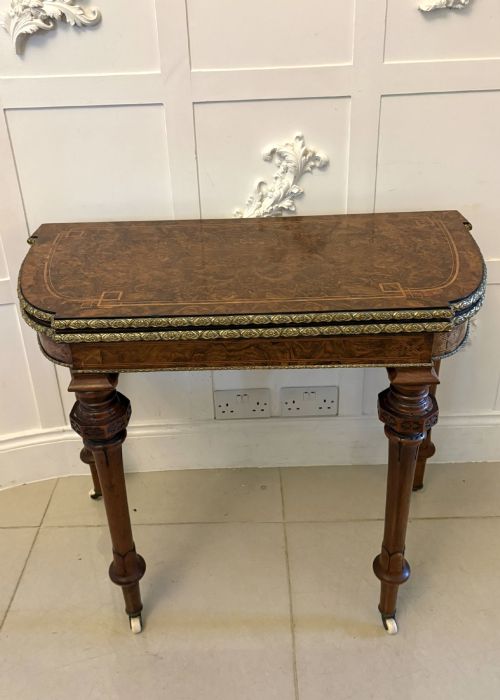
Common forms found across these listings include credenzas, pier cabinets, games tables, centre tables, and writing desks. These items were traditionally utilised in reception rooms and drawing rooms to exhibit taste and hold decorative objects.
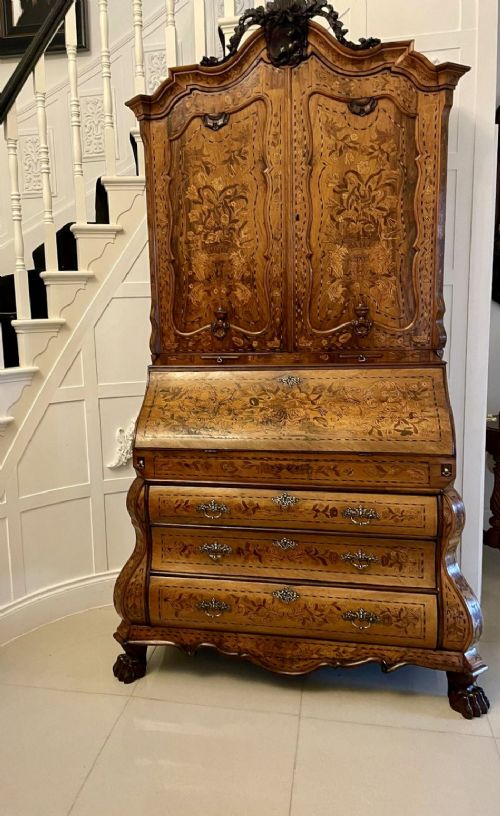
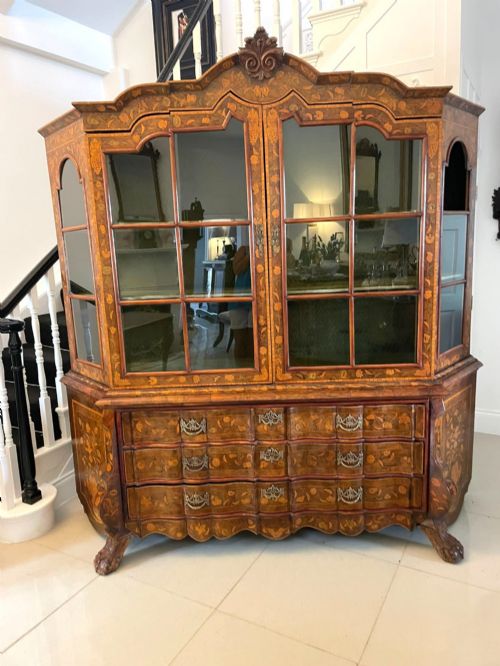
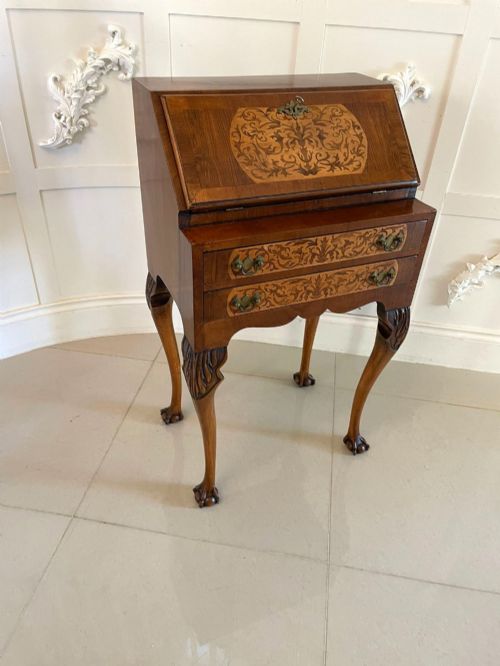
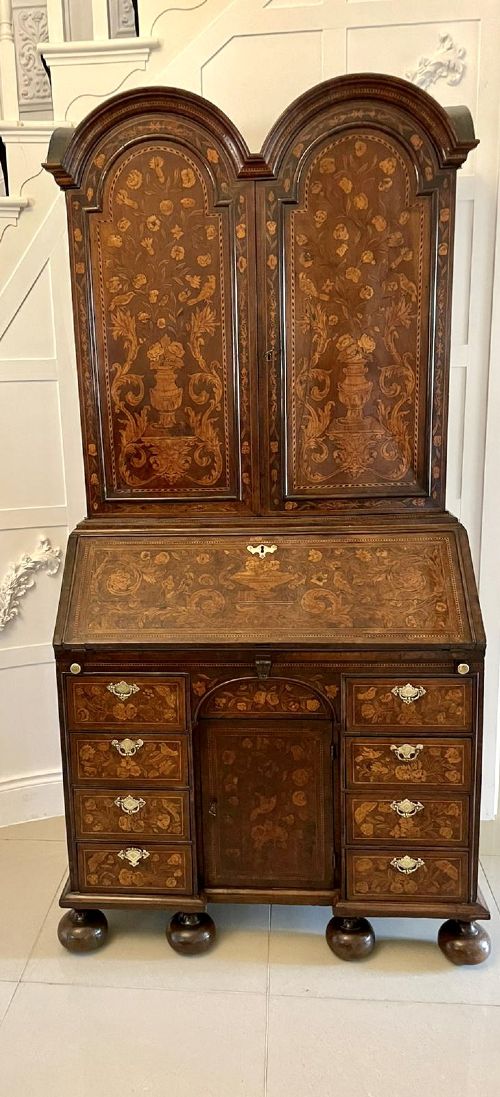
The aesthetic vocabulary stretches across multiple stylistic revivals, including French Revival, Dutch Rococo, and Aesthetic Movement designs. Buyers will frequently encounter credenzas and pier cabinets featuring detailed marquetry panels alongside smaller lamp tables and writing slopes.
How they were made
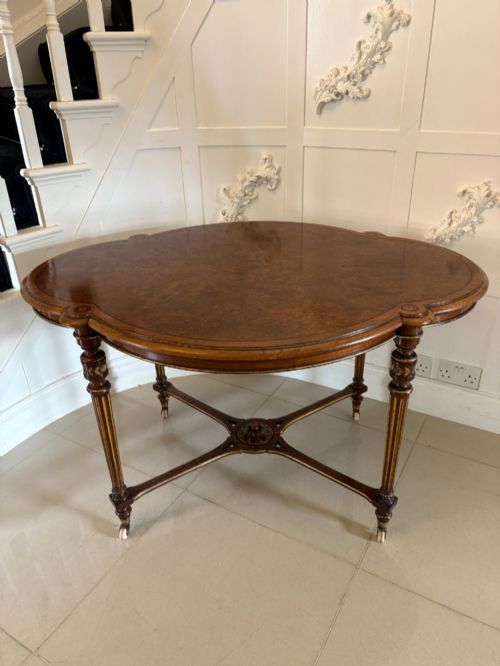
Craftsmen built these items using carefully sliced veneers of burr walnut, valued for its swirling grain patterns, applied over solid secondary woods. This veneer work was frequently enhanced by intricate wood inlay, boxwood inlay, and floral marquetry.
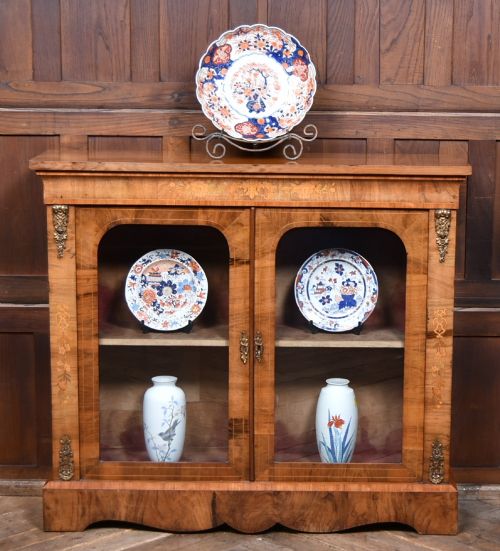
Many items incorporate contrasting materials such as brass mounts, ormolu accents, glass doors, and porcelain plaques to punctuate the figured wood surfaces. Ebonised details and delicate stringing lines were also utilised to frame panels and structural edges.
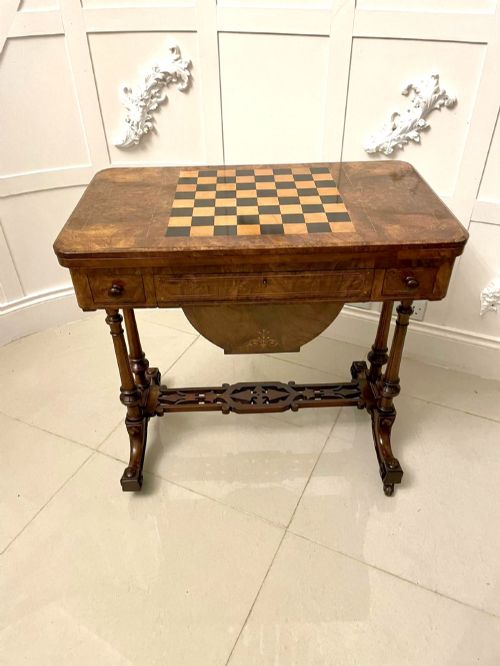
Some nineteenth-century tables cleverly concealed fold-over tops and compartments designed specifically for poker dice and playing cards.
What varies in quality
The visual strength of the burr walnut figuring dictates the initial impact of a piece, with denser, more symmetrical grain patterns commanding greater visual presence. Craftsmanship is further revealed in the precision of the marquetry and inlay work, where tight joints and clean lines demonstrate superior execution.
Integration of secondary elements such as fire-gilded ormolu mounts, hand-painted porcelain plaques, and cast brass details elevates the overall composition. The architectural coherence of larger forms like breakfront bookcases and credenzas separates standard utility items from masterwork examples.
Edward Holmes Baldock·Maple and Co·Walter Carter Harrods
The Inlaid Burr Walnut Glossary
- Burr walnut
- A specialised wood veneer taken from the growth excrescences on walnut trees, prized for its complex and swirling grain patterns. It forms the primary decorative surface across Victorian and earlier cabinetry.
- Marquetry
- A technique where pieces of coloured wood, shell, or ivory are fitted together to form pictorial or geometric designs on a wooden ground. Floral motifs are frequently rendered using this method on bureau flaps and cabinet doors.
- Ormolu
- Gilded bronze mounts applied to furniture edges, corners, and feet to provide architectural accent and protection. This material appears frequently on mid-nineteenth-century credenzas and display cabinets.
- Pier cabinet
- A narrow display cabinet designed specifically to stand against the wall space between windows. These pieces often feature glass doors and velvet-lined interiors for exhibiting porcelain.
- Credenza
- A large sideboard or cabinet used primarily for storage and display in formal rooms. Mid-nineteenth-century versions in walnut often combine curved glass doors with extensive marquetry inlay.
Inlaid Burr Walnut: Frequently Asked Questions
What periods are these pieces from?
The inventory spans several centuries, running from seventeenth-century William and Mary examples through Georgian, Victorian, and Edwardian eras, up to Art Deco designs of the twentieth century.
Victorian pieces represent the largest share of items on this page, particularly items dating around the 1850s to 1880s.
How do I care for burr walnut furniture?
Burr walnut requires stable environmental conditions away from direct sunlight and extreme humidity fluctuations to protect the delicate veneer and underlying timber.
Regular dusting with a soft dry cloth and occasional application of appropriate furniture wax helps maintain the lustre of the polished surface.
What is the difference between a credenza and a pier cabinet?
A credenza is typically a low, broad cabinet featuring a central cupboard flanked by curved glass doors, often fitted with porcelain plaques or marquetry.
A pier cabinet is a taller, narrower piece built to fit the wall space between windows, usually housing a single glass-fronted display section.
Where were these tables used originally?
Occasional tables, centre tables, and games tables were placed in the principal entertaining spaces of nineteenth-century homes, such as drawing rooms and libraries.
They served multiple functions, ranging from the display of decorative objects to hosting card games and writing correspondence.