


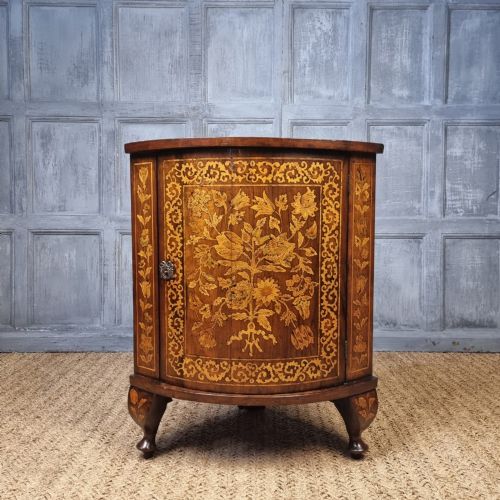


Inlaid Bowfront Corner Cupboard
An inlaid bowfront corner cupboard brings architectural elegance and useful storage to an awkward domestic angle.
Inlaid Bowfront Corner Cupboard
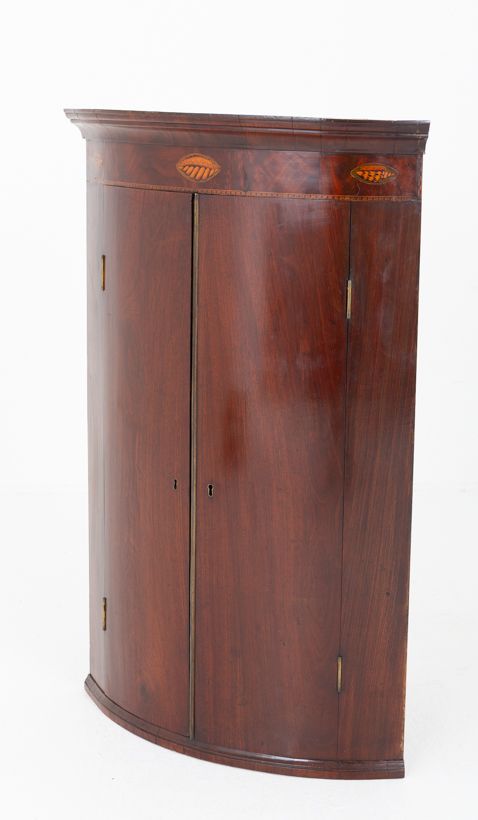
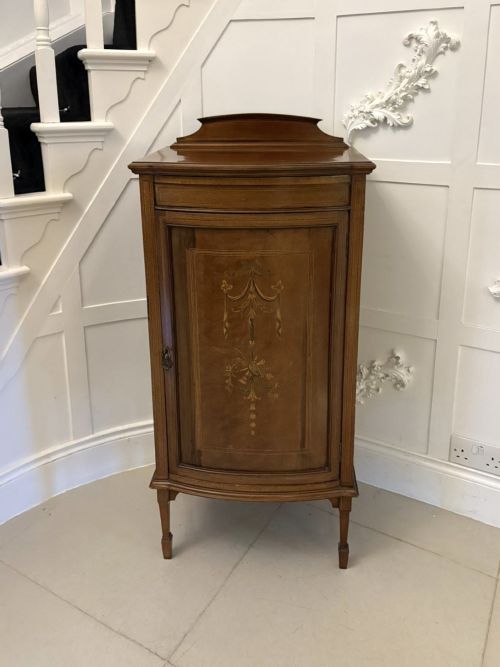
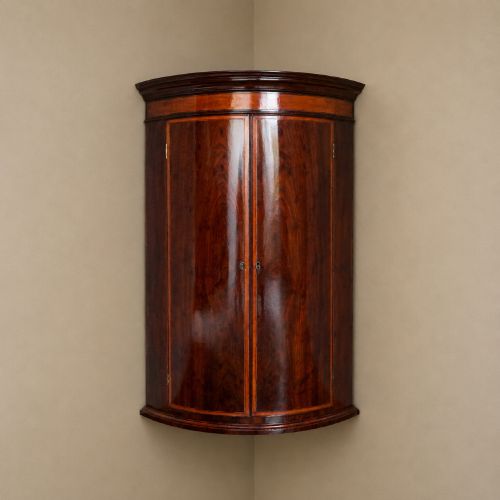
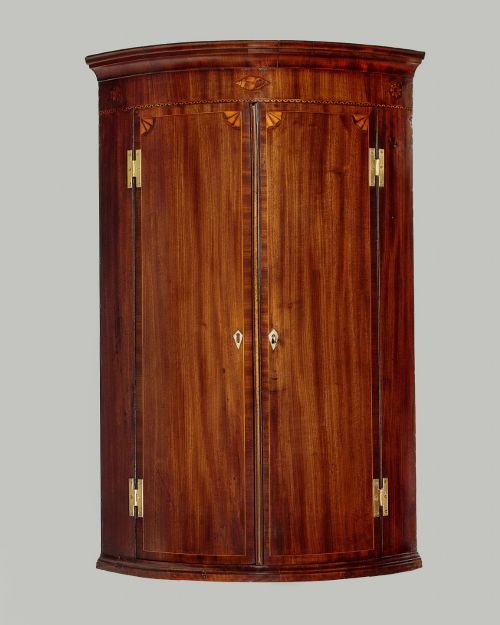
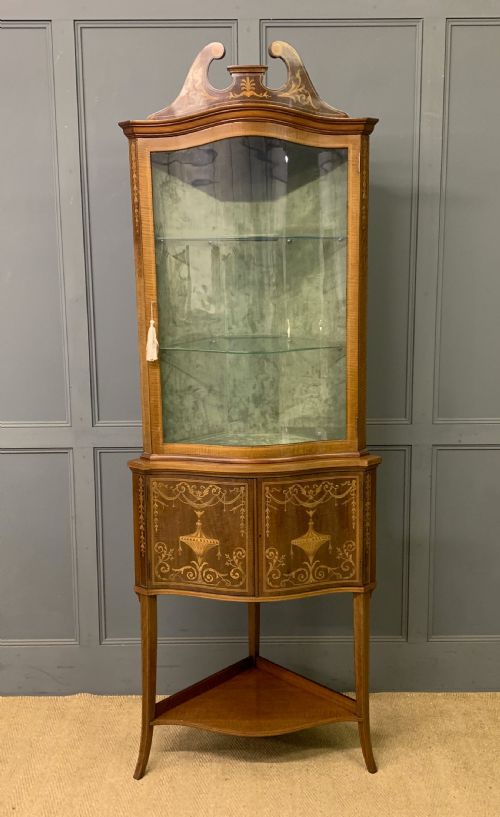
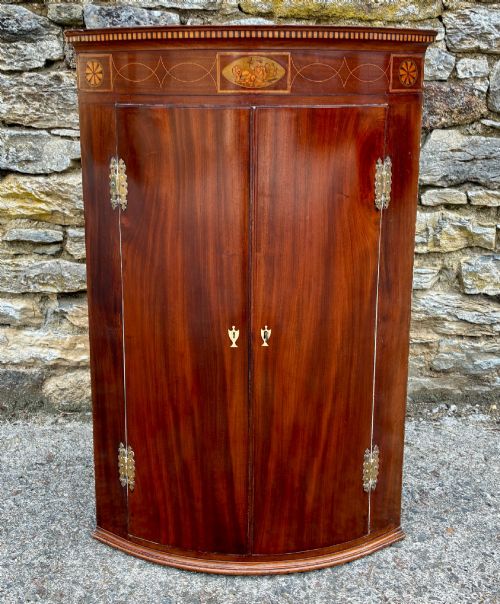
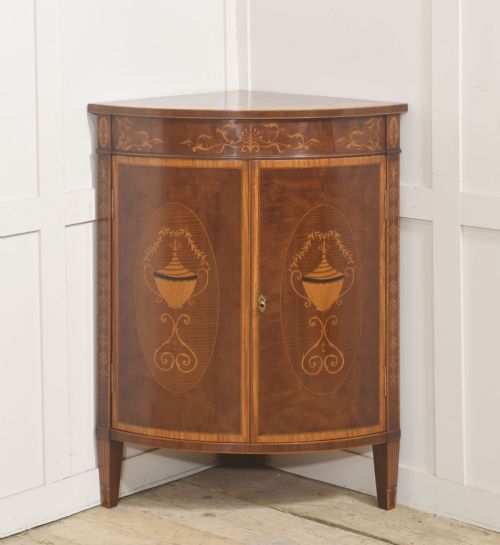
When you search for an inlaid bowfront corner cupboard, you are looking at fitted storage designed to occupy the meeting point of two walls while softening the room with a curved, protruding front. These pieces primarily date from the Georgian period through to the Edwardian era, with George III examples appearing frequently alongside later Sheraton Revival and Victorian interpretations. You will find both hanging wall cupboards and floor-standing cabinets among the selections.
The form spans compact wall-mounted vessels meant to sit above other furniture and taller standing units that anchor a corner from the floor up. Mahogany forms the backbone of these offerings, often accented with boxwood, satinwood, or marquetry detailing. Certain variations include glazed doors configured for display rather than concealed storage.
Materials and construction methods
Cabinetmakers built these curved carcasses predominantly from solid mahogany, oak, or walnut, sometimes selecting figured timbers such as plum pudding mahogany or elm. The curved bow front required skilled timber selection and steam bending or Cooperage techniques to achieve the characteristic outward sweep.
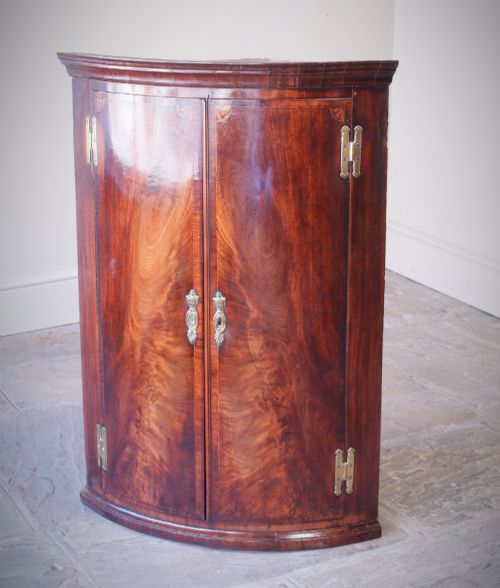
Surface enrichment relied on contrasting veneers and stringing, utilising boxwood and satinwood inlay to create geometric borders and shell motifs. Brass hardware, including H-hinges and escutcheons, completed the construction, securing the doors and hanging points.
Inlaid Bowfront Corner Cupboard Retail Price Guide 2026
Typical asking prices for inlaid bowfront corner cupboard among the pieces listed under this phrase on Sellingantiques today, from the lower quarter to the upper quarter. They describe what is for sale here now, not the wider market.
Mahogany serves as the primary timber across the inventory, supplemented by oak, walnut, and elm.
Distinctions in quality
Quality in these cabinets rests upon the choice of timber figure and the precision of the contrasting inlay work. Finer examples display carefully matched flame mahogany veneers and delicate, even boxwood stringing that follows the curve of the bow front without interruption.
Structural integrity also separates the grades, visible in the dovetail joinery of the carcass and the original condition of the brass fittings. Superior pieces retain well-fitted doors that close true against the frame, maintaining the clean lines of the curved front.
The Inlaid Bowfront Corner Cupboard Glossary
- Bowfront
- A convex curved cabinet front that projects outward. This shape softens the sharp angles of a room.
- Stringing
- Thin lines of contrasting wood inlay used to outline panels and drawers. It provides linear definition to the cabinet facade.
- Marquetry
- Elaborate veneer patterns depicting floral or pictorial scenes using various coloured woods. It appears on select 18th-century and Victorian pieces.
- Hinges
- Metal fastenings supporting the cabinet doors, often taking the form of decorative H-shaped brass plates on earlier pieces.
Inlaid Bowfront Corner Cupboard: Frequently Asked Questions
How do I hang a wall cupboard?
Wall-mounted corner cupboards require secure fixing to solid wall studs or masonry using heavy-duty brackets suited to the weight of hardwood.
Because these pieces are heavy, professional installation ensures the cabinet remains stable and level over time.
What is Sheraton Revival style?
Sheraton Revival refers to late 19th and early 20th-century furniture inspired by the neoclassical designs of Thomas Sheraton. These pieces frequently feature lighter timbers and refined inlay.
Such cabinets capture the elegance of the Georgian era while utilising manufacturing methods typical of the Edwardian period.
Are these cabinets difficult to clean?
Routine maintenance involves dusting with a dry, soft cloth and occasionally feeding the wood with appropriate beeswax. Avoid using modern aerosol polishes that build up residue.
Keeping the timber away from direct sunlight and radiators prevents the veneer from drying out and cracking.
How can I date my cupboard?
Dating relies on examining the secondary woods used inside, the construction of the drawer dovetails, and the style of the brass hardware. Georgian examples typically show hand-cut joinery.
Comparing the inlay motifs and overall proportions to known period styles helps narrow the manufacturing decade.