




Traditional Corner Wall Cabinet
A traditional corner wall cabinet puts dead space to work, offering timber panels and glazed doors that turn an empty room junction into storage.
Traditional Corner Wall Cabinet
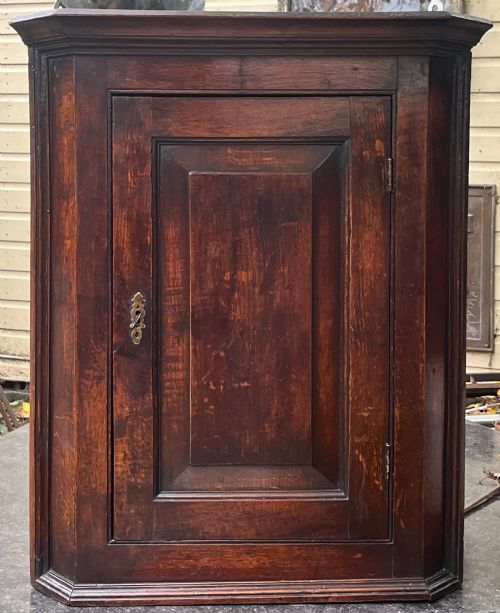
A traditional corner wall cabinet is designed specifically to hang where two walls meet, saving floor space while keeping contents secure behind a single door. The selection on this page centres heavily on Georgian pieces, alongside examples from the eighteenth century, the nineteenth century, and the Victorian era.
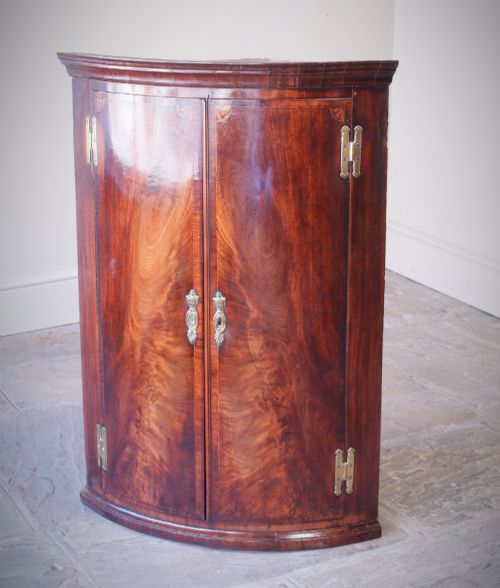
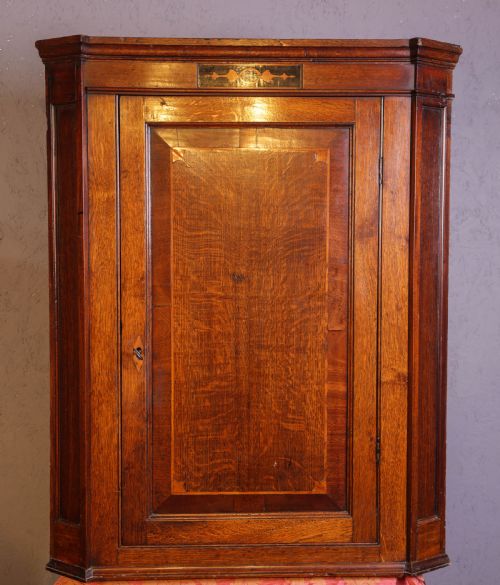
Most pieces seen here arrive in robust oak or rich mahogany, occasionally detailed with satinwood inlay, red walnut, or pine. Formats range from simple panelled doors to bow front profiles and glazed display fronts suited to porcelain.
Makers shaped these cupboards to fit snugly into domestic rooms, producing both flat fronted wall units and curved bow front designs. Regional pieces span English workshops and French provincial examples, showing how cabinet makers adapted standard storage to awkward angles.
How they were made
Carpenters constructed these wall cabinets using solid oak, mahogany, and pine, often applying veneers and satinwood inlay to create decorative contrast on the doors. Iron and brass hinges, alongside working locks and key escutcheons, secure the heavy timber doors against the frame.
Cabinet makers utilised traditional joinery like dovetailing and mortise and tenon construction to ensure the heavy corner units could hang safely from wall fixings. Glazed doors feature individual timber glazing bars holding small panes of glass for display purposes.
Traditional Corner Wall Cabinet Retail Price Guide 2026
Typical asking prices for traditional corner wall cabinet among the pieces listed under this phrase on Sellingantiques today, from the lower quarter to the upper quarter. They describe what is for sale here now, not the wider market.
Some nineteenth century provincial makers cleverly utilised scrap packing timber for internal corner brackets, proving thrift outlived fashion.
What varies in quality
The choice of primary timber sets the baseline for quality, moving from utilitarian pine up to figured mahogany and quarter sawn oak. Superior examples display finer grain patterns, crisp satinwood inlay, and well chosen veneers that have aged evenly.
Construction detail distinguishes finer workshop output, particularly in the precision of the mitres, the thickness of the backboards, and the survival of original brass hardware. Interiors fitted with shaped shelves or small internal drawers show greater ambition from the cabinet maker.
The Traditional Corner Wall Cabinet Glossary
- Bow front
- A convex curved cabinet front that projects forward from the corner walls. This curved profile requires skilled timber bending or shaping from the solid block.
- Glazing bars
- The wooden strips that hold individual panes of glass within a cabinet door. Narrow, well proportioned bars indicate careful cabinet work.
- Escutcheon
- A protective plate surrounding the keyhole on the cabinet door. These are frequently made of brass and help prevent the wood from splitting around the lock.
- Satinwood inlay
- Contrasting light timber inserted into recesses cut into the primary wood surface. It creates decorative borders and geometric patterns on the door panels.
Traditional Corner Wall Cabinet: Frequently Asked Questions
How do I hang a heavy oak corner cabinet?
These wall units require secure fixings anchored directly into structural wall studs or masonry rather than mere plasterboard. Professional installation ensures the substantial weight of solid oak and mahogany does not pull the fixings loose.
Because the geometry of a corner cabinet distributes weight toward the front opening door, check that the internal hanging brackets or screw points are robust and properly seated.
What is the difference between oak and mahogany models?
Oak examples generally date from the earlier periods or provincial workshops, offering a heavier grain and a warmer, rustic tone. Mahogany versions often appear in more formal Georgian settings, sometimes enhanced with satinwood inlay.
Both timbers provide durable housing, but mahogany allows for sharper carved details and a smoother polished finish compared to the rustic character of oak.
Were these cabinets meant for kitchens or parlours?
Corner cupboards served multiple rooms depending on the household, holding dry goods in domestic spaces or displaying valued ceramics in the parlour. Glazed doors point toward display use, while solid panelled doors kept contents hidden from view.
Today, they function well in dining rooms for glassware or in hallways where floor space remains at a premium.
How can I date an eighteenth century corner cupboard?
Dating relies on examining the construction methods of the internal shelves, the timber species, and the style of the hinges and lock plates. Eighteenth century pieces often feature hand sawn backboards and pegged joints rather than modern screws.
Secondary woods used inside the cabinet, such as pine or oak boards behind the main facade, also offer clues to regional British or continental origins.