



Inlaid Bedside Lockers
Inlaid bedside lockers bring intimate storage beside a bed, uniting compact scale with decorative cabinet work.
Inlaid Bedside Lockers
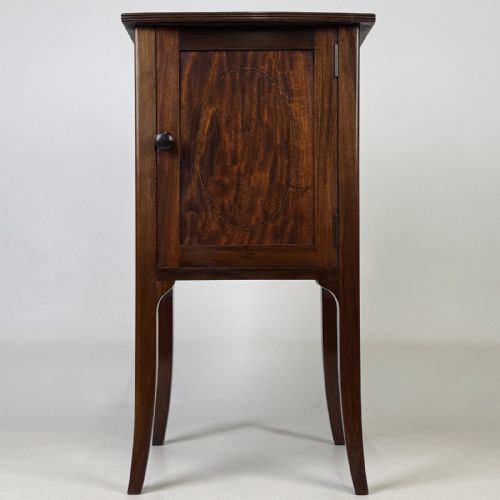
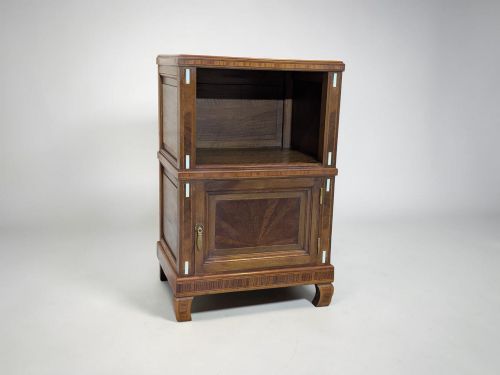
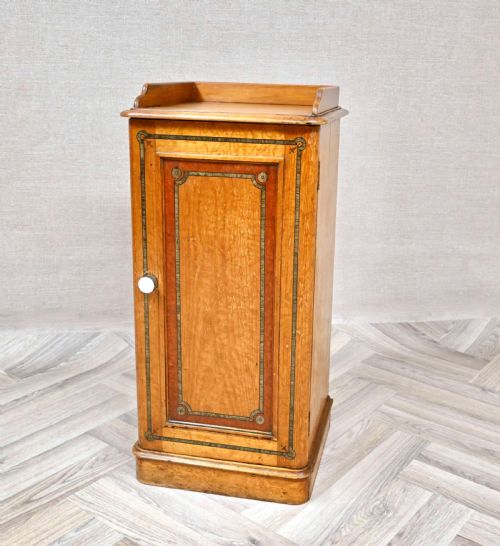
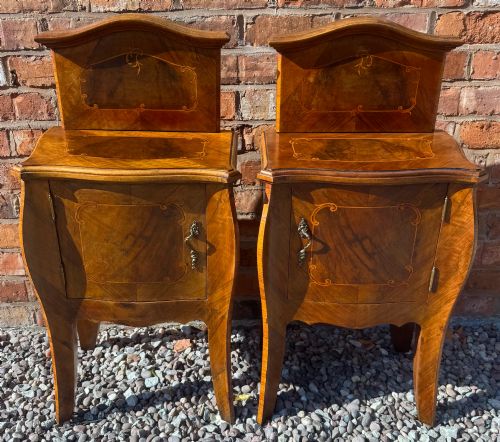
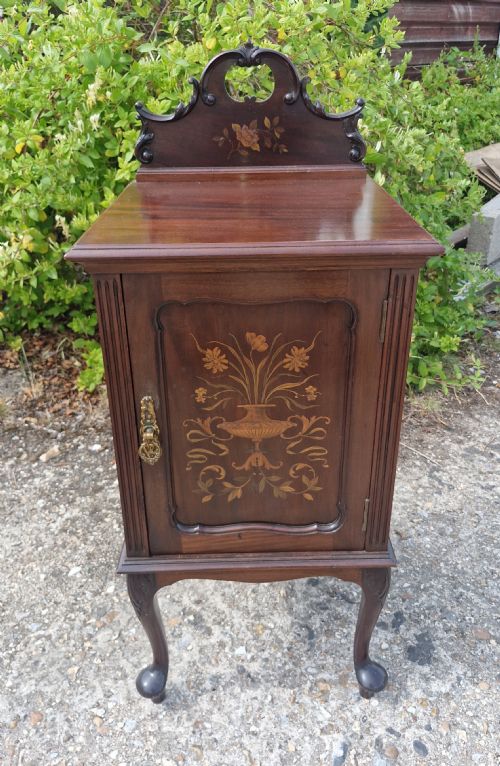
Inlaid bedside lockers comprise small cabinets and tables designed for night-time storage, frequently appearing in pairs across the Edwardian and Victorian periods. These pieces utilise woods such as mahogany, satinwood and walnut, often ornamented with delicate wood inlay or marquetry.
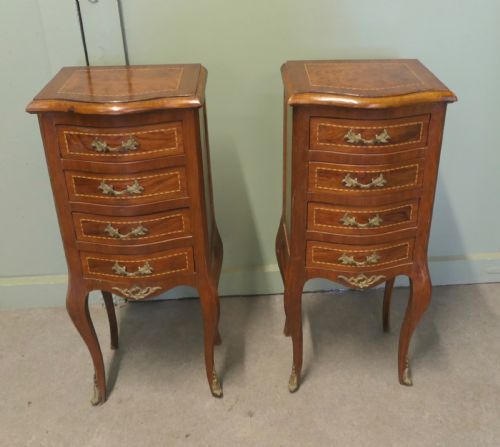
Forms range from simple cupboards and pot cupboards to taller four-drawer side lockers and marble-topped nightstands. French influences emerge through Louis XV styles and parquetry work, alongside simpler English Edwardian mahogany examples.
Buyers encounter these utilitarian yet decorative pieces spanning the eighteenth century through to the nineteen-thirties. The selection balances compact storage capacity with the refined surface decoration characteristic of inlaid cabinet work.
How they were made
Cabinet makers constructed carcass frames from timbers like mahogany, walnut and pine, applying contrastingveneers and stringing in satinwood, boxwood and ebony. Wood inlay and marquetry formed geometric or floral motifs set directly into the primary surfaces.
Metal fittings such as brass handles and ormolu mounts added functional and decorative accents to drawers and cupboard doors. Marble tops occasionally provided durable surfaces for French nightstands and bedside cabinets.
Inlaid Bedside Lockers Retail Price Guide 2026
Typical asking prices for inlaid bedside lockers among the pieces listed under this phrase on Sellingantiques today, from the lower quarter to the upper quarter. They describe what is for sale here now, not the wider market.
Listings feature mahogany, satinwood, walnut and rosewood lockers spanning the eighteenth century to the nineteen-thirties.
What varies in quality
The sophistication of the timber selection and the precision of the wood inlay establish the visual standard of a locker. Finer pieces display crisp botanical or geometric marquetry set flush into deeply figured mahogany, satinwood or kingwood veneers.
Structural integrity depends on the joinery of the carcass and drawers, alongside the retention of original brass handles or ormolu mounts. Matched pairs command particular attention for their symmetry and balanced proportions beside a bed.
Gillows
The Inlaid Bedside Lockers Glossary
- Marquetry inlay
- An elaborate technique of fitting small pieces of veneer into a groundwork to create pictorial or decorative patterns. This method defines the decorative surface of many finer French and English cabinets.
- Satinwood
- A lustrous timber native to India and Ceylon, prized for its golden sheen and yellow colouring. Makers used it extensively for contrasting crossbanding and detailed inlay work on Edwardian pieces.
- Pot cupboard
- A traditional term for a small bedside cabinet originally designed to house a chamber pot. These practical items frequently feature a single cupboard door and occasionally a small internal shelf.
- Ormolu
- Gilt-bronze mounts applied to furniture for decorative effect, commonly seen on French side lockers. The technique involves fusing gold amalgam to a bronze base.
- Parquetry
- A geometric mosaic of wood pieces used for surface decoration, frequently seen on French tables and cabinets. It differs from marquetry by relying on angular, repeating patterns rather than curves.
Inlaid Bedside Lockers: Frequently Asked Questions
What is a bedside locker?
A bedside locker is a small piece of furniture designed to stand beside a bed, providing enclosed storage for night-time essentials. These items often take the form of compact cupboards, cabinets, or small tables.
They evolved from traditional pot cupboards and nightstands, incorporating drawers and shelves. Inlaid versions add decorative surface patterns to this functional bedroom furniture.
Are these lockers usually found in pairs?
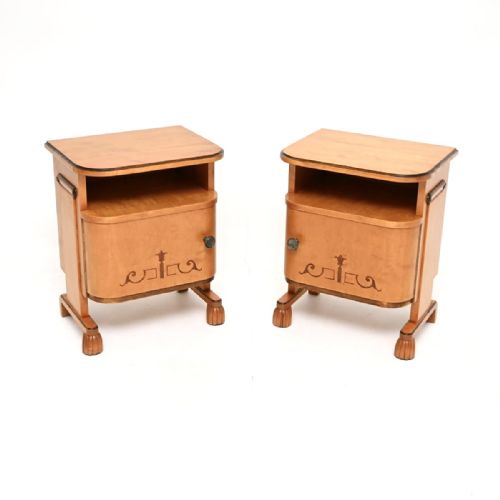
Bedside lockers appear both as single pieces and as matched pairs, depending on their original commission. Pairs are particularly sought after for balancing the proportions of a bedroom scheme.
Makers often built side lockers in matching sets during the Edwardian period and the early twentieth century. Single pieces frequently date from earlier Georgian and Victorian years.
What woods were used for inlay?
Cabinet makers utilised contrasting light and dark timbers to create distinct patterns on the drawer fronts and top surfaces. Satinwood, boxwood and ebony frequently provided the pale or dark elements for decorative stringing.
These contrasting woods were set into primary surfaces of mahogany, walnut or rosewood. The resulting motifs range from simple geometric lines to complex floral marquetry.
How do French styles differ?
French bedside lockers often embrace Louis XV revival forms, featuring shaped silhouettes, parquetry work and ormolu mounts. Some examples incorporate marble tops designed to resist wear on nightstand surfaces.
English cabinets tend to favour straight lines in inlaid mahogany or satinwood. Both traditions prioritise compact proportions suitable for nineteenth and twentieth-century bedrooms.