


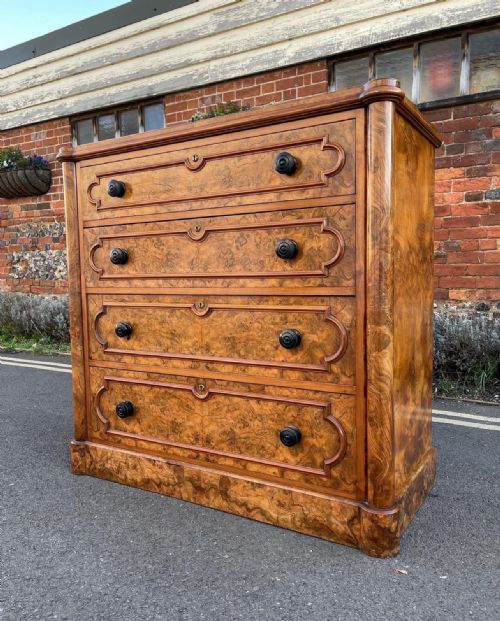


Vintage Walnut Storage Pedestals
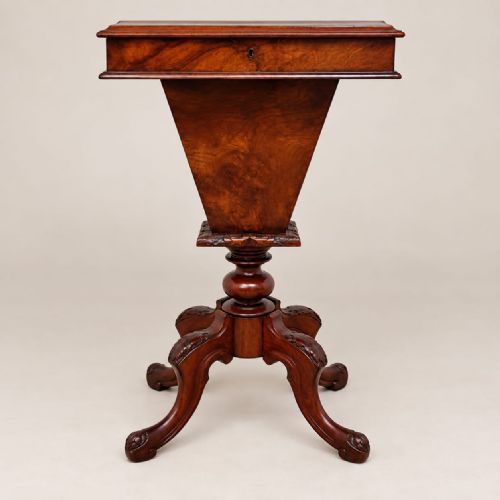
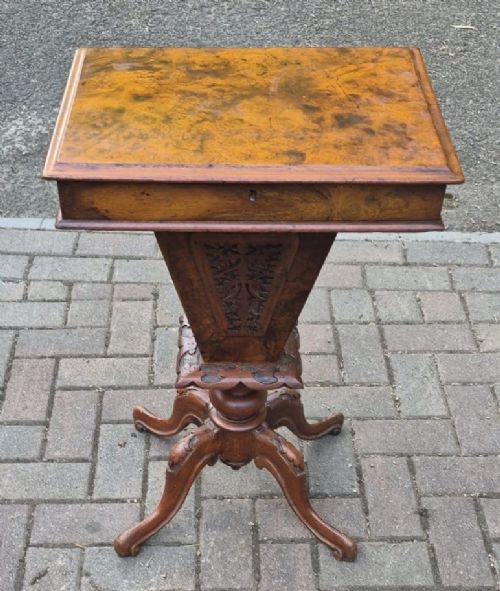
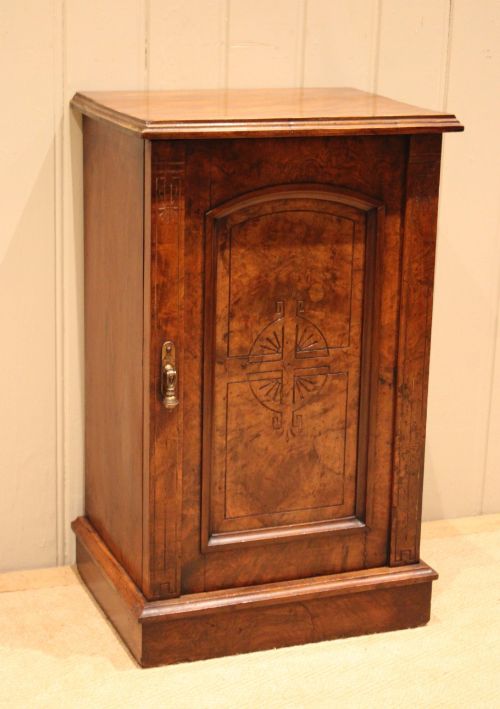
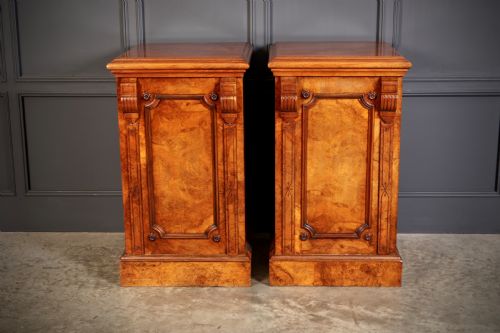
These vintage walnut storage pedestals bring rich timber figure and practical bedside or side capacity to a room.
Vintage Walnut Storage Pedestals
Vintage walnut storage pedestals cover a practical range of compact bedside cabinets, side cabinets, and sewing tables spanning the Victorian era through the Art Deco period. Buyers seeking vintage walnut storage pedestals find small bedside cupboards, nightstands with drawers, and pairs of figured timber cabinets designed for domestic utility.
The selection on this page relies heavily on nineteenth-century Victorian forms alongside 1920s Queen Anne revival designs and 1930s Art Deco pieces. Makers utilise compact footprints to provide enclosed storage through single doors, drawers, or tambour fronts suited to bedroom and living spaces.
How they were made
Cabinet makers constructed these pieces using solid walnut and pine carcases overlaid with decorative veneers including burr walnut and figured walnut. Workshops selected timber figures to create symmetrical patterns across door panels and drawer fronts.
Structural joints incorporate secondary timbers like pine, while decorative enrichment often relies on boxwood stringing, marquetry inlay, and brass hardware. Carved details appear on Victorian examples, contrasting with the smooth geometric surfaces of Art Deco items.
Vintage Walnut Storage Pedestals Retail Price Guide 2026
Typical asking prices for vintage walnut storage pedestals among the pieces listed under this phrase on Sellingantiques today, from the lower quarter to the upper quarter. They describe what is for sale here now, not the wider market.
Listings span from the Victorian period through 1930, uniting walnut, brass, boxwood, and pine in bedside and side cabinet forms.
What varies in quality
Quality rests upon the selection and matching of the walnut veneer across the primary surfaces. Finer examples display lively burr or figured grain patterns that wrap symmetrically around the cabinet body.
The refinement of secondary details distinguishes standard production from superior work. Crisp boxwood inlay, well-fitted brass mounts, and smoothly operating drawers or tambour doors elevate the standing of a piece.
Harry and Lou Epstein
The Vintage Walnut Storage Pedestals Glossary
- Burr walnut
- A prized timber harvested from tree growths that produces intricate, swirling grain patterns. Cabinet makers slice this wood into thin veneers for decorative surfaces.
- Tambour
- A flexible shutter formed of narrow strips of wood glued to a canvas backing. This mechanism allows a curved door to slide smoothly around a cabinet corner.
- Marquetry
- A technique where pieces of contrasting wood veneer are fitted together to form decorative pictures or geometric patterns. Artisans inlay these designs directly into the furniture surface.
- Boxwood
- A dense, pale yellow wood used traditionally for fine stringing and contrasting inlay lines. It provides sharp visual borders against darker walnut veneers.
- Pedestal cabinet
- A tall, freestanding storage unit designed with a single cupboard door enclosing interior shelves or space. These compact forms typically serve beside a bed or seating area.
Vintage Walnut Storage Pedestals: Frequently Asked Questions
What are vintage walnut storage pedestals used for?
These cabinets serve primarily as bedside tables or compact side storage units in living spaces. Their enclosed cupboards and drawers conceal books, lighting accessories, and personal items.
Pairs often frame a bed or fireplace, providing symmetrical surface space and concealed storage within a small room footprint.
How do I identify an Art Deco walnut cabinet?
Art Deco pieces from the 1930s favour clean geometric lines, waterfall edges, and unadorned surfaces that highlight the natural figure of the burr walnut veneer. They discard the heavy carving of Victorian items in favour of sleek, streamlined silhouettes.
Hardware is typically minimal or cast in simple geometric shapes, letting the timber grain act as the primary decoration.
What is burr walnut?
Burr walnut comes from a tree excrescence that yields a chaotic, highly figured grain filled with swirling patterns and small knot clusters. Because it is unstable in solid form, craftsmen apply it as a decorative veneer over stable secondary timbers.
This technique creates rich, opulent surfaces on cabinet doors and tabletops.
Are these pedestals durable for daily use?
Walnut is a robust hardwood that stands up well to daily domestic use when cared for properly. The underlying carcases are typically built from stable secondary woods like pine to prevent warping.
Routine dusting and protection from direct sunlight and excessive moisture keep the polish and veneer intact over decades of use.