



Pair Inlaid Walnut Nightstands
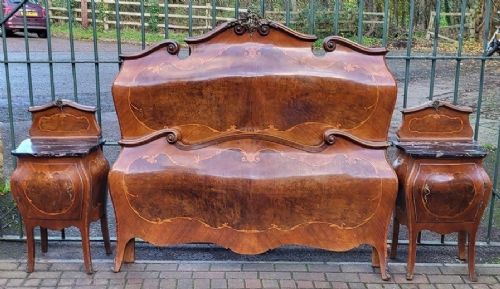
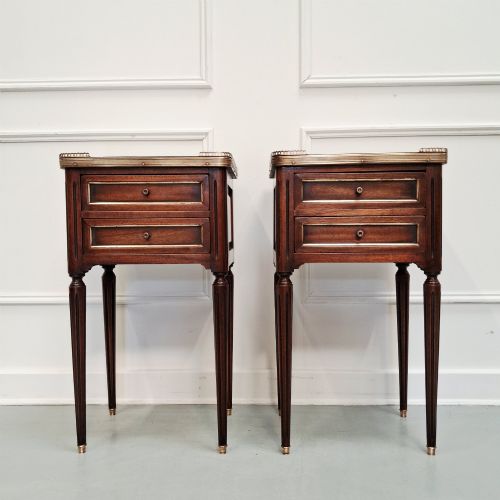
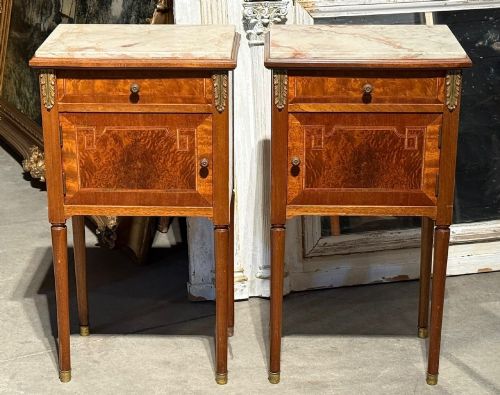
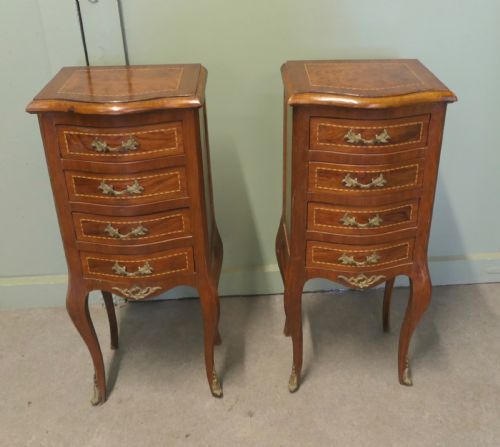
These pair inlaid walnut nightstands bring continental elegance to a bedside, combining rich timber and decorative brass mounts.
Pair Inlaid Walnut Nightstands
When you search for pair inlaid walnut nightstands, you find matching bedside tables, cabinets, and small commodes designed for French and Italian interiors. The selection spans the Victorian and Edwardian eras into the early twentieth century, reflecting classical continental tastes.
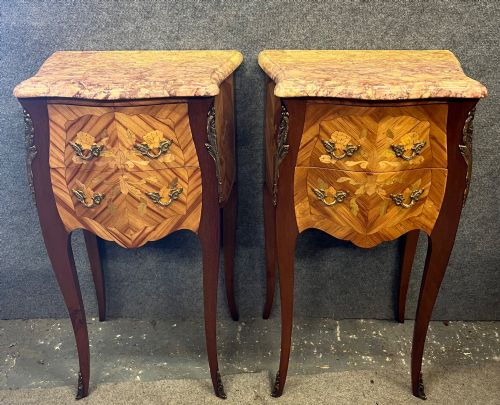
Most examples you meet on this page date from the nineteen-twenties and nineteen-thirties, taking the form of bedside chests, lamp tables, and small cupboards. French Louis XV styles and serpentine shapes dominate the records, alongside kidney-shaped tables and bow-front variants.
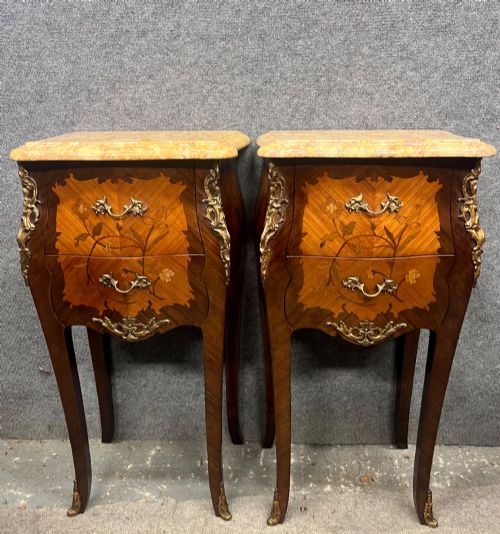
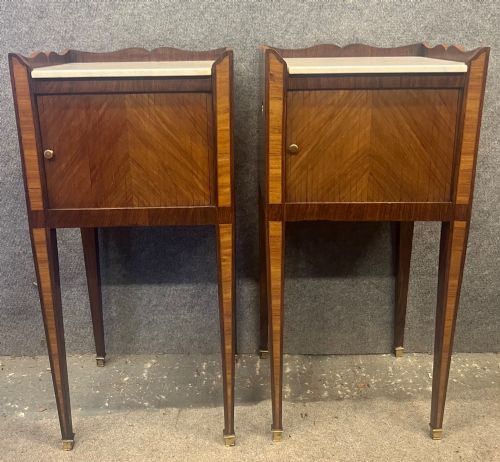
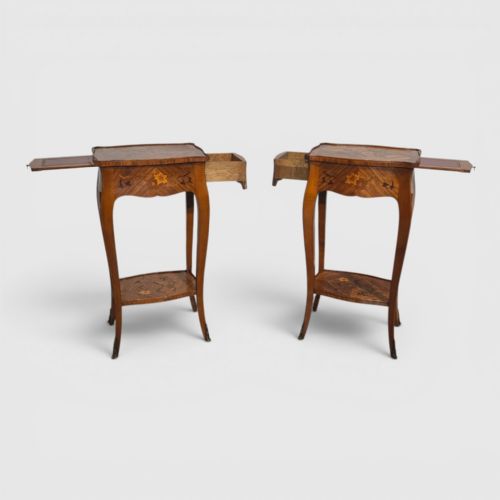
These pieces function primarily as bedside storage, often incorporating single drawers, cupboards, and occasionally marble tops or secret compartments. Walnut serves as the principal timber, frequently enhanced with contrasting marquetry and parquetry patterns.
How pair inlaid walnut nightstands were made
Cabinetmakers utilised walnut veneers applied over solid carcases to create intricate geometric parquetry and pictorial marquetry designs on tops and drawer fronts. Kingwood and rosewood were often introduced alongside walnut to provide contrasting tones within the inlay work.
Many specimens feature shaped marble slabs fitted precisely to their upper surfaces, protected by raised wooden galleries or plain moulded edges. Cast or chased ormolu and gilt bronze mounts decorate the corners, handles, and sabots, accentuating the curved contours of the woodwork.
Pair Inlaid Walnut Nightstands Retail Price Guide 2026
Typical asking prices for pair inlaid walnut nightstands among the pieces listed under this phrase on Sellingantiques today, from the lower quarter to the upper quarter. They describe what is for sale here now, not the wider market.
At least one clever bedside cabinet includes a secret compartment for hidden midnight valuables.
What varies in quality
The sophistication of the marquetry and the precision of the timber matching dictate the standing of a pair. Finer specimens display detailed floral or geometric patterns executed in multiple contrasting woods, while simpler versions rely on plain walnut grain.
Hardware and secondary materials also set examples apart. Heavy, crisply cast ormolu mounts and substantial slab marble tops indicate superior workshop production compared to lighter metal fittings and unadorned wooden surfaces.
The Pair Inlaid Walnut Nightstands Glossary
- Marquetry
- Decorative veneer work arranged in pictorial patterns using various coloured woods. This technique adorns many tabletops and drawer fronts.
- Parquetry
- Geometric patterns formed by small pieces of veneer fitted together. It frequently covers the flat surfaces of twentieth-century bedside cabinets.
- Ormolu
- Gilded bronze used for decorative mounts and sabots on furniture. It provides a bright metallic contrast against dark walnut timber.
- Commode
- A low chest of drawers or cabinet standing on legs. Several continental examples take this form.
- Kidney-shaped
- Describing a curved tabletop resembling a kidney bean. This form appears frequently among French bedside tables.
Pair Inlaid Walnut Nightstands: Frequently Asked Questions
How do I use these nightstands?
These pieces fit beside a bed to hold lamps, books, and small personal items. Their enclosed cupboards and drawers keep bedside clutter concealed.
They also function effectively as small lamp tables or side units in a drawing room. Their compact proportions allow them to sit easily in narrow spaces.
Are these pieces strictly French?
Many examples originate from France and follow Louis XV or Rococo revival styles. French cabinetmaking traditions heavily influence the serpentine and kidney shapes.
However, Italian workshops also produced notable variations using burr walnut and similar marquetry techniques. Both origins share a common continental aesthetic.
What is parquetry?
Parquetry is a mosaic of wood veneer arranged in geometric designs like cubes or chequers. It differs from marquetry, which creates pictorial scenes.
Cabinetmakers used parquetry to cover tabletops and drawer fronts on twentieth-century pieces. The grain direction alternates to catch the light differently.
Why do some have marble tops?
Marble provided a durable, heat-resistant surface for bedside use, protecting the timber below from spills. It added significant weight and stability to small tables.
White and coloured marble slabs were fitted into wooden frames on the upper surface. This feature appears regularly on Victorian and Edwardian examples.