



Ebonised Inlaid Side Cabinets
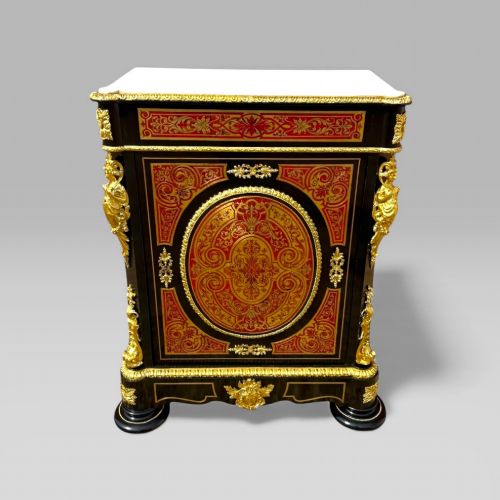
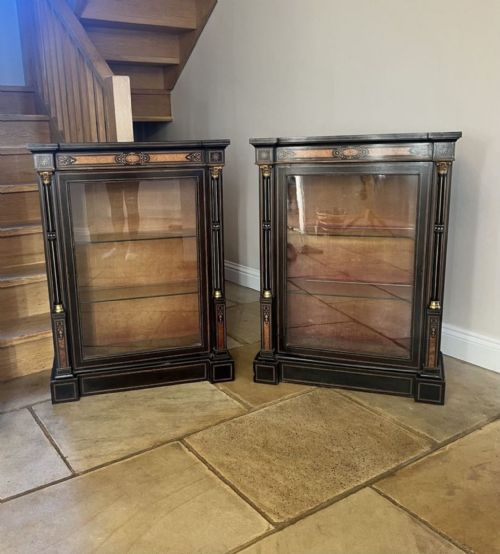
These ebonised inlaid side cabinets combine dark timber surfaces with precision marquetry and metal mounts.
Ebonised Inlaid Side Cabinets
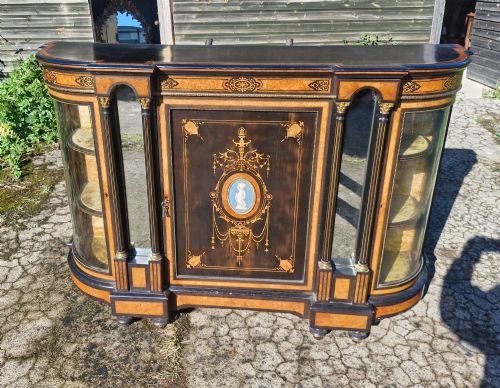
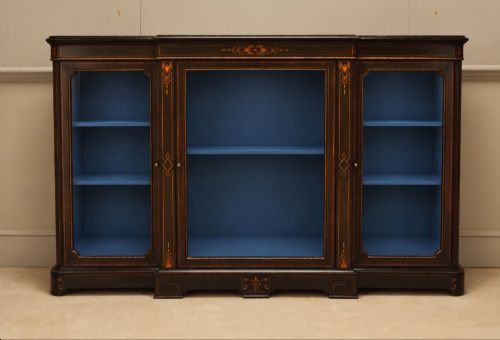
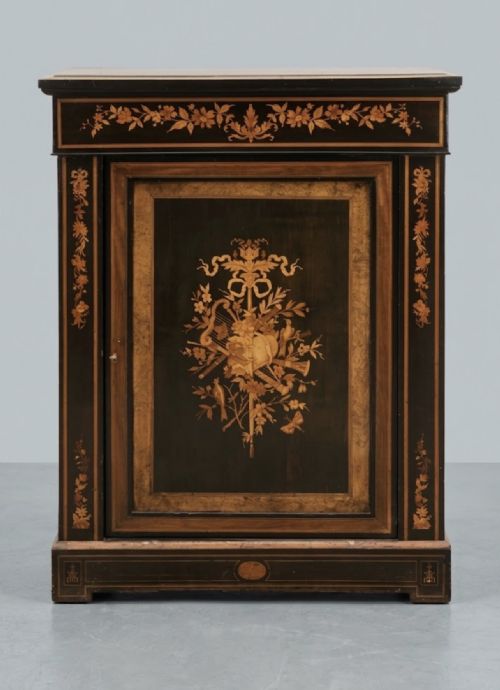
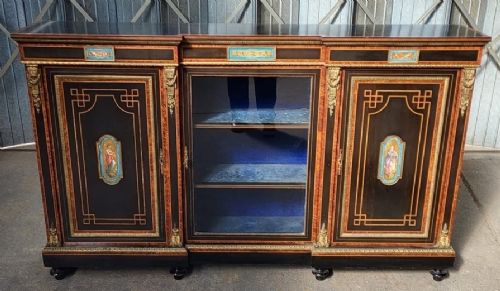
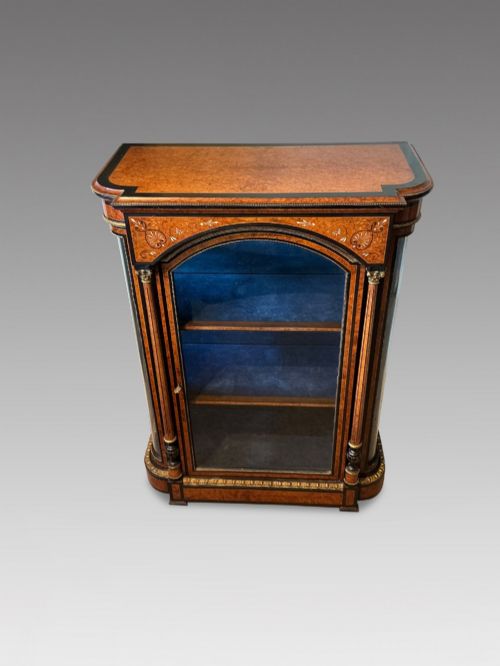
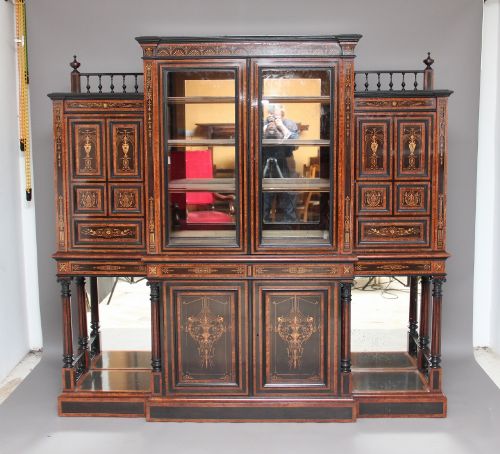
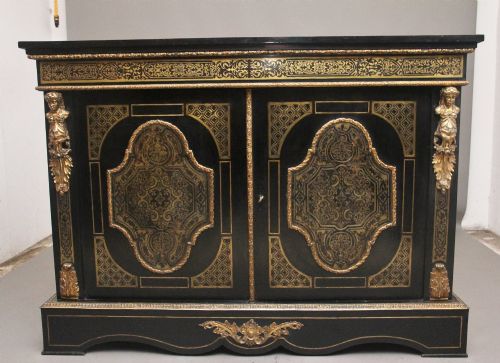
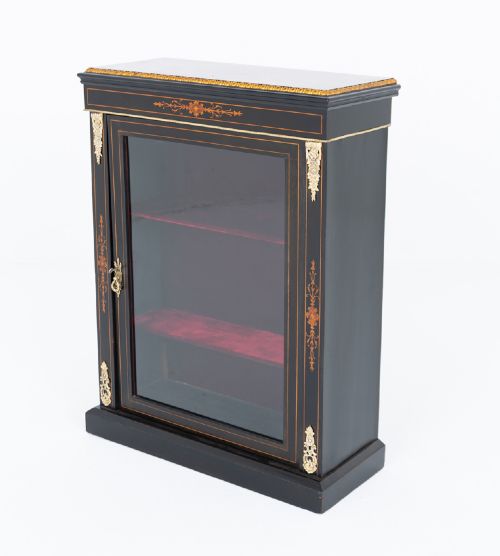
Ebonised inlaid side cabinets are nineteenth-century display and storage furniture pieces designed for formal reception rooms. Buyers encounter various forms on this page, including pier cabinets, credenzas, and breakfront display units.
The prevailing style across these pieces is Victorian and French Napoleon III, often featuring distinct revival influences. They serve both a decorative function for displaying porcelain and a practical role for containing books and objects.
Most examples originate from the nineteenth century, spanning decades from eighteen-fifty to nineteen-hundred. The selection encompasses single items, matched pairs, and multi-part buffet cabinets.
How they were made
Cabinet makers utilised ebonised wood as the primary dark carcase material, frequently combining walnut, amboyna, and ebony veneers. Surfaces were then prepared for intricate marquetry using contrasting timbers.
Craftsmen embedded brass, tortoiseshell, and ormolu mounts into the wooden structure, alongside delicate stone inlay such as pietra dura. Glass panels and marble tops completed the construction of these decorative storage pieces.
Ebonised Inlaid Side Cabinets Retail Price Guide 2026
Typical asking prices for ebonised inlaid side cabinets among the pieces listed under this phrase on Sellingantiques today, from the lower quarter to the upper quarter. They describe what is for sale here now, not the wider market.
Some nineteenth-century makers thoughtfully provided miniature side cabinets specifically scaled down for nurseries or child-sized drawing rooms.
What varies in quality
Quality differences lie in the precision of the brass and tortoiseshell boulle work and the crispness of the cast ormolu mounts. Finer pieces demonstrate superior integration of marquetry across curved serpentine fronts.
The selection of secondary timbers and the retention of original marble tops and fitted glass doors also distinguish standard production from exceptional examples.
Lamb of Manchester·Gordovil Spain
The Ebonised Inlaid Side Cabinets Glossary
- Ebonised wood
- Timber treated to imitate the dark, dense appearance of ebony. This finish became popular during the nineteenth century for formal cabinet work.
- Boulle
- An elaborate form of marquetry employing brass and tortoiseshell. Named after French cabinet maker André-Charles Boulle, it defines Napoleon III and Victorian pieces.
- Ormolu
- Gilded bronze used for mounts and decorative trims on nineteenth-century furniture. It provides metallic contrast against dark ebonised surfaces.
- Pietra dura
- Inlay work utilising polished, coloured stones to create pictorial designs. This technique appears on monumental credenzas and select cabinets.
- Marquetry
- Decorative patterns formed by fitting veneer pieces onto a carcase. Floral and geometric motifs frequently adorn the doors and panels of these cabinets.
Ebonised Inlaid Side Cabinets: Frequently Asked Questions
What is an ebonised inlaid side cabinet?
These pieces are nineteenth-century storage furniture featuring dark ebonised wooden surfaces decorated with brass, tortoiseshell, or wood marquetry inlay.
They function as display units or credenzas, often incorporating glass doors and marble tops for formal interior settings.
How do you style an ebonised cabinet?
Place the cabinet against a neutral wall to let the dark ebonised finish and metallic brass inlay stand out clearly.
Utilise the interior shelves and glass panels to display porcelain or glassware while keeping the top surface uncluttered.
What is the difference between a pier cabinet and a credenza?
A pier cabinet is typically a tall, narrow single-door unit designed to stand in the wall space between windows.
Credenzas are wider, low-profile cabinets featuring multiple doors, often flanked by curved side sections or glass display compartments.
How do you date a nineteenth-century side cabinet?
Examine the construction materials, joinery techniques, and stylistic influences such as Napoleon III boulle work or Victorian aesthetic movement details.
Look for specific period characteristics like pietra dura mounts or amboyna veneers that align with nineteenth-century manufacturing trends.