



Continental Marquetry Cupboards
Continental marquetry cupboards are timber storage pieces inlaid with patterned veneers, offering both practical utility and striking decorative presence.
Continental Marquetry Cupboards
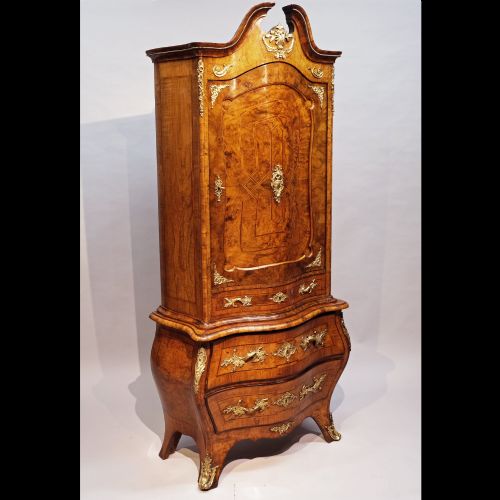
Continental marquetry cupboards encompass storage pieces decorated with detailed wood veneers, ranging from side cabinets and bookcases to grand armoires. These items span multiple periods from pre-sixteenth century examples up to mid twentieth century creations, originating from various European regions including Germany, Italy, Malta and France.
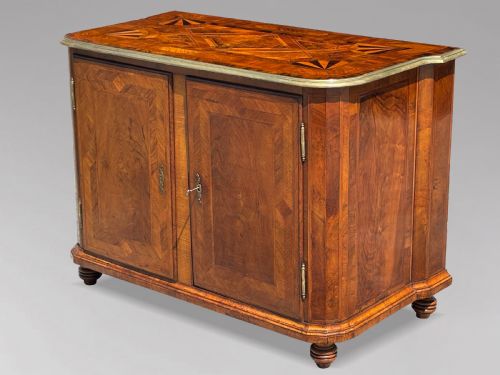
Buyers will encounter forms such as compact bedside cabinets and side cabinets alongside larger breakfront bookcases and armoires. The surface decoration relies heavily on floral and geometric inlay work executed in contrasting timbers.
The construction types vary from seventeenth century German side cabinets to nineteenth century walnut cabinets on chests. These pieces serve as functional storage while displaying the distinct regional design traits of their makers.
How they were made
The primary structural timber across these pieces is walnut, often paired with fruitwood, satinwood, mahogany and ebonised wood for the contrasting marquetry panels. Craftsmen cut thin slices of various woods to compose intricate floral or geometric patterns set into the main body of the furniture.
Metal elements such as brass and ormolu provide mounts, hinges and key escutcheons that accent the wooden surfaces. Certain pieces incorporate heavy stone elements, notably Carrara marble tops, resting on the wooden cabinetry beneath.
Continental Marquetry Cupboards Retail Price Guide 2026
Typical asking prices for continental marquetry cupboards among the pieces listed under this phrase on Sellingantiques today, from the lower quarter to the upper quarter. They describe what is for sale here now, not the wider market.
A surprise stone surface waits atop the floral marquetry when a cool Carrara marble slab crowns the walnut cabinet.
What varies in quality
Quality depends upon the precision of the veneer work and the complexity of the marquetry motifs integrated into the cabinet doors and drawer fronts. Tighter joints between the contrasting wood segments indicate superior cabinet making.
The choice of secondary materials, such as the inclusion of heavy marble tops and detailed brass or ormolu mounts, elevates the status of a given piece. Cohesion between the regional style, whether German Baroque or Italian Neoclassical, and the execution of the timber inlay defines the tier of the object.
The Continental Marquetry Cupboards Glossary
- Marquetry
- Decorative veneer work arranged in pictorial or geometric patterns across a furniture surface. This technique uses various coloured woods to create contrast.
- Ormolu
- Gilded bronze used for mounts and decorative hardware on furniture. It adds metallic highlights to timber cabinets.
- Breakfront
- A piece of furniture where the central section projects forward from the flanking wings. This layout breaks up the flat facade of large bookcases and cabinets.
- Ebonised
- Timber treated to resemble ebony through staining or painting. This dark finish provides stark contrast against lighter marquetry inlay.
Continental Marquetry Cupboards: Frequently Asked Questions
Where were continental marquetry cupboards made?
These pieces originate from workshops across mainland Europe, with specific regional examples recorded from Germany, Italy and Malta. Each area developed distinct cabinet making traditions and decorative vocabularies.
Local timber availability and prevailing artistic movements, such as the Baroque or Rococo Revival styles, shaped the final appearance of cupboards produced in these different regions.
How do I care for inlaid wood furniture?
Maintain stable indoor humidity levels and keep the timber away from direct heat sources to prevent the marquetry veneers from lifting. Regular dusting with a soft, dry cloth preserves the polished surface.
Avoid using harsh chemical polishes or excessive moisture, which can damage both the wood and any accompanying brass or ormolu mounts.
What is the difference between marquetry and inlay?
Marquetry involves covering the entire surface of a piece with fitted veneer pieces to form a pictorial or decorative pattern. It acts as a complete skin over the structural carcase.
Inlay traditionally describes setting pieces of wood or other materials into pre-carved recesses within a solid wooden base rather than covering the whole surface.
How do I identify different periods of cabinets?
Dating relies on examining the structural joinery, the choice of secondary timbers, and the stylistic vocabulary of the carving and marquetry. Earlier pieces often show heavier proportions and specific regional Baroque traits.
Later nineteenth and twentieth century interpretations frequently revive earlier aesthetics like the Louis XV style, combining historical motifs with contemporary construction methods.