
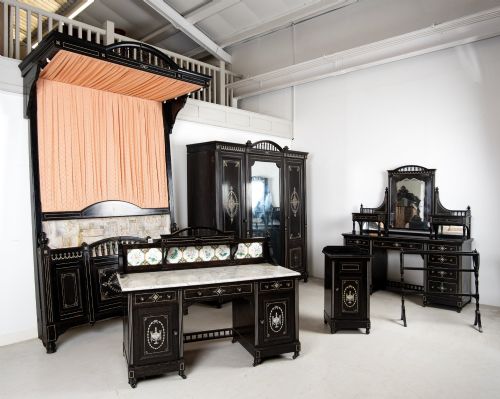
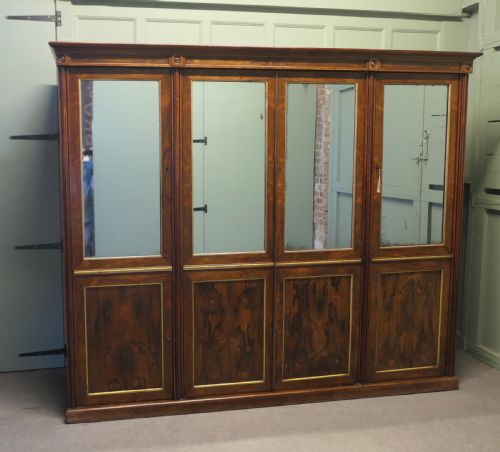
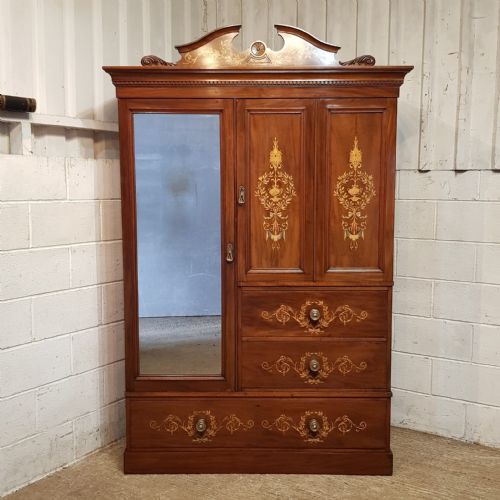
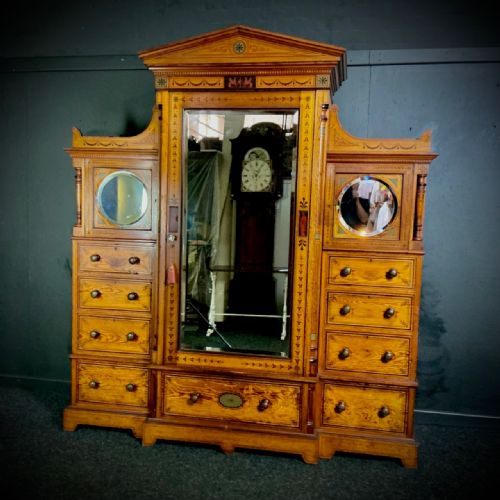
Inlaid Bedroom Mirror
An inlaid bedroom mirror brings polished timber, reflective glass and delicate banding together to brighten a dressing space.
Inlaid Bedroom Mirror
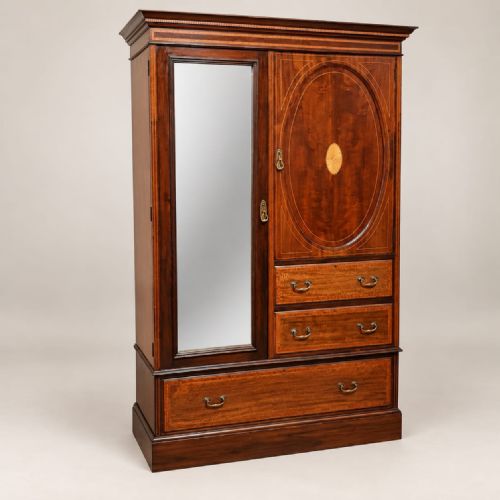
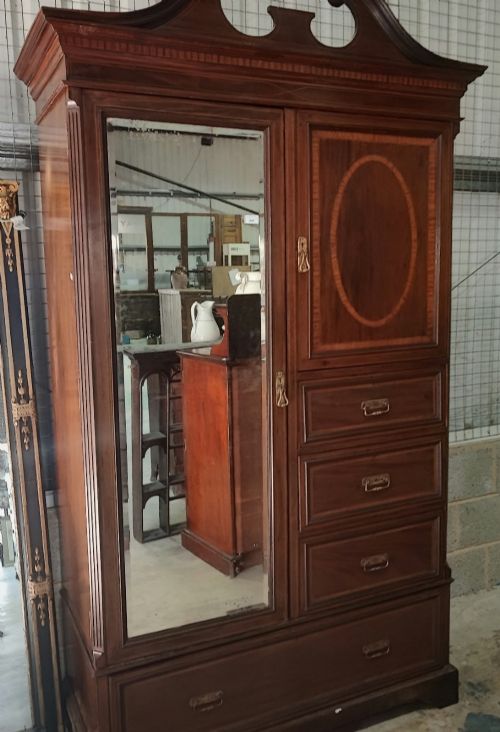
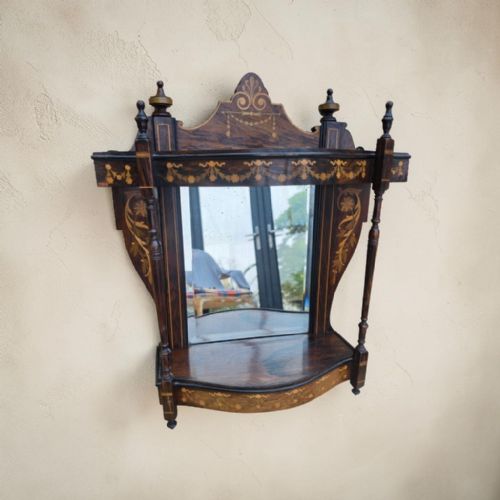
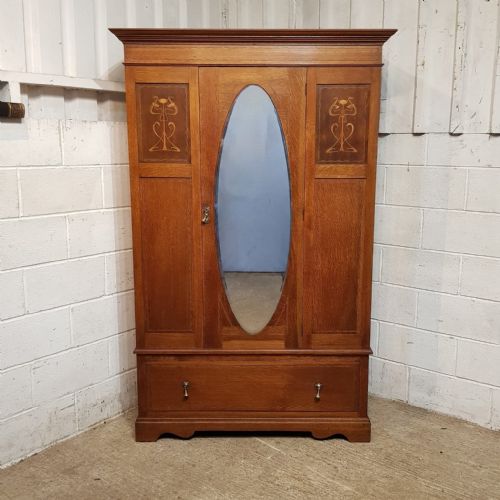
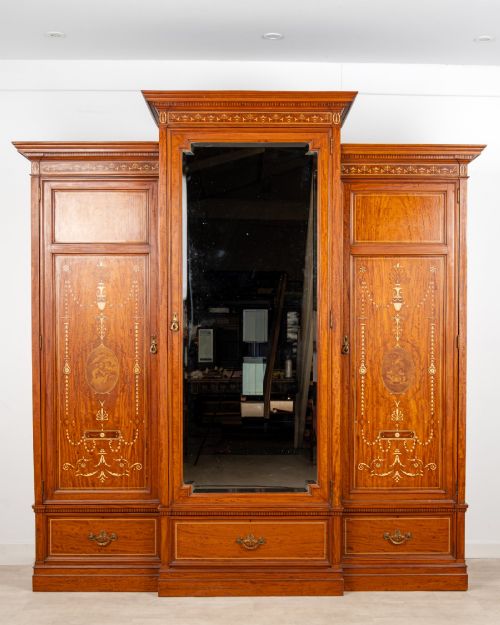
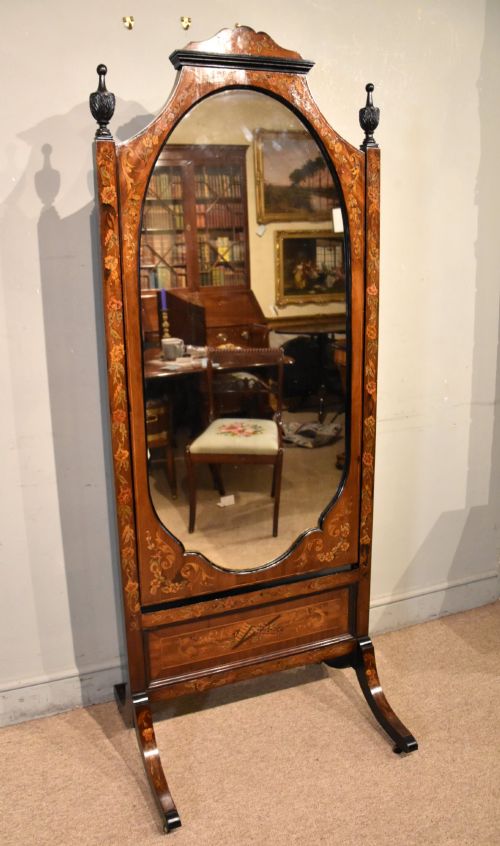
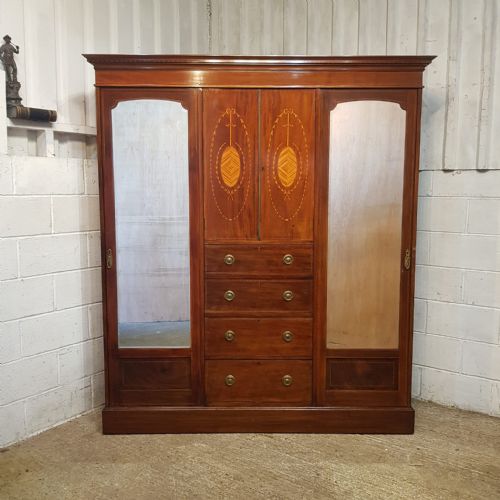
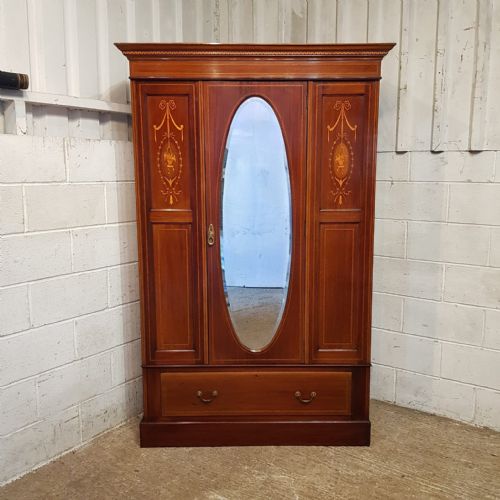
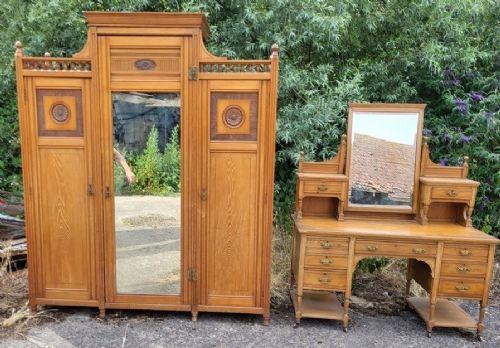
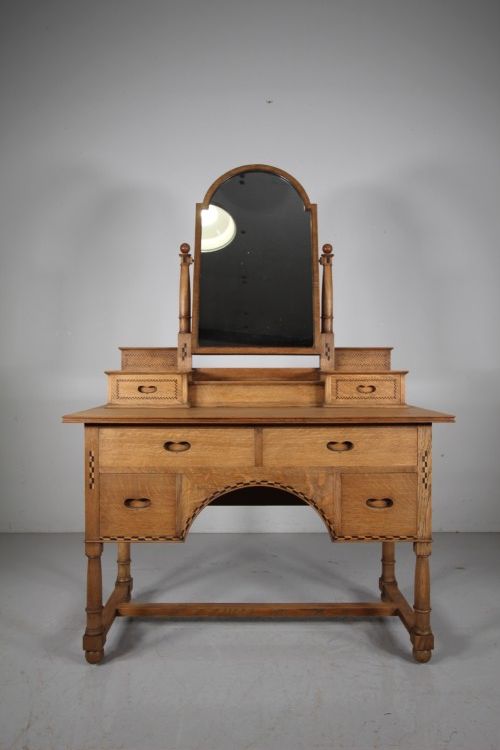
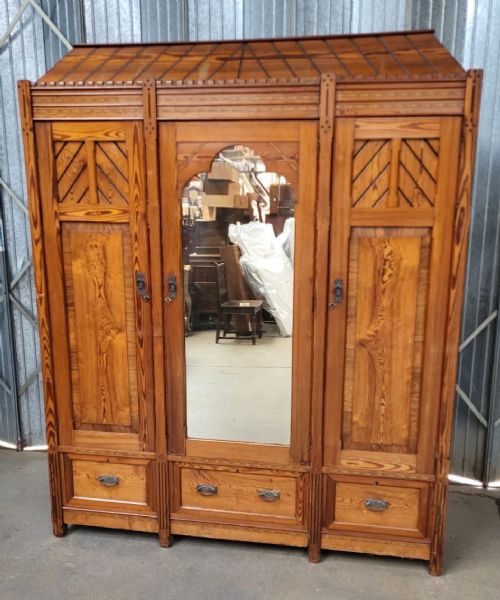
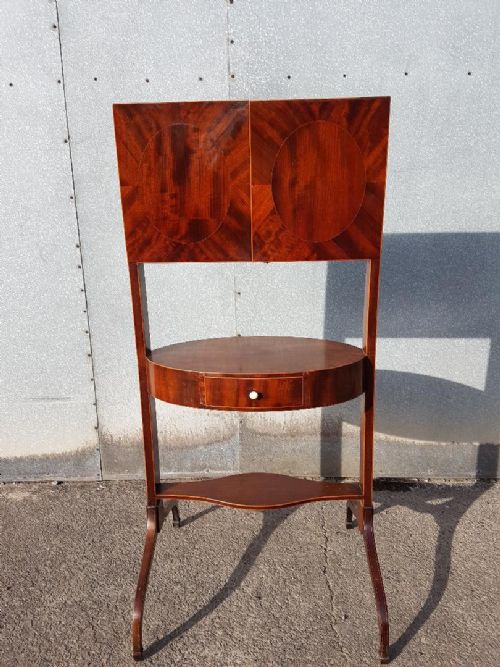
When you search for an inlaid bedroom mirror, you look at reflective glass framed or mounted within timber structures that span the Victorian, Edwardian and Georgian periods. These pieces appear as cheval mirrors, wall mirrors, or as the central pivoting components attached to dressing tables and larger wardrobes.
The most common examples on this page date from the Edwardian era and the late nineteenth century, fashioned primarily from mahogany and satinwood. They range from small freestanding toilet glasses with shelves to tall cheval mirrors designed to show a full-length reflection.
Makers integrated decorative woodwork through contrasting veneers and linear banding, uniting practical bedroom furniture with decorative craft.
Materials and construction
Makers constructed these mirrors using solid hardwoods and carefully sliced veneers, predominantly selecting mahogany, oak and rosewood as a sturdy base. Satinwood and lighter timber inlays were then set into hand-cut recesses to form geometric borders, floral motifs and classical swags.
Brass fittings, including pivot screws and hanging brackets, secured the glass frames while allowing adjustable angles for daily use. Mirror glass was bevelled by hand or set flat within rebated wooden mouldings, backed by protective timber panels to ensure stability.
Judging quality and craftsmanship
The standard of an inlaid bedroom mirror rests on the precision of the cabinetwork and the crispness of the contrasting woodwork. Superior examples show seamless flush fitting where the decorative banding meets the surrounding timber, without gaps or thick adhesive lines.
The choice of secondary woods, the depth of the brass mounts and the clarity of the original mirror glass further distinguish finer workshop output from simpler commercial production.
Edwards and Roberts·Shapland and Petter·Maple and Co·Wright and Hunter·Gillows of Lancaster
The Inlaid Bedroom Mirror Glossary
- Cheval mirror
- A freestanding full-length mirror suspended on a vertical frame with pivoting side supports. It allows the glass to tilt to various angles.
- Satinwood
- A durable, hard timber with a natural golden lustre and satin-like sheen, frequently used for contrasting stringing and marquetry panels.
- Marquetry
- The art of forming decorative patterns using fitted pieces of various coloured veneers applied to a wood foundation.
- Compactum
- A large multi-compartment wardrobe combining hanging space, drawers and shelving within one fitted piece.
- Bevel
- An edge ground and polished to an angle along the perimeter of the mirror glass to catch the light.
Inlaid Bedroom Mirror: Frequently Asked Questions
How do I clean the mirror glass safely?
Use a soft microfiber cloth slightly dampened with water or a mild vinegar solution to wipe the surface gently.
Avoid spraying liquid directly onto the glass, as moisture can seep behind the frame and damage the silver backing over time.
Where should I hang a wall mirror?
Mount the piece securely onto a solid wall stud using appropriate fixings rated for the weight of the timber frame.
Position it at a height that reflects natural light from windows to brighten dark corners of a bedroom.
How can I date an Edwardian mirror?
Examine the construction methods, such as machine-sawn timber and brass screw heads, which point to the late nineteenth or early twentieth century.
Edwardian pieces often feature lighter satinwood banding and simplified neoclassical motifs compared to heavier Victorian designs.
Can I adjust a pivoting cheval mirror?
Tighten or loosen the brass thumbscrews located on the side upright supports to control the tension of the tilting frame.
Take care to support the glass with one hand while adjusting the fittings to prevent sudden slipping.