








Industrial Pine Storage Chest
An industrial pine storage chest brings practical utility and sturdy timber construction into modern rooms.
Industrial Pine Storage Chest
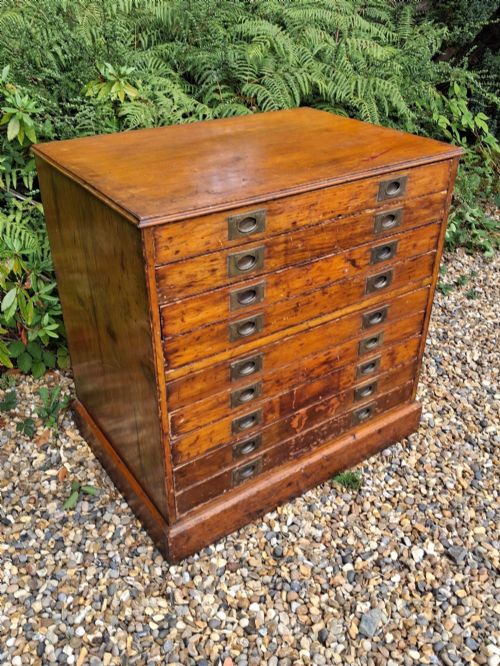
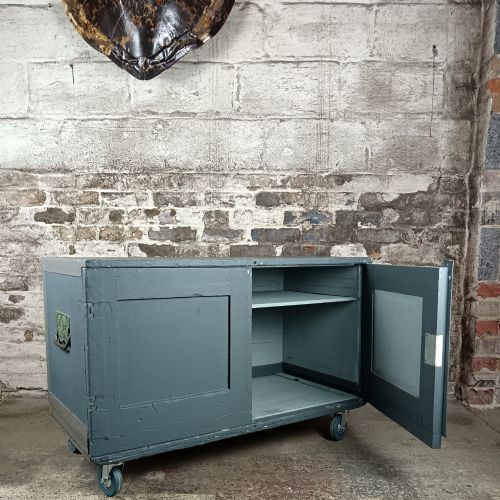
An industrial pine storage chest combines utilitarian function with robust timber construction, appearing in forms such as banks of drawers, trunks, and shop fittings. These pieces originate from commercial, military, and domestic contexts across the nineteenth and early twentieth centuries.
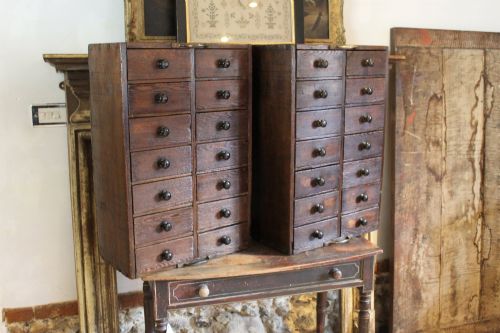
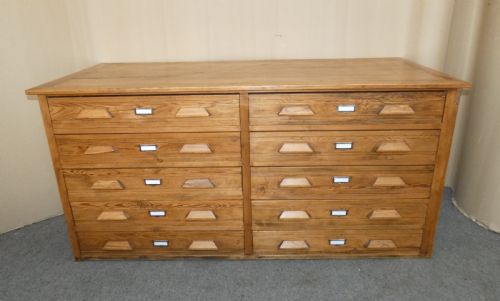
The version most commonly encountered on this page is the multi-drawer cabinet or travelling trunk, built to withstand heavy daily use in workshops, offices, and retail spaces. Their substantial presence and honest construction suit contemporary interiors requiring serious storage solutions.
Materials and construction methods
Construction relies heavily on solid pine and pitch pine, chosen for durability and availability during the nineteenth and twentieth centuries. Surfaces often retain original painted finishes or bare timber patination acquired through decades of functional service.
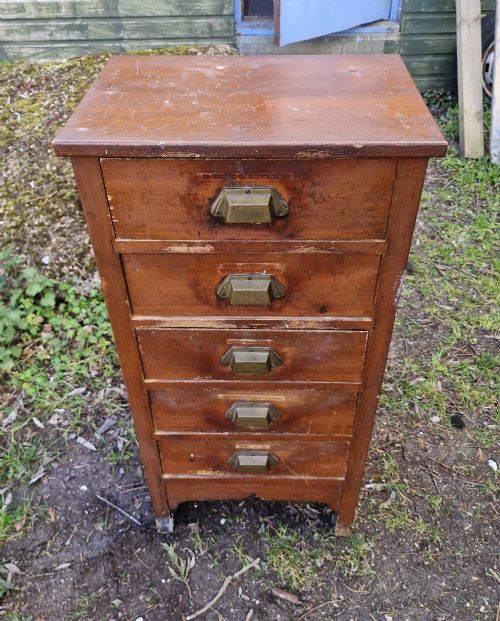
Metal hardware such as iron, brass handles, and ironmongery braces reinforce joints and corners on campaign cases, tool boxes, and heavy chests. These utilitarian additions ensure structural integrity under demanding transport or workplace conditions.
Industrial Pine Storage Chest Retail Price Guide 2026
Typical asking prices for industrial pine storage chest among the pieces listed under this phrase on Sellingantiques today, from the lower quarter to the upper quarter. They describe what is for sale here now, not the wider market.
Listings span the nineteenth century, Victorian era, Edwardian period, and up to the nineteen-twenties, featuring pine, pitch pine, iron, and brass.
Distinctions in quality and origin
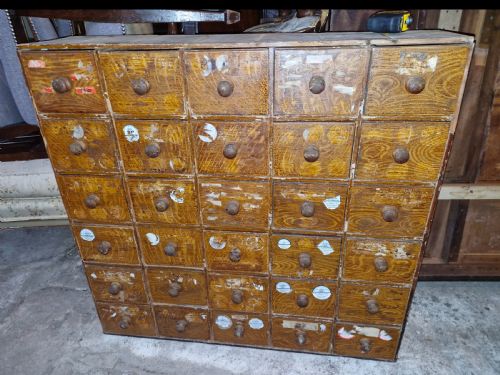
Quality separates pieces built for specialised trades, such as watchmakers, drapers, and engineers, from standard domestic storage. Specialised cabinets often feature numerous fitted drawers and specific hardware that reflect their original commercial purpose.
The integrity of original surfaces and surviving maker details distinguish superior examples. Pieces retaining untouched paint, authentic brass or iron handles, and documented trade origins hold greater historical interest.
Luxmore's of Ilfracombe·Gnome Et Le Rhone Engine Company·D Napier & Sons
The Industrial Pine Storage Chest Glossary
- Pitch pine
- A dense, resinous variety of pine timber frequently utilised in heavy-duty furniture and plan chests during the Victorian and Edwardian eras. Its high resin content provides notable durability and a distinct grain pattern.
- Campaign chest
- A portable trunk or chest constructed in sections with recessed brass handles and corner brackets, designed for military transport. These pieces dismantle easily for travel without damaging the timber body.
- Shop fitting
- Fixtures and furniture built specifically for retail environments, including drapers and ironmongers. They typically incorporate banks of small drawers designed for displaying and storing merchandise.
- Bank of drawers
- A multi-drawer cabinetry unit designed for organising large quantities of small items or documents. They appear frequently in workshops, offices, and commercial spaces.
- Ironmongery
- Metal hardware and fittings, including brackets, hinges, and handles, used to reinforce wooden chests and storage cabinets. Original ironmongery contributes significantly to the utilitarian aesthetic.
Industrial Pine Storage Chest: Frequently Asked Questions
What were industrial pine storage chests used for?
These chests and cabinets served commercial, military, and trade purposes, functioning as tool boxes, shop counters, and transport trunks. Businesses relied on them to organise hardware, fabrics, and documents securely.
Over time, many transitioned from active workplaces into domestic settings where their deep drawers and sturdy lids offered practical storage for household items.
How can I date an industrial pine chest?
Dating relies on construction methods, timber types, and hardware styles associated with the nineteenth and early twentieth centuries. Victorian and Edwardian examples often display specific brass or iron handles and dovetail joints characteristic of the period.
Makers' marks, trade labels, or structural designs tied to military campaigns and specific trades also help narrow down the date of manufacture.
Are these chests suitable for everyday home use?
Their robust construction and practical drawer configurations make them highly functional for modern domestic storage. They fit well in living rooms, hallways, and home offices needing durable organisational furniture.
Living with these pieces involves appreciating their honest timber surfaces and historical wear as part of their character.