
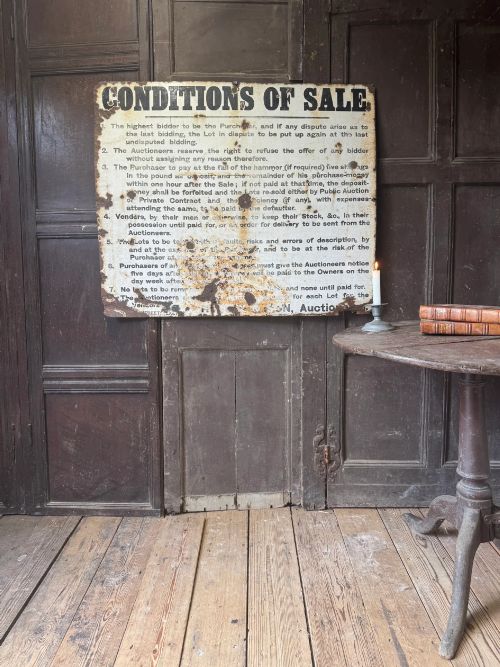
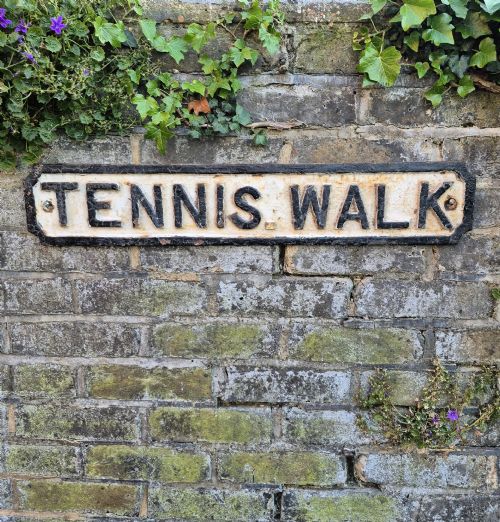


Industrial Metal Wall Sign
An industrial metal wall sign brings hard-wearing utilitarian character into a room through authentic painted iron, enamel, and brass lettering.
Industrial Metal Wall Sign
When you search for an industrial metal wall sign, you are looking at functional utility pieces spanning from the Victorian era through the mid-twentieth century. These items encompass street names, railway notices, advertising plaques, and trade signs originating from British, French, and domestic contexts.
You are most likely to meet painted cast iron, sheet metal, and enamel examples issued for public transport, local authorities, and commercial businesses. They range from simple gate warnings to large double-sided shop clocks and trade plaques.
The objects carry the genuine marks of their working lives, serving as architectural salvage that transitioned from exterior municipal or railway duties into interior decorative display.
Materials and construction methods
Makers utilised durable base metals such as cast iron, sheet metal, and brass to withstand harsh outdoor environments. These substrates were often finished with protective coats of paint or fused glass enamel to ensure long-term legibility.
Lettering and graphic details were typically hand-painted or fired directly onto the enamel surface, creating high-contrast public notices designed to endure decades of exposure.
Listings feature periods spanning from the Victorian era through the 1950s, utilising iron, brass, enamel, and painted sheet metal.
Assessing quality in metal signage
Quality rests in the crispness of the original lettering, the depth of the casting, and the integrity of the surface finish. Pieces retaining their authentic painted or enamelled layers without heavy modern intervention command greater attention.
The distinction between a standard municipal notice and a specific trade or railway piece lies in the clarity of its provenance, such as named local authorities, identifiable makers, or specific company commissions.
The Industrial Metal Wall Sign Glossary
- Enamel
- A glassy substance fused to the metal surface through high-heat firing. This technique provided a glossy, weather-resistant finish common on twentieth-century advertising and public telephone notices.
- Cast Iron
- An iron-carbon alloy poured into a mould to create rigid plates and relief lettering. It forms the heavy basis for many nineteenth-century street and railway signs.
- Trade Sign
- A specialised marker hung outside a shop or business to indicate the specific profession or goods sold within. Examples include painter, jeweller, and auctioneer plaques.
- Architectural Salvage
- Building materials and fixtures rescued from structures slated for demolition or remodeling. This encompasses street signs and wall signage removed from municipal and railway settings.
- Sheet Metal
- Thin flat pieces of metal rolled into panels for lightweight signage. It was frequently utilised for early twentieth-century pictorials and directional boards.
Industrial Metal Wall Sign: Frequently Asked Questions
How do I clean an old metal sign?
Wash the surface gently with warm water and mild soap using a soft cloth. Avoid abrasive pads or harsh chemical solvents that might strip the original painted or enamelled finish.
Dry the metal thoroughly afterwards to prevent any active corrosion from developing on exposed iron or steel areas.
Are these signs safe for outdoor use?
Most of these pieces spent decades outdoors, but surviving examples now often carry delicate patinas and degraded finishes. Placing them back outside exposes them to moisture and frost which accelerates deterioration.
Displaying them indoors preserves the remaining paint and enamel layers for the future.
How do I hang a heavy cast iron sign?
Cast iron and heavy metal plaques require secure fixings anchored directly into structural wall studs or masonry. Relying on simple drywall plugs risks failure due to the considerable weight of the metal.
Use appropriate load-rated brackets or screws that match the existing mounting holes on the piece.
How can I tell a railway sign's age?
Railway pieces often feature specific company titles, typography styles, and standardised casting methods tied to historical corporate eras. Comparing the lettering style and corporate name provides a reliable window into the period of manufacture.
Standardised regulations enforced across lines also help narrow down the decade of production.