


Cast Iron Sign
A cast iron sign brings substantial historic weight to a wall, combining functional lettering or heraldry with enduring metalwork.
Cast Iron Sign
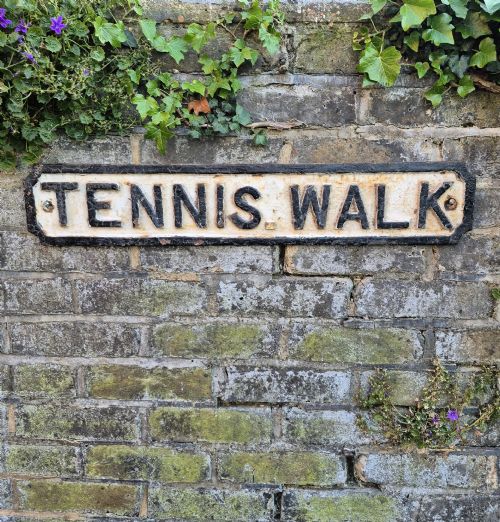
When you search for a cast iron sign, you encounter heavy functional markers from railways, streets, and trade premises alongside decorative heraldic plaques. These pieces served practical purposes in public and commercial spaces, ranging from railway warnings to municipal street naming.
The versions most commonly met on this page date from the nineteenth and early twentieth centuries, reflecting the industrial expansion of those eras. Street names, railway instructions, and commercial displays make up the bulk of the available forms.
Period examples carry the specific typography and casting characteristics of their original locations, whether local authority street markers or railway company notices. Their original placement outdoors means surviving pieces often bear the authentic marks of weathering and layered paint.
How they were made
Production relied on pouring molten metal into sand moulds prepared from wooden or metal patterns, which imparted a distinct textured ground behind raised letters and borders. This casting method allowed makers to produce crisp lettering and intricate armorial details in high relief.
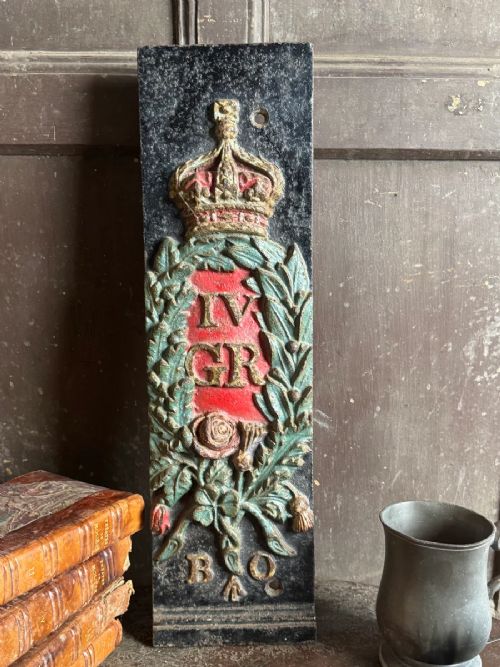
Finished plates received coats of oil-based paint to protect the iron from corrosion and to provide contrasting colours for the raised text and backgrounds. Surviving specimens frequently retain remnants of these successive painted layers applied over decades of use.
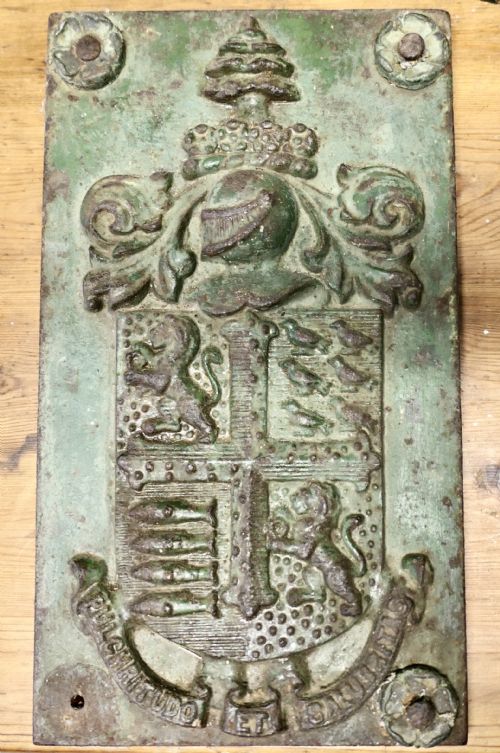
A sixteenth-century fireplace dieu et mon droit sign sits alongside nineteenth-century pigs and signal cannons.
What varies in quality
Quality rests in the crispness of the casting and the legibility of the lettering, where sharper relief and cleaner edges distinguish better workshops. Finer pieces demonstrate precise mould preparation and careful finishing of the metal surface before painting.
Significance also depends on the provenance and historical context, with municipal street signs and specific railway company issues holding distinct documentary interest. The complexity of the design, such as heraldic coats of arms or intricate trade graphics, elevates the visual weight of the piece.
Corneau Freres Charleville·J. and H. Keyworth and Co
The Cast Iron Sign Glossary
- Relief casting
- A method where letters and designs project outward from the background plate. This technique ensures the text remains readable even after multiple layers of overpainting.
- Railwayana
- Collectable items associated with the operation and history of railways. These objects include cast iron bridge notices, station warnings, and locomotive plaques.
- Armorial
- Relating to heraldry and coats of arms. Such designs appear on municipal and institutional plaques to denote official authority.
- Architectural salvage
- Building components and attached fixtures rescued from structures slated for demolition. This category encompasses street signs, wall plaques, and shop signage.
- Trade sign
- A marker used by a business or merchant to advertise services or identify premises. These objects often take pictorial forms or feature specific company lettering.
Cast Iron Sign: Frequently Asked Questions
How do I hang a heavy cast iron sign?
Wall mounting requires substantial fixings anchored directly into masonry or secure timber studs to support the considerable weight of the metal.
Rubber spacers or pads placed behind the sign prevent the iron from rubbing against the wall surface and distributing moisture.
Should I repaint an old cast iron sign?
Preserving existing historic paint layers is generally preferred by collectors because it maintains the authentic surface history of the object.
If corrosion threatens the stability of the metal, conservation-grade stabilization is recommended rather than a complete modern repaint.
How do I date a railway sign?
Dating relies on the specific typography, company initials, and the historical operating dates of the railway network named on the plaque.
Standardised company fonts and amalgamation dates provide clear chronological markers for railwayana pieces.
Were street signs painted by hand?
Lettering and backgrounds on nineteenth-century street markers were typically finished by hand using durable oil-based signwriting paints.
Painters followed the raised cast guidelines of the letters, resulting in subtle variations across different municipal authorities.