


Indian Repousse Silver
Indian repousse silver pieces bring deep relief work and intricate regional detail to bowls, boxes, and tea services.
Indian Repousse Silver
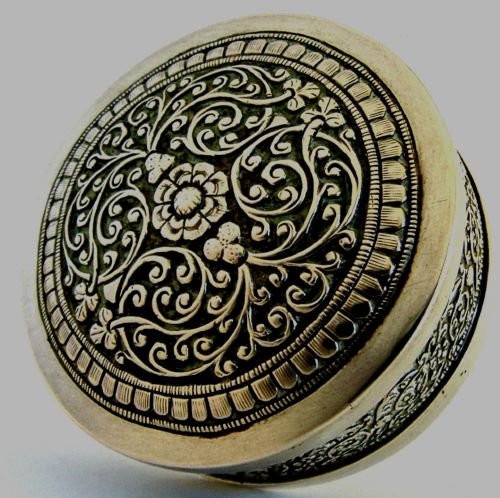
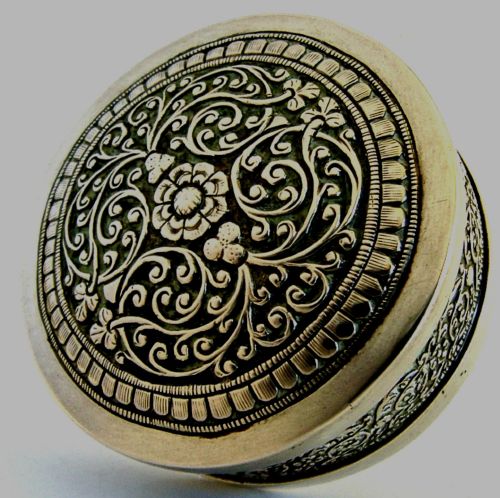
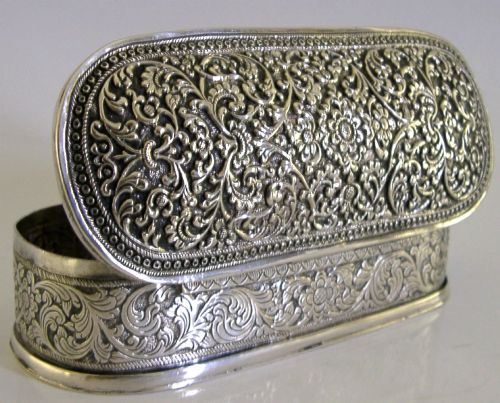
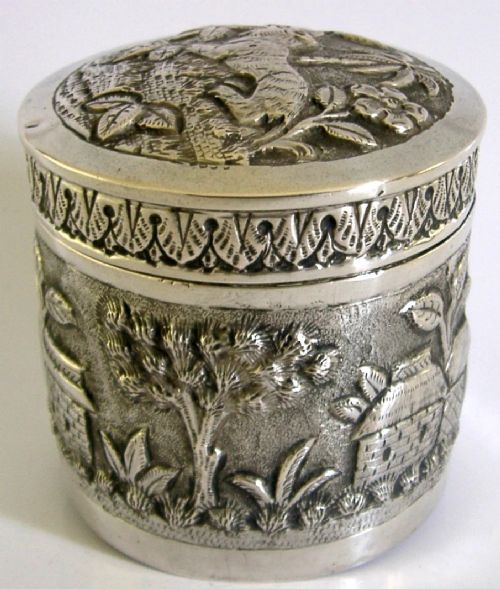
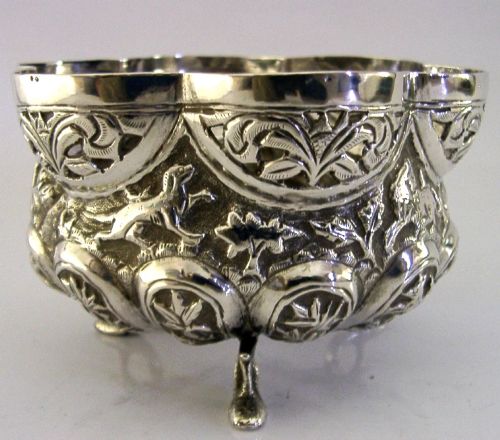
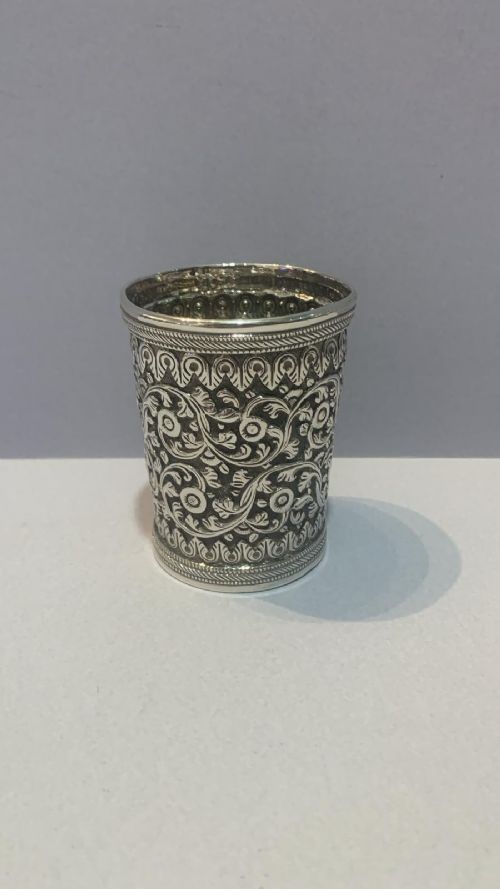
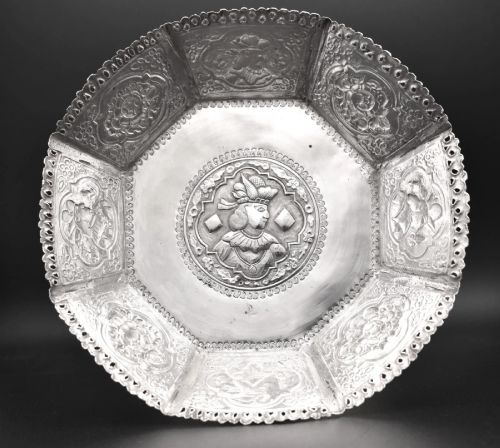
Indian repousse silver encompasses a distinct range of domestic objects and ceremonial vessels created during the nineteenth and early twentieth centuries. When searching for Indian repousse silver, buyers encounter functional and decorative items such as trinket boxes, tea caddies, bowls, and occasional chairs featuring prominent metalwork. These pieces emerge from various regional styles including Anglo-Indian, Indo-Persian, Indo-Tibetan, Burmese, and specific local traditions like Kutch.
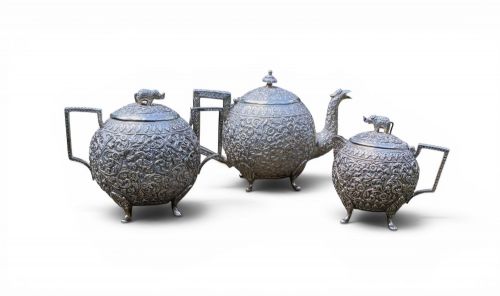
The objects listed on this page span the Victorian and Edwardian eras, with a concentration of items dated around eighteen ninety to nineteen ten. Trinket boxes, lidded containers, and decorative bowls appear most frequently alongside occasional chairs with silver elements and complete tea services. Each item displays hand-hammered surface decoration that reflects the distinct aesthetic preferences of its particular origin.
Materials and Techniques
Craftsmen shaped these items using solid silver, sterling silver, and silver metal sheet, alongside supporting elements in wood, timber, and copper. The repousse technique involves hammering the metal sheet from the reverse side to form raised designs on the front, supplemented by fine chasing on the surface. Silver plate and white metal also appear within the selection alongside traditional solid silver compositions.
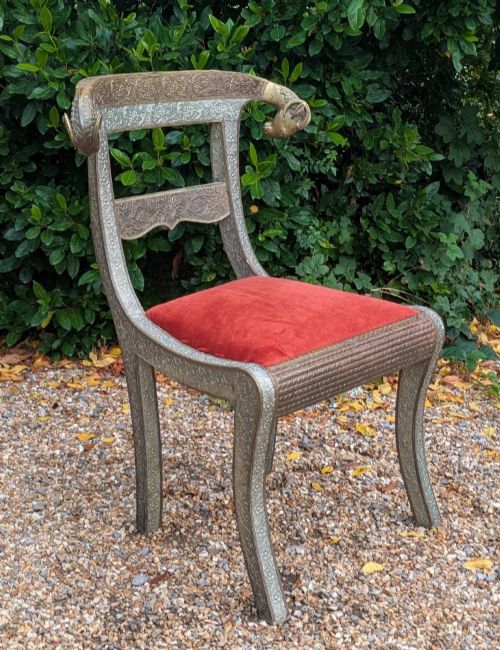
Makers integrated structural materials such as wood and timber into specific forms like boxes and occasional chairs to provide rigidity beneath the metal sheets. Surface ornamentation ranges from deep relief animal figures and deities to geometric patterns and pierced copper trays plated in silver.
Several occasional chairs feature carved ram heads alongside their silver elements.
Quality Variations
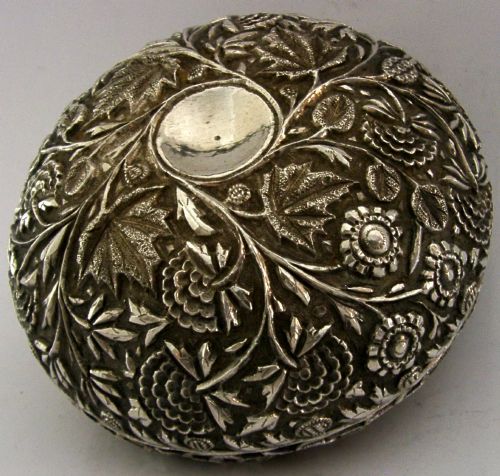
The distinction between standard items and superior examples lies in the depth and clarity of the hammer work. Pieces featuring deep relief repousse demonstrate greater technical skill in pushing the metal forward without thinning it excessively. The complexity of the chased details, particularly on figures of deities, animals, and foliate motifs, separates mass-produced items from finer studio work.
Weight and structural integrity also influence the standing of a piece, with heavier solid silver items commanding more attention than lighter silver-plated alternatives. The preservation of sharp contours in the chased designs, rather than softened or worn edges, indicates superior execution by the maker.
George Fox·Hodsoll Collection
The Indian Repousse Silver Glossary
- Repousse
- A metalworking technique where the artisan hammers the reverse of a sheet to form raised designs on the front. This method allows for high-relief ornamentation on bowls, boxes, and plaques.
- Kutch
- A traditional centre of silver smithing in Gujarat, India, known for distinct dense foliate and animal motifs. Pieces from this region frequently display exceptional depth in their repousse work.
- Chasing
- A surface decoration technique performed simultaneously with repousse to refine details and push metal back into the design. Artisans use small punches to create texture and outline figures.
- Betel Nut Container
- A specialised lidded box or container used for storing ingredients related to betel nut chewing traditions. These items often feature intricate embossed folklore and figural decoration.
- Tazza
- A footed display bowl or plate elevated on a pedestal base. These decorative vessels showcase large expanses of repousse decoration across their wide basins.
Indian Repousse Silver: Frequently Asked Questions
What is Indian repousse silver?
Indian repousse silver refers to decorative and utilitarian metalware produced in India during the nineteenth and early twentieth centuries. Artisans hammered these objects from the reverse to create raised, three-dimensional surface designs.
Items range from small trinket boxes and card cases to large bowls, beakers, and tea services. These pieces often incorporate regional styles such as Kutch or Burmese work.
Were these pieces used daily?
Many items served practical functions in colonial and domestic households, including tea caddies, card cases, betel nut containers, and serving dishes. Others were purely decorative or ceremonial, such as trophy cups and ritual ewers.
Owners today generally use the smaller boxes for keepsakes and display the bowls and vases as decorative accents. The sturdy construction of solid silver allows for gentle contemporary use.
How should I clean silver plate?
Silver plate requires gentle cleaning to avoid wearing away the thin layer of silver over the base metal. Use a soft cloth and a mild, non-abrasive silver polish formulated specifically for plated items.
Avoid vigorous rubbing, especially over areas with deep repousse work where the plating might be thinner. Store pieces in dry environments to prevent tarnishing.