
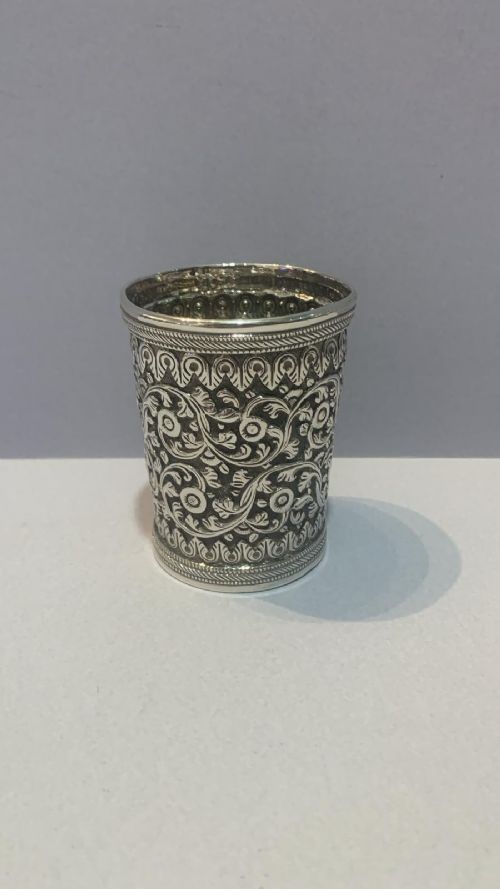


Silver Repousse Beaker
These silver repousse beaker pieces are hammered vessels shaped from sterling, coin, and 800 silver, offering tactile historical drinking vessels to collectors.
Silver Repousse Beaker
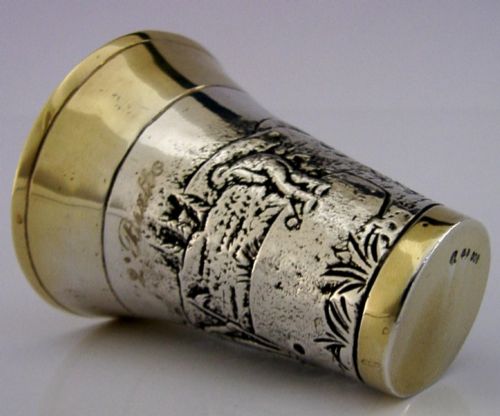
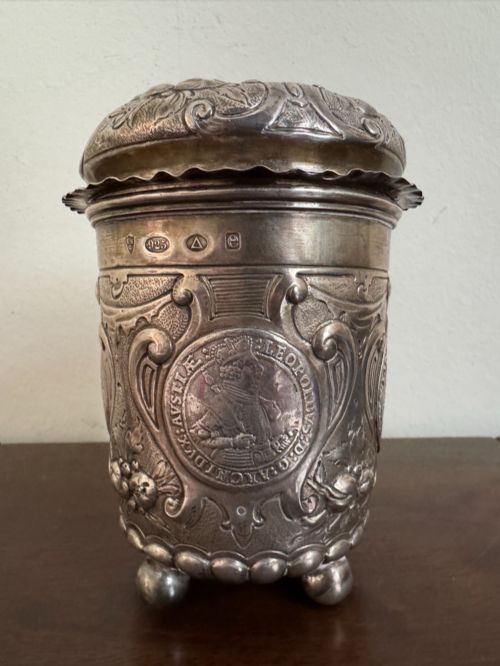
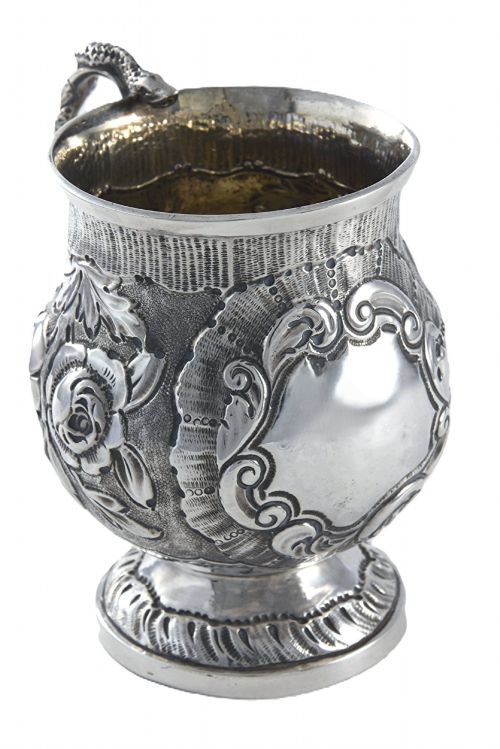
When you search for silver repousse beaker, you are looking at drinking vessels shaped in metal and pushed out from the reverse to create raised ornamentation on the exterior surface. The pieces on this page span the 17th century through the Edwardian period, covering forms such as christening mugs, lidded vessels, and standard drinking cups.
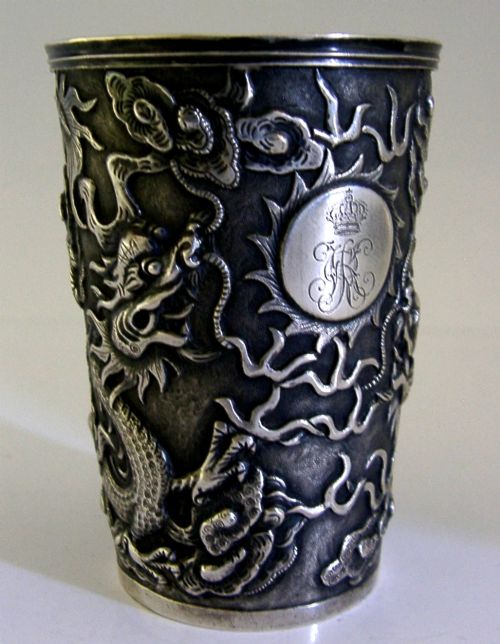
You will encounter pieces originating from British makers in Chester and Victorian workshops alongside continental European and Asian examples, including German, Chinese export, and Anglo-Indian silver. The selection ranges from plain cylindrical forms to elaborate baroque revival tankards and coin-set drinking vessels.
The assortment includes specialised functional objects like christening cups and barware alongside cabinet specimens. Each piece reflects the specific decorative vocabulary of its period, whether that is Victorian botanical chasing, dragons on Chinese export silver, or dense foliage from Kutch.
How they were made
Makers formed these vessels using sterling silver, 800 silver, coin silver, and parcel-gilt or silver-gilt finishes. The metal was hammered and worked from the reverse side, known as repousse, often combined with chasing from the front to refine details in the surface relief.
Construction techniques varied from simple raised sheet silver cylinders to coin-set vessels utilising actual thalers, as seen in German examples. Gilding was applied selectively or overall to interior and exterior surfaces to enrich the appearance of the silver.
Listings span from the seventeenth century through the Victorian, Edwardian, and turn of the century periods, utilising sterling silver, 800 silver, and coin silver.
What varies in quality
Quality in these vessels rests upon the crispness and depth of the hammering and chasing work. Superior examples exhibit sharp, purposeful relief where the metal thickness supports intricate detail without thinning unduly.
The integration of form and ornament dictates distinction, separating standard utility items from masterwork pieces. Exceptional specimens maintain structural integrity while displaying accomplished hand-worked surface texture across the body.
The Silver Repousse Beaker Glossary
- Repousse
- A metalworking technique where the metal is hammered from the reverse side to form a raised design in relief on the front. This method gives the surface a tactile, three-dimensional quality.
- Chasing
- Working the metal from the front side using punches and hammers to sink the background or refine details on a repousse design. It complements repousse work by sharpening lines and textures.
- Parcel-Gilt
- Silver objects that are partially gilded with gold, leaving areas of plain silver to create contrast. This technique highlights specific decorative motifs or interiors.
- Coinage
- The incorporation of actual historical coins, such as thalers, into the body or cover of a vessel. This practice was common in continental European silver production.
- Silver-Gilt
- Silver that has been entirely coated with a thin layer of gold, also known as vermeil. The gold wash protects the silver beneath and adds a rich, warm tone.
Silver Repousse Beaker: Frequently Asked Questions
What is a silver repousse beaker used for?
These vessels functioned historically as drinking cups, christening mugs, and presentation pieces for beverages. Over time, many transitioned into decorative cabinet objects or display items.
Today, collectors use them to study historic metalwork techniques and incorporate period silver into home displays.
How do I date a silver beaker?
Dating relies on hallmarks, maker marks, and stylistic indicators associated with periods like the Victorian era, Georgian period, or seventeenth century. Specific decorative motifs, such as dragons on Chinese export pieces or coin insertions, also provide chronological clues.
Comparing the manufacturing style and weight helps place the object within its likely historical decade.
What is the difference between sterling and 800 silver?
Sterling silver contains a higher purity of silver, specifically 92.5 percent pure silver alloyed with other metals for durability. 800 silver contains 80 percent pure silver and was commonly utilised in continental European manufacturing.
Both standards appear across different regional workshops and periods represented in these items.
How should I care for antique silver?
Antique silver requires gentle cleaning with non-abrasive cloths specifically formulated for precious metals to preserve the original surface and chasing detail. Avoid harsh chemical dips that strip away natural patination and surface character accumulated over centuries.
Store pieces in stable humidity environments away from direct sunlight to maintain the condition of the metal.