
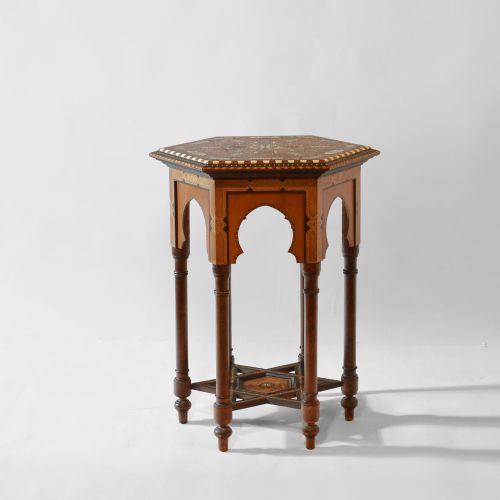


Indian Inlaid Wooden Table
An indian inlaid wooden table brings intricate craftsmanship and geometric detail into a room, offering both decorative presence and practical surface space.
Indian Inlaid Wooden Table
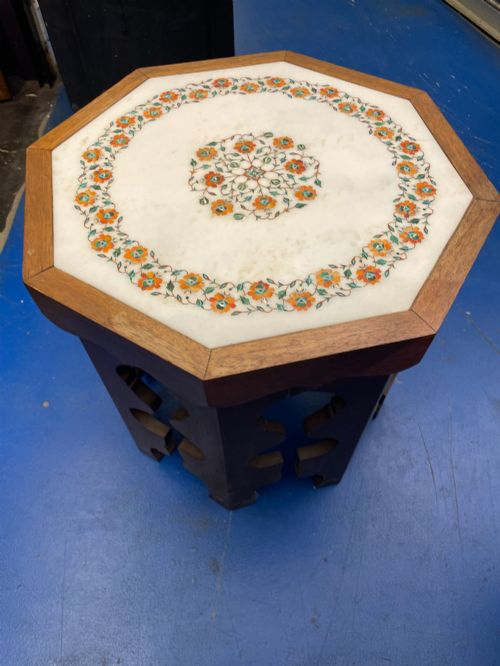
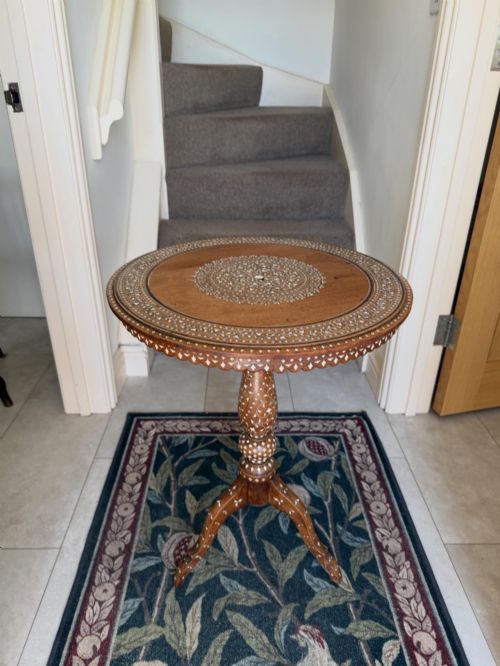
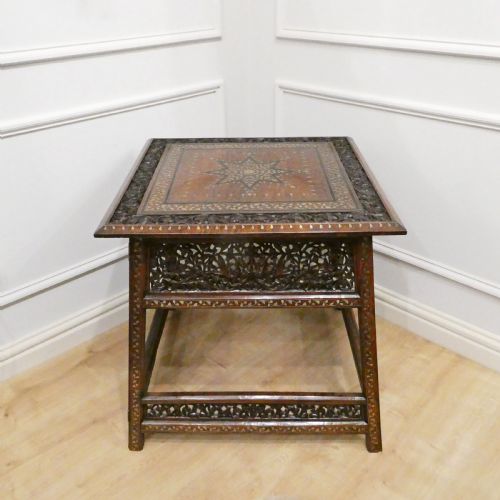
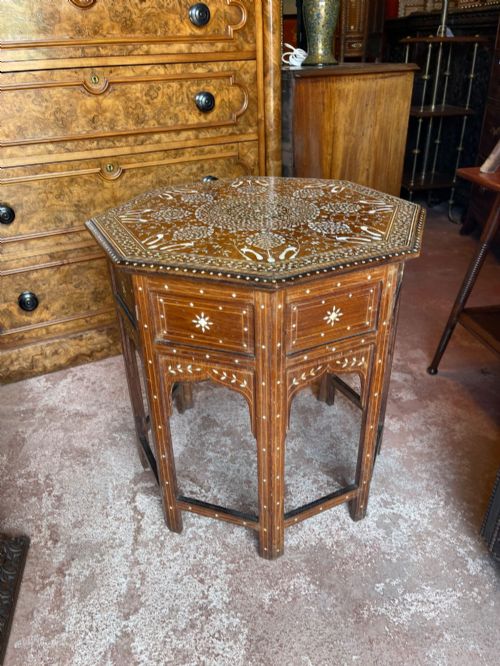
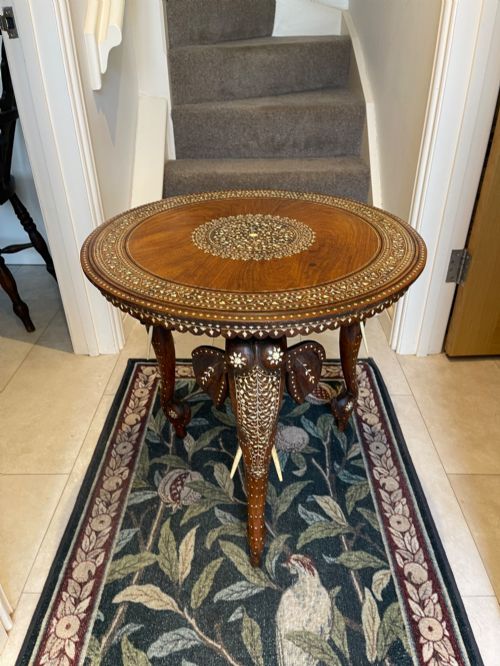
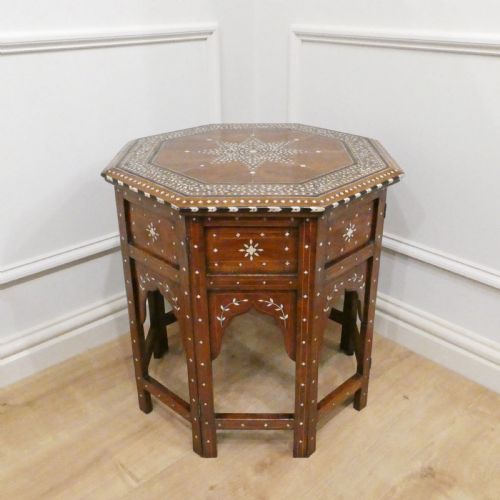
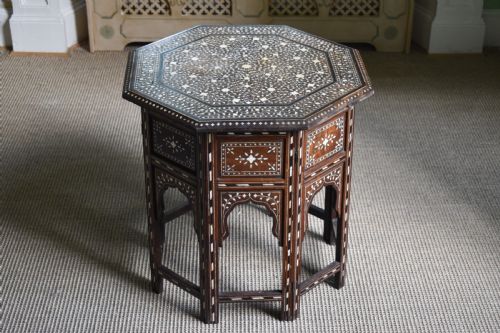
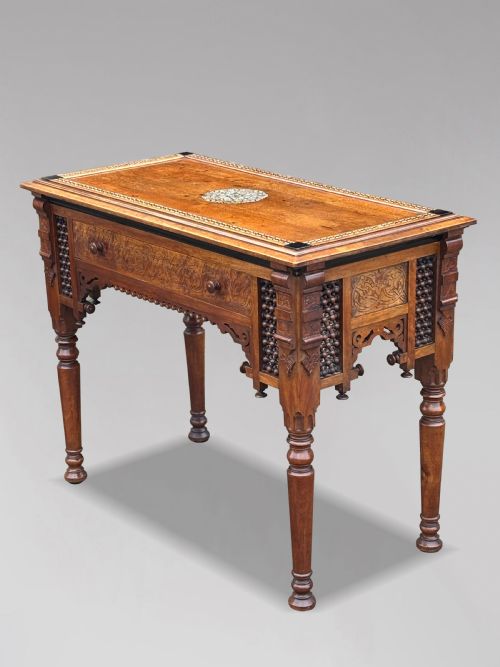
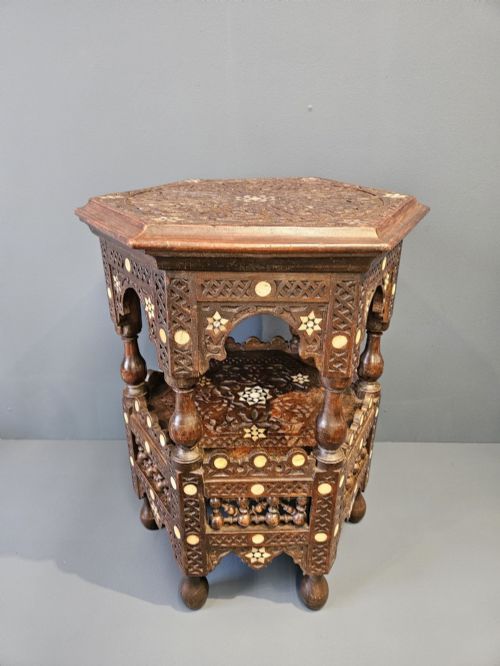
An indian inlaid wooden table encompasses varied forms such as octagonal side tables, folding coffee tables, and chess tables originating from the nineteenth and early twentieth centuries. These pieces frequently reflect Anglo-Indian, Moorish Revival, and Islamic styles, demonstrating the rich design traditions of their makers.
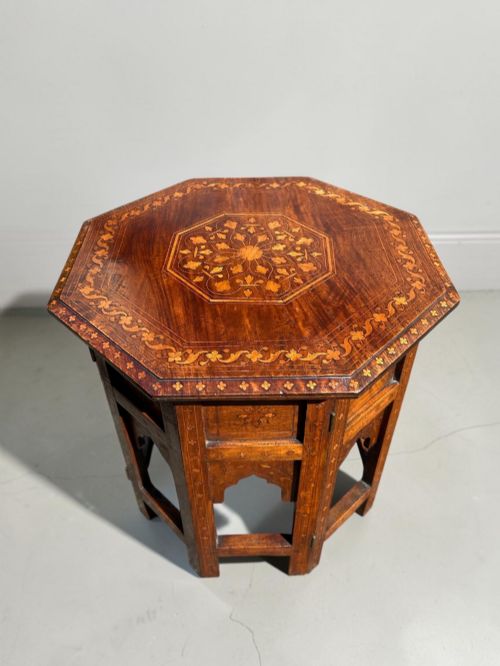
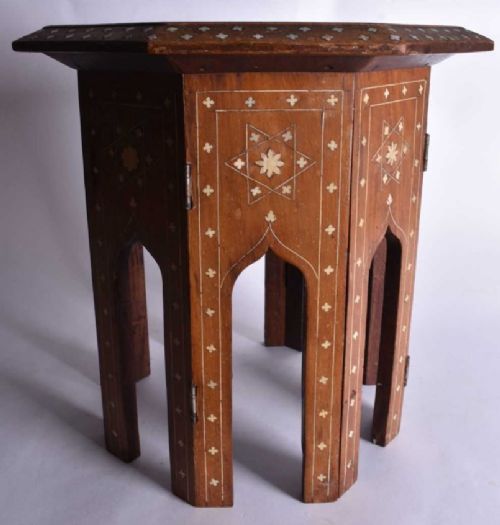
The octagonal folding table represents the version most commonly encountered, often associated with the production centres of Hoshiarpur. Such pieces were designed to be portable as well as decorative, featuring collapsible bases that support intricate geometric tops.
Materials and construction
Construction relies on dense timbers such as teak, rosewood, and hardwood, providing a stable foundation for complex surface decoration. Artisans shaped these woods into folding frames and pedestal forms suited to intricate carving.
Surface patterns incorporate contrasting materials including bone, brass, and mother-of-pearl, embedded precisely into the timber ground. This technique creates dense, tonal compositions across table tops and aprons.
Several tables feature hidden chess boards, proving that nineteenth-century travellers took their leisure very seriously indeed.
Assessing craftsmanship
Quality reveals itself in the precision of the inlay work and the tightness of the joinery on folding bases. Finer examples display meticulous alignment where bone, brass, or mother-of-pearl meet the surrounding wood without excessive filler.
Carved relief depth and the complexity of geometric or floral motifs distinguish accomplished workshop output from simpler production. The crispness of the pierced fretwork and the stability of the assembled structure define the upper tier of these pieces.
Hoshiarpur Workshops
The Indian Inlaid Wooden Table Glossary
- Hoshiarpur
- A North Indian city renowned for intricate wood carving and inlay work, particularly involving bone and brass on shesham or teak. Pieces originating from this centre often feature dense geometric or floral patterns.
- Octagonal
- Having eight sides. This geometric form is frequently utilised for table tops in Anglo-Indian furniture design.
- Fretwork
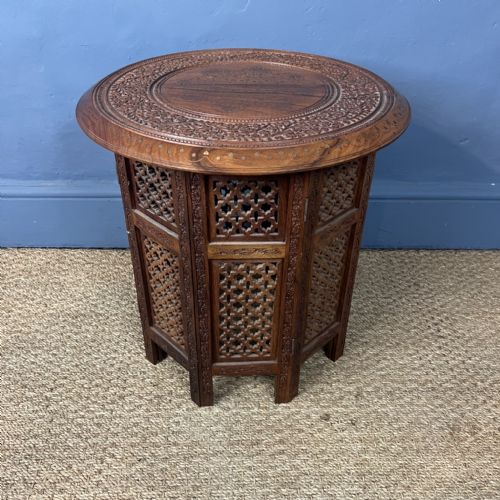
- Ornamental design created by cutting patterns through thin wood using a piercing technique. This method appears commonly on the folding bases of occasional tables.
- Moorish Revival
- An architectural and decorative style popular during the nineteenth century incorporating Islamic design elements. It manifests in these tables through star motifs and horseshoe arch influences.
Indian Inlaid Wooden Table: Frequently Asked Questions
What is an indian inlaid wooden table?
These pieces are decorative items featuring detailed surface work in bone, brass, or mother-of-pearl set into timber frames. They date primarily from the nineteenth and early twentieth centuries.
Many adopt traditional forms such as octagonal folding tables or occasional tables influenced by Anglo-Indian and Moorish design aesthetics.
How were folding tables used?
Collapsible tables served as versatile occasional furniture for sitting rooms, allowing owners to move or store them easily when not required for entertaining.
Their portable nature made them popular in European domestic interiors during the Victorian and Edwardian periods.
How do I care for inlaid wood?
Maintain these surfaces by dusting gently with a soft dry cloth and avoiding excessive moisture or direct sunlight. Natural timbers and delicate inlay materials react poorly to rapid changes in humidity.
Occasional light treatment with appropriate furniture wax preserves the polish of the wood without disturbing the embedded bone or metal elements.
How do I identify Hoshiarpur work?
Hoshiarpur pieces typically feature dense overall patterns composed of intricate floral or geometric motifs carved into teak or shesham wood. The inclusion of finely cut bone or brass wire inlay provides a strong visual indicator of this regional style.
Many examples also incorporate collapsible or folding bases designed with pierced fretwork panels.