
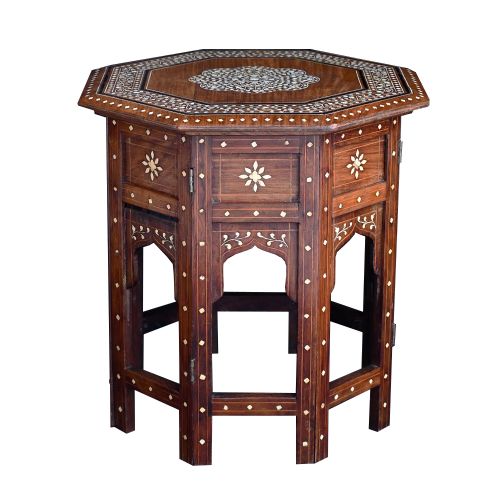
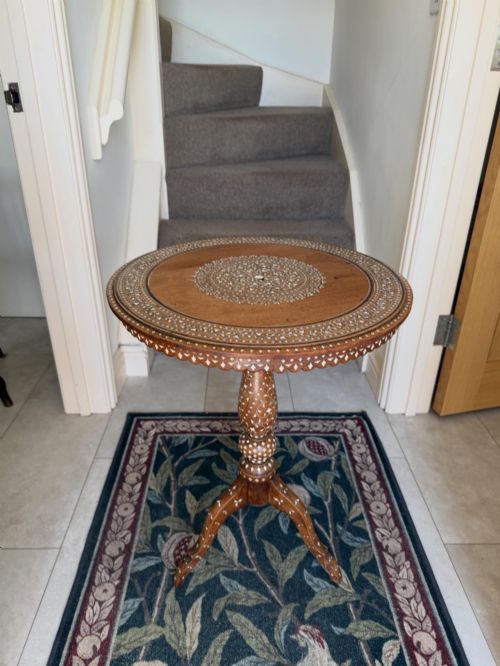
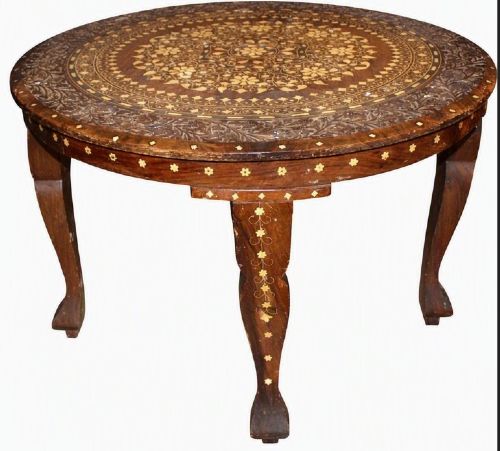
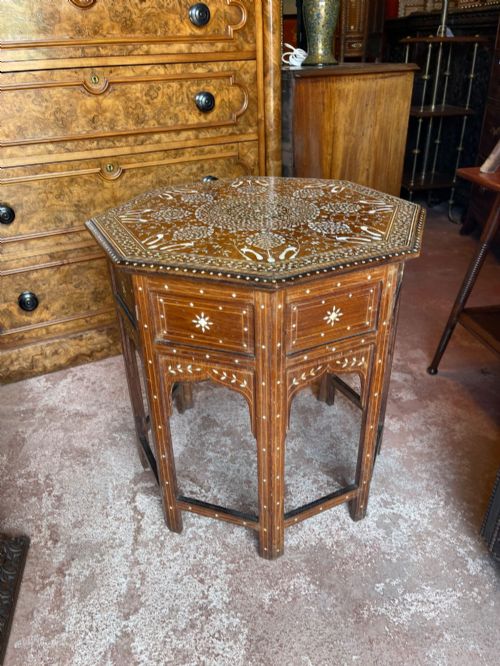
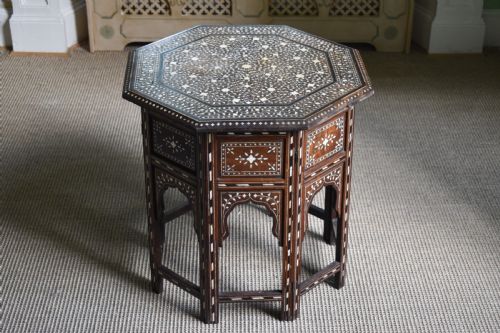


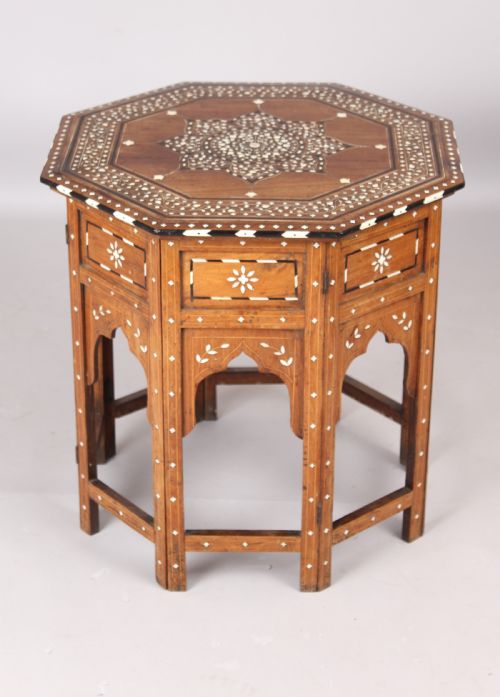


Rosewood Bone Inlaid Table
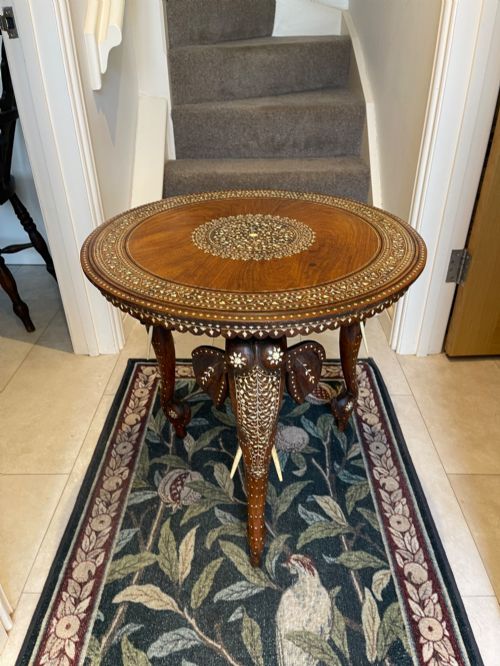
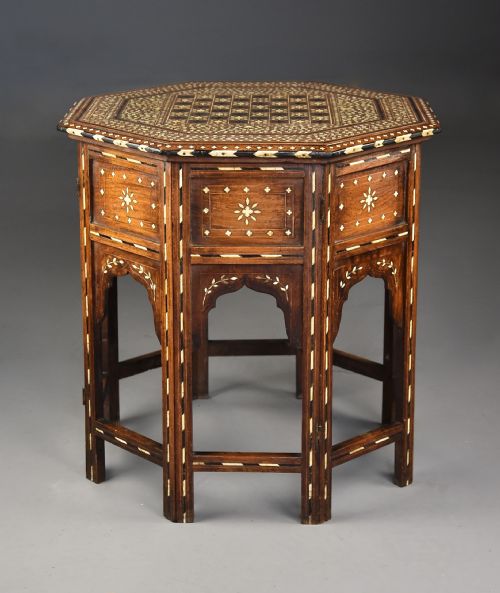
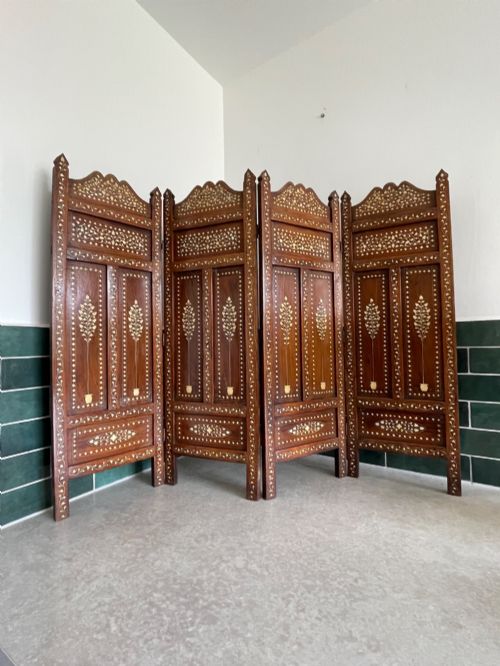
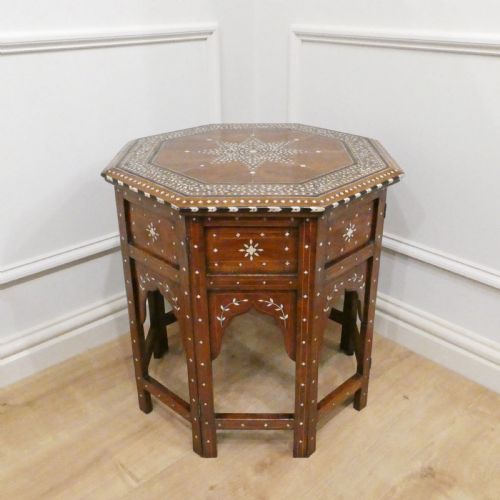
These rosewood bone inlaid table pieces combine dense tropical timbers with intricate botanical bone work, offering tactile exoticism to any interior.
Rosewood Bone Inlaid Table
The regional Hoshiarpur tradition strongly dominates the pieces listed here, known for intricate geometric and floral patterns covering the entire structure. Alongside these, Edwardian occasional tables and Aesthetic Movement designs appear, blending European furniture forms with skilled eastern inlay techniques.
How They Were Made
Artisans built these pieces using rosewood, teak, ebony, and ebonised wood as a dark, contrasting foundation for detailed decoration. Individual sections of bone were meticulously carved by hand and pressed into precise recesses cut into the timber surface.
Fine scrolling foliage, animals, and geometric motifs define the ornamentation, sometimes complemented by secondary woods like satinwood or subtle brass highlights. The construction relies on traditional joinery methods suited to transport and daily domestic use.
What Varies In Quality
The density and precision of the bone inlay set the finest examples apart from simpler production, particularly where the carving achieves crisp relief without chipping. Comprehensive surface coverage across the top and legs indicates superior craftsmanship compared to sparse or purely geometric decoration.
Structural integrity and timber selection also determine the grade of a piece, with heavy tropical hardwoods providing a more stable foundation than lighter secondary woods. Maker marks, such as stamps from established retailers like Liberty & Co, further distinguish specific workshop origins.
Liberty & Co·Dumont
The Rosewood Bone Inlaid Table Glossary
- Hoshiarpur
- A region in Punjab renowned for producing intricately carved wooden furniture decorated with bone or ivory inlay. This tradition supplied many of the Anglo-Indian pieces found in Western markets during the late nineteenth and early twentieth centuries.
- Anglo-Indian
- A descriptive term for furniture and decorative arts made in India under British influence, combining local craftsmanship with European forms. These items often feature dense carving and contrasting inlay.
- Ebonised
- Wood treated with a dark stain or finish to imitate ebony. This technique provided a dark ground that made white bone inlay stand out sharply.
- Aesthetic Movement
- A late nineteenth-century design current that emphasised visual beauty over narrative content, often incorporating Japanese and Indian decorative motifs. Pieces from this movement frequently utilised rosewood and contrasting inlay.
- Etagere
- A small open shelving unit or side table with multiple tiers designed for display. Edwardian examples combined this form with delicate bone and ebony inlay.
Rosewood Bone Inlaid Table: Frequently Asked Questions
Where were these tables made?
Many of these pieces originate from Hoshiarpur in India, produced for export during the nineteenth and early twentieth centuries. Others were manufactured in Britain during the Edwardian period using imported materials and techniques.
British retailers like Liberty & Co also commissioned or retailed these distinctive items to satisfy Victorian and Edwardian taste for exotic furnishings.
How do I clean a bone inlaid table?
Dust the surface regularly with a soft, dry cloth to prevent dirt from lodging in the intricate recesses of the bone and timber. Avoid using wet cloths, harsh chemical polishes, or excessive moisture which can damage the organic material and weaken the adhesive holding the inlay.
Applying a very sparing amount of appropriate microcrystalline wax can help protect the rosewood frame without harming the delicate bone sections.
Are these tables sturdy enough for daily use?
Most occasional tables, side tables, and octagonal forms were built for functional domestic service, holding decorative objects or tea services. However, the heavy carving and inlaid surfaces require gentle treatment compared to solid utilitarian furniture.
Placing them away from direct heat sources and strong sunlight preserves both the tropical hardwood and the bone inlay over time.
How do I identify an Aesthetic Movement piece?
Aesthetic Movement examples typically date from the late nineteenth century, around eighteen-ninety, featuring dark rosewood structures with restrained yet striking bone inlay. They reflect a deliberate shift towards artistic refinement and unconventional global inspirations.
These pieces often blend clean structural lines with meticulous surface decoration, aligning with contemporary interior design philosophies of the period.