



Indian Decorative Tray
These indian decorative tray pieces bring intricate hand-engraved metalwork and painted lacquer into your home, offering both functional service and striking wall display.
Indian Decorative Tray
When searching for an indian decorative tray, you encounter an array of items spanning wall chargers, serving trays, and folding coffee tables originating from the late nineteenth and early twentieth centuries. The selection encompasses diverse stylistic influences, notably Anglo-Indian, Kashmiri, Middle Eastern, and Indo-Persian designs.
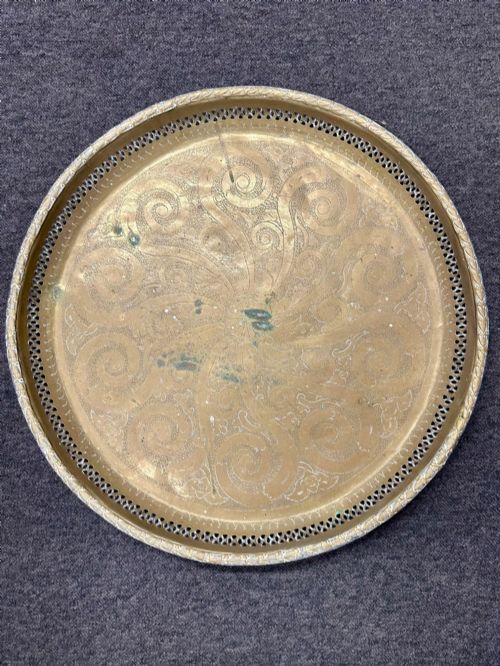
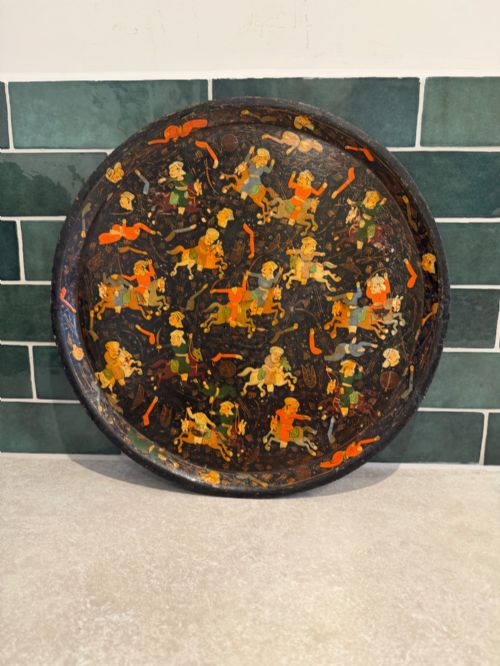
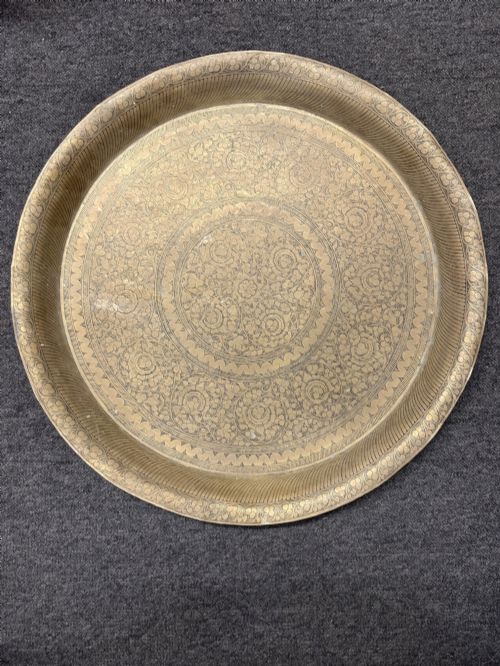
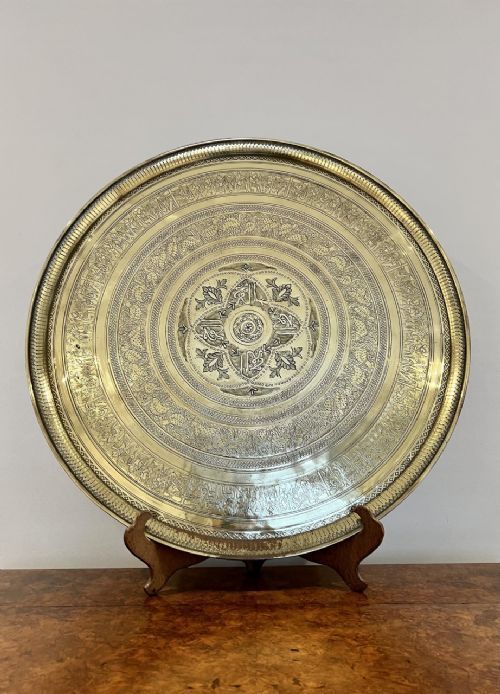
The most common forms on this page include large circular brass wall chargers and serving trays alongside painted Kashmiri papier-mache pieces. These items range from compact dishes to substantial fifty-eight centimetre copper and mixed metal platters suited for prominent display.
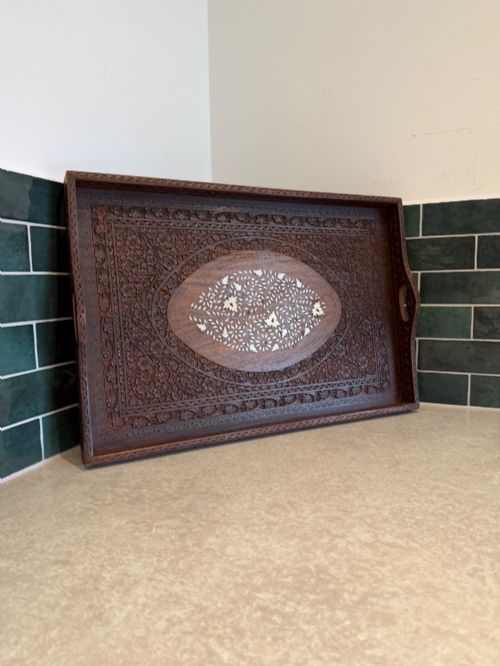
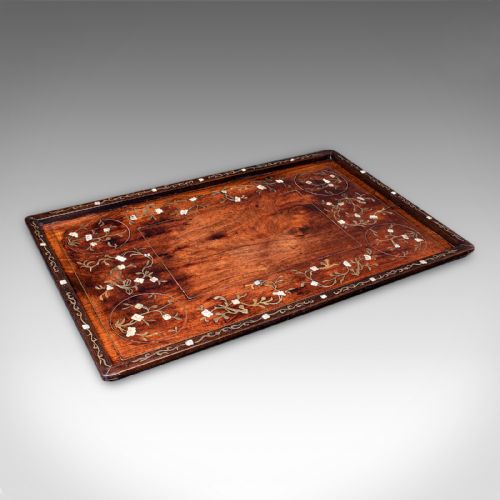
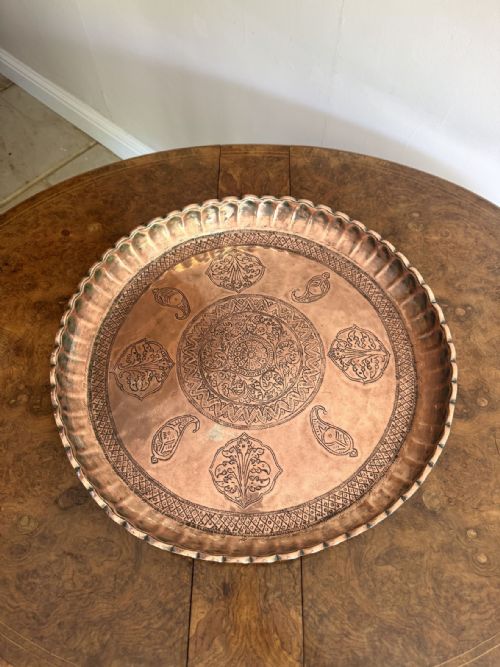
Pieces frequently incorporate regional specialities such as floral engravings, pierced galleries, and repousse work. Collectors find both utilitarian afternoon tea slides in teak and purely ornamental chargers designed to hang upon a wall.
Materials and construction methods
Metal items rely heavily on brass and copper, often enriched with mixed metal elements and silver plating. Artisans utilised hand-engraving, piercing, and repousse techniques to shape intricate floral and geometric surface patterns.
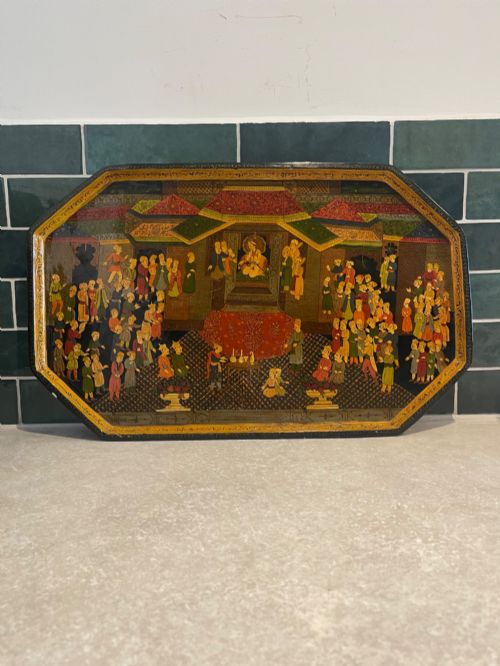
Wooden forms incorporate teak and walnut, frequently combined with bone inlay for contrasting detail. Kashmiri examples utilise papier-mache finished with lacquer and paint to create vibrant, colourful surface designs.
Indian Decorative Tray Retail Price Guide 2026
Typical asking prices for indian decorative tray among the pieces listed under this phrase on Sellingantiques today, from the lower quarter to the upper quarter. They describe what is for sale here now, not the wider market.
Current listings span the Victorian era up through 1910, featuring materials from brass and copper to walnut, teak, and bone inlay.
Assessing craftsmanship and execution
The distinction between standard items and superior examples lies in the depth and precision of the hand-chiselled or engraved detail. Heavier gauge metals and deeply worked repousse reliefs demonstrate a higher level of artisan skill.
Finishing touches such as finely pierced galleries and well-preserved painted lacquer surfaces elevate certain items above simpler utilitarian counterparts.
The Indian Decorative Tray Glossary
- Repousse
- A metalworking technique where the metal is hammered from the reverse side to form a raised design in relief. This method creates depth and texture on chargers and platters.
- Papier-mache
- A composite material made of paper pulp mixed with binding agents, moulded and then painted. Kashmiri artisans use this technique to produce lightweight, highly decorated trays.
- Wall charger
- A large ornamental plate intended primarily for display on a wall rather than for serving food. These pieces often feature hanging loops or pierced rims.
- Pierced gallery
- A raised, perforated border surrounding the edge of a tray. This openwork design requires meticulous hand-cutting by the metalworker.
- Anglo-Indian
- A style describing items produced in India during the British colonial period, combining traditional local craftsmanship with European forms.
Indian Decorative Tray: Frequently Asked Questions
How were these trays originally used?
These items served various roles from domestic afternoon tea service to ornamental wall display. Many larger chargers were hung in reception rooms to showcase fine metalwork.
Utilitarian pieces handled daily hospitality tasks, while delicate papier-mache and inlaid surfaces functioned as decorative accents within the home.
How should I clean antique brass and copper?
Maintenance requires gentle dusting with a soft, dry cloth to preserve the aged patina. Aggressive chemical polishes remove historic surface character and should be avoided.
Consult a specialist if a piece requires deeper conservation to protect delicate engravings or silver plating.
What is the difference between Kashmiri and Anglo-Indian styles?
Kashmiri pieces are typically distinguished by papier-mache construction, lacquer finishes, and colourful painted motifs. They reflect distinct regional artistic traditions separate from metalwork.
Anglo-Indian items merge traditional Indian decorative techniques with Victorian or Edwardian furniture forms, such as folding coffee tables and tea slides.