

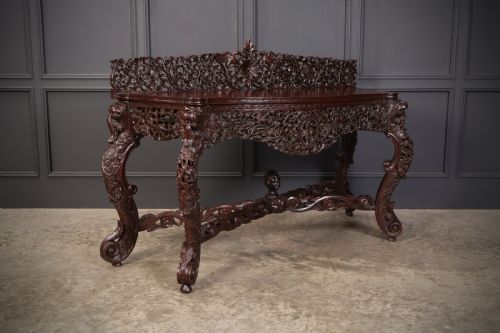


Indian Colonial Sideboard
An indian colonial sideboard brings deep timber and intricate carving straight from nineteenth-century workshops into a modern dining room or hall.
Indian Colonial Sideboard
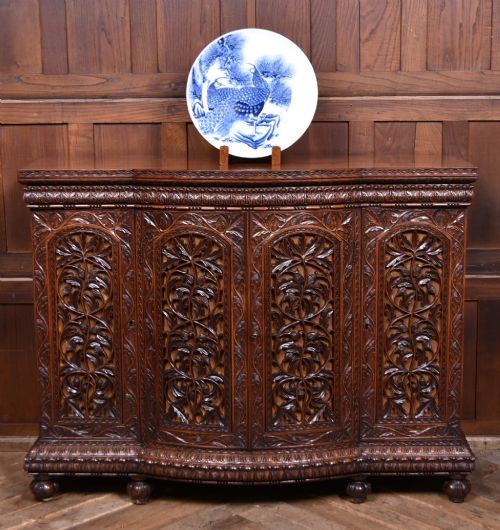
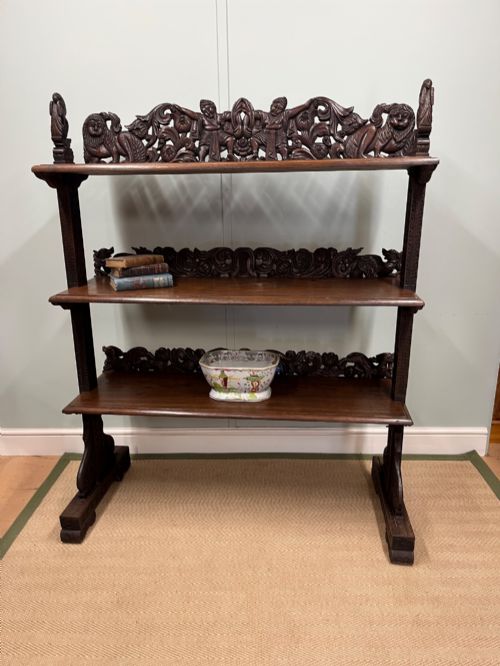
An indian colonial sideboard combines British nineteenth-century forms with the rich carving traditions of South Asia and Burma. When searching for an indian colonial sideboard, buyers encounter robust storage furniture spanning the Victorian and Regency periods, alongside console tables, cabinets, and three-tier buffets.
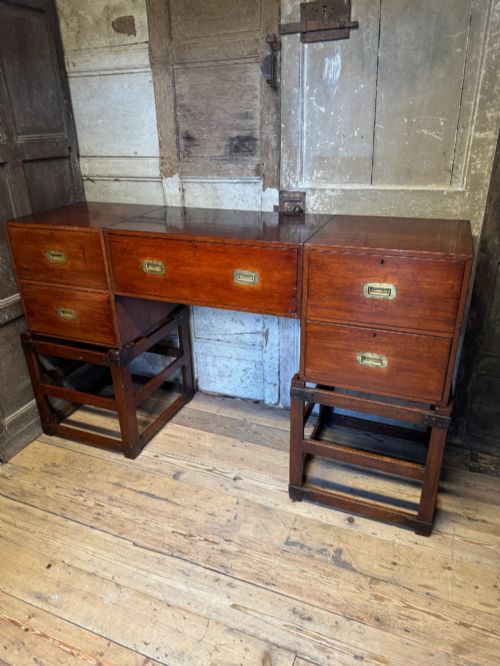
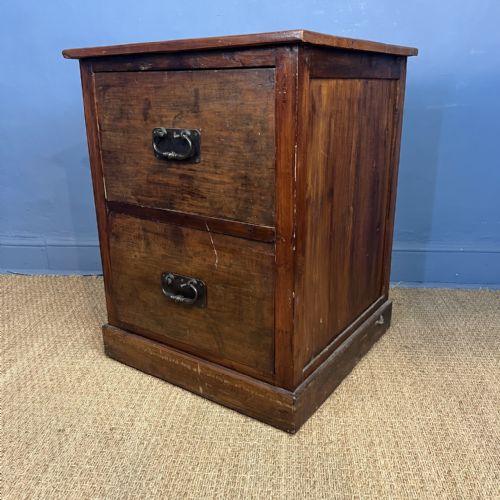
The pieces appearing on this page present various stylistic lineages, including Anglo-Indian, Anglo-Burmese, and Burmese colonial designs. Makers utilised dense tropical timbers to build heavy pedestals, inverted breakfronts, and campaign-style furniture intended for colonial administrators.
How they were made
Carpenters constructed these pieces using dense imported tropical timbers such as teak, padauk, padouk wood, rosewood, and solid satinwood. These heavy woods provided the structural stability needed for deep relief carving without warping in humid climates.
Craftsmen applied intricate chisel work directly into the hardwood surfaces, creating elaborate floral and figural panels. Metal components like brass and iron appeared on campaign tables and specialised cabinets, offering durability and functional assembly for travelling officials.
Materials recorded on this page include teak, padauk, rosewood, solid satinwood, brass, and iron.
What varies in quality
Quality separates plain functional furniture from pieces featuring deeply undercut, crisp botanical carving that retains sharp edges across the timber panels. The selection of timber also dictates standard, with figured padauk and solid satinwood commanding greater appreciation than standard utilitarian hardwoods.
Proportion and structural integrity define the better examples, where drawers slide smoothly within heavy pedestals and cornices maintain balanced alignment. Finer specimens display harmonious integration between the Western furniture carcass and the ornate indigenous ornamentation.
The Indian Colonial Sideboard Glossary
- Padauk
- A dense, heavy tropical hardwood showing a reddish-brown colour that darkens with age. It serves as a primary timber for heavily carved nineteenth-century colonial furniture.
- Inverted breakfront
- A cabinet facade where the central section recedes rather than projects forward. This layout creates dynamic shadow lines across carved pedestal sideboards.
- Campaign table
- Portable furniture designed for British military officers on the move. These items often feature modular construction and durable brass hardware.
- Chiffonier
- A small sideboard or low cabinet equipped with drawers and shelves. Victorian makers adapted this domestic form using exotic solid satinwood and padauk.
Indian Colonial Sideboard: Frequently Asked Questions
What is an indian colonial sideboard?
An indian colonial sideboard is a nineteenth-century storage piece built in South Asia or Burma for British households. These items merge traditional European forms with dense tropical hardwoods and intricate local carving.
They function as grand serving surfaces in dining spaces and hallways while showcasing exceptional cabinetmaking from the Victorian and Regency eras.
How do I care for padauk wood?
Padauk and teak furniture requires stable indoor humidity away from direct heat sources to prevent timber movement. Regular dusting with a dry cloth keeps the dense surface clean without stripping natural oils.
Avoid commercial polishes containing silicone, as they build up over time and dull the deep lustre of the carved hardwood.
Are these sideboards heavy?
These pieces consist of solid tropical hardwoods like teak and padauk, making them exceptionally heavy and substantial. Moving them typically requires two people to protect the carved feet and heavy pedestal bases.
Their substantial weight reflects the dense nature of the timber used in nineteenth-century colonial workshops.
How do I date a colonial cabinet?
Dating relies on examining construction methods, timber choice, and stylistic markers recorded across the nineteenth century. Pieces often correspond to specific periods like Regency or Victorian eras through distinct moulding and hardware.
Carving depth and motif styles also help differentiate mid-century work from later productions around nineteen-ten.