



Indian Carved Storage Box
An indian carved storage box brings tactile depth and rich timber grain to a room, offering practical concealment alongside centuries of craft tradition.
Indian Carved Storage Box
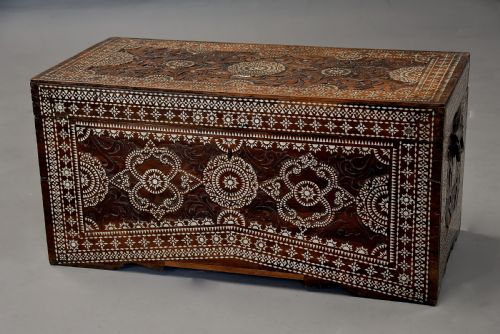
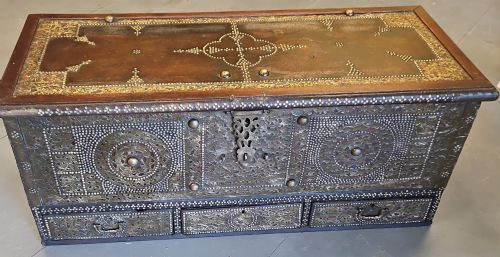
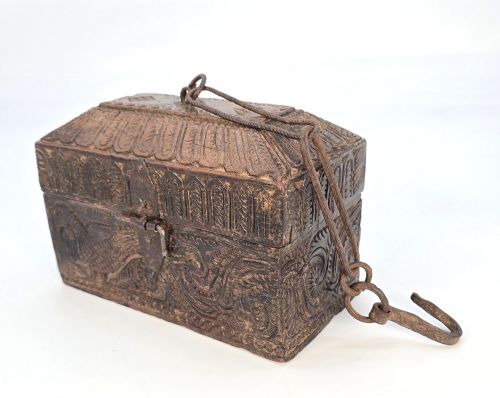
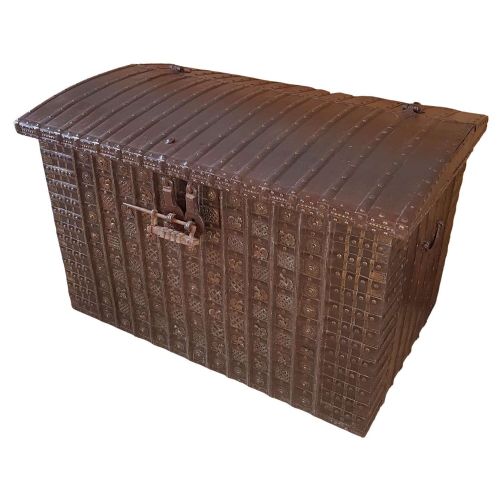
An indian carved storage box encompasses everything from small tabletop trinket caskets and spice containers to monumental dowry chests and traders coffers. Buyers searching this phrase meet substantial hardwood trunks alongside intricately carved boxes originating from regional centres such as Rajasthan, Kashmir, and the Swat Valley.
Materials and Construction
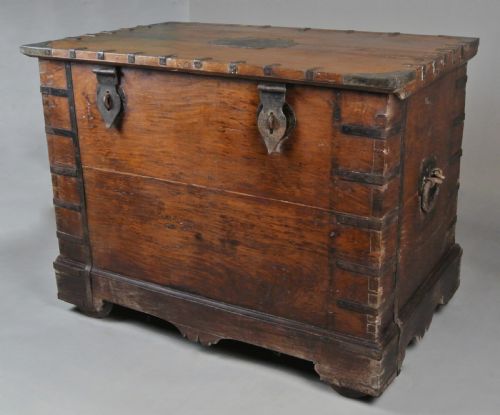
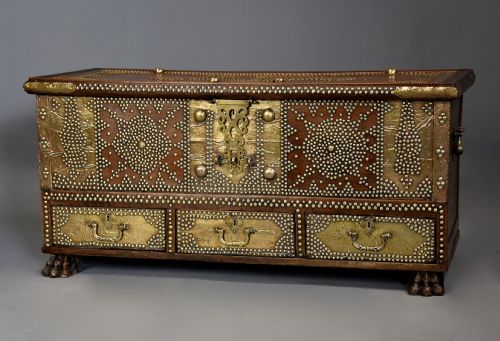
Carpenters utilised dense tropical timbers, predominantly solid teak, hardwood, rosewood, ebony, and camphor wood, often reinforced with substantial iron bands and decorative brass studwork. These robust materials provided the structural integrity necessary for maritime transport and heavy domestic storage.
Surfaces display intricate hand-carved relief work, mother of pearl inlay, silver plating, and lacquer finishes applied across regional vernacular styles. Joints and fittings relied on traditional carpentry methods, paired with functional wrought iron locks and hinges designed for security.
One unexpected survival is a novelty biscuit tin produced by Hunter and Palmer to mimic the appearance of a carved hardwood box.
Craft and Proportion
The distinction between standard utility items and finer examples rests upon the depth and precision of the hand-carved detail, the selection of figured timbers, and the intact survival of original brass or iron hardware. Finer pieces demonstrate careful symmetry in their ornamentation and employ superior secondary woods.
Structural preservation also dictates standing, as boxes retaining their original stands, working locks, and uncompromised interior compartments command greater appreciation. The integrity of inlaid elements and the crispness of the surface carving reveal the original maker's proficiency.
Hunter and Palmer
The Indian Carved Storage Box Glossary
- Damchiya
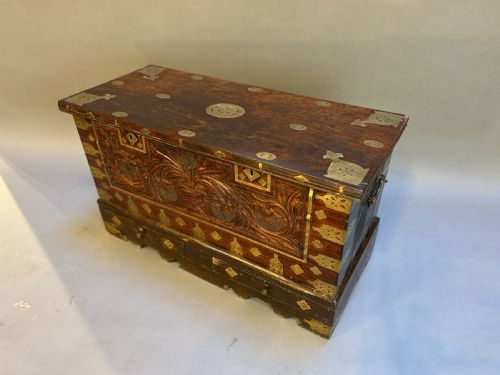
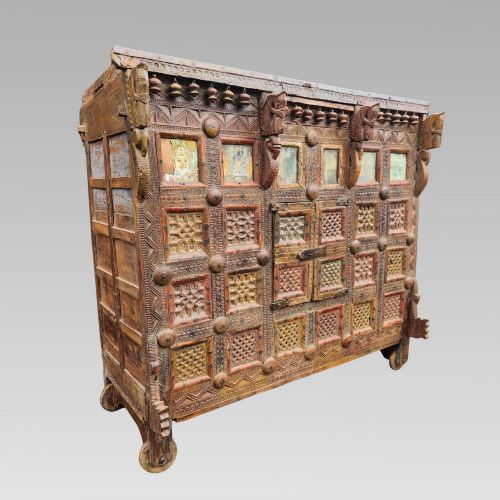
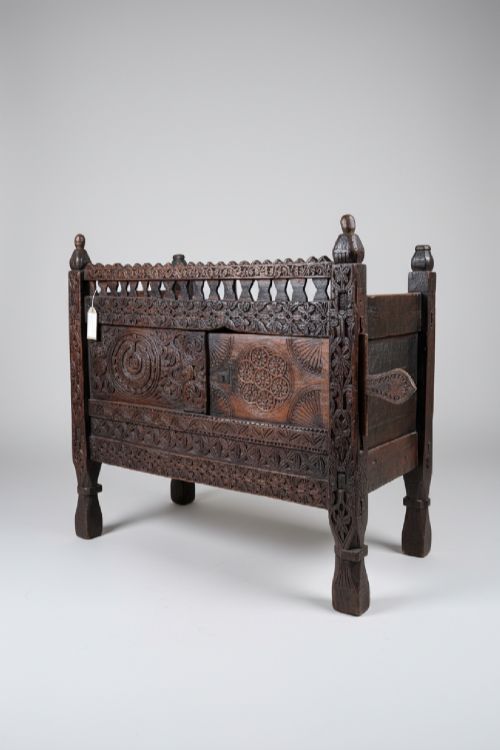
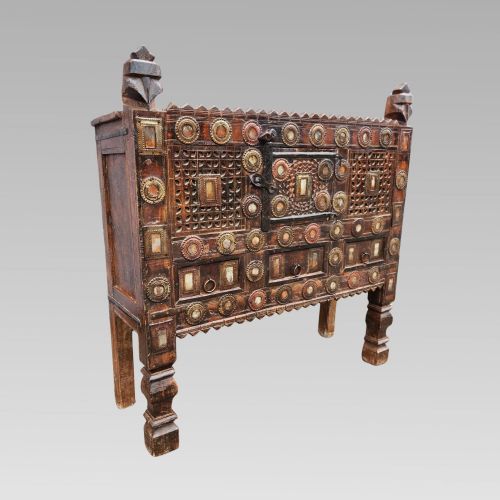
- A traditional low storage cabinet or dowry chest originating from rural regions, typically featuring carved panels and heavy wooden framing. These pieces served a central role in household furnishings and dowry storage.
- Zanzibar chest
- A distinct form of traders chest defined by heavy brass studding, strapwork, and compartmentalised interiors linked to maritime trade routes. They were constructed in teak or rosewood to withstand long sea journeys.
- Campaign box
- Portable furniture made for military officers or travellers, often fitted with brass corners and recessed carrying handles. Such items prioritised structural resilience and practical organisation.
- Coffer
- A large, heavy chest traditionally used for storing valuables, textiles, or documents. They frequently feature robust iron binding for added security.
- Pandan
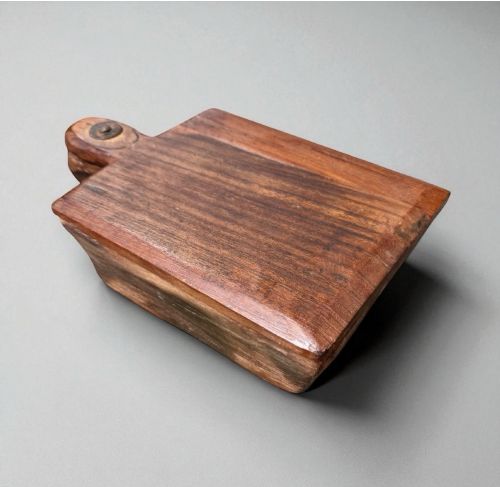
- A traditional box designed for holding betel nut or spices, often worked in precious metals or fine timber. These small containers display meticulous decorative detail.
Indian Carved Storage Box: Frequently Asked Questions
What were indian carved storage boxes used for?
These boxes served multiple domestic functions, from storing precious dowry textiles and spices to holding jewellery, turbans, and personal documents. Larger coffers and trunks accommodated heavy household goods during transit.
Smaller caskets and spice boxes remained accessible within living quarters for everyday items. Their robust construction ensured contents stayed protected from dust, damp, and insects.
How do I date an indian carved storage box?
Dating relies on examining the timber species, construction joints, ironwork style, and the character of the hand-carving. Nineteenth-century examples often display specific regional motifs alongside machine-sawn or hand-sawn timber indicators.
Earlier eighteenth-century pieces tend to show heavier hand-wrought iron hardware and deeper, less stylised relief work. Secondary woods and wear patterns around handles and feet also offer chronological clues.
Where should I place an indian carved storage box at home?
Large chests and damchiyas function well as coffee tables, hallway furniture, or blanket storage at the foot of a bed. Their decorative fronts and heavy timber presence anchor a room's aesthetic.
Smaller trinket boxes and spice containers suit tabletops, sideboards, or open shelving where their surface details can be closely appreciated. Keeping them away from direct heat sources preserves the timber and inlay.
How do I care for antique tropical hardwoods?
Maintain the timber by applying appropriate natural waxes sparingly to nourish the dry wood grain without clogging carved recesses. Avoid synthetic polishes that can build up a cloudy residue over time.
Protect the pieces from extreme humidity fluctuations and direct sunlight, which cause tropical hardwoods like teak, ebony, and rosewood to split or fade. Gentle dusting with a soft, dry brush keeps the intricate carvings clean.