




Impressionist River View Painting
Impressionist river view painting captures the fleeting light and movement of water, offering collectors luminous water-side scenes from the nineteenth and twentieth centuries.
Impressionist River View Painting
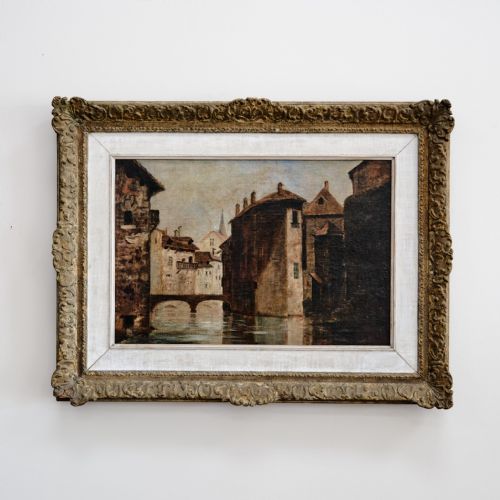
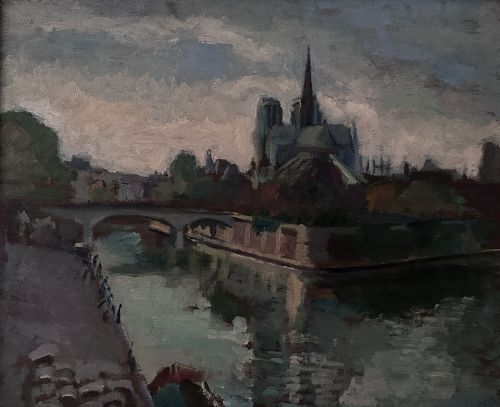
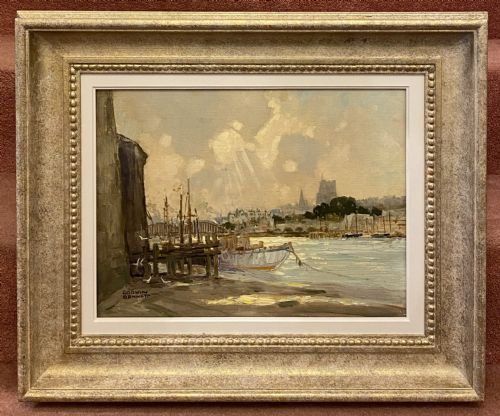
When you search for impressionist river view painting, you encounter outdoor scenes capturing light upon water, frequently featuring rivers, lakes, canals, and bridges. The selection on this page predominantly includes oil paintings and oil on canvas works produced across the nineteenth and twentieth centuries.
Many of these works showcase French and British locations, including Parisian river views along the Seine and Oxford scenes. Artists recorded these bodies of water using loose brushwork characteristic of French Impressionism, Post-Impressionism, and Modern British styles.
The objects span varied decades from the nineteenth century through the mid-twentieth century, offering different interpretations of light and atmospheric conditions. Most pieces present urban or pastoral riverbanks executed in oil paint upon canvas, board, or wood.
Materials and methods
The works rely upon oil paint applied to surfaces such as canvas, wood, and board. Artists built up these compositions using visible brushstrokes that describe the movement and reflection of water.
Some pieces incorporate gold leaf frames, while others present the painted surface directly. The combination of oil paint and supportive canvas or board allowed painters to capture outdoor illumination swiftly.
Styles represented include French Impressionism, Post-Impressionism, and Modern British landscape painting.
Assessing quality
Quality rests in the handling of light and the surety of the brushwork, where confident application brings water and atmosphere to life. The relationship between the painted banks and the reflective surface demonstrates the artist's command of the medium.
Condition of the canvas, board, and oil paint layer also shapes the character of each piece. Works that retain their original vibrance and surface integrity offer a clearer window into the historical moment they record.
Ron Folland·Godwin Bennett·Peter Greenham
The Impressionist River View Painting Glossary
- Canvas
- A heavy woven fabric stretched across a wooden frame to serve as a support for oil paint. It remains the most common substrate found in these listings.
- Oil Paint
- A slow-drying paint made by mixing pigments with oils such as linseed. This medium allows for rich blending and textured impasto work.
- Impressionism
- A nineteenth-century art movement characterised by relatively small, thin, yet visible brush strokes and an emphasis on accurate depiction of light. It forms the stylistic core of these river views.
- Post-Impressionism
- A predominantly French art movement that developed from Impressionism, extending its use of vivid colours and thick application while retaining subject matter like landscapes and water.
- Board
- A rigid wooden or composite panel used as a flat support for painting. Several works in the selection utilise this material instead of stretched fabric.
Impressionist River View Painting: Frequently Asked Questions
What defines an impressionist river view painting?
These works focus on outdoor aquatic scenes, capturing changing light and reflections upon rivers, lakes, or canals. They rely on expressive brushwork rather than rigid academic detail to convey the atmosphere of the water.
Such paintings often depict specific European waterways, from Parisian scenes along the Seine to English riverbanks and bridges, produced across the nineteenth and twentieth centuries.
Which materials were used to create them?
Artists primarily utilised oil paint applied to stretched canvas, wooden panels, or rigid boards. These materials allowed painters to work with speed and texture outdoors.
Frames often incorporated gold leaf or carved wood, framing the painted river view to complement its historical period.
How do French and British styles differ?
French works in this selection often lean towards Belle Epoque or Impressionist interpretations of urban waterways like the Seine. They emphasise vibrant light and fleeting atmospheric effects.
British examples, including Modern British pieces, frequently explore academic or impressionistic treatments of rivers and bridges in Oxford or Rochester with distinct tonal qualities.
How should I display these paintings at home?
These works suit spaces with stable temperature and humidity away from direct sunlight, which protects the oil paint and canvas. Pairing them with traditional or contemporary interiors highlights their expressive brushwork.
Consider the original frame style when placing the piece, as it often reflects the aesthetic of the period in which the artist painted the river view.