


Impressionist Fruit Painting
Impressionist fruit painting captures the vitality of natural forms through loose brushwork, offering buyers a vivid slice of early to mid twentieth century modernism.
Impressionist Fruit Painting
An impressionist fruit painting presents a traditional domestic subject transformed by the energetic brushwork and colour experiments of the twentieth century. When exploring this genre, buyers encounter works spanning from the nineteen-tens through to the nineteen-sixties, reflecting decades of evolving modernist thought.
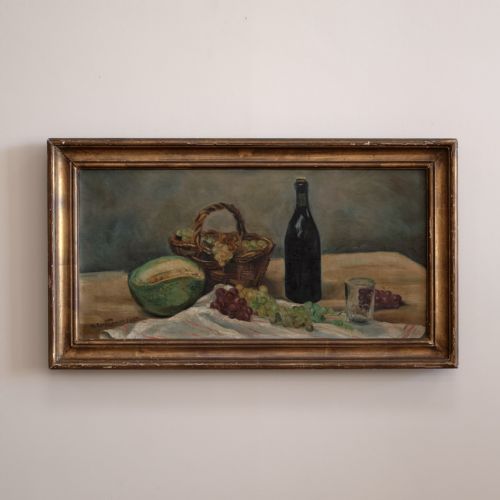
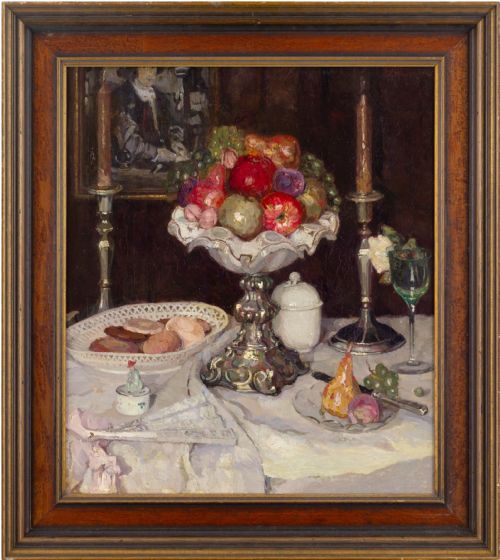
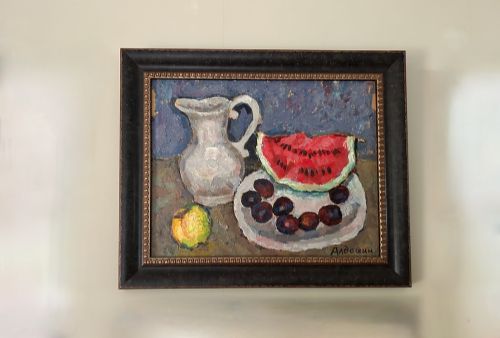
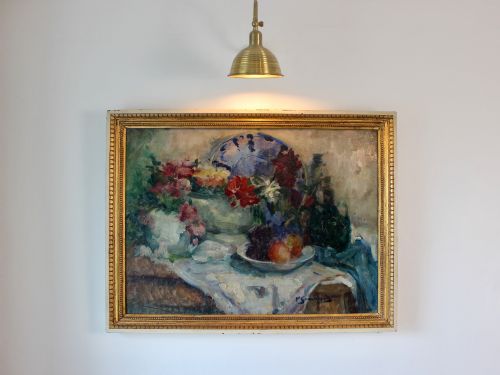
The most common format on this page is the oil painting on canvas, frequently housed within a period wood or gilt wood frame. These canvases capture domestic tabletop scenes, baskets of produce, and occasional outdoor spreads.
Stylistic influences range from French modernist colourism and early post-impressionism to slightly cubist compositions. The subjects remain grounded in everyday still life arrangements while pushing boundaries through light and form.
Assessing Quality
Quality in these works rests upon the confidence of the brushwork and the harmony of the palette. Stronger examples display a purposeful command of light and shadow that animates the composition rather than merely recording objects.
The integration of the fruit with its surrounding space marks the difference between a routine exercise and a compelling modernist work. Superior pieces demonstrate a sophisticated handling of colourist principles that elevates the domestic tabletop into a vibrant study.
Fruits occasionally share table space with candlesticks, biscuits, bottles, and hats, proving that early modernists painted whatever happened to be nearby.
Else Preußner·Vladimir Aldoshin·Victor Simonin·Henri Joseph Pauwels·John Gilbey Bowles·Maud Frances Eyston Sumner
The Impressionist Fruit Painting Glossary
- Impressionism
- A nineteenth and twentieth century painting style focusing on light, loose brushwork, and everyday subjects. It broke from academic precision to capture the immediate visual experience.
- Post-Impressionism
- A subsequent development that extended impressionist techniques while emphasising geometric forms and expressive use of colour. Artists used these methods to inject greater emotional resonance into still life subjects.
- Impasto
- Paint applied thickly to a canvas so that it stands out from the surface. This technique gives physical texture and depth to the painted fruit.
- Colourist
- An artist who uses colour as the primary element to convey emotion, light, and structure. Such works rely on vibrant chromatic relationships rather than strict tonal shading.
- Still life
- A painting featuring inanimate subject matter, typically commonplace objects such as fruit, flowers, and tableware. It provides artists with a controlled arrangement to explore light and composition.
Impressionist Fruit Painting: Frequently Asked Questions
What is an impressionist fruit painting?
It is a canvas artwork depicting fruit arrangements using the loose brushwork and light effects characteristic of twentieth century modernism.
These pieces range from early twentieth century studies to mid-century modernist interpretations by European and international artists.
How do I date these paintings?
Dating relies on stylistic clues, framing, artist records, and canvas construction typical of specific decades from nineteen-ten to the nineteen-sixties.
Post-impressionist and modernist traits help position the work within its historical period.
Where were these artists working?
The creators of these works operated across various European hubs, with a strong representation of French modernist circles and Belgian painters.
Some makers also brought international perspectives from South Africa and beyond.
How should I frame these canvases?
Many examples arrive in their original wood or gilt wood frames which complement the period aesthetic of the artwork.
Preserving these matching frames maintains the historical integrity of the piece.