




Impressionist Cattle Painting
Impressionist cattle painting captures pastoral life through loose brushwork and natural light, offering a window into rural history.
Impressionist Cattle Painting
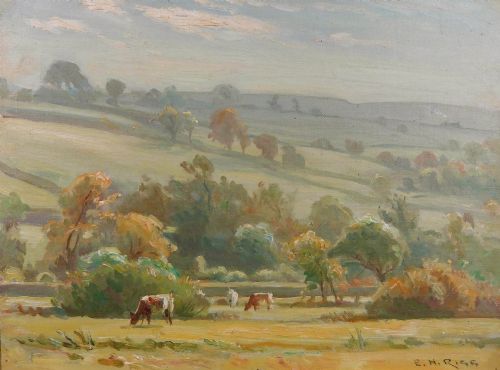
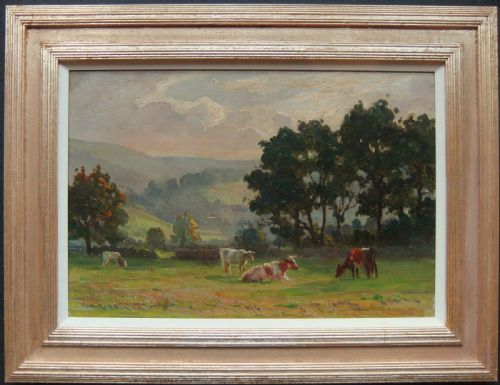
An impressionist cattle painting brings the rural atmosphere of the nineteenth and twentieth centuries directly into a room through scenes of cows grazing by rivers and resting in pastures. These artworks capture the changing light on Yorkshire, Scottish, and Welsh landscapes using looser brushwork than traditional academic art.
The pieces available on this page span several decades from the late nineteenth century through to the mid twentieth century, encompassing British Impressionism, Scottish Impressionism, and Victorian Pastoral styles. Buyers encounter both smaller watercolours on paper and larger oils on canvas depicting daily rural tasks like milking and driving cows.
Works by named regional artists such as Ernest Higgins Rigg, Owen Bowen, and William Greaves sit alongside watercolours and oils by figures like Ernest Pile Bucknall and George Smith. Each piece reflects the enduring appeal of pastoral subjects across Edwardian and later twentieth-century British school traditions.
Materials and construction
Artists painted these pastoral scenes primarily with oil paint on canvas or wood panels, building texture with confident brushstrokes to render the tactile quality of fields and livestock. Watercolours and pastels on paper also appear across the selection, offering a lighter handling of light and atmosphere.
The physical support consists typically of stretched canvas or prepared board housed within traditional frames that complement the landscape subject matter. Pigments range from earthy pastoral tones to brighter Impressionist palettes designed to convey natural daylight.
Listings feature works in oil, watercolour, and pastel on canvas, wood, and paper, spanning from the nineteenth century to nineteen-sixty.
Assessing quality and execution
Quality in these pastoral works rests on the artist's confidence in handling light, atmosphere, and the anatomy of the cattle within the landscape. Stronger examples demonstrate a sure command of brushwork that brings movement to a riverbank or pasture without relying on rigid detail.
The integration of the animals into their surrounding environment separates the most successful compositions from simpler topographical records. Handling of paint texture, depth of perspective, and the preservation of the original surface condition further distinguish the range.
Ernest Higgins Rigg·Owen Bowen·William Greaves·Ernest Pile Bucknall·George Smith·Henri Joseph Harpignies
The Impressionist Cattle Painting Glossary
- British Impressionism
- A style adopted by British artists from the late nineteenth century onwards, focusing on contemporary rural life, natural light, and looser brushwork influenced by French movements.
- Pastoral Realism
- An artistic approach dedicated to depicting rural and agricultural scenes with an emphasis on authentic working life and natural landscapes.
- Oil on Canvas
- A traditional painting medium where oil paints are applied to a woven fabric surface stretched across a wooden frame.
- Watercolour
- A painting method where water-soluble pigments are used on paper to create translucent washes of colour and light.
- Pastel
- A dry drawing medium composed of powdered pigment and a binder, applied to paper to achieve soft, blended atmospheric effects.
Impressionist Cattle Painting: Frequently Asked Questions
What periods do these paintings cover?
The selections span from the nineteenth century through the Edwardian era up to the mid twentieth century. Most works date from the late Victorian period to the nineteen-twenties.
Key artistic movements represented include British and Scottish Impressionism alongside Victorian pastoral traditions.
How should I hang an oil painting?
Choose a wall away from direct sunlight and steady heat sources to protect the canvas and the pigments. Ensure the fixing is secure and appropriate for the weight of the framed artwork.
Keep humidity levels in the room stable to prevent any warping of the wooden stretcher or panel over time.
What subjects appear in these scenes?
The artworks focus predominantly on rural landscapes featuring cattle grazing by rivers, resting in pastures, or being driven along country lanes. Farm buildings and Yorkshire valleys frequently provide the backdrop.
Human activity is often included, such as milking time or pastoral workers tending to the land.
Are watercolours framed differently from oils?
Watercolours on paper require framing behind glass to protect the delicate medium from moisture and dust. They typically feature a paper mount separating the painting from the glass.
Oil paintings on canvas are generally left unglazed to allow the texture of the paint surface to remain visible.