



Impasto Floral Oil Artwork
Impasto floral oil artwork brings thick, tactile pigment and vibrant colour to your walls, capturing botanical subjects with striking physical depth.
Impasto Floral Oil Artwork
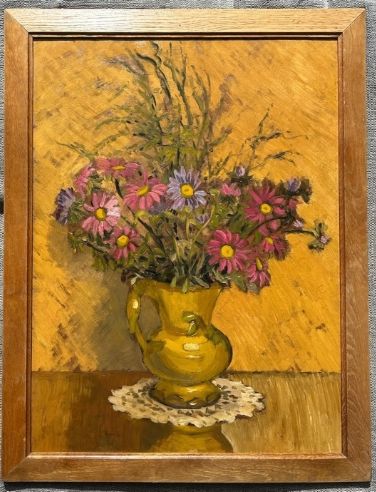
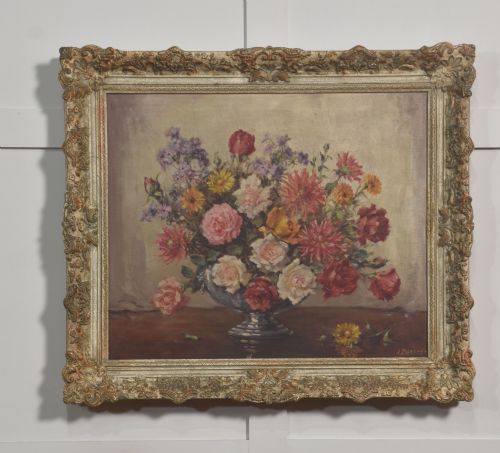
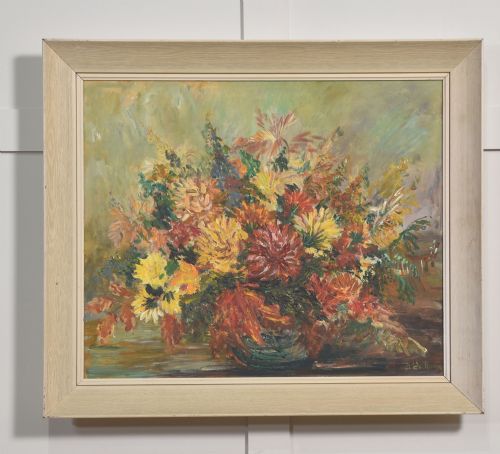
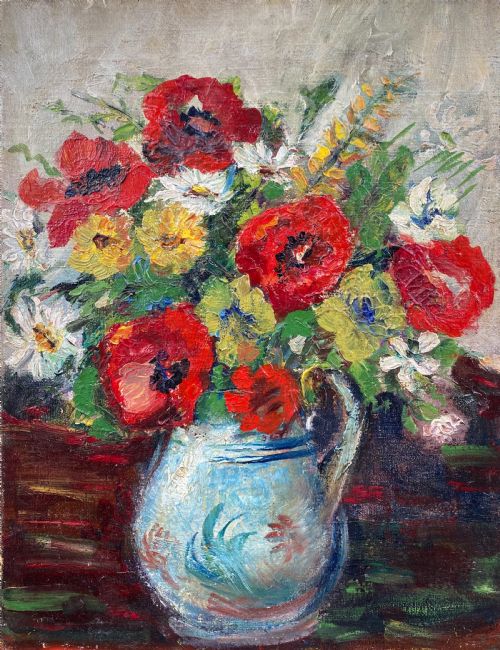
Impasto floral oil artwork comprises still life studies and botanical paintings executed with heavy, raised paint applications that project from the surface. You will frequently encounter mid-century modernist and post-impressionist examples dating from the nineteenth century through the 1960s.
The subjects focus on flowers, vases, and interior plant studies rendered on canvas or board. These works range from intimate early twentieth-century compositions to large post-war French and British canvases.
How they were made
Artists built these works using oil paint applied thickly to canvas or wooden board, often with brushes or palette knives to leave visible ridges. Supporting structures frequently utilise timber stretchers, sometimes housed within gilt or plaster frames.
The physical manipulation of oil pigment allows the flower petals and foliage to stand in relief above the background. This layering creates a tangible interplay of light across the hardened paint surface.
Listings feature works spanning the nineteenth century through the 1960s, executed primarily in oil paint on canvas and board.
What varies in quality
The strength of the composition and the confidence of the brushwork dictate the success of the piece. Masterly handling of thick pigment creates a harmonious balance between the floral subject and the surrounding space.
Condition of the painted surface and structural stability of the canvas or board influence the piece. Original framing and well-preserved paint layers without excessive drying cracks elevate the integrity of the work.
Kenneth Cozens·I. Berezny·D. L. Williams·Sir Matthew Smith·Elizabeth T. Sutcliffe·Bertoldo Taubert
The Impasto Floral Oil Artwork Glossary
- Impasto
- A technique where paint is laid on an area of a surface in thick layers, usually thick enough that the brush or painting-knife strokes are visible. When dry, impasto provides texture, meaning the paint stands out from the page or canvas.
- Oil on canvas
- A traditional painting medium where pigments are bound with drying oils and applied to a stretched fabric support. This combination allows for rich colour saturation and long-term durability.
- Still life
- A work of art depicting mostly inanimate subject matter, typically commonplace objects which may be either natural or man-made. In these pieces, the focus rests upon floral arrangements, vases, and plant life.
- Post-Impressionism
- A predominantly French art movement that developed roughly between the late nineteenth century and the early twentieth century. Artists extended impressionism while rejecting its limitations, favoring more expressive use of paint.
Impasto Floral Oil Artwork: Frequently Asked Questions
What is impasto floral oil artwork?
These pieces are paintings that use thick layers of oil paint to create raised, textured surfaces depicting flowers and botanical studies. They span from nineteenth-century antiques to mid-century modern works.
The heavy application of pigment gives the petals and leaves a physical presence, setting them apart from flat paintings.
How do I hang these paintings?
Most of these works are stretched on canvas or mounted on board, often set within wooden or gilt frames ready for wall hanging. Ensure you use appropriate fixings suited to the weight of the frame and canvas.
Keep them away from direct sunlight and damp environments to protect the oil paint and wooden supports.
How can I tell the period?
Dating relies on stylistic clues like mid-century modernist abstraction, post-impressionist brushwork, or earlier Victorian framing and canvas characteristics. Signatures and stretcher construction also help pinpoint the era.
Materials such as wood boards and specific canvas types align with the documented decades from the nineteenth century through the 1960s.