



Impasto Floral Canvas Art
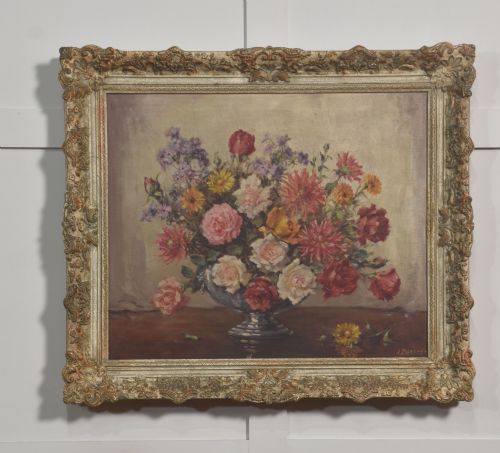
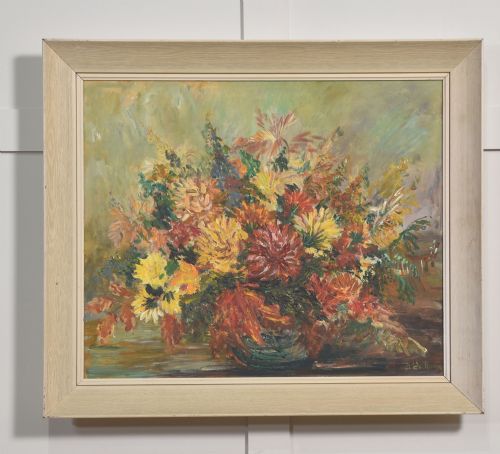
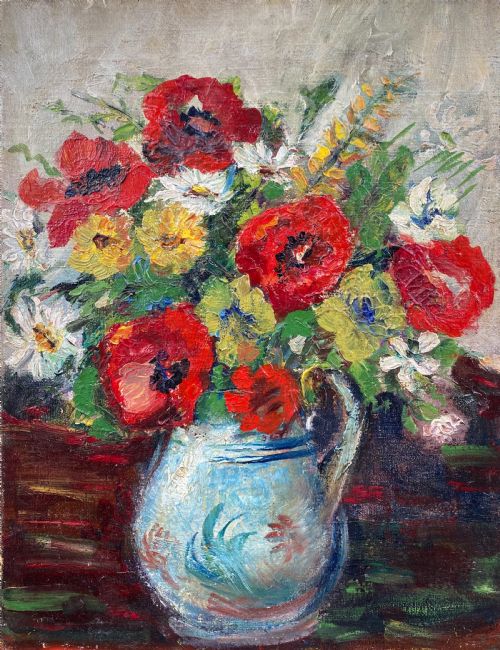
Impasto floral canvas art brings thick paint and textured blooms into a room, offering immediate depth and rich colour.
Impasto Floral Canvas Art
Impasto floral canvas art consists of oil paintings on canvas that capture flowers, still lifes, and domestic scenes with pronounced texture. The selection includes works from the nineteenth century through the 1960s, spanning Edwardian Impressionism, Post-Impressionism, and Mid-Century Modernism.
Buyers will encounter various interpretations of floral subjects, from vibrant country flowers and poppies in vases to dahlias in bowls and potted plants. These pieces range from intimate interior studies to continental and British modernist compositions.
The materials consistently involve oil paint applied to canvas, frequently supported by wood frames, gilt, plaster, and gold leaf. Many works date from the interwar and mid-century decades, reflecting Post-Impressionist and modernist sensibilities.
Assessing quality
Quality rests in the handling of the paint and the confidence of the composition, where thick impasto creates deliberate form rather than mere bulk. The vitality of the brushwork and the harmony of the colour palette distinguish stronger modernist and impressionist studies from simpler decorative works.
The integration of the canvas with appropriate framing, whether original gilt or complementary wood, contributes to the overall integrity of the piece. Provenance and attribution to recognised painters also elevate specific works within the broader range.
Listings feature oil on canvas works spanning the nineteenth century, 1920, 1930, 1940, 1950, and 1960.
I. Berezny·D. L. Williams·Sir Matthew Smith·Elizabeth T. Sutcliffe·Bertoldo Taubert
The Impasto Floral Canvas Art Glossary
- Impasto
- A technique where oil paint is laid on canvas in very thick layers, standing out visibly from the surface. This creates a tactile, three-dimensional quality that catches light and shadow.
- Post-Impressionism
- An art movement extending beyond impressionism that prioritised symbolic content and heavy painterly structure. It forms the stylistic bedrock for many mid-century floral compositions.
- Gilt
- A thin layer of gold or gold-like material applied to wood frames and plaster ornaments. It provides a reflective border that complements the rich tones of oil paintings.
- Mid-Century Modern
- A style spanning the middle decades of the twentieth century, characterised by simplified forms and modernist experimentation. Works from this period often incorporate abstracted or expressive botanical studies.
Impasto Floral Canvas Art: Frequently Asked Questions
What is impasto floral canvas art?
It comprises oil paintings on canvas featuring flowers and plants created with thick, raised applications of paint. The surface texture gives the blooms a tangible presence.
These pieces range from nineteenth-century studies to 1960s modernist interpretations by various British and continental artists.
How do I hang and care for these paintings?
Secure the canvas using appropriate wall fixings suited to the weight of the wood frame and plaster elements. Keep them away from direct sunlight and excessive moisture to protect the oil paint and canvas.
Dust the frame gently and avoid using liquid cleaners on the textured oil surface.
How are different art periods distinguished?
Edwardian and 1920s pieces often lean towards traditional impressionist floral arrangements. Works from the 1930s to the 1960s show increasing modernist, cubist, and French modernist influences.
Examining the canvas preparation, framing style, and artist signatures helps place a work within its historical decade.
What subjects appear besides flowers?
While floral arrangements dominate, artists also depicted intimate domestic interiors, fruit, chestnut leaves, and potted plants. These sit alongside broader still life compositions.
Such secondary subjects frequently share the same expressive oil technique and textured palette.