


Mid Century Floral Oil Painting
These mid century floral oil painting works bring decades of pigment and brushwork into a room.
Mid Century Floral Oil Painting
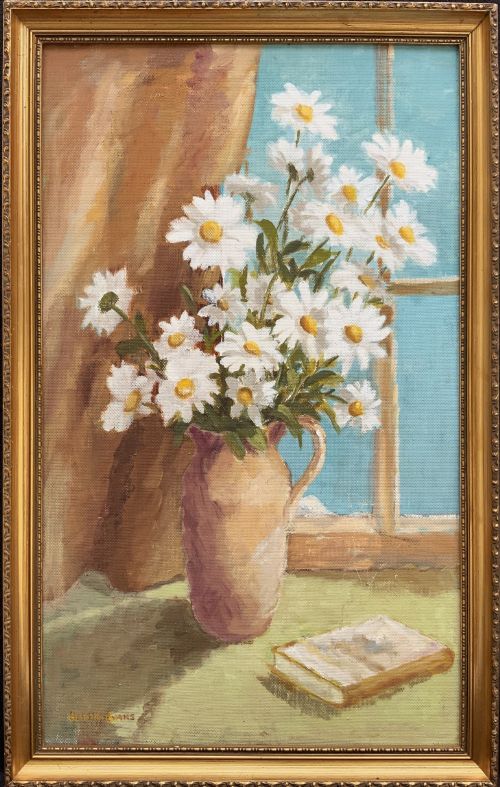
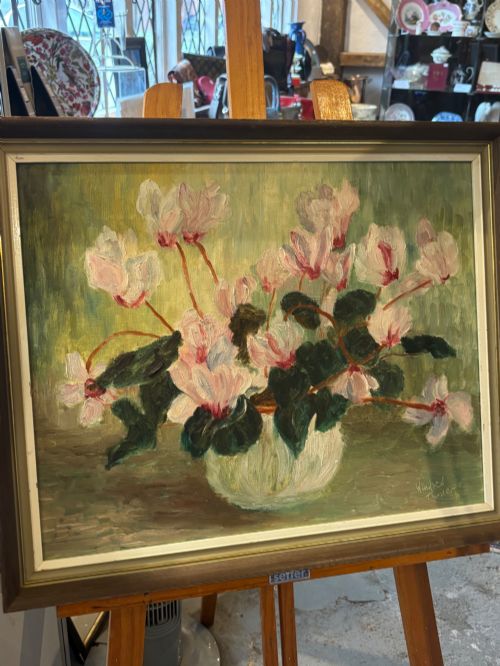
A mid century floral oil painting brings botanical subjects onto canvas, board, metal and wood surfaces, spanning domestic vases to abstracted displays. The pieces encountered here reach from the nineteenth century into the nineteen-sixties, with the nineteen-fifties and sixties forming the bulk of the selection.
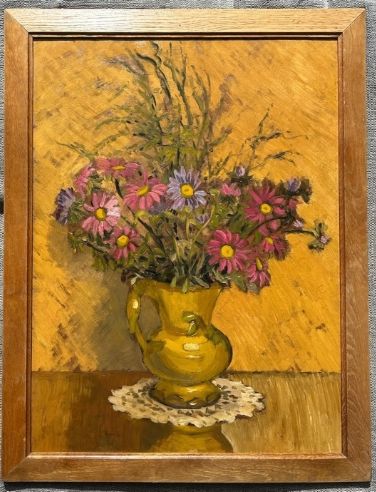
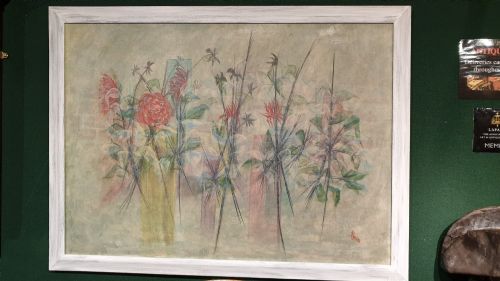
Still life studies dominate the selection, showing flowers arranged in bowls, terracotta pots and glass jugs alongside fruit or household objects. Alongside traditional realism, works appear in impressionist, modernist, impasto and lightly cubist idioms.
Materials and Method
Artists painted these works primarily with oil paint applied to canvas, wood board or metal panels, sometimes paired with tempera techniques. Canvases and boards frequently sit within decorative gilt wood frames that complement the painted surface.
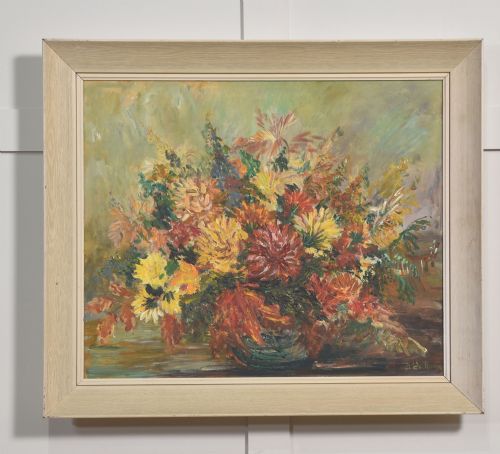
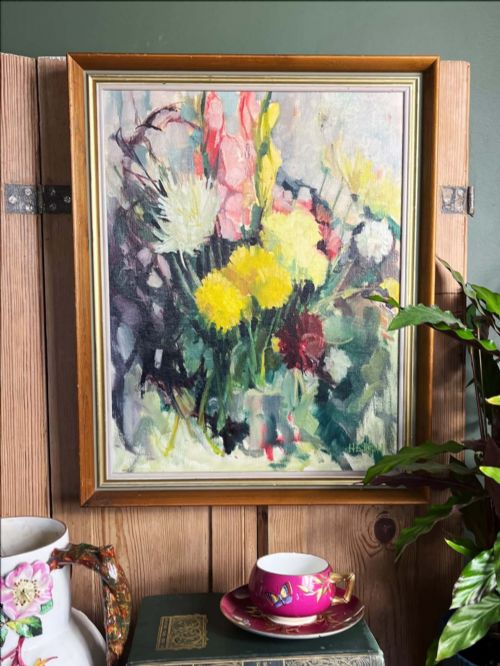
Brushwork varies from smooth, controlled application to thick impasto that leaves physical relief on the picture plane. Pigments capture natural light and botanical detail across subjects ranging from yellow chrysanthemums to white lilies.
Several canvases capture modest kitchen jugs holding spring flowers, proving that nineteenth-century daisies and mid-century lilies found beauty in the everyday.
Distinguishing the Works
The strength of a mid century floral oil painting depends on the confidence of the brushwork and the handling of light within the composition. Works showing distinct tonal control and textural depth separate themselves from simpler decorative studies.
Signatures, exhibition provenance and documented authorship elevate individual pieces, distinguishing named artists from anonymous studio output. The integration of paint and support, alongside the preservation of the original surface, dictates the standing of the piece.
Kenneth Cozens·D. L. Williams·Mark Ingram·Amile Coppieters·A. Nikolokov·J.Milton·Sir Matthew Smith·Bela Balogh·Terence Loudon·Robin MacKertich·Stuart Armfield·Bertoldo Taubert·Moritz Calisch
The Mid Century Floral Oil Painting Glossary
- Impasto
- Paint applied thickly to a canvas or board, standing out in relief from the surface. This technique adds tactile depth and catches light across floral petals and vase edges.
- Still life
- An artwork depicting inanimate subject matter, typically commonplace objects such as flowers, fruit and vessels. These arrangements allow artists to focus on colour, form and light.
- Tempera
- A permanent, fast-drying painting medium consisting of coloured pigment mixed with a water-binder agent. It produces a matte surface distinct from oil paint.
- Gilt frame
- A wooden picture surround coated with a thin layer of gold leaf or metallic paint. These frames often accompany mid-century canvases to enhance the presentation of the art.
Mid Century Floral Oil Painting: Frequently Asked Questions
How do I hang a heavy oil painting safely?
Secure fixings directly into wall studs or use appropriate wall anchors rated for the weight of the wood and canvas frame. Ensure the hanging wire or brackets on the reverse are firmly attached before mounting.
Position the centre of the canvas at approximately eye level to achieve the correct visual balance in the room. Keep the artwork away from direct sunlight and fluctuating heat sources to protect the oil pigments.
What defines mid-century art style?
Mid-century art embraces a departure from strict academic realism towards impressionist, modernist and abstracted interpretations of subjects. Artists experimented with expressive brushstrokes and vibrant palettes while retaining traditional oil mediums.
Floral subjects during this period often feature simplified forms and bold colour relationships. This approach reflects broader post-war shifts in European and British painting.
Are these paintings supplied with frames?
Many pieces retain their period wooden or gilt frames as recorded in the individual descriptions. These surrounds often date from the same era as the canvas.
Check the listing details to confirm whether a specific frame is included with the artwork. Framing styles range from simple painted wood mouldings to decorative gilt designs.