



Imari Ware Wall Platter
These imari ware wall platter examples are striking ceramic display pieces that bring rich palettes and intricate patterns to any interior.
Imari Ware Wall Platter
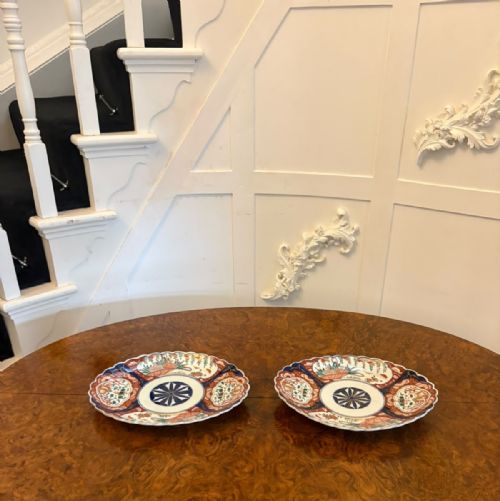
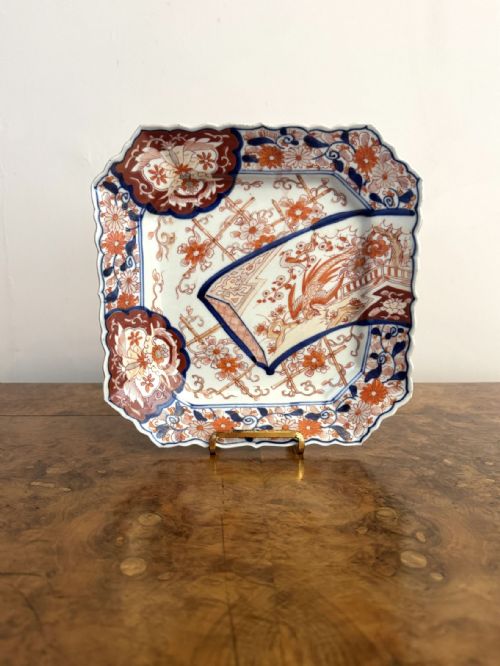
An imari ware wall platter is a decorative ceramic piece designed for display, encompassing charger plates, circular dishes, and unusual geometric forms such as fan-shaped and square-shaped plates. Buyers searching for an imari ware wall platter will encounter pieces spanning from the late seventeenth century through to the early twentieth century, including items from the Edo and Meiji periods.
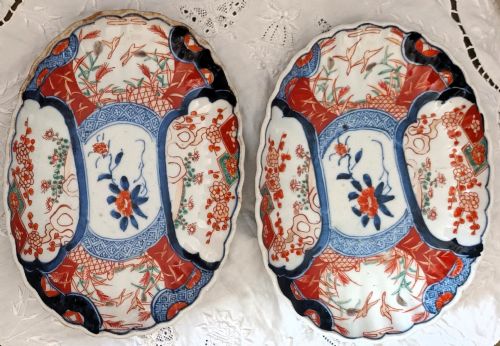
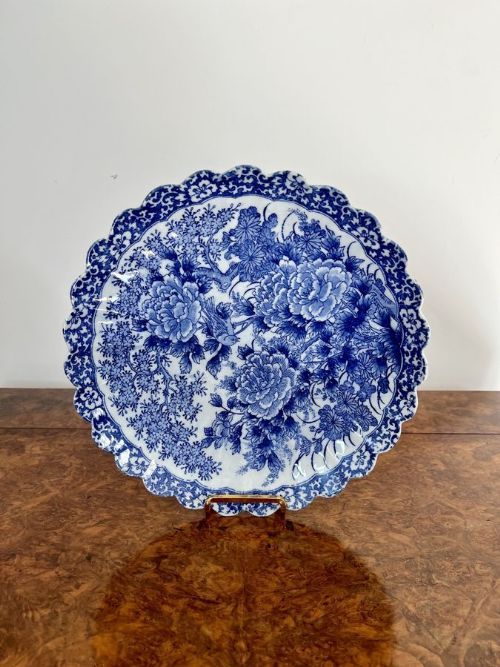
The selection ranges from large scale chargers measuring over twenty inches across to pairs of oval and scalloped porcelain dishes. Many pieces demonstrate traditional Japanese aesthetics, featuring cobalt blue underglaze combined with enamel and gilt highlights.
How they were made
Makers utilised porcelain and ceramic bodies painted with cobalt glaze for deep blue underglaze elements, combined with colourful enamel and gold leaf or gilding. This palette was fixed through firing processes that bonded the glaze and surface decorations.
Techniques varied from standard circular throwing and moulding to specialised shaping for square, scalloped, and fan-shaped plates, finished with scrolling foliate borders and intricate surface details.
Some plates abandon traditional circles entirely, appearing as fans or squares because strict symmetry was occasionally deemed boring.
What varies in quality
Quality in these plates is defined by the crispness of the cobalt glaze, the precision of the enamel work, and the preservation of the gold leaf or gilding. Superior examples exhibit unusual forms, such as fan or square shapes, alongside balanced compositions within scrolling foliate borders.
The depth and clarity of the porcelain body, combined with the complexity of the painted designs, separate standard decorative dishes from pieces of exceptional artistic merit.
The Imari Ware Wall Platter Glossary
- Imari
- A style of Japanese export porcelain originating from the port of Hizen, traditionally decorated in underglaze blue, iron red, and gold. This palette creates a vibrant contrast across chargers and decorative plates.
- Charger
- A large decorative plate intended for display on a wall or sideboard rather than for dining use. These pieces often measure significant diameters.
- Meiji
- A historical period in Japan spanning from 1868 to 1912, associated with increased export of decorative arts to Western markets. Pieces from this era often display refined enamel and gilding techniques.
- Edo
- The period in Japanese history lasting from 1603 to 1868, during which the foundational styles of Arita and imari ceramics were developed. Early examples from the late seventeenth century belong to this era.
- Aka-e
- A Japanese term meaning red pictures, referring to red overglaze enamels used in decorating porcelain. This technique frequently accompanies cobalt blue underglaze designs.
Imari Ware Wall Platter: Frequently Asked Questions
How do I hang a wall platter safely?
Displaying a large charger requires a specialised spring-loaded wall hanger designed to distribute weight evenly across the rim without causing friction damage to the porcelain body.
Ensure the mounting hardware is securely fixed into wall studs to support the substantial weight of seventeenth or nineteenth-century ceramic chargers.
Were these plates used for dining?
Most large chargers and decorated dishes were produced specifically for display, export, and decorative presentation rather than everyday culinary use.
Their intricate enamel and gold leaf surfaces were intended to be admired on walls or display stands within domestic interiors.
How do I distinguish Edo period pieces?
Seventeenth-century Edo period pieces typically exhibit distinct potting characteristics, heavier porcelain bodies, and specific early cobalt blue tones within scrolling foliate borders.
Consulting the specific glaze texture and regional Arita characteristics helps differentiate these early examples from later nineteenth-century production.
Can I clean my imari plate with water?
Dusting with a soft, dry brush is generally sufficient for routine maintenance of antique porcelain and enamel display surfaces.
Avoid immersing pieces with delicate gold leaf or overglaze enamels in water, as moisture can compromise vulnerable historic pigments.