




Imari Porcelain Display Bowl
An imari porcelain display bowl brings rich cobalt blue and vibrant enamel decoration to a room, offering centuries of ceramic artistry.
Imari Porcelain Display Bowl
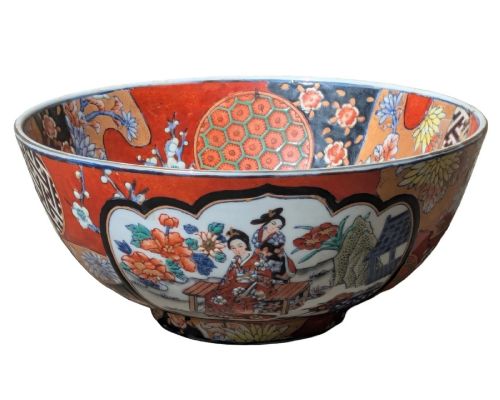
An imari porcelain display bowl brings traditional Japanese ceramic craft into domestic spaces through decorative vessels designed primarily for presentation. The pieces appearing here span from the 17th century through the Edo, Meiji, and Showa periods, showing the long lineage of these decorative items.
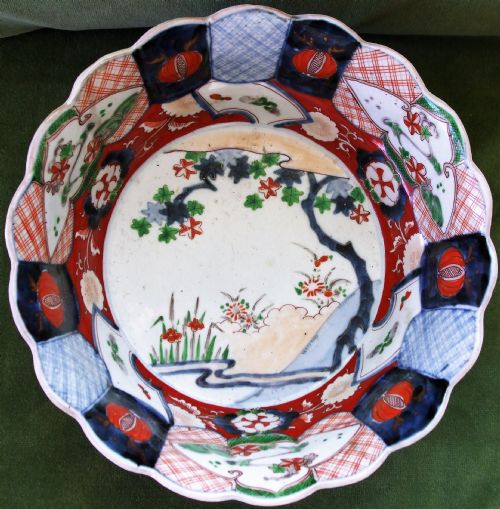
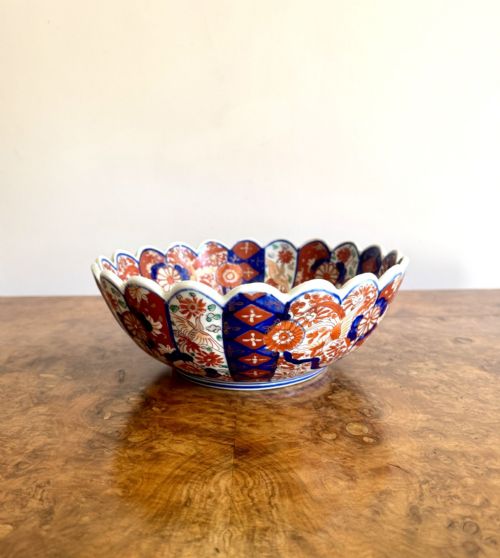
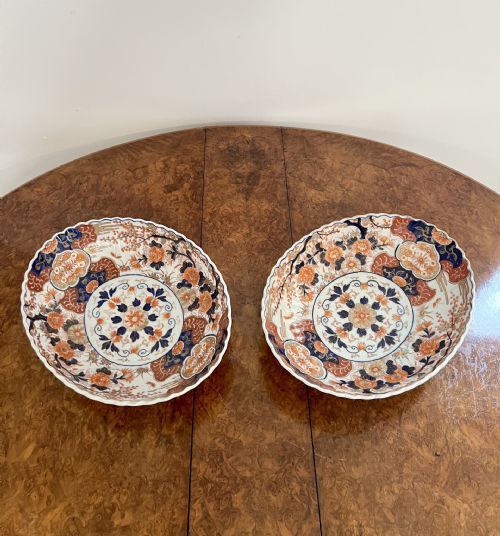
Most examples you encounter on this page date from the 19th century and 1900, taking the form of bowls, plates, and chargers with characteristic shapes. You will find scalloped edges, hexagonal forms, and tripod bases among the selection.
Originating from Arita in Japan, these items reflect specific regional production methods that endured across multiple centuries. The selection combines bowls and display dishes that showcase traditional Japanese styles.
Materials and methods
Ceramic production relies on fine porcelain shaped into bowls and plates, then fired to create a durable base. Artisans apply cobalt blue underglaze before adding overglaze enamels.
Gilding and gold leaf frequently enhance the painted patterns, adding metallic contrast to the fired colours. Glaze seals the surface to protect the intricate painted details.
Current listings feature porcelain items spanning the 17th, 18th, 19th, and 20th centuries, including Arita wares and Meiji period pieces.
Distinctions in quality
Quality in these pieces rests on the precision of the hand-painted cobalt blue and enamel decoration across the porcelain surface. Finer examples display superior control in the brushwork and richer application of gold leaf and gilding.
The complexity of the form also separates standard pieces from exceptional ones, particularly those featuring intricate hexagonal shaping or elaborate scalloped edges. Well-preserved glaze and enamel integrity across centuries elevate the standing of a bowl.
The Imari Porcelain Display Bowl Glossary
- Arita
- The Japanese town and surrounding region where the porcelain production originated during the Edo period. It represents the historical centre of this ceramic tradition.
- Meiji Period
- A historical epoch in Japan spanning from 1868 to 1912, known for significant cultural output and increased export of decorative arts. Pieces from this time often exhibit high decorative detail.
- Edo Period
- The period in Japanese history lasting from 1603 to 1867, marked by relative stability and flourishing arts. Early examples of the porcelain tradition date back to this era.
- Charger
- A large decorative plate or shallow bowl intended for display rather than dining use. These substantial pieces provide a broader canvas for traditional patterns.
Imari Porcelain Display Bowl: Frequently Asked Questions
How do I date an imari bowl?
Dating relies on stylistic markers, materials, and documented production eras associated with Japanese ceramic history.
Pieces range from 17th-century Arita wares to Meiji period and 20th-century items, each showing distinct painting styles and potting techniques.
How were these bowls used historically?
Historically, these items served primarily as decorative display objects in homes rather than functional tableware.
Their striking colours and patterns made them centrepieces for rooms, both in Japan and internationally after export.
How do I care for antique porcelain?
Antique porcelain requires gentle handling and placement away from direct sunlight or heavy vibrations.
Dusting with a dry, soft cloth is sufficient to maintain the glazed surface and any delicate gold leaf or enamel details.