


Imari Pattern Jar
These imari pattern jar examples span periods from the Georgian era through the early twentieth century, offering distinctive porcelain forms for your interior.
Imari Pattern Jar
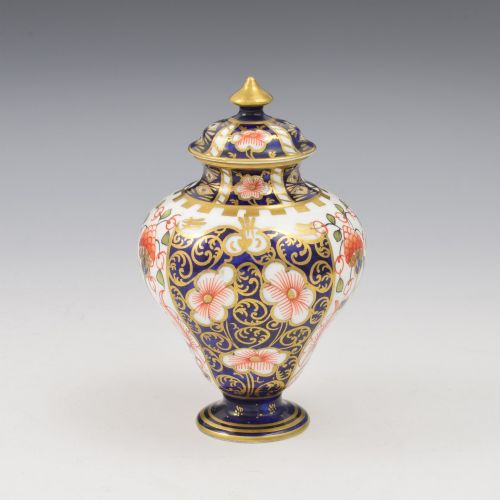
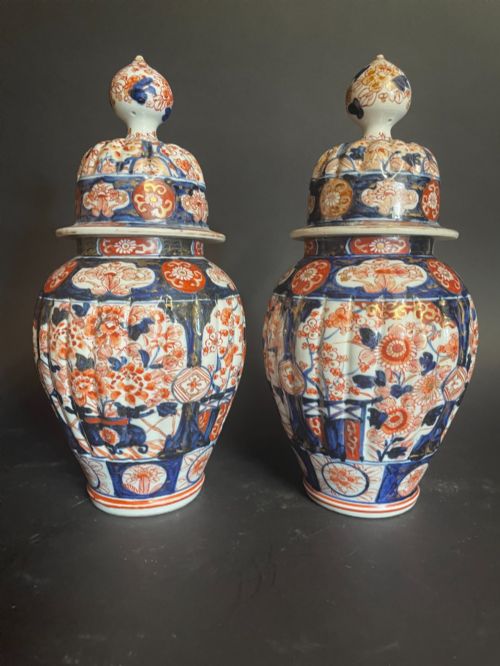
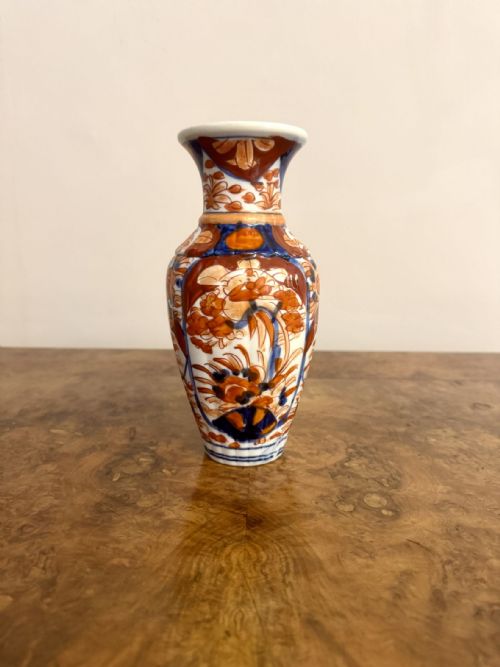
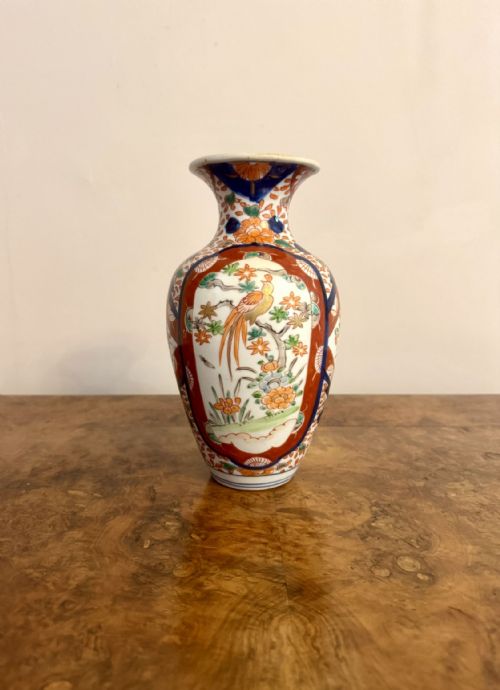
An imari pattern jar brings together rich porcelain bodies and traditional decorative motifs. You will encounter various forms across this selection, including lidded jars, covered vases, and pot pourri vessels.
The pieces originate from diverse periods such as the Georgian era, the nineteenth century, and the early twentieth century. Japanese Imari styles sit alongside English ceramic interpretations such as Mason's ironstone and Royal Crown Derby.
Vessels range from compact miniature vases to large lidded pieces and hexagonal baluster shapes. Many retain their original covers, while others function as decorative table pieces or converted lamps.
How they were made
Potters shaped ceramic and porcelain bodies before applying detailed glaze work. Enamel colours and gold leaf accents were added to create the characteristic palette.
English ironstone pieces provided a heavy, durable alternative to imported porcelain. Artisans utilised intricate hand painting and gilding techniques across both Japanese and European workshops.
Object forms include octagonal baluster vases, biscuit barrels, pot pourri containers, and spill lamps.
What varies in quality
The precision and density of the hand painted enamel work define the visual impact of each vessel. Finer examples display meticulous brush control within complex floral and geometric panels.
The preservation of the gold leaf and gilt detailing separates standard pieces from exceptional ones. Complete sets with matching covers command attention due to their scarcity in the archive.
Royal Crown Derby·Mason's Ironstone·Japanese Korango
The Imari Pattern Jar Glossary
- Imari
- A style of ceramic decoration originating in Japan, characterised by a palette of iron red, cobalt blue, and gold. European factories subsequently adopted and adapted these distinctive motifs.
- Baluster
- A vase form with a rounded body that tapers toward the base and swells near the centre. This shape provides stability for larger lidded jars.
- Ironstone
- A heavy, durable ceramic patented in the nineteenth century as a robust alternative to porcelain. It readily accepts transfer printing and hand painted enamels.
- Pot Pourri
- A lidded vessel perforated to release the scent of dried flowers and spices held within. These decorative jars often feature elaborate pierced covers.
- Gilt
- A thin layer of gold applied to the surface of porcelain or ceramic to highlight rims and patterns. This metallic decoration enhances the warmth of the underlying glaze.
Imari Pattern Jar: Frequently Asked Questions
How do I date an imari pattern jar?
Dating relies on the ceramic body, glaze characteristics, and factory marks found on the base. English pieces often bear nineteenth-century ironstone stamps, while Japanese items reflect Edo and Meiji period aesthetics.
Context also comes from the style of gilding and the weight of the porcelain. Comparing the piece to recorded archive examples helps narrow the production era.
Are these jars safe to use for food?
Antique ceramic and porcelain vessels are intended primarily for display and decorative storage rather than culinary use. Historic glazes and gold leaf can wear down with modern washing and food contact.
Preserving the integrity of the hand painted enamel surface is best achieved by keeping the interior dry. Enjoy them as mantelpiece ornaments or lidded centrepieces.
How should I clean my porcelain jar?
Dust the surface gently with a soft, dry brush to remove particles without disturbing the gilt details. Avoid harsh chemical cleaners or submersion in water, which can damage aged enamel.
If washing is essential, use lukewarm water and a mild soap on the unpainted ceramic areas only. Dry immediately with a lint-free cloth.
Did English and Japanese makers use the same designs?
English factories like Royal Crown Derby and Mason's Ironstone drew direct inspiration from imported Japanese wares. They reinterpreted the traditional colour palettes and motifs onto their own ceramic bodies.
While Japanese examples reflect Edo and Meiji period traditions, English pieces adapt those visual elements into Victorian and Georgian decorative forms.